All posts by wellnmed@gmail.com

An exhibition traces the origins of indigo, born in India and loved the world over

The dye that brings the world together

The Greeks called it indikon and the Romans, indicum, eventually indigo in English, all implying the same — from India. True indigo, Indigofera tinctoria, a flowering plant with 750 sub-species is found in the tropics. It produces this distinctive natural dye from its leaves, and is the only organic source of the colour blue in nature. And the Indian subcontinent being the prime supplier of true indigo, the dye was named thus by the Greeks.

Then, Arab merchants took the dye to the Mediterranean and Europe and its rarity gave it a regal aura. Jenny Balfour-Paul, dye specialist and an authority on indigo, says the term ‘royal blue’ came from here.

Balfour-Paul was at Kolkata’s Indian Council for Cultural Relations to speak at Indigo Sutra, a fascinating symposium held there in early November.

As Gasali Adeyemo from Nigeria demonstrated the unique adire tie-dye technique from his country, Sufiyan Ismail Khatri from Kutch demonstrated ajrakh, the block printing that’s done on both sides of the fabric. Adeyemo spoke of how the patterns in adire are tribe identifiers, also working as messages that convey specific ideas and thoughts, easily recognisable to compatriots.
Amrita Mukerji, the woman behind Sutra Textile Studies, the non-profit society that organised the event, was in Malaysia in the late 80s-early 90s and decided she wanted to showcase India as something more than just the country that provided wealthy Malays with plantation workers. So she began to exhibit, using personal and other collections, Indian textiles, jewellery, art, literature and music.

It was in Nigeria that Mukerji had fallen in love with indigo, finding the local shops stacked with bolts in vibrant indigo hues in adire patterns. It was there she discovered checked cloth called George that looked just like Indian lungi patterns. And later learnt that the name came from Fort St. George in Chennai; the same cloth was known as Bleeding Madras in other places.

And the twain met

In 2000, Mukerji met Balfour-Paul. At the time, Balfour-Paul had just come across the journals of a Victorian adventurer and fellow indigo-lover, Thomas Machell.

Inspired by Machell’s writing, which she published as Deeper than Indigo, Balfour-Paul set out to trace his footsteps; and Mukerji travelled with her to the places in Bengal where Machell had lived as an indigo planter.
Monoleena Banerjee, an independent textile designer and consultant, also accompanied them.

Superimposing a map made by Machell on to a contemporary road map, they found four of Machell’s nil kuthis or indigo houses in Nadia district. Three of them were in ruins, while the fourth had been taken over by the local Hare Krishna society.

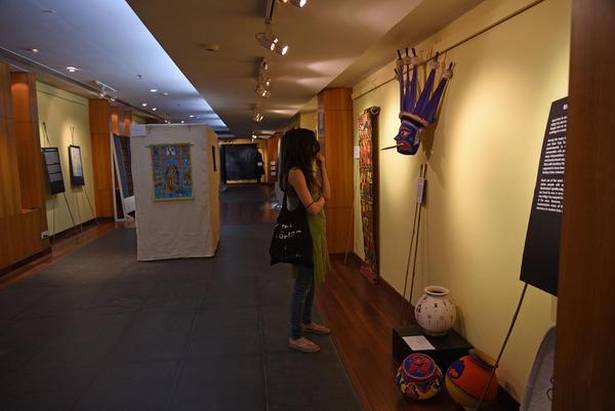
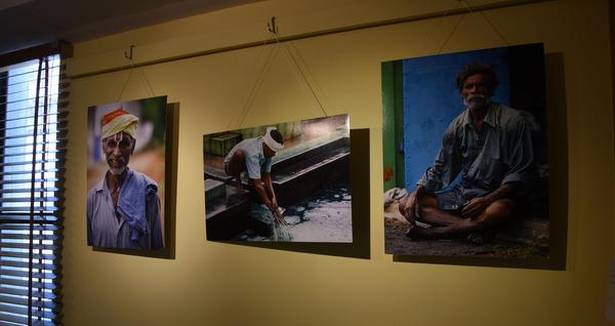
All these threads came together at the symposium, held most appropriately in the centennial year of the Champaran Satyagraha. Wonderfully curated by Londoner Simon Marks, textile designer and natural dyer, who spends a lot of time in Jaipur and Kutch, there were seminars, workshops, discussions, film shows, a bazaar, and excursions to weaving and dyeing centres.

Participants came from across India, Africa, Japan, Thailand, Jordan, Salvador, Great Britain and Bangladesh to exhibit their skills and share knowledge, playing their part in promoting and reviving indigo, the oldest natural dye known to man.

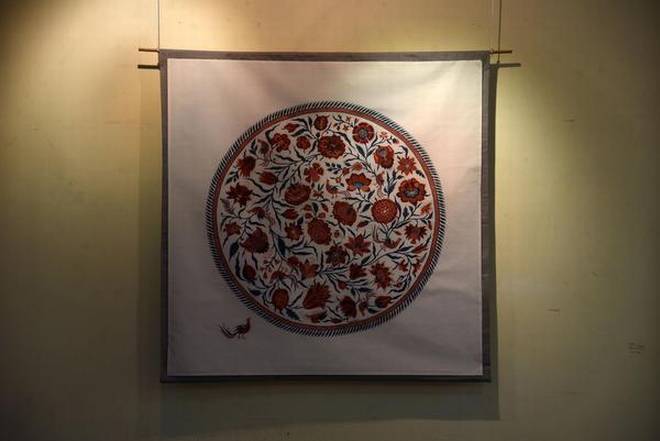
A scale model of an indigo dye manufacturing unit, a replica of the one in London’s Kew Gardens, made for a fascinating study. There were collections of indigo-hued and inspired works of art, to be worn or displayed, as well as indigo fabric installations, including a maze-like room separator by Kolkata designer Santanu Das. Natural dye artist Ajit Das’s exhibits emphatically announced the range of this dye between hues of blue, purple and black.
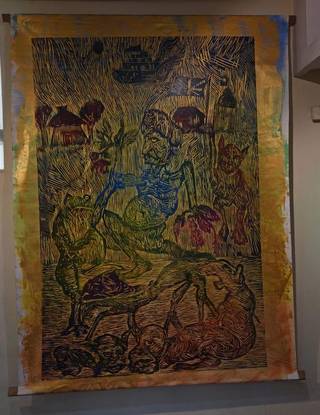
We are reliably informed there are more blue jeans on this planet than there are people, and Jesus Ciriza Larraona, a Spaniard, is currently working with dye manufacturers in Tamil Nadu and elsewhere to develop organic dye for Levi’s jeans. He also manufactures organic indigo clothing for Auroville.

Ruby Ghuznavi, a reputed crafts researcher who has done much to revive organic dyes in Bangladesh, was a keynote speaker here. Living Blue, a unit of CARE, Bangladesh, works to empower weavers, indigo farmers and dye-makers in Rangpur in the northern part of the country. It specialises in exports of kantha and indigo-dyed fabrics, using the Japanese Shibori technique, for personal wear and home furnishings.

Clearly, the increasing use of organic products in a polluted world has led to the current revival of interest in sustainable indigo. And, as it did centuries before, the dye is bringing the world together.

The author, who lives in Kolkata, keeps rediscovering it, often with wonder.

source: http://www.thehindu.com / The Hindu / Home> Entertainment> Art / by Patrick Sanjiv Lal Ghose / November 04th, 2017
Suriname envoy at Kolkata ghat from where ancestors set sail

Kolkata :

On February 26, 1873, sailship Lalla Rookh set off from what is now known as Suriname Ghat with 410 passengers on board. Nearly all of them were from places that are now in Uttar Pradesh and Bihar. The men and women had been recruited as ‘coolies’ or indentured labourers by the Dutch who owned sugarcane plantations in Suriname. The ship docked at Paramaribo on June 5 with 279 men, 70 women and 50 children. Eleven did not survive the voyage. In the years that followed, 63 more ships left Kolkata port for Suriname.

Nearly 145 years later, a descendant of one of the 34,304 Indian labourers who were transported to a distant land in the northern tip of South America returned to the very ghat from where her ancestor had set sail and survived the arduous journey. It was a poignant moment for Aashna Kanhai, the Surinamese ambassador to India, as she stood at ‘Mai Baap’ Memorial on Suriname Ghat and looked at the shimmering waters of the Hooghly.

“Today, there are 170,000 people of Indian origin in Suriname (the total population is 558,368). There are also 200,000 of them in Holland who decided to leave Suriname when the country became independent 42 years ago,” said Kanhai as she folded her palms in a namaskaar in front of the Mai Baap Memorial.

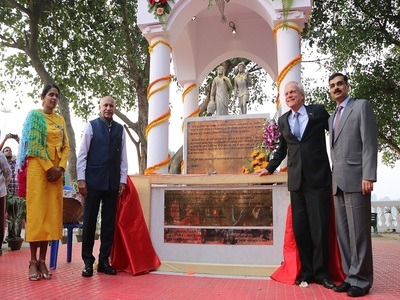
Surinam ambassador in India Aashna Kanhai, Union minister of state for external affairs M J Akbar, Netherlands ambassador in India Alphonsus Stoelinga and Kolkata Port Trust chairman Vinit Kumar at the unveiling of the plaque at Mai Baap Memorial in Surinam Ghat, Garden Reach on Saturday. photo by – Avik Purkait

The occasion that had brought Kanhai to Kolkata was Suriname Day. “My ancestors must have stood here for the last time before leaving India forever. The men carried two dhotis and two kurtas each. The women carried two saris each. Apart from this, some carried religious books like the Ramayana, Mahabharata or Quran,” Kanhai said, her voice choked with emotion.

Aashna Kanhai, the Surinamese ambassador to India, celebrated Suriname Day on the banks of Hooghly on Saturday, accompanied by minister of state for external affairs MJ Akbar, who unveiled a plaque at the Mai Baap Memorial on Suriname Ghat.

The memorial comprises a sculpture of a man and a woman, each carrying a potli, to commemorate the landing of Indian labourers at Paramaribo. The original sculpture is in Paramaribo and its replica was inaugurated in Kolkata in 2015.

Her great grandmother’s father was among the indentured labourers who landed in Suriname. During an earlier visit to Kolkata, she had heard the name Bhawanipore and it rang a bell. “I recalled that my ancestors were kept at the Bhawanipore Depot before they boarded the ship,” Kanhai added.

Initially, the transport and living conditions of Indian labourers in Suriname was worse than it had been prior to the abolition of the Dutch slave trade. Many died during the journey.

But why did the Dutch planters require Indian labourers? “In 1863, slavery was abolished by the Dutch and they entered into an agreement with the East India Company to recruit labourers from India to work in the sugarcane plantations in Suriname. Men, known as Arkatias were sent out to recruit people from Uttar Pradesh and Bihar. They entered into a five-year contract and came to be known as the Contrakees or Agreemanees. They were to receive 25-pence a week for their labour but payment was often delayed. Of the 34,000-odd Indians who reached Suriname, 65% stayed back. Indentured labour was finally abolished 100 years ago in 1917,” the Surinamese ambassador said.

During the event, videos of renditions by Surinamese singer Raj Mohan were screened. In a Bhojpuri song, the singer brought out the feelings of a ‘coolie’ after he realized that he had been cheated. The second song by Mohan was Tagore’s Ami Chini Go Chini Tomarey, Ogo Bideshini. Kanhai, who speaks fluent Bhojpuri, said that the only Bengali she knows is the Rabindrasangeet which is extremely popular in Suriname.”That one stanza of the Bhojpuri song says it all. It reveals how the labourers from India had gone to Suriname with plans to return after five years with small fortunes. Once there, they realized that they were cheated. They were taken there as replacement slaves. Such was colonialism. They just played with words to make things sound better. The Hooghly wasn’t a river of hope. It was a river of no return. The peasants left their lands in the first place because of the huge taxation imposed by the colonial government in India. They had no surplus during lean seasons. Through such programmes, we celebrate the resilience of human spirit,” Akbar said.

While Dutch ambassador Alphonsus Stoelinga recounted how his country shared a piece of history with India and Suriname, Kolkata Port Trust chairman Vinit Kumar said there are plans to improve the surroundings of the memorial. “The first labour ship to leave Kolkata for the Mauritius was in 1834. Later, ships left for several countries. We have plans to organize heritage tours to the Suriname Ghat and create a larger indenture memorial. We shall also upgrade the surroundings,” Kumar said.

source: http://www.timesofindia.indiatimes.com / The Times of India / News> City News> Kolkata News / by Jayanta Gupta / TNN / November 26th, 2017

Kolkata Chinese makes it big with Tangra-style food in London

Kolkata :

Kolkata-born Chinese who took Tangra-style cuisine to London is planning to leverage the popularity of the Indo-Chinese food that he serves at his restaurant in Harrow to start a chain across UK.

Steven Lee, whose father had migrated to India in the 1940s from Guangdong province in China, was born in Kolkata in 1971 and grew up in Tangra, the Chinatown that once housed tanneries that have now been converted to restaurants.

Like most Chinese living in Kolkata, Lee had bland Chinese food at home. But it was the spicy Indian-Chinese served in Chinese restaurants that he loved.

“Indo-Chinese food is a Tangra creation that is now a worldwide sensation. This fusion is unique on its own and loved by foodies all over. It is different because this fusion is prepared by using Indian ingredients while still accepting the Chinese cooking technique,” explained Lee, who started Indo-Chinese kitchen bar Hakkaland named after the Tangra’s Hakka community.

While Lee left Kolkata to work in at China Garden — a popular Chinese restaurant by Nelson Wang in Mumbai — nearly 20 years ago, he still visits his relatives in Kolkata annually during the Chinese New Year.

Around 17 years ago, celebrity chef Udit Sakhel invited him to London to work at his restaurant Dalchini. There, Lee used his experience and knowledge of Tangra-type Chinese to introduced Indo-Chinese food. “I infused many new dishes to this fusion and Asian taste which was widely accepted in the UK and the restaurant was a huge success in early 2000s. “Keeping the multi-cultural diversity of UK in mind, I introduced Hakka Chicken, Ginger Chicken, Fish Pepper Salt, Tai Pai Paneer, Soya Chilli and a lot more,” Lee recounted.

After working for Dalchini at Wimbledon, Spice n Ice at Croydon and Bombay Wok at Hounslow, Lee teamed up with partners to launch Hakkaland a year ago. During Durga Puja, Lee’s restaurant served to Bengali patrons at the Ealing Town Hall.

Encouraged by the customer response, Lee now plans to make Hakkaland UK’s first Indo-Chinese restaurant chain with joints in Manchester, East London, Leeds, Lecister and Birmingham. Lee isn’t sure yet but if things go his way, he even has eyes on bringing his brand home to where it all started, Tangra.

source: http://www.timesofindia.indiatimes.com / The Times of India / News> City News> Kolkata News / by Subhro Niyogi / TNN / November 20th, 2017

Miss West Bengal ’17 votes for cleanliness in her hometown

Agra :

West Bengal: Miss West Bengal ’17 votes for cleanliness in her hometown | Agra News – Times of India

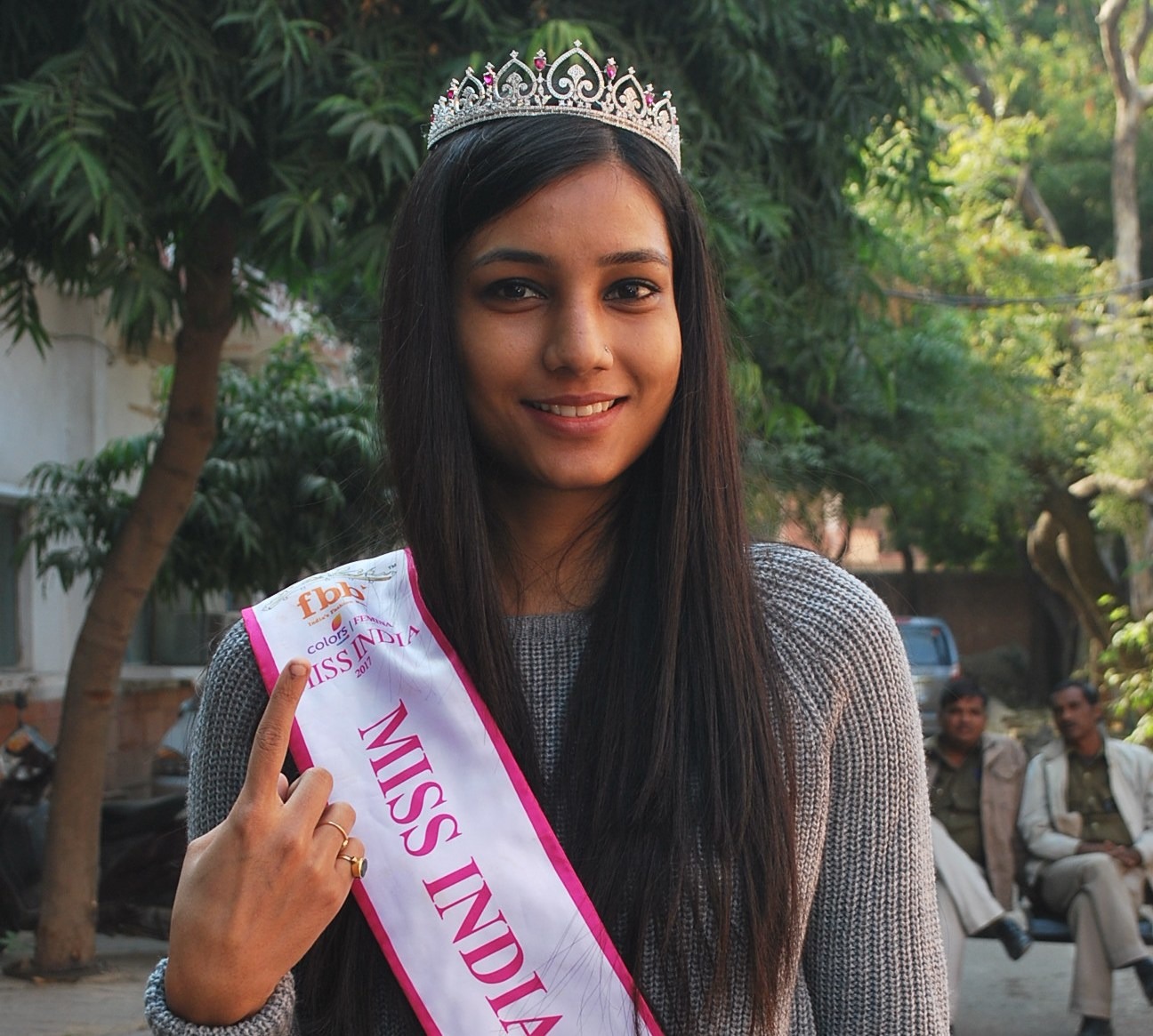
During voting for civic body elections at ward no. 74 here on Wednesday, all eyes were on Shivankita Dixit, a 23-year-old who was crowned Miss West Bengal 2017, who turned up to vote.

Dixit, a resident of Manas Nagar, has been living with her aunt in Kolkata for a year, and had participated and won the contest in that state. She then auditioned for the Miss India contest in Mumbai. She returned to her hometown to vote for the civic body elections.
Wearing tiara on her head, Dixit told TOI, “My vote was for cleanliness. I want the winning candidate to give priority to creating garbage-free localities and clean roads. A clean environment is the first step to a healthy life.”

Apart from cleanliness issue, the local businessman Sanjay Dixit daughter said, “I’m not aware of Agra city, but in my locality, the residents are conservative. They don’t allow their daughters to go out and explore the world. My vote in civic body polls is also important because the mayoral candidate which I have voted for is expected toward empowerment of girls in the city.”

Shivankita Dixit completed her graduation from Dayalbagh University and is the first beautypageant winner from Agra.

source: http://www.timesofindia.indiatimes.com / The Times of India / News> City News> Agra News / by Arvind Chauhan / TNN / November 23rd, 2017

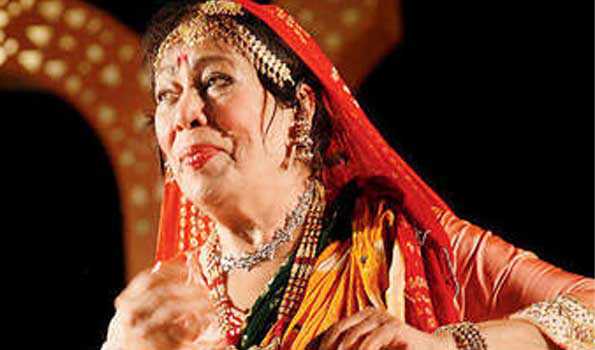
Sitara Devi—still twinkling on Kathak scene

New Delhi (UNI):

On Wednesday, Google marked the 97th birth anniversary of eminent Kathak dancer Sitara Devi with a colourful Doodle.

The online search engine paid tribute to the legendary dancer for her vibrant energy, awesome footwork, and exceptional ability to bring a story to life.

Such was Sitara Devi’s passion for Kathak that even at the ripe age of 94 in 2014, she performed “ada” and “tukras” while sitting in a chair at a Haridas Sangeet Sammelan festival. In between her performances, she took a pill for her heart problem all the while coaxing the audience to make demands of her. “It will make me happy if you demand some tukra or ada from me because all I want to do is dance, dance and dance,” she said.

It is no wonder then, that she was anointed “Nritya Samragini” (Empress of Dance) by none other than Gurudev Rabindranath Tagore after he watched her performance when she was just 16.

Sitara Devi’s exquisite footwork is unparalleled and her adas were legendary. She could at once be coquettish as in “sarakti jaye rukh se naqab ahista ahista” and within seconds be an adoring mother in “thumak chalat ramchandra’’.

The danseuse was born on November 8, 1920 in Calcutta (now Kolkata) around Diwali and named “Dhan Lakshmi”. She was fondly called “Dhanno”. But later, as she spread her wings she came to be known as Sitara Devi.

Soon the family moved to Varanasi. Her father, Sukhdev Maharaj, was a Sanskrit scholar and also a Kathak dancer and musician. He is considered a source of the Benares gharana of Kathak. Her mother Matsya Kumari was related to the royal family of Nepal.

Those were the days when dance was not considered respectable and the sound of `ghungroos’ was related to prostitutes. Thus, Sukhdev Maharaj was forced to move out their residence in Kabir Chaura in Varanasi.

However, Sitara Devi’s fame as a Kathak danseuse spread far and wide. When she was just 13, film maker and dance director Narendra Sharma invited her to Bombay (now Mumbai) to perform in a film. Thereafter she performed in several films including Arzoo, Aurat Ka Dil, Nagina, Phool, Hulchul, Roti and Mughl-e-Azam among others.

Sitara Devi’s closeness to the film industry led her into two marriages with film personalities. She married K Azif of Mughl-e-Azam fame and then Pakistani and Indian Film producer and director Nazir Ahmed Khan. Both the marriages ended in separation and Sitara Devi remained married to her art till the end.

She, however, is credited with introducing the famous Benares gharana of Kathak in the Bombay film industry. She trained top heroines of the day including Madhubala, and Mala Sinha in Kathak.

Sitara Devi performed all over the world including at the Royal Albert Hall, London (1967) and the Carnegie Hall, New York (1976) and worked tirelessly to popularise the dance form.

In a career spanning six decades she was bestowed the Sangeet Natak Akademi Award and Padam Shri.

However, in 2002 she turned down Padam Bhushan saying she deserved the Bharat Ratna.

She said she did not grudge the award of Bharat Ratna to artistes like Ustad Bismillah Khan, Lata Mangeshkar and Pandit Ravi Shankar but she felt she deserved it as well.

The legendary artiste lives on in the hearts of her audiences, her numerous disciples and through her talented daughter Jayantimala Rishika, also a Kathak dancer.

Sitara Devi passed away on November 25, 2014.

UNI GP RSA 1544

source: http://www.uniindia.com / United News of India / Home> Features / by Gargi Parsai / November 13th, 2017

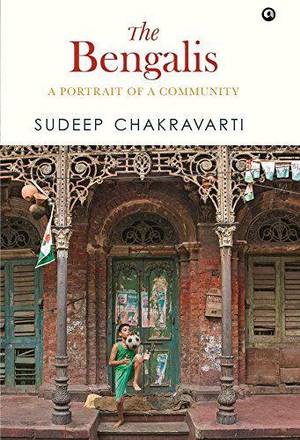
The Bengalis: A Portrait of a Community review: A people and its contradictions

The Bengalis: A Portrait of a Community Sudeep Chakravarti Aleph ₹799

Cataloguing failures and frustrations of Bengalis, their sense of self, culture, and radical and reactionary politics

Portraits of a people are difficult to pull off, unless attempted with love, irony, and aplomb. Sudeep Chakravarti does not fall short on these counts in his whirlwind cultural, social and political history of the Bengalis, a community as notorious for its factiousness, chauvinism, and obstinate perseverance in self-harm as for its tolerance, cosmopolitanism, creativity and intellectual brilliance.

Written with verve, energy, and polish, and drawing on considerable resources, both anecdotal and archival, Chakravarti’s book takes its place beside other contemporary attempts at ‘collective’ portraiture, such as Jeremy Paxman’s The English (1998) and John Hooper’s The Italians (2015). Such attempts frequently founder on the need to both explode myths and sustain them. In The Italians, Hooper quoted Orson Welles’s famous insertion in Graham Greene’s script for The Third Man (1949), to the effect that Italy under the murderous Borgias produced the Renaissance, while five hundred years of democracy in Switzerland produced only the cuckoo clock. Chakravarti is alert to the dangers of such sensationalism, cataloguing Bengal and the Bengalis’ frustrations and failures with as much sympathy and perception as their undeniable record of achievement in the arts and sciences, and in the making of modern India and Bangladesh. The great strength of his account is that it treats the Bengalis, despite their self-imposed divisions, as one people, and accordingly looks at the history of both east and west — that is, both modern West Bengal and Bangladesh.

Literary, other pegs

A sense of history is at the core of this book’s success: the sections I read with most absorption were on the origins of the Bengalis, their mongrel ethnicity, their religious dissensions, their syncreticism and cosmopolitanism, their politics — radical and reactionary — and their formative historical crises, such as the 1943 famine, the Tebhaga land agitation, Partition, Naxalbari, muktijuddho (Bangladesh liberation war) and the birth of a new nation. Chakravarti’s own family, with its roots in East Bengal, and its network of connections across borders and religions, in Bangladesh and India (not to speak of the inevitable diaspora) provides an invaluable anecdotal substratum to the more contemporary passages of this account. So too does the material taken from Chakravarti’s experiences as a reporter, looking especially at Naxalbari and latter-day Maoist insurgency in jangalmahal.

By comparison, the descriptions of gastronomy, literature, cinema and music seem conventional and uninspired — there are the obligatory accounts of the Tagores, of Nazrul, of the modern novelists, of children’s literature, of cinema with its great auteurs, but modern Bengali poets and filmstars are notably absent (no Shakti, no Sunil, no Uttam, no Suchitra). The six Bengali seasons, and the riverine landscape, are poetically noted, but less attention is paid to the physical realities of urban settings and their transformation in the wake of Partition. On the whole these are minor omissions — obviously a single book attempting to portray a community has to leave out almost as much as it includes, or be reduced to the kind of breathless, impressionistic list of ‘Bengali’ attributes that appears on the back cover.

The bhadralok view

But another problem, to which Chakravarti is undoubtedly sensitive, though he fails to resolve it, is that this is very much a bhadralok (‘gentry’) account of the Bengali ‘sense of self’. While Chakravarti is at pains to explain the mixed, overwhelmingly non-Aryan, non-Brahmin and non-Ashrafi composition of the Bengali people, and offers fascinating vignettes of the rise (and fall) of Fazlul Haq’s Krishak Praja Party, as well as of peasant rebellion, religious hatred, and uprisings fuelled by caste and class oppression, the collective ‘subject’ that emerges remains resolutely fixed in its bhadralok status, fenced round by references to art, literature, food and clothes. Given that this species is not only dying, but perhaps already dead in Bengal today, the cultural chronicler needs to break out of the bubble of self-love created by the delusional Bengali gentry, and look more closely at the actual majority of the population. Some unexpected insights might have resulted from such a study, though it is also true that the aura — or miasma — of bhadralok culture is hard to dismiss in its entirety.

In a sense, the Bengalis are what they believe themselves to be, and their aspirations are closely identified with the image of itself that an educated, upwardly mobile class started peddling to the world from around the 19th century onwards. History is cruel to such delusions, and Chakravarti records with sympathy and intelligence the enormous traumas produced by cataclysms like the famine, Partition, peasant uprisings and labour unrest. But what of those labouring masses, those refugees and small entrepreneurs, shopkeepers and vegetable sellers, hustlers and dealers, farmers and craftspersons, first generation schoolgoers and dropouts? They are Bengalis too, but not as easily identified by the cultural clichés common in Bengali bhadralok parlance (Rabindrasangeet, film clubs, fine cooking, literature, and so on). To do Chakravarti justice, he is unremittingly aware of these cracks in the Bengali self-portrait, and his account is politically aware and historically faithful, even though he never quite makes the (very Bengali) transition from amra to ora, ‘we’ to ‘they’.

The Bengalis: A Portrait of a Community; Sudeep Chakravarti, Aleph, ₹799.

source: http://www.thehindu.com / The Hindu / Home> Books> Review / by Supriya Chaudhuri / November 18th, 2017

Danish tavern decked up to start second innings in Serampore

Kolkata :

The double-storey Denmark Tavern, which was in a shambles till a couple of years ago, will soon turn into a lifestyle stay. The edifice on the banks of the Hooghly in Serampore will be Bengal’s second government-backed live-and-conserve endeavour after the St Olav’s Church project, which was restored last year and is in back in use for prayers and religious ceremonies.

Come February and CM Mamata Banerjee will open the doors of Denmark Tavern that has risen out of debris after being painstakingly restored by the National Museum of Denmark (NMD) in tandem with the West Bengal Heritage Commission. The NMD has funded the Rs 3.5-crore restoration and the state tourism department is paying another Rs 1.2 crore for the finishing. It will be running the cafe-by-the-river, which will have six overnight-stay rooms.

The Serampore riverfront, which looked picture perfect during the Danish rule, fell on bad times and the majestic structures were left to rot for decades. In 2012, things started changing with Serampore Initiative, the grand revival of the former Danish colony. The Denmark Tavern restoration is part of the big plans to bring back the old glory of the former Danish colony.

“We are extremely excited about the completion of the Denmark Tavern, which was the most challenging of the restoration work we have done in Serampore,” Bente Wolff, curator, National Museum of Denmark, told TOI from Copenhagen. Over last several months, Wolff has been flying in and out of Serampore to supervise the restoration work.

“This is the first public-private partnership in the heritage sector at this scale. This will give a fillip to the CM’s pet project of river cruise linking all the heritage towns along the Hooghly,” said Manish Chakraborti, the project’s conservation architect
Clearing the morass and rescuing the tavern was the most formidable task ever, said Suvaprasanna, chairman of the commission. “The challenge was in connecting history with architecture. For instance, the exact location of the tavern was not known. Finally, we found documents showing it was next to the SDO’s residence. It took one-and-a-half months to clear the debris,” he said.

“Denmark’s interest in reviving the remnants of the buildings first started in 2008 at the ethnographic department of the National Museum of Denmark,” added commission member Partha Ranjan Das. Archival and field studies were carried out between November 2008 and April 2009 by restoration architect Flemming Aalund and historian Simon Ranten, who produced an elaborate, report.

source: http://www.timesofindia.indiatimes.com / The Times of India / News> City News> Kolkata News / by Ajanta Chakraborty / TNN / November 21st, 2017

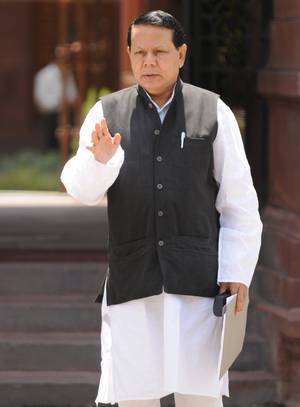
Veteran Congress leader Priya Ranjan Dasmunsi passes away

Priya Ranjan Dasmunsi

He had been in coma since 2008.

Senior Congress leader and former Union Minister Priya Ranjan Dasmunsi passed away on Monday at a private hospital in New Delhi. He was 72.

Mr. Dasmunsi suffered a massive stroke and paralysis in October 2008 and slipped to comatose. He was treated in Apollo Hospital in New Delhi since 2009. “He breathed his last at 12:10 pm. He developed chest infection last month and it worsened his condition,” sources in the hospital said.

“I just received the news of sad demise of former Union Minister, former West Bengal Pradesh Congress Committee President and our beloved leader Priya Ranjan Dasmunsi,” State Congress president Adhir Ranjan Chowdhury stated in a letter to Congress president Sonia Gandhi.

“Our deepest condolences on the passing of respected Priya Ranjan Dasmunsi, our veteran Congress leader and former union minister. He will be greatly remembered for his contributions, especially to Indian Football,” @INCIndia, the official Twitter account of the Congress tweeted.

Mr. Dasmunsi served as the president of the All India Football Federation for nearly two deacdes. A West Bengal strongman, he represented Raiganj from 1999 till he fell ill. He was the I&B Minister during Monmohan Singh-led United Progressive Alliance government. It was during his term Fashion TV was briefly banned for showing “obscene” content.

Mr. Dasmunsi was the West Bengal State Congress president from 1970 to 1971.

He is survived by wife Deepa, a Congress politician, and son Priyadeep.

source: http://www.thehindu.com / The Hindu / Home> News> States> Other States / by Staff Reporter / Kolkata – November 20th, 2017

Kolkata hosts conference and live workshop on colorectal diseases

Kolkata:

The next few days the city will witness a series of brain storming session on the updates, insights and latest treatment modalities on colorectal diseases. Colorectal surgeons, gastroenterologists, radiologists, and oncologists from across the globe have already arrived in Kolkata to exchange knowledge and through hands-on workshop and conference. Organised by CK Birla Hospitals – CMRI, Gastrocon was flagged off on Friday.

“We are increasingly seeing diseases that were relatively uncommon in the past. Colorectal diseases are one such spectrum, where doctors have had to evolve in their knowledge to cope with increasing demands. This conference attempts to gather doctors from different disciplines under one roof to try and provide a holistic approach to colorectal diseases,” said Dr. Sanjay De Bakshi, Senior Consultant.

The third most common malignancy across the world is colon cancer. It accounts for nearly 1.4 million new cases and 6, 94,000 deaths per year. The high incidence rate is possibly due to the modern lifestyle and unhealthy diet. Through Gastrocon the hospitals also aims to create awareness about the disease available diagnostic and treatment options.

“As we are a research oriented institute we are continuously deliberating and coming out with the best possible solutions for our patients. With Gastrocon, we aim to create a common platform of knowledge sharing between the medical community and our patients where we intend to spread awareness and in turn educate them on how to deal with all kinds of colorectal diseases,” said Uttam Bose, CEO. CK Birla Hospitals – CMRI.

source: http://www.timesofindia.indiatimes.com / The Times of India / News> City News> Kolkata News / by Sumati Yengkhom /TNN / November 17th, 2017

The Indian in the Yasukuni Shrine

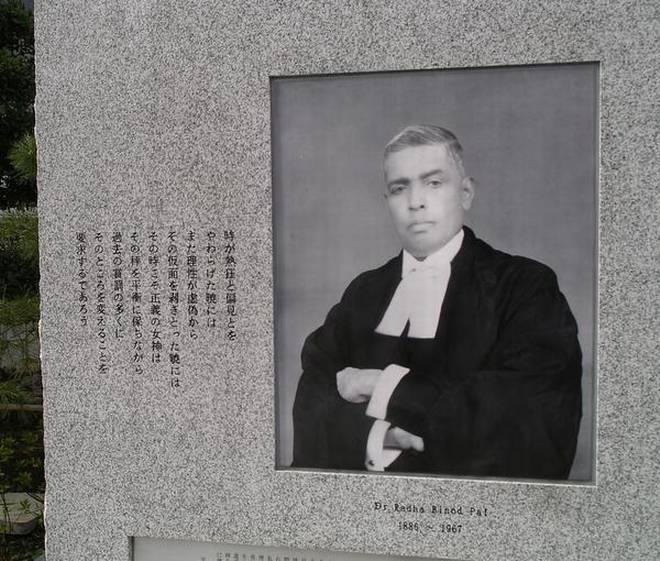
Plaque in Yasukuni Shrine, northwest of Tokyo’s imperial palace, features a large black and white photograph of an Indian judge: Radha Binod Pal (1886-1967).

To the northwest of Tokyo’s imperial palace, the Yasukuni Shrine is a 148-year old complex of memorials and cherry tree-dotted grounds, commemorating those who died in the service of Japan between 1869 and 1947.

It has emerged as the symbol of Japan’s fraught relations with its neighbouring countries and its own uncomfortable relationship with its Second World War history. Among the two million people buried there are 1,068 convicted war criminals. Fourteen of these are categorised as ‘Class A’ criminals, found guilty of a special category of “crimes against peace and humanity” by the 11-member team of justices from Allied countries that made up the 1946 Tokyo War Crimes Tribunal.

Visits to Yasukuni by senior Japanese politicians are viewed by neighbouring countries, in particular China and South Korea, as provocations, tantamount to a denial of war crimes. Japanese nationalists believe Yasukuni visits to be a justified exercise of sovereignty, indicating a moving on from what they consider to be an overly apologetic stance to the war. On the day this correspondent visited, there were scant traces of these bitter recriminations. A series of memorials dedicated to military horses, pigeon carriers and dogs charmed camera-wielding tourists. But the plaque attracting the tightest knots of visitors featured a large black and white photograph of an Indian judge: Radha Binod Pal.

In Japan, this Bengali jurist elicits the kind of recognition and reverence that other countries reserve for the likes of Mahatma Gandhi and Rabindranath Tagore. Biographical mini series about the judge are aired on Japanese TV, memorials to him have been erected in Tokyo and Kyoto, and books debating his legacy are published every few years. The average Indian would be hard-pressed to identify Justice Pal at all. Until the war, he was best known for his contributions to the Indian Income Tax Act, 1922. His international profile comes from his participation in, and eventual dissent from, the Tokyo War Crimes Tribunal.

Twenty-five of Japan’s top wartime leaders were convicted by the tribunal of the new category of ‘Class A’ charges. Going against the grain of Allied judgment, Pal issued a 1,235-page dissent in which he rejected the creation of the ‘Class A’ category as ex post facto law. He further slammed the trials as the “sham employment of legal process for the satisfaction of a thirst for revenge”. And he argued that the nuclear incineration of Hiroshima and Nagasaki should also be counted as major war crimes.

Procedural flaws

The Indian judge tends to be valorised by Japanese nationalists and historical revisionists who seek to deny Japan’s wartime culpability. But in fact the jurist did not absolve Japan. His intention was rather to highlight the flaws in the legal process of the trial. Since all the judges were appointed by victor nations, the Indian justice thought the trial to be biased and motivated by revenge.

In his 2007 book on Pal, Takashi Nakajima, an Associate Professor at Hokkaido University’s Public Policy School, criticises right-wing supporters of Pal for relying on out-of-context quotes from the dissenting judgment. Pal’s dissent ran to a quarter of a million words, but Prof. Nakajima says that only a handful of quotes tend to be used by historical revisionists as ballast for their agenda.

Back at the shrine, a Japanese tourist gazed at the Pal memorial, silently mouthing the words written on the plaque: “When Time shall have softened passion and prejudice… then Justice, holding evenly her scales, will require much of past censure and praise to change places.”

(Pallavi Aiyar is an author and journalist based in Tokyo)

source: http://www.thehindu.com / The Hindu / Home> News> Tokyo Despatch – International / Pallavi Aiyar / November 18th, 2017