All posts by wellnmed@gmail.com

Doc with city roots a star author in Britain

London:

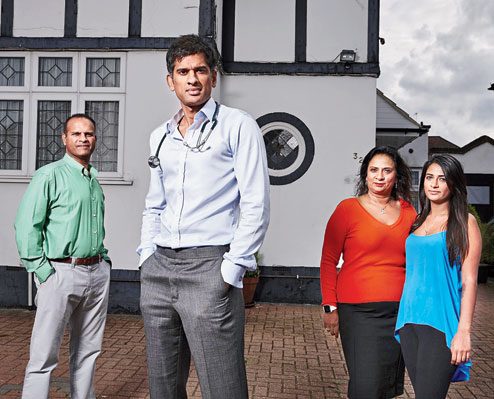
Who is Rangan Chaterjee and why has he suddenly become just about the most famous doctor in Britain – a bit of a heart throb, actually?

For starters, Chatterjee, son of a doctor, Tarun Chatterjee, who came to England from Calcutta in the 1960s, has written a book, The 4 Pillar Plan: How to Relax, Eat, Move and Sleep Your Way to a Longer, Healthier Life, which is now No. 1 on Amazon UK.

“I am a Bengali boy and this book will have special appeal for Bengalis who tend to eat late at night,” Chatterjee told The Telegraph, as he remembered frequent Calcutta holidays at his father’s home in Shyambazar and his mother Bandana’s in Chetla.

Chatterjee, who has been interviewed by BBC News, The Daily Telegraph, the Daily Mail, the Daily Express and elsewhere, appears to have struck a chord by focusing “on finding the root cause of diseases and helping my patients make their illnesses disappear”.

“The handsome 40-year-old father-of-two, star of BBC One’s Doctor in the House, is at the forefront of a new generation of social-media-savvy medics,” wrote one interviewer about the 6ft 6in tall doctor who lives in Wilmslow, Cheshire, with his Gujarati wife, Vidhaata, a criminal barrister, and their children, aged seven and five.

Based on his “experiences serving as a doctor for nearly 20 years”, Chatterjee, MBChB, BSc (Hons), MRCP, MRCGP, says that his “book goes beyond the sort of health advice we’ve all been reading about for so long – beyond the fad diets and the quick fix exercise programmes”.

His plan has been endorsed by, among others. Celebrity chef Jamie Oliver, who believes “Rangan’s easy, common-sense plan can help everyone live a happier, healthier life”.

Two events have shaped Chatterjee’s life – one was caring for his father who died five years ago. He was a consultant at Manchester Royal Infirmary, “a first-generation immigrant, who worked and worked and worked”.

Even more traumatic was the near death of his infant son who was diagnosed with “an easily rectified calcium deficiency”.

With a sensible diet, exercise and meditation, Chatterjee says: “I have routinely helped my patients reverse type 2 diabetes; eliminate irritable bowel syndrome; lower blood pressure without drugs; reduce menopausal symptoms naturally; sleep better and regain their energy; regain control of their autoimmune conditions; restore harmony to their circadian rhythms; add life to their years, as well as years to their life.”

source: http://www.telegraphindia.com / The Telegraph, Calcutta,India / Home> Calcutta / by Amit Roy / January 03rd, 2018
Gratitude to genius behind Boson

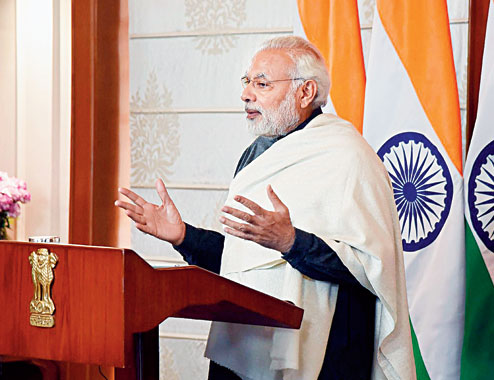
Prime Minister Narendra Modi pays tribute to S.N. Bose (below) on his 125th birth anniversary
via video-conferencing from New Delhi on Monday. (PTI)

Calcutta:

Physics was his calling but he could play a complex classical raga on the esraj with as much dexterity as he could read out a French novel in impromptu English translation.

Stories highlighting the multifaceted genius of Satyendra Nath Bose, after whom the Boson particle is named, on Monday filled the curtain-raiser to a yearlong commemoration of his 125th birth anniversary.

Prime Minister Narendra Modi inaugurated the event from Delhi through video-conferencing, reminding the audience at the SN Bose National Centre for Basic Sciences in Salt Lake that “just as a quantum particle does not exist in isolation, we should also get out of isolation”.

Modi said the scientific ecosystem needed to connect with innovators, entrepreneurs and technocrats to work on artificial intelligence, big data analytics, machine learning, genomics and electrical vehicles. “These are some of the rising technologies on which we need to get ahead,” he pointed out, holding up Bose as the inspiration to test new frontiers.

Born on January 1, 1894, Bose had collaborated with Albert Einstein to create what came to be called the “Bose-Einstein Condensation”. Physicist and author Partha Ghose, who did his PhD under Bose, recounted one among many instances of how humble he could be despite his brilliance.

“He was in a reflective mood one day and spoke about the ‘photon spin’ aspect in his derivation of Planck’s law. But then, with a mischievous smile, he said, “But the old man (Einstein) struck it off”.

Ghose said the anecdote left him flabbergasted because Nobel laureate C.V. Raman’s research later vindicated Bose’s derivation.

“When I asked him why he didn’t claim credit for his discovery, he said, ” Ki ba eshe gelo? Ke baar korechhilo tatey ki eshe jaye? Baar to hoyechhilo (How does it matter? Who discovered it is not the main thing, is it? At least it was discovered)’,” he reminisced.

Planck’s law is the basis of quantum theory.

In his speech, the Prime Minister said many Nobel prizes had been won for work based on Bose’s research.

Union science and technology minister Harsh Vardhan also paid tribute to Bose.

source: http://www.telegraphindia.com / The Telegraph, Calcutta,India / Home> Calcutta / by Anasuya Basu / January 02nd, 2018

City girl on a roll in New York

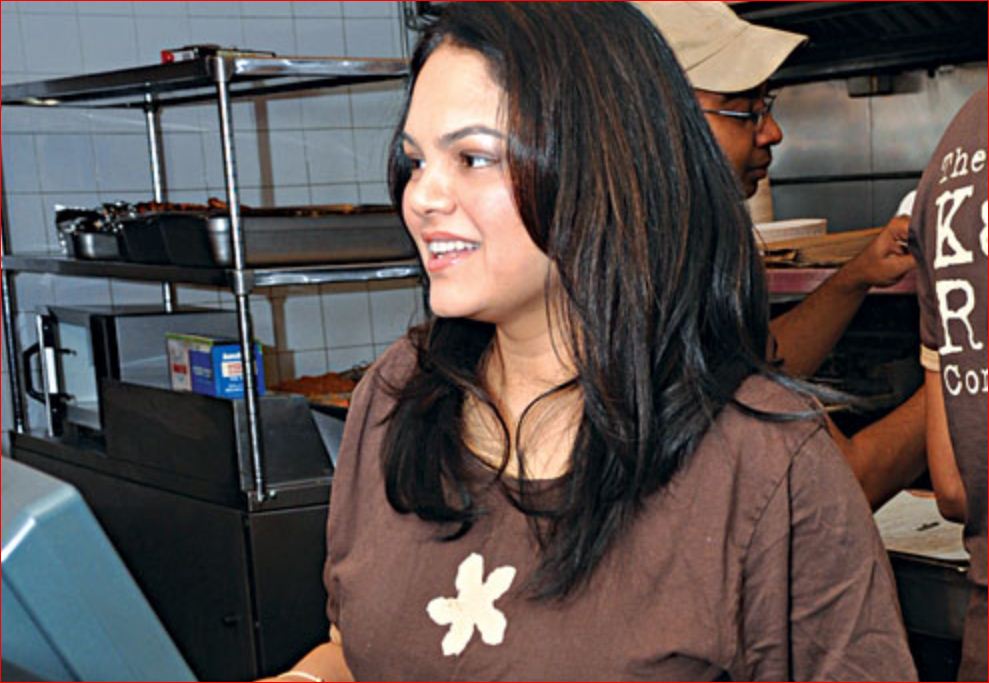
An outlet of The Kati Roll Company, which has branches in New York and London

Calcutta:

The Calcutta girl who makes “the next best wrap after Pashmina” rolled out her sixth kati roll shop in New York in November and has another one lined up in March.

Payal Saha, who comes from a music family that runs Hindusthan Records of 1932 vintage, has five stores serving up kati rolls in Manhattan New York , where she is based, and a solo near Oxford Street in London.

The newest store of The Kati Roll Company opened at Grand Central in New York and the earlier ones are at Greenwich Village, East Village, Midtown West and Midtown East.

Daughter of a college professor and an entrepreneur, Payal perhaps had it in her blood to excel in business. Both her grandfathers were entrepreneurs, she said over an email chat from New York.

Payal’s paternal grandfather founded Hindusthan Records after training in Germany. “He travelled through India looking for regional content from the brothels of Varanasi, recording recitals by baijis to Bade Ghulam Ali and Debabrata Biswas,” she said. The Akrur Dutta Lane studio of Hindusthan Records was inaugurated by Tagore where he also recorded his songs.

Payal Saha

Her maternal grandfather jumped ship on Staten Island as an illegal immigrant in NYC and went on to become a chemical engineer from New York University before returning to Calcutta to open a paint factory.

The first store of Kati Roll Company opened in 2002 and soon became a raging trend for “fast casual dining” in New York. It has been widely covered in the American and London press, including The New York Times and BBC America. “After 15 years we still have snaking queues and on weekend nights we need bouncers to manage the rush. Last year, we sold over a million rolls,” Payal said. The bestseller: Chicken Tikka Roll with Achari Paneer a close second.

The decor at her stores is very street and Bollywood with film posters and a rugged charm.

Payal studied at Loreto House before moving to Lawrence School in Ooty for her PLus II and Jesus and Mary College in New Delhi for her graduation. She left for New York in 2000. “My husband (Anil Bathwal) was working in advertising and found a job in New York,” she said.

While Payal missed her Calcutta food, it was the kati roll that she most yearned for. Her personal favourite: Golden Spoon on Middleton Row near her school. “I also like the rolls at Stop and Go near Ballygunge Phanri,” she added.

Soon, Payal started experimenting with recipes and came up with The Kati Roll Company. On her next visit to Calcutta, she visited as many roll shops as she could – from Anamika in New Alipore to Badshah in New Market. She also gained some hands-on experience at a kati roll shop run by a Bengali in Mumbai. “I was determined to make it taste like the best of Calcutta rolls, if not better,” she said.

In the early days, Payal made everything on her own, with just one helper. “We would grind the spices, make the parathas and marinate the fillings. It was a lot of work.”

With several shops under her wings, operations stabilised and a baby to take care of, she now depends more on her “capable managers”.

The core menu is authentic kati roll but for healthy eating, she offers chapatti instead of paratha. Recently, Payal started a line of flavoured lassi with organic yogurt. Mango Lassi and Mishti Doi Lassi made with patali gur are among the top picks.

Her one earnest wish: Bengal should apply for a GI tag for the kati roll.

source: http://www.telegraphindia.com / The Telegraph, Calcutta,India / Home> Calcutta / by Anusuya Basu / January 02nd, 2018

Dooars fest set to roll today

Alipurduar:

The Biswa Dooars Utsav will commence from Friday at Alipurduar Parade Ground and singers from neighbouring countries will perform at the event.

Singers from Bangladesh, Nepal, Bhutan will perform at the 14th Dooars Utsav, sources said.

Sourav Chakraborty, MLA Alipurduar, as well as General Secretary of Dooars Utsav Committee, said: ” This is the first time singers from Bangladesh, Bhutan, Nepal are coming this year to attend Dooars Utsav. Almost 6,000 artistes across the state will participate in different cultural activities.”

“The Utsav will start tomorrow and end on 7th January. The Utsav is organised to promote Dooars among the people of the country. Every evening eminent singer from Calcutta and Mumbai will perform on the main stage of the Utsav. On the last day, Kumar Sanu will perform,” Chakraborty added.

There are three stages in the Utsav Ground which is known as Parade Ground in the town. One is main stage where the main programmes will be held. Another stage is set for the children’s performance while the third stage is made where the folk artists will perform. This is the first time several troops from different communities will perform during 10 days of the Utsav. There are people belong to Limbu, Rava, Mech, Garo, Asur, Santal, Adibashi communities. Troops of Dukpa community in Buxa hill will also perform. Different troops from Forest Villages and tea gardens will participate actively in the Utsav.

Chakroborty added that almost 200 stalls will be there in the Utsav. Arrangements for children amusement will be there. Stalls are also coming from Bangladesh, Bhutan and Nepal.

This is the first time sports has been added in the Utsav. Badminton, Cricket, Marathon are added. Games will be held on 30th and 31st December in the parade ground. Senior renowned artists across the North Bengal will also be felicitated during Utsav. Tourists coming to Alipurduar town will be taken to forest and Phuentsholling by the Utsav Committee free of cost.

source: http://www.telegraphindia.com / The Telegraph, Calcutta,India / Home> West Bengal / by Anirban Chaudhury / December 29th, 2017

Girl who refused to bow before ordeals – Archer from Bengal shines

Salt Lake:

An archer once hailed as a child prodigy but forced to move out of Bengal for want of opportunities was part of the Indian women’s trio that struck gold in last month’s Asian Championship in Dhaka.

Trisha Deb, 26, has seen several ups and downs in her 17-year-old career. Daughter of an errand runner and a tuition teacher, Trina’s first sophisticated bow came in 2004 as part of a scheme for budding players.

Her journey began at the Baranagar Archery Club, the cradle of such archers as Banerjee siblings Dola and Rahul. “The club is right next to my maternal grandparents’ home, where my mother would leave me when she went to give private tuitions,” Trisha told Metro.

The first laurel came in 2004 when Trisha won gold in the sub-junior national championships in Delhi. An encore followed in Ajmer the next year. It was her bronze in the senior nationals at age 14 that turned heads.

But Trisha’s performance graph took a sudden plunge thereon. “Archery is an expensive sport. A standard bow needs refurbishment every couple of years. My parents tried their best but it was too much for them,” she said.

Trisha had applied for admission to the famed Tata Archery Academy, Jamshedpur, in 2006 but was rejected because of her height.

The next few years were the worst in Trisha’s career. “I was not even selected for the nationals from the state. I was shattered mentally,” she said.

Fortune smiled on Trisha in the form of a residential programme for archers at Punjabi University, Patiala, in 2011. Her mother was jittery about letting her shift base but Trisha was determined not to give up sports.

In Patiala, Trisha met Jiwanjot Singh Teja, a coach at Punjabi University. Teja advised her to shift to compound archery from recurve because of her short height.

A recurve bow gets its name from reverse curves at the end. Compound bows, on the other hand, use a pulley system that takes strain off of the bow, making it easier to shoot.

A year later, Trisha won the All-India Inter-University Archery Championship and in 2013 she made it to the Indian team for compound archery.

Trisha was part of the Indian team that won bronze at the World Cup in 2013 in Shanghai. Her best came the year after with a bronze in the compound women’s individual event at the Asian Games in Incheon, South Korea. It also bagged her a railway job.

Now the sole earning member of her family after her father’s death last year, Trisha refuses to give up her passion.

Her reward came when she, along with Parveena and Jyothi Surekha, won gold in Dhaka by beating the team from Korea. She was on the verge of tears when she heard the national anthem playing as she took the podium.

“I am not growing younger. But I am in good shape and want to carry on as long as I can,” said Trisha, who has set her sights on the Asian Games 2018, to be held in Jakarta.

source: http://www.telegraphindia.com / The Telegraph, Calcutta,India / by Debraj Mitra / December 30th, 2017

CSIR develops ‘solar tree’ that can light 5 houses

A CSIR laboratory in West Bengal has designed a ‘solar power tree’ that takes up only four square feet of space and produces about three kilowatts (kW) of power, enough to power about five households.

“The challenge was to come up with a design so as to generate more solar power in less land space,” Sibnath Maity, chief scientist at the Central Mechanical Engineering Research Institute (CMERI) in Durgapur, which developed the “tree”, told IANS.

“For one mW of power, one needs five acres of land. To generate 10,000 mW we would need 50,000 acres. Now this poses a dilemma in states like West Bengal and Bihar,” Mr. Maity said.

The “solar tree” was inaugurated on Tuesday by Union Science and Technology Minister Harsh Vardhan during his maiden visit to the CMERI, which is a constituent of the Council of Scientific and Industrial Research (CSIR).

Mr. Maity said one conventional solar photovoltaic system of five kW requires 400 square feet of area.

The three kW solar power tree resembles a tree with branches at different tiers and could be squeezed on rooftops and highways with a space requirement of around four square feet.

“The branches hold up the 30 photovoltaic panels and the system costs around Rs.3 lakh with battery back-up,” Mr. Maity said.

Two solar power trees would be installed at the office at Harsh Vardhan’s bungalow according to the Minister’s request, said Mr. Maity.

Harsh Vardhan also inaugurated the ‘Control Container’ developed by the CMERI for lake and sea trial of ‘Remotely Operated Vehicle (ROV)’.

“I happily took part in live demonstration of the tractors developed by CSIR-CMERI by being literally in the driver’s seat and actually driving one vehicle,” the Minister posted on his official facebook page.

“I lauded the contribution of the institute in Green Revolution with its immensely successful technological achievements — the ‘Swaraj Tractor’ followed by the ‘Sonalika’ and the ‘Krishi Shakti’ I also drove the ‘e-rickshaw’ developed by the institute with great enthusiasm,” Harsh Vardhan added. – IANS


“Challenge was to come up with a design to generate more solar power in less land space”

source: http://www.thehindu.com / The Hindu / Home> News> Cities> Kolkata / IANS / Kolkata – May 21st, 2016

Kolkata artist’s paintings stamp their authority in Germany

Kolkata :

German postal service Deutsche Post AG has issued two postage stamps featuring paintings by an artist from Kolkata.

Sudip Chatterjee, who passed out of the Indian College of Art & Draftsmanship in 1986 after graduating in science from University of Calcutta, was pleasantly surprised when he received a mail from the Deutsche Post headquarters in Bonn, seeking his approval to use two of his paintings in postal stamps. Each stamp is priced 1.45 euro.

Awarded senior fellowship by HRD ministry for 2016-18, Chatterjee was in Germany for an exhibition at Galerie Sabine Neubuhr from May 30 to June 19. He is again due to visit Germany next year for an exhibition at Gallerie Stauferland at Goppingen near Stuttgart from May 31 to June 17.

Chatterjee association with Germany goes back two decades. In 1998-99, he was an artist in residence at the Kuntseminar Freie Hochschule in Metzingen, Germany, and has done several shows in Stuttgart and Berlin, apart from Paris, Mumbai, Delhi and Kolkata.

His Paintings are part of the collection at the National Gallery of Modern Art, Roopankar Museum, Bharat Bhawan and other private and public collections in India, Germany, France, UK, Finland, Austria, Canada and the US.

source: http://www.timesofindia.indiatimes.com / The Times of India / News> City News> Kolkata News / TNN / December 28th, 2017

Drone duo soar in start-up dream Army and city police place orders

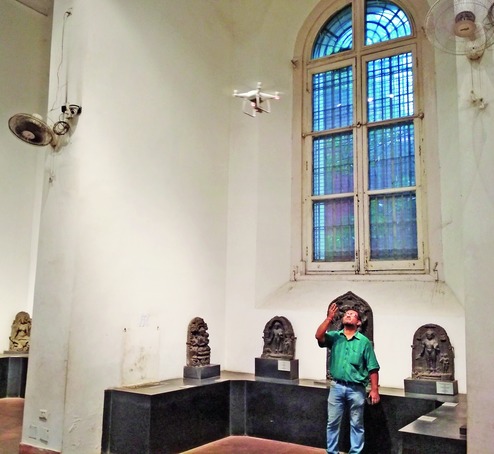
A drone from RC Hobbytech Solutions Pvt Ltd being tested at the Indian Museum

Calcutta:

A start-up born out of a career setback has started soaring on the rotor blades of drones.

RC Hobbytech Solutions Pvt Ltd, started by two friends, specialises in building unmanned aerial vehicles, commonly known as drones, and has already bagged orders from the Indian Army, the railways and Calcutta police, among others.

Flooded with contracts, the fledgling start-up is servicing these orders with a soft loan from IIM Calcutta, project-based finance from banks and the Rs 1.5 crore it won in a competition launched by Balmer Lawrie under the Startup India scheme in November.

For co-founder Biswajit Dey, a graduate in aeronautical engineering from St Peter’s University in Chennai, RC Hobbytech was a seed sown by the disappointment of missing out on a chance to join the Army Aviation Corps because of an accident that put him in hospital for three-and-a-half months.

A dejected Biswajit came to Calcutta to meet his school friend Ritesh Kanu, who had just graduated in business management from Techno India Salt Lake and was to appear for an interview at the RBI.

Ritesh didn’t go for the interview. Instead, he and Biswajit decided to launch their start-up.

“I liked making drones and fiddling with them while Ritesh was trained to market them. That made us a good team,” said Biswajit, who learnt the basics of drone technology in college. “There is a huge market for unmanned aerial vehicles in agriculture, surveillance and mining,” said Ritesh.

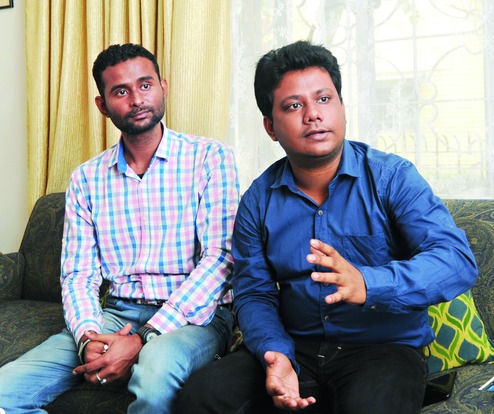
Co-founders of RC Hobbytech Solutions Pvt Ltd Biswajit Dey and (right) Ritesh Kanu.
Picture by Sanat Kr Sinha

RC Hobbytech is working on drone technology to replace the army’s system of detecting intruders along the country’s vast borders. “The army sets up poles with two free-hanging bottles to detect intruders. Whenever an infiltrator tries to cross a border fence, the bottles make a noise and alert the sentries at the forward post. They have electric fences but the wiring can be cut and the alarm system switched off,” Ritesh said.

The start-up’s Drones Tech Lab division has devised an Intruder Detection System based on GPS for the army. The system sends alerts to the forward post and control room in three seconds whenever an intruder is detected. The information includes the exact position of the suspected infiltrator.

“Our system is based on sensors and also sends messages over mobile phone, giving the correct location,” said Biswajit.

A pilot run of the system at Udhampur in Kashmir from March to April earned a letter of appreciation from the army, Biswajit said.

He is currently modifying the system to give it an industrial finish along with camouflage.

From a drone start-up, Biswajit and Ritesh are now a “solutions provider in surveillance industry, leveraging unmanned technology and integrating hardware, software and data analysis”.

They had started with a capital of Rs 4 lakh in 2014 and ended up burning the cash in a year. When their families started asking what they were up to, the duo stopped going home. They then floated a company called EduRade to teach drone technology in institutes and raise money. “It was in 2016 that we pitched for incubation at IIM Calcutta. We met Subhranghshu Sanyal, CEO of the IIMC Innovation Park, at an event and he liked our product. We were incubated in October 2016,” Biswajit recalled.

Sanyal is impressed with what the duo have done so far. “They are providing real-time solutions to problems that are quite risky for human beings to solve. Their work for the army takes risk away and improves accuracy, which is fantastic,” he said.

source: http://www.telegraphindia.com / The Telegraph, Calcutta,India / Home> Calcutta / by Anasuiya Basu / December 28th, 2017

City girl under Gopi’s wing

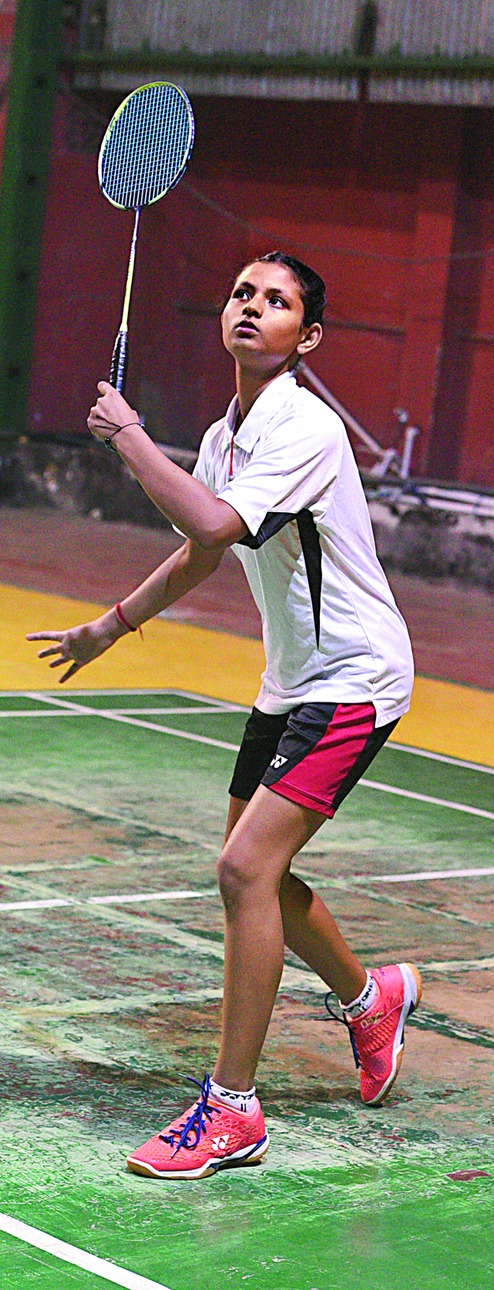
Shreya Tiwari at a practice session at Park Circus Byam Samiti. (Rashbehari Das)

Calcutta:

She is just 13 and has reached some milestones that teens at her age can hardly imagine.

Meet Shreya Tiwari, a Class VIII student of Indira Academy, who recently won an under-15 state badminton championship in Raiganj and reached semis of another under-15 state-level tournament in Durgapur. She has been training under Pullela Gopichand, the Dronacharya of Indian badminton for the past one and half years.

Shreya started playing the game six years ago as her father felt she must engage in a sport to stay fit. “Just a few days after she started training under coach Tapas Biswas at Park Circus Byam Samiti, the coach called me up and told me ‘she has a great potential, she will surely play for India’. Shreya also fell in love with the game soon after joining the coaching centre,” said Sanjay Tiwari, the father, who is the founder-principal of Indira Academy.

Shreya, a big fan of Srikanth Kidambi, started playing district-level tournaments in 2012 and just after a couple of years of playing at district level, she started playing at state and national level. “Shreya is very sincere and passionate about her game. She is a fast learner. She started winning state-level tournaments at the age of nine, which is really commendable,” said coach Biswas.

source: http://www.telegraphindia.com / The Telegraph, Calcutta,India / Home> Calcutta / by Ayan Paul / December 27th, 2017

Besties bring gold for Bengal Rowing duo may move out for better facilities

Shreya Iyer and (right) Aishwarya Krishnan

Rabindra Sarobar:

A pair of childhood best friends whose special bond extends to competitive rowing have just fulfilled their dream of becoming national champions.

Aishwarya Krishnan, 19, and Shreya Iyer, 20, together won Bengal’s only gold medal in the Senior National Championships in Pune from December 6 to 11. The duo defeated Chandigarh and Odisha in the 500m women’s double sculls with a timing of 1:43.5.

Metro had highlighted the girls’ journey through friendship and rowing on February 6 after they won a silver medal in the same event of the previous national championships.

“The Odisha team had Asian medallists. Beating them to win gold this time was extra special,” said Aishwarya, who is studying in St. Xavier’s College.

Since becoming partners in double sculls in 2015, the two of them have won several tournaments but losing to Odisha in the Bhopal championships had hurt.

The night before the rematch, Shreya lost count of the number of times she woke up. “I was super pumped up, all adrenaline!” Shreya, who is in Loreto College, recounted.

Aishwarya said her mind was blank. “I just wanted to give 100 per cent.”

On December 10, the Bengal duo led from start to finish. The celebrations were briefly halted by Aishwarya throwing up – she blames it on one egg too many for breakfast – but the pair later took the Bengal contingent out for a pizza lunch.

What clicks for the pair is their chemistry. “I can go all out for her and she for me. What you need in a team game comes to us naturally,” said Shreya, who also loves to play the violin.

Their next target? Doing well in 2000m events.

They are considering moving out of Bengal because it lacks a water strip for 2,000m practice.

source: http://www.telegraphindia.com / The Telegraph, Calcutta,India / Home> Calcutta / by Debraj Mitra / December 27th, 2017