All posts by wellnmed@gmail.com
12
11th
IICB uncovers molecular mechanism of stress-induced gastric ulcer
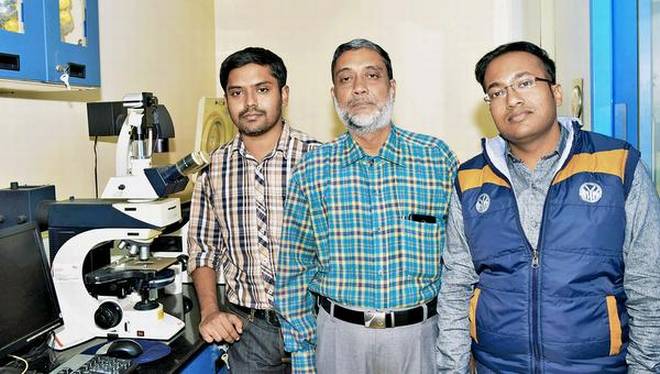
The link between mitochondria in the stomach and the brain was found using rats
Researchers at Kolkata’s CSIR-Indian Institute of Chemical Biology (CSIR-IICB) have for the first time identified the molecular mechanism by which acute mental stress affects the stomach causing gastric ulcer or stress-related mucosal disease. Using a rat model subjected to cold-restrained stress, the research team led by Uday Bandyopadhyay from the Division of Infectious Diseases and Immunology at IICB has used drugs that can act specifically on mitochondria present in the stomach to prevent gastric ulcer caused by stress.
When subjected to stress, the mitochondrial respiratory capacity was disrupted, ATP production was reduced and oxidative stress increased. Stress also causes morphological changes to the mitochondria such as increased fragmentation. The results of the study were published in the journal Free Radical Biology and Medicine.
“Due to oxidative stress and fragmentation, the mitochondria in the gastric mucosal lining cannot behave in a normal fashion and ATP production gets further compromised. In the absence of ATP production, cells cannot proliferate and the gastric lining gets thinner due to mucosal cell death. All these cause stress-induced gastric ulcer,” explains Dr. Bandyopadhyay. “This is the first time we could find a link between the mind and mitochondria in the stomach. It is very exciting and fascinating.”
Second brain
The stomach is one of the organs most severely affected by stress and this is due to the link between the stomach and the brain. Moreover, the stomach is also known as the body’s second brain with a specialised neural network, repository of neurotransmitters and different kinds of nerve cells innervating the organ, though fewer in number.
Plenty of corticosterone was released into the blood when the animals were subjected to stress. Once corticosterone gets inside mitochondria it reduces ATP production and respiration capacity. By using a drug that prevents corticosterone from binding to the receptor found inside the cell, the researchers were able to significantly prevent stomach injury in the animals.
Interestingly, some common psychoactive drugs used in the study helped in preventing the pathological manifestations — gastric ulcer. “So we can say that it is indeed the acute mental stress which is causing gastric complications,” says Rudranil De from IICB and first author of the paper.
Role of mitochondria
“We delved deeper to find out the involvement of mitochondria in stress-induced gastric damage,” says De. A compound that scavenges harmful free radicals released from the malfunctioning mitochondria and another compound that inhibits mitochondrial fragmentation significantly prevented the injury and intra-gastric bleeding; although the drugs don’t reportedly act on the brain.
“Although stress is present, we could still prevent the damage caused to the stomach by targeting the mitochondria,” says De. “The use of these two compounds acting directly on the mitochondria confirmed that acute mental stress damages the mitochondria of the stomach ultimately leading to tissue injury and haemorrhage.”
The use of tranquilisers and barbiturates, often prescribed to patients suffering from mental stress and disorders, are associated with inherent problems including withdrawal effects and long-term side effects. “Our study proposes an alternative line of therapeutic strategy which relies on salvaging mitochondrial damage, thereby providing significant protection from stress. This will help avoid the use of existing psychoactive drugs while keeping the subjects alert,” says Somnath Mazumder from IICB, one of the authors.
If further research and human trials confirm the results seen in animal studies, it would lead to a new generation of anti-stress medications with minimal side effects which would aim at targeting the mitochondrial pathology to take care of a bigger psychosomatic health complication.
source: http://www.thehindu.com / The Hindu / Home> Sci-Tech / by R. Prasad / January 06th, 2018
Jhargram-born scientist discovers low cost material to build anti-landmine vehicle
Kolkata :
Aerospace Engineering researcher Professor Santanu Bhowmick, who hails from Jhargram district of West Bengal, has discovered a unique raw material to manufacture light weight anti landmine-vehicles.
The anti-landmine vehicles used by the defence organisations in India usually weigh 10-15 tonnes. Whereas vehicles manufactured using raw material discovered by Profesor Bhowmick will weigh only 5 tonnes, resulting in faster spped and greater mobility, especially in hilly terrains. The new material is also capable of withstanding heat upto 2400 degrees celcius. Usually, heat generated during a landmine blast measures upto 2000 degrees celcius.
Professor Bhowmick has already discovered a light weight bulletproof jacket which has been approved by the empowered committee of the Ministry of Defence. The jacket is made from indigenous ultra modern lightweight thermoplastic technology. It has been included in the Prime Minister’s ‘Make in India’ project.
Anti-landmine vehicles used in India are made of steel which tends to melt by the heat generated by landmine blasts, resulting in the death of its occupants -namely security personnel and jawans.
According to Professor Bhowmick, “Primarily the new vehicle will be provided with a heat withstanding ceramic and steel plate fitted to its base. The other portions of the vehicle will be made of steel. Later the entire vehicle can be made entirely of this material which will make it lighter. The material remains unchnged even at the highest temperature limit of 2400 degrees celcius.”
The vehicle base will be made of three layers of heat resistant ceramic plates of 60mm thickness.
Professor Bhowmick claims that the new anti-landmine vehicle will be made by the Tata group at their Jamshedpur workshop. On January 4, a meeting was held between him and the representatives of Tata group. According to Bhowmick, “Tata will supply high quality steel. The vehicle will be entirely made by Indian technology.”
The newly discovered material’s patent has been secured by Bhowmick. The new series of vehicles will be ready by 2020, confirms the scientist.
On Monday, the professor delivered a presentation about the newly discovered technology at the Army Technology Seminar 2018 using slide shows to illustrate his findings. According to him, “In the future this raw material may be used in building army bunkers, tanks, missiles and space research centres too.”
Bhowmick has been assisted in the research by three other scientists – Govindraju M, G Ajesh and V Shivakumar.
Monday’s presentation was attended by the Indian Army chief Gen. Bipin Rawat and many top ranking Army officers. DRDO director S Christopher was also present at the show together with scientists from the Chennai and Gandhinagar IITs.
Professor Bhowmick’s discovery is considered an important progress towards Prime Minister Narendra Modi’s Make In India project especially in the Defence sector.
source: http://www.telegraphindia.com / The Telegraph, Calcutta,India / Home> News> City News> Kolkata News / by El Samay / January 09th, 2018
CM to give awards to nine at fest
Siliguri:
The chief minister will present Banga Ratna to nine persons from north Bengal for their contribution in different fields at the inauguration of the Uttar Banga Utsav here on Monday.
Mamata Banerjee is scheduled to launch the eight-day cultural fest at Kanchenjungha Stadium here.
Official sources have said among the recipients of the Banga Ratna are Manas Dasgupta (economist from Darjeeling), Dinesh Chandra Roy (researcher on folk culture of the region from Jalpaiguri), Prem Kumar Bhutia (social worker of Kalimpong) and Debkumar Mukherjee (educationist from Cooch Behar).
The others are Malin Das (folk music instrumentalist of Cooch Behar), Dilip Kumar Roy (writer from Alipurduar), Prem Bihari Thakur (retired teacher from North Dinajpur), Tapas Kundu (researcher on Molecular Biology from South Dinajpur) and Radhagobinda Roy (social worker of Malda).
“Each award will carry a prize of Rs 1 lakh, a shawl and a certificate.
Apart from the awards, a total of 54 meritorious students from eight districts of north Bengal will get Rs 10,000 each from the chief minister.
Thirteen of them will get the assistance at the inaugural and the rest will be provided with the amounts by the administrations of their respective districts,” an official of the organising committee of the festival said.
source: http://www.telegraphindia.com / The Telegraph, Calcutta,India / Home> West Bengal / by Bireswar Banerjee / January 08th, 2018
Bird fest takes wing

Alipurduar:
The second edition of the annual bird festival was inaugurated at the Buxa Tiger Reserve on Saturday.
The state forest department and Siliguri-based Himalayan Nature & Adventure Foundation (HNAF) are jointly organising the event.
Forty bird lovers and experts from different parts of Bengal and even from Delhi are participating at the four-day fest.
The Buxa Tiger Reserve is rich in avifauna and the fest is unique as it aims to bring together eminent ornithologists, researchers and bird enthusiasts from the region. “It (the fest) offers an opportunity to explore nature’s avifauna in this region alongside the rich biodiversity and wilderness of BTR,” Ravikant Sinha, the principal chief conservator of forests (wildlife) of the state, said after inaugurating the fest.
The fest will also help foresters to make a checklist of the birds available in the reserve, generate awareness among people about conservation of birds and study their habitat, said foresters.
Last year, 127 species of birds were sighted during the fest. They included rare birds like the mountain imperial pigeon, Rufous-bellied hawk eagle, Silver-eared mesia, Jerdon’s baza, Sultan tit, Brown dipper and wreathed hornbill.
“We want to highlight the avian population in Buxa, which is no less attractive (than the animals) . We have plans to make it a state-level festival in the coming years. The Buxa Hills are comparatively undisturbed and we hope more species will be sighted this year,” said Sinha.
source: http://www.telegraphindia.com / The Telegraph, Calcutta,India / Home> West Bengal / by Anirban Choudhury / January 07th, 2018
Fish & veg farm success
Jalpaiguri:
Two youths in Jalpaiguri have achieved success in combined fish and vegetable farming through an old technology and earned accolades from officials of the district administration who are now planning to showcase their success as an example before farmers.
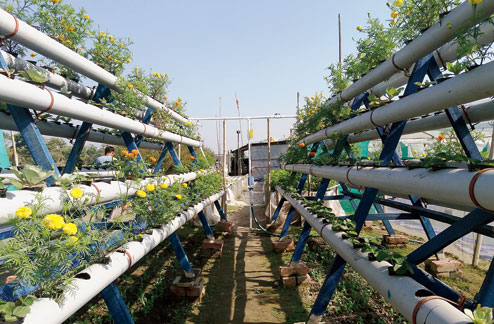
Arkaprabha Das and Subhadip Mitra have introduced aquaponics, a technology where water is used both for fish and vegetable farming, on a one-bigha plot near Canal More under Kharia panchayat of Jalpaiguri Sadar block, 8km from the town.
With assistance provided by the Fish Farmers’ Development Agency and the district administration, they have come up with the project.
They have dug four ponds, measuring around 30ft by 15ft with a depth of 5-6ft, where they are farming different species of hatchlings like pabda (Indian catfish), punti (swamp barb), telapia (Indian tilapia), shingi (stinging catfish), magur (walking catfish) and chitol (clown knifefish).
“In these ponds, the growth of fishes would be high as compared to other ponds measuring around four-five bighas of land. In those ponds, it takes around six to seven months for fishes to grow but here, the fishes would be of similar sizes within 75 days,” said Das.
Unlike other ponds where the water is stagnant, the water here, which is mixed with the waste released by fishes, is channelized through pipes, which have holes above. On these pipes, the duo have planted marigold shrubs and flowers are also growing on those pipes.
“Due to presence of nutrients in the water, the flowers are also growing steadily. We are then diverting the water to bed (a flat structure) where the water is flown through pebbles. The water here is getting purified while we have planted vegetables on the bed, which are getting the nutrients,” he said.
From this bed, the water is being shifted another bed, known as flowing bed. There, though the water has been kept covered, flowers, strawberry and chillies have been planted above the cover.
In course of the process, ammonia from water is being removed and nitrogen compounds present in it help in growth of plants. Also, the water, while being diverted back to the ponds carries fresh oxygen, which helps in growth of fishes.
“It is old technology but is hardly used by cultivators,” said an official of the district fisheries department.
“We feel aquaponics should be largely used in our state. It can expedite production of fishes, vegetables and flowers. In total, around Rs 5 lakhs or so has been spent for the project. We will keep on helping them in the initiative,” Somnath Chakraborty, the chief executive officer of Fish Farmers’ Development Agency, said.
Rachna Bhagat, DM, Jalpaiguri, said they will showcase the success story among cultivators of the district.
“It is a unique project. We will apprise other cultivators and those who are into fish farming, about the technology,” she said.
source: http://www.telegraphindia.com / The Telegraph, Calcutta,India / Home> West Bengal / by The Telegraph Correspondent / January 06th, 2018
Focus French connection
Calcutta:
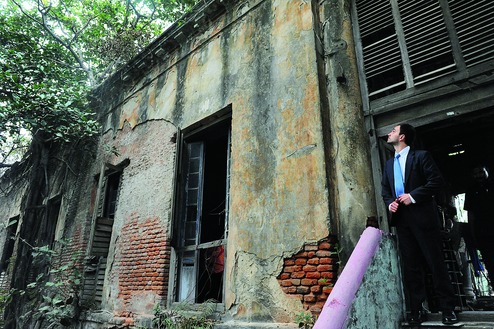
Registry Building, a derelict colonnaded structure with louvered screens, caught in the clasp of myriad tree roots at the corner of the Strand, declared as condemned by the civic body, is the focal point of an initiative in Chandernagore for the former French colony to reconnect with its built architectural heritage.
Friday will see the launch of Know Your Indo-French Heritage, a week-long multidisciplinary workshop that is taking place within the ambit of Bonjour India, a celebration of Indo-French partnership in innovation and creativity across the country, organised by the French Embassy and Institut Francais.
“It is a collaborative workshop designed for the restoration of French-built heritage which will not survive unless people are proud of the town’s assets and realise that this can be a source of economic growth,” said French consul general Damien Syed, who reiterated his distress at the state of dereliction of the French heritage structures.
Students from Jadavpur University, Chandernagore College and The Confluence Institute for Innovation and Creative Strategies in Architecture, Lyon, will meet at Chandernagore College on Friday. “They are expected to come up with innovative design solutions as to how public spaces in the town can be better utilised. One of the outcomes of the workshop would be a sustainable business model for the reuse of the Registry Building. IIM Nagpur will collaborate on that,” said Aishwariya Tipnis, a conservation architect who has worked to identify the heritage buildings in Chandernagore. Seven buildings from her list, including the Registry Building, have recently been selected for notification as heritage structures by the state heritage commission.
All ideas from the workshop will be exhibited on the Strand as part of the closing ceremony on January 12 for the public as well as French ambassador Alexandre Ziegler to see. “We will also launch a crowd-funding initiative which will possibly be a first in India for restoration of a building,” she said.
Four heritage adda sessions will take place involving eminent residents like lighting wizard Sridhar Das and representatives of heritage businesses like confectioner Surya Kumar Modak.
Beyond Chandernagore
France will be the partner country this year at the state government’s Bengal Global Business Summit. “For the first time, we will have a delegation of nine or 10 companies,” said Syed. This is a significant development after the pullout of a French joint venture from the Haldia port which was blamed on strong-arm tactics by an entrenched lobby close to the ruling establishment. The then ambassador Francois Richier had raised the matter with the state government during his city visit in 2014.
source: http://www.telegraphindia.com / The Telegraph, Calcutta,India / Home> Calcutta / by Special Correspondent / January 05th, 2018
It’s Bach to the cemetery for a musical feast in Kolkata
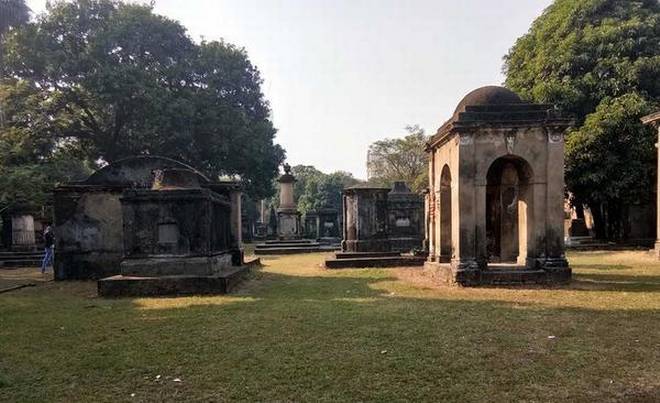
One of the city’s oldest Christian cemeteries will host an evening of Baroque music to celebrate its 250th birth anniversary
Come Saturday, Kolkatans, both the living and the dead, can look forward to a grand musical feast as the South Park Street Cemetery, one of the city’s oldest cemeteries, will celebrate its 250th birthday by holding a concert on its premises.
In a clearing amid small and giant sepulchres, ageing plaques, and 300 varieties of trees, its sprawling, leafy compound will host a performance by a string quartet and a pianist on January 6.
The performances, according to the programme booklet, will mainly be of “17th and early 18th century Baroque composers” such as Antonio Lucio Vivaldi, Johann Sebastian Bach and George Frederick Handel. Some of the finest musicians of the city, including some who are based abroad, such as the violinist Prosanto Dutt, will perform. “He will also talk about the music,” said Ranajoy Bose, the architect of the two-hour show and a managing member of the Christian Burial Board, which manages the cemetery. The tickets are priced at a modest ₹20.
On being asked about the low price of the tickets, Mr. Bose said, “This is a strange cemetery. For instance, there are no crosses here. Instead, the tomb designs carry the architectural imprint of many civilisations, including Greek, Roman, Turkish and Mughal influences, and some are even shaped liked Hindu temples. We would like school children to know something about these eclectic designs created by Indian masons, besides some Western classical music.”
source: http://www.thehindu.com / The Hindu / Home> News> States> Other States / by Suvojit Bagchi / Kolkata – January 03rd, 2017