All posts by wellnmed@gmail.com

Kolkata library that celebrates parallel literature turns 40

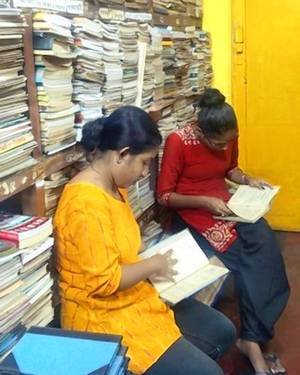
Visitors browse the collection at the library. Photo: Special Arrangement

Little Magazine Library grew from artistic writing.

Nestled in Temar Lane, off College Street, Little Magazine Library is a bright yellow building. The small entrance to this home-turned-library in Kolkata opens up to wall after wall of books. Seated in the midst of these mountains is founder Sandip Dutta, the owner of the library that turned 40 on Saturday.

His quest to open a library of this kind, which would eventually host poet Mahasweta Devi and other literary figures, began on one of his many trips to the National Library in 1972, when he was 21.

“When I walked into the National Library, I saw the little magazines thrown on the floor. Dust and worms had wrecked most of them,” he said.

Mr. Dutta launched his archive when the country was taken up by the little magazine movement in the 1970s. It made its way across Maharashtra, Kerala and West Bengal, nurturing marginalised, less-known writers. In Bengal, the movement gathered steam through post-modernist Bengali literature.

Periodicals prosper

The coming of the Hungry Generation writers popularised periodicals like Krittibash (edited by Sunil Gangopadhyay and Dipak Majumdar), Sabuj Patra, Kali Kalam, Kobita Saptahiki (edited by Shakti Chattopadhyay) and Kallol.

Initially, Mr. Dutta organised an exhibition, which showcased about 750 little magazines from his collection. By 1978, he had set it up, and was working to clear the confusion about what the magazines meant: “People often take ‘little’ in this case to mean ‘for children,’ but few realise it is a non-commercial, parallel establishment that celebrates artistic voices.”
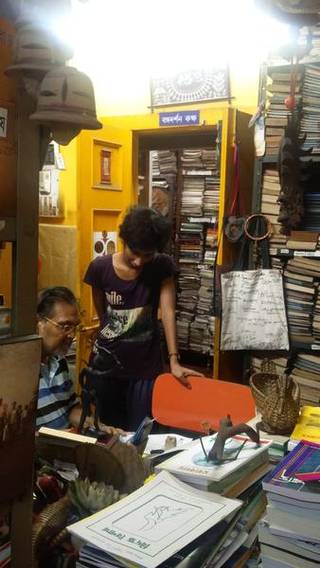
Sandip Dutta in his library with a new member. Photo: Special Arrangement.

The venture started off with 1,500 magazines and was known as ‘Library and Laboratory for Bengali Little Magazines.’ It later became the ‘Kolkata Little Magazine Library and Research Center,’ housing about 60,000 periodicals, 1,600 of them digitised. It also houses research material on 60 topics: from film, music, politics and feminist theory to subaltern studies.

Filmmaker Jojo Karlekar, who made a documentary, Little Magazine Voices, says, “I don’t think it is possible to ever be comprehensive about it.”

Mahasweta Devi was a regular patron. When she lost the manuscripts and a few publications, Mr. Dutta was given the task of retrieving them.

source: http://www.thehindu.com / The Hindu / Home> News> Cities> Kolkata / by Bulbul Rajagopal / Kolkata – June 23rd, 2018
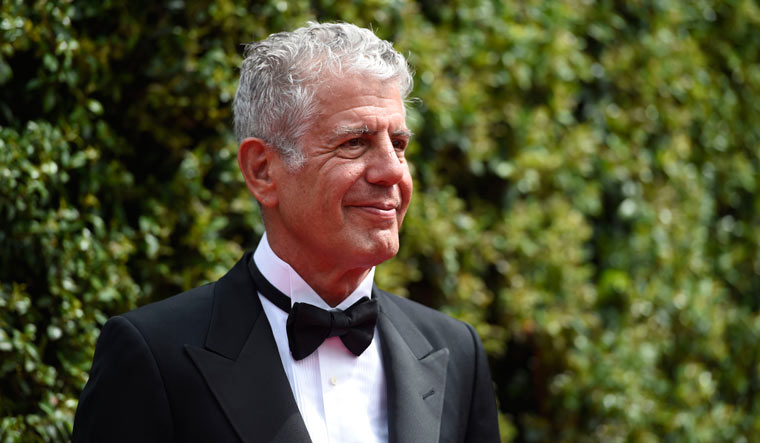
When Bourdain visited Kolkata and indulged in a plate of poori-bhaji

Anthony Bourdain | AP

The news of US celebrity chef Anthony Bourdain’s death has sent shock waves across the food world and beyond. Bourdain, who will be remembered as a renowned chef, author and TV personality, was also an intrepid journalist. He pioneered a kind of a cultural field reporting which offered an unpretentious window into the lives of people who toil and sweat to earn their bread, who are the hidden cogs of a food chain whose most ostentatious and snobbish aspects are held up as aspirational. He travelled the world in search of stories connected to food and eating and living. He patiently listened, and allowed himself to be carried away. When he came to India in 2006 to shoot an episode of his TV series No Reservations, he characteristically observed: “To be in India, anywhere in India, is to risk being endlessly enchanted and repelled, until your senses wanna to shut down.”

A major part of that episode was devoted to his time spent in Kolkata, although the same episode also featured the high-energy Maximum City Mumbai. Bourdain pointed out how these two were the only cities in India, with their tightly-packed interweaving of class and cultures, which reminded him of home, that is New York. Bourdain took a second class train to reach Kolkata and immersed himself in its sounds, smells, shapes and colours, traversing a journey which has charmed countless other dreamers, authors, filmmakers.

After intently watching a cock-fighting match in rural Bengal, digging into a two-rupee plate of poori-aloo bhaji in a flower market under the Howrah Bridge and attending local wrestling matches and temple rituals, you could only trust Bourdain to cleverly remark, “Incidentally if you are going to be reincarnated in India , I highly recommend being a cow. The service is excellent.”

He even waded into the sets of a TV serial shoot, where he dined on a simple, wholesome thali with the cast and crew. Mamata Shankar, Bengali actress and daughter of famous Indian dancer Uday Shankar, was in the middle of a shoot, but happily entertained her curious guest who derived a great sense of reassurance from the fact that soap operas the world over are the same, like good old comfort food. In a Mid-Day article, Mamata fondly reminisced: “He was a happy Frenchman, consumed by food. We ate together that afternoon and he surprised me with his knowledge of Bengali food. He was a khaddo rashik (gourmand). I told him about my father and uncle (Pandit Ravi Shankar). He was familiar with their work. I was surprised how much he knew about my family.”

Accompanied by a popular food columnist Nondon Bagchi, Bourdain played a hectic round of cricket at Kolkata’s Maidan and followed it up with a round of jhaal muri and a similar version of the savoury snack served with crackers from vendors on the fringes of the park. This wasn’t very dissimilar to eating nachos after a game of baseball, the dapper chef thoughtfully pointed out.

When onboard a ferry in the Sundarbans to escape the hectic flurry of the city, Bourdain was your green hero worried about submerged islands and sustaining biodiversity. But every global issue for Bourdain had an entry-point from food. Who would have thought that prawns and bhetki fish in extra virgin diesel oil could be so tasty, Bourdain observed as any real journalist would, always curious, open-minded and unafraid of the unknown.

source: http:theweek.in / The Week / Home> Leisure> Lifestyle / by Sneha Bhura / June 09th, 2018

Students unite over water of the world

Chowringhee:

A study on quality of water brought together schoolchildren from Calcutta and Kentucky.

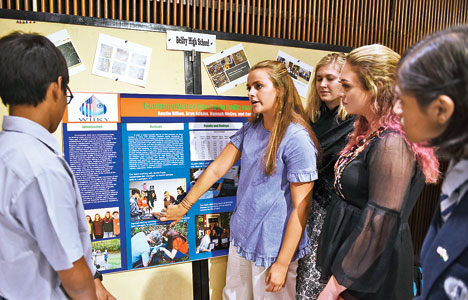
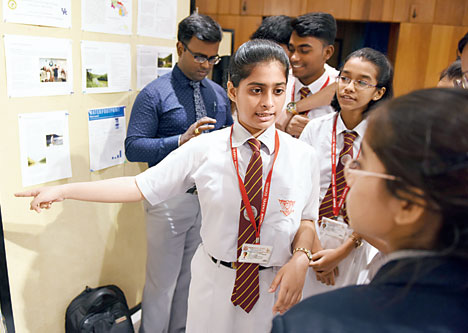
Students of 10 schools from Calcutta, Durgapur, Kharagpur, Ranchi and Guwahati studied the quality of water from various sources and the Kentucky students assessed the impact of coal mines on water. They presented their projects at American Center on Friday.

Students of Union Chapel School at American Center on Friday. Pictures by Ankit Datta

The students of DAV Model School, Durgapur, were declared winner for their study on the water of Barakar river flowing through Jharkhand and Bengal. They shared the prize with the students of Belfry High School, Kentucky, who based their project on wells in East Kentucky.

Students of Belfry High School, Kentucky – Pictures by Ankit Datta

Ten schools from eastern India and 12 from Kentucky tested samples from 121 water bodies, including rivers, wetlands, ditches, canals, wells and ponds in their own areas. The findings were shared with the community to discourage contamination of water.

The project titled Exploring Water Quality in Eastern India and Kentucky was launched by the US consulate general in Calcutta, in collaboration with University of Kentucky and Association of Social and Environmental Development,

“We hope the participants will take the lead in championing positive social change regarding water quality and conservation,” said Jamie Dragon, director, American Center.

The students of Belfry High School investigated water in 10 wells near coal mines.

“We will present a proposal to the Environmental Protection Agency in the US because well water is not regulated,” said Haridas Chandran, physics teacher at Belfry.

The students of DAV Model School, Durgapur, checked the pH level of Barakar river water and its residual chlorine content. One of the findings was that storing the water for long is not recommended because the absence of residual chlorine can trigger a significant growth of microbes.

“We carried out some tests in the school laboratory and the rest on river banks,” said Soumit Das, Class XII.

Garden High School worked on wetlands and Sri Sri Academy on water quality of Hooghly.

Carol Hanley, who guided the students in India and Kentucky, said they had to choose a waterbody that had both cultural and scientific significance.

“We call this community- based science so that science becomes real,” said Hanley, the director, College of Architecture, Food and Environment, University of Kentucky.

source: http://www.telegraphindia.com / The Telegraph,Calcutta,India / Home> Calcutta / by A Staff Reporter / June 23rd, 2018

Software developed by N Bengal techie helps check Oz shark attacks

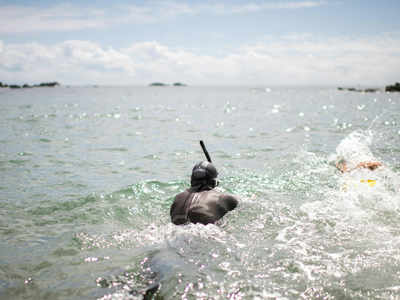
Shark Spotter has been deployed in 11 beaches in north New South Wales such as Byron Bay, Ballina (picture for representation only)

Jalpaiguri :

Remember Jaws, the 1975 Hollywood thriller on a giant man-eating great white shark that struck terror on fictional resort town Amity Island? In beaches across Australia, the Steven Spielberg reel horror is real with the country recording the largest number of unprovoked shark encounters with humans after the United States.

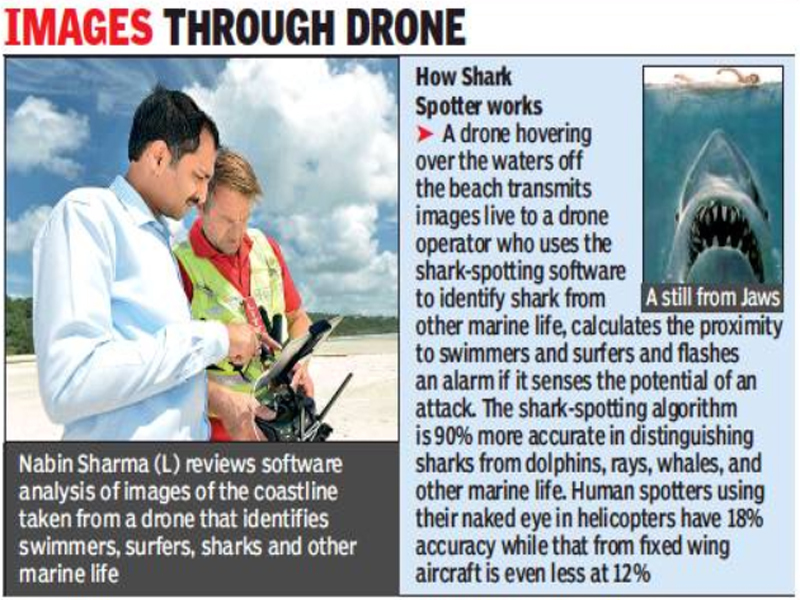
Now several Australian beaches have deployed a technology co-developed by a technologist from north Bengal that uses artificial intelligence to seek out sharks based on aerial footage from drones and warn swimmers to get out of the water quickly.

Dubbed as Shark Spotter, the software uses an algorithm capable of using video footage streamed from drones to detect sharks and alert swimmers. “The Shark Spotter is the world’s first, non-destructive technology able to detect sharks and other potential threats using real-time aerial video imagery. The new algorithm is 90% accurate in distinguishing sharks from other marine life. Human spotters from fixedwing aircraft or helicopter have accuracy of 12%-18%,” said Nabin Sharma, a lecturer at the University of Technology Sydney, who along with Michael Blumenstein developed the software that is making waves Down Under.

Shark Spotter has been deployed in 11 beaches in north New South Wales such as Byron Bay, Ballina, where shark attack was a major problem. And they have already saved lives. Shark attack reports from these beaches have declined significantly, prompting authorities in beach towns in the US and Europe to also consider the technology.

The Shark Spotter technology has won in three major categories (Research & Development Project of the year, Artificial Intelligence or Machine Learning Innovation of the year and Community Service Markets) in the Australia Information Industry Association, iAward 2018, New South Wales.

Sharma did his schooling in Holy Child School, Jalpaiguri, before graduating from Ananda Chandra College in the town. He then did Master of Computer Application (MCA) and Bachelor of Science from Siliguri Institute of Technology, before doing his PhD from the School of ICT, Griffith University. He is currently a lecturer with the School of Software, University of Technology Sydney (UTS).

Of more than 500 known shark species, 26 have been involved in unprovoked attacks on humans. Of these, Australia has 22 shark species. Australia records an average 1.5 deaths per year from shark .

source: http://www.timesofindia.indiatimes.com / The Times of India / Home> City News> Kolkata News / by Pinak Priya Bhattacharya / TNN / June 24th, 2018

An orator and a gentleman

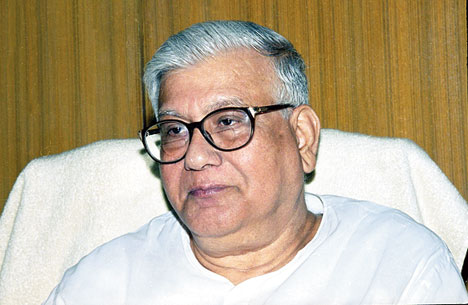
In memoriam: Satya Sadhan Chakraborty(1933 – 2018) FE Block

Satya Sadhan Chakraborty, former higher education minister in the Left Front government, passed away at his FE Block residence on Saturday morning. He was 85.

According to family sources, he suffered a massive cardiac arrest at 10.30am. He leaves behind his only daughter Sharmistha Bhattacharjee. “I stay in Delhi but was spending a lot of time in Calcutta to be with Baba and was there with him continually since May,” she said. Chakraborty’s wife Shukla had died four years ago.

Chakraborty hailed from Comilla, now in Bangladesh, and came to Calcutta for higher studies after Partition. He did an MA in political science from Calcutta University.

He became an MP defeating Bhola Sen in the Calcutta South constituency in 1980 but was defeated by the same rival in 1984. “It was one of the 16 seats we lost in the Congress wave after Indira Gandhi was killed,” recalled colleague and Salt Lake neighbour Rabin Deb. He also worked in the education cell of the West Bengal College and University teachers’ Association (WBCUTA) and became its general secretary.

He was elected thrice from Chakdah to the Assembly. After his first victory in 1991, he became the higher education minister in Jyoti Basu’s cabinet, a post he held till 2006 even after Buddhadeb Bhattacharjee succeeded Basu as chief minister in 2000.

“Baba had suffered a slipped disc when he was a minister. That led to a problem in movement in later life. For the last few years, he was wheelchair-bound,” recalls Sharmistha, who remembers her father as a “very positive thinking individual”.

Deb, a resident of FD Block, knew Chakraborty as a teacher at Vidyasagar College from the time he was a student himself in a different college. Chakraborty would later retire as head of the political science department there. “But he caught my eye with his impromptu Bengali translation of (Marxist leader) B.T. Ranadive’s speech at the Lenin centenary celebration at Eden Gardens.”

Chakraborty, Deb recalls, was a large-hearted man and a good orator. “Such was his way with words that he could say tough things couched in high civility, leaving the Opposition at a loss for response on the Assembly floor. He had come up the hard way. He worked on the factory floor to support his family even as he studied in the evening course.”

In those days, they lived in Dum Dum. Chakraborty shifted to Salt Lake in 1992.

During his own stint as Ballygunge MLA, Deb recalls needing money to build premises for Charuchandra Evening College.

“Classes of the college were being held in a dilapidated school building. As per rules, the government could not give money to buy land. But we found a way. I raised the matter as a supplementary question in the Assembly. As minister, he assured me help to construct the building. Thus we could get around the legal hurdle. The building now stands as Naba Ballygunge Balika Uchcha Mahavidyalaya beside Kasba police station on the Rashbehari connector,” he smiles.

Chakraborty, he points out, also played key roles in the party’s Cuba and Nicaragua standing committees. “He was also the Bengal representative in an Afro Asian Peace Conference which was attended by Frontier Gandhi and Sheikh Hasina.”

source: http://www.telegraphindia.com / The Telegraph,Calcutta,India / Home> Calcutta / by Special Correspondent / June 22nd, 2018

Rimpa Siva gets Ustad Bismillah Khan Yuva Puraskar

Kolkata :

She has been playing the tabla since the age of three. At 32, Kolkata-based Rimpa Siva has been bestowed the Ustad Bismillah Khan Yuva Puraskar 2017 by the Sangeet Natak Akademi. Needless to say, Rimpa is thrilled with the announcement and is hoping that her recognition will inspire other girls to play the tabla.

Speaking to TOI, Rimpa said she was pleasantly surprised with the announcement. “I didn’t even know that I was nominated for this award. I came to know about my win only after congratulations starting pouring in. I feel privileged to be getting the award on the same year when the Akademi Puraskar will be given to Haimanti Shukla and Parvathy Baul from Bengal,” said Rimpa, who had bagged first class first degrees during both her graduation and master’s from Rabindra Bharati University.

Awards, however, aren’t new to Siva. Known as a child prodigy, she has already won the President’s Award from APJ Abdul Kalam in 2007, Shanmukha Sangeetha Shiromani Award in 2004 and Anunraj Memorial Fund award from Norway in 1996. Rimpa dedicates the credit for her performance to the guidance received from her father, Pt Swapan Siva.

“Whatever I am now is a result of the blessings and teachings of my father,” she said. At 14, she had first accompanied Pt Hari Prasad Chaurasia on a concert tour to the US. Since then she has been playing with stalwarts. In 1999, a 26-minute documentary film titled “Rimpa Siva: Princess of Tabla” was made in France.

There was a time when Rimpa would face questions about why she had picked up an instrument that was traditionally a favourite with men. After performing the world over and now, having won this award, she finds this question irrelevant. “People feel that since women’s fingers are delicate, they might not be suitable for playing the tabla.

But, I have proved them wrong. I’m glad that other women tabla players including Reshma Pandit and Mitali Khargonkar are also coming up now,” said the player from the Farukhabad gharana who is known for playing Ustad Karamatullah Khan’s intricate “kata gheghe tete kata” composition at a very high speed.

The 32-year-old has also come up with an instrumental band called Nari Shakti. “Apart from me on the tabla, we have Pamela Banerjee on pakhawaz, Nibedita Ghosh on sitar and Atri Mazumdar on vocals. However, we are still trying to find good female santoor and sarangi players for our band,” she said. On being asked about her thoughts on World Music Day, she said she is hoping that more and more women instrumentalists come to the forefront. “It’s time for more women to break the glass ceiling,” she signed off.

source: http://www.timesofindia.indiatimes.com / The Times of India / Home> News> City News> Kolkata News / by Priyanka Dasgupta / TNN / June 20th, 2018

TCS is largest employer in Bengal

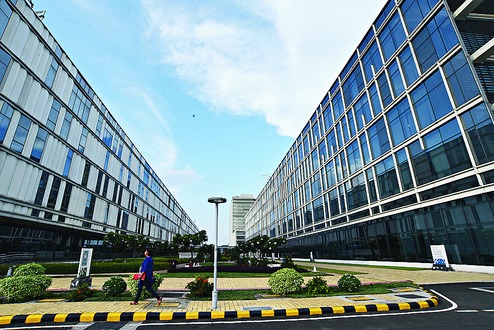
The TCS campus in Rajarhat. Picture by Sanjoy Chattopadhyay

Calcutta:

TCS has emerged as the largest employer in the private sector in Bengal, having close to 40,000 people on the rolls spread across 15 locations in Calcutta.

The company, India’s largest by market capitalisation, has added 10,000 people in the last 33 months alone. It is expected to add another 2,000 this year .

Even as automation, digital disruption and just-in-time recruitment may potentially tamper the pace of addition of workforce across the company, TCS executives said Calcutta will continue to maintain its share of the overall pie.

The company has close to 3,95,000 people on the rolls as on March 31, 2018 across 50 countries, but mostly in India.

Ajoyendra Mukherjee, executive vice-president and global head of human resources of TCS, said the company has given 20,000 offer letters to students in campuses across the India.

In Bengal, the company has gone to 40 engineering colleges last year, offering employment to nearly 2,000 students. Apart from TCS, Bandhan Bank, RP-SG Group and ITC are some of the large private sector employers in the state.

The special economic zone in Rajarhat now houses the largest facility for TCS in the city. It employs around 17,000 people, operating at 90 per cent of the capacity.

The IT behemoth has 2.5 million square feet space in this 40 acre sprawling campus, out of the 4 million square feet it has across Calcutta, including leased and owned space. The city is one among the top four locations for TCS in India.

The campus still has the space to add at least one million square feet and create at least 10,000 more jobs.

According to Suresh G Menon, vice president and general manager – eastern region of TCS, banking financial, utilities, retail are some of the core areas Calcutta focuses on. “We are 10 per cent of TCS now,” he said.

Tapering curve

Mukherjee said the company’s headcount would not grow at the same pace as revenue like in the past, due to multiple factors, such as automation in the IT world and cost push. The company recorded 7,700 net addition last year.

“Analytics, IoT (Internet of Things) and automation are changing the entire delivery process. We are going for hiring in an agile way which is on-demand,” Mukherjee explained.

source: http://www.telegraphindia.com / The Telegraph,Calcutta,India / Home> Business / by Sambit Saha / June 07th, 2018

Kolkata cyclist to pedal from Ladakh to Sri Lanka

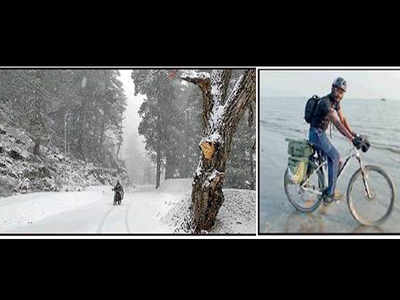
City mountaineer and trekker Samrat Moulik recently cycled 3,000km from Gangotri in Uttarakhand to Kuakata in Bangladesh

Kolkata :

A mountaineer and trekker from Kolkata, who quit a corporate job to pursue his passion, is preparing for a mega cycling expedition of 5,500km – from Nubra Valley near Ladakh to Kanyakumari and onward to Sri Lanka.

Three months ago, he completed a 3,000km solo cycling journey from Gangotri in Uttarakhand to Kuakata in Bangladesh, traversing the entire length of the Ganga as it meandered through five states before entering Bangladesh.

“The condition of the Ganga – that we consider sacred and yet pollute – prompted me to undertake the ‘Save Ganga’ campaign in February-March. I wanted to know what was polluting the river and its impact on the population living along its length,” said Samrat Moulik. He began the journey on February 8 this year and finished on March 21.

While the condition of the river is good in Uttarakhand, its deterioration was visible after Haridwar. “Pollution actually began at Nagina – a town in Uttar Pradesh. In Moradabad, there is cremation ground at the ghat, a picture that one sees all along the river thereafter. From there on, the river water gets murkier as it flows. The effects of Ganga Action Plan, about which I had heard for years, were not visible. The pollution load of the Ganga increases as polluted tributaries flow into it,” said Moulik.

As the river flows downstream, industrial waste becomes the major pollutant. The situation improved in Jharkhand. But when the river bifurcates into the Hooghly and the Padma near Rajmahal, its condition again deteriorates. “The situation is better in Bangladesh because of people’s dependence on the river,” he said.

Moulik plans to start his journey in September. He will cover several rivers in central, west and south India before travelling to Sri Lanka and cycle along the rivers there.

source: http://www.timesofindia.indiatimes.com / The Times of India / Home> News> City News> Kolkata News / TNN / June 14th, 2018

Id gift for buddy trio’s business idea

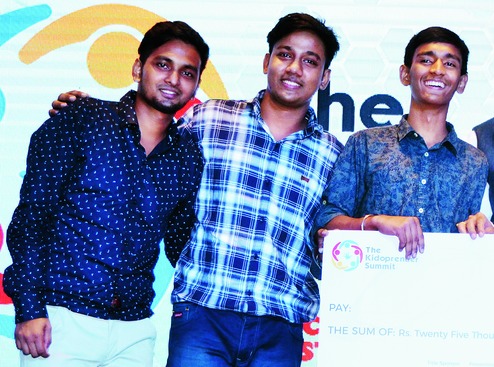
(From left) Md Wasim Ali Ansari, Azhar Rabbani and Ayush Singh at The Kidopreneur Summit at Novotel on Saturday. Picture by Biswajit Kundu

Calcutta:

They gave Id celebrations at home a miss to pitch their business module before a roomful of entrepreneurs. Azhar Rabbani and Mohammad Wasim Ali Ansari, along with Ayush Singh, have devised a plan to provide easy accommodation to outstation students through an app.

The three friends beat six other teams to bag the first prize at The Kidoprenuer Summit, in association with The Telegraph, at Novotel on Saturday. Co-hosted by Sonali’s Cubo, Merchants’ Chamber of Commerce and Srei Infrastructure Finance, the one-of-its-kind conclave gave young entrepreneurs a chance to showcase their innovative business ideas.

The OFY (Only For You) Homes project hopes to address the accommodation problems that students of other cities face when they come to Calcutta to study. “More than 60 colleges in and around the city don’t offer hostel facilities and at any time around 30,000 students are looking for a place to stay,” said Ayush, 17, a student of Shree Jain Vidyalaya.

The boys plan to offer standardised paying guest accommodation and flats on rent through an app. “Students can rent a home for any period of time and also share it with a maximum of four roommates. We will offer packages. They can get food, Internet, electricity and other amenities at Rs 6,000 to Rs 12,000 a month,” said Azhar, 18, of Seth Anandram Jaipuria College.

College mate Wasim, 18, said the trio have been working out the logistics for the past three months. “We hope to launch the app by the year end. We are tying up with people who rent out rooms,” he said.

Yubasana Kapas, 14, of Gokhale Memorial Girls’ School won the third prize for her plan to showcase Bengal’s art and culture before foreign patrons.

Three students – Kaushik Sardar, Shane Romel Kujur and Gaurav Bordoloi – from National Institute of Technology, Durgapur, bagged the second prize for Pedals Go, an app-based rental plan for bicycles.

“The event has brought three generations of entrepreneurs on one platform,” said Vayjayanti Pugalia, who curated the event.

The summit saw young entrepreneurs from across the country exchange notes with business stalwarts from the city and share their stories and challenges.

source: http://www.telegraphindia.com / The Telegraph,Calcutta,India / Home> Calcutta / by Chandreyee Ghose (additional reporting by Samabrita Sen) / June 17th, 2018

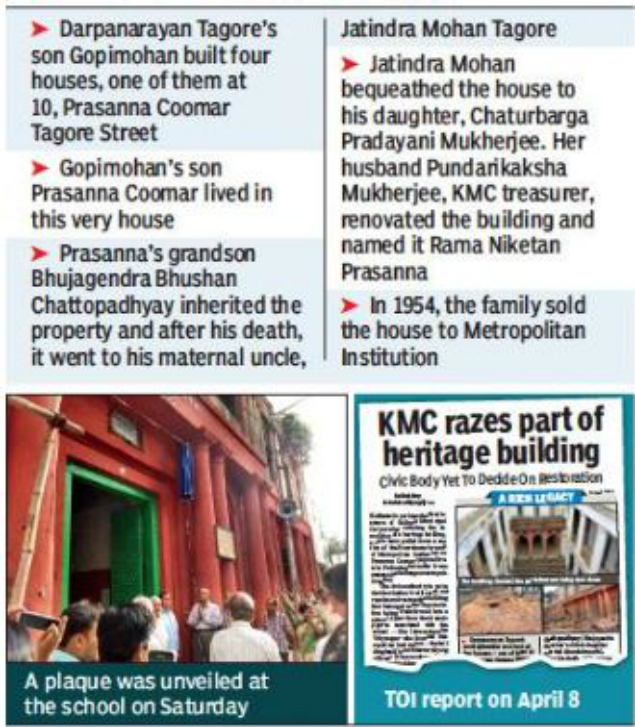
Citizens take inititaive to restore heritage school

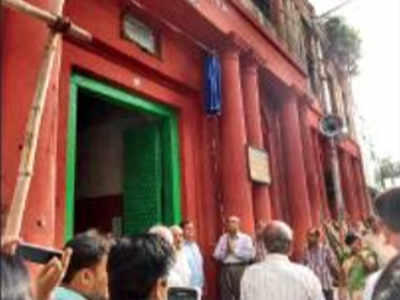
A plaque was unveiled at the school on Saturday

Kolkata :

A dilapidated portion of the Burrabazar branch of Metropolitan Institution, which was pulled down by the KMC on April 7, is getting a new lease of life with a group of residents taking the initiative to restore the heritage structure to its old glory. The initial, rudimentary repairs have been carried out with school funds and the subsequent renovation is likely to depend on government assistance as well as crowdfunding.

Members of ‘Purono Kolkatar Golpo’, a Facebook group that has taken up the project, organized a programme on the premises of the institution on Prasanna Coomar Tagore Street at Pathuriaghata on Saturday, when they unveiled a plaque, with the building’s “heritage status” written on it.

This plaque, they hope, would make Kolkatans and authorities aware of the historical significance of the school, which was founded by Ishwarchandra Vidyasagar.

The unveiling was followed by discussions and a cultural programme, which was attended by current and old students, teachers, neighbours and local councillor, Ellora Saha, who advised to form a development committee that would work towards procuring money from the government. “It is a proud moment that ordinary people have come together to conserve the historical institution. Our aim is to restore the building,” said P N Palit, secretary at Vidyasagar Institute trustee board. He added the initial repair, white-wash and clearing trees and undergrowth from the compound were carried out with school money.

Heritage enthusiast Swarnali Chattopadhyay said, “It’s high time we did something to save such structures of architectural and historical significance. For restoration, we are looking to state help and crowdfunding as and when required.”

Till 1954, the building belonged to the Tagores and was known as Rama Niketan.

Thereafter, the Burrabazar branch of Metropolitan Institution was set up on the premises, where the school ran out of rooms on the ground and first floors. Now, with only 60 students on the roll, classes are held only on the ground floor. The Pathuriaghata post office shared the same compound. “To save the building, it is important to save the school.

Different activities have to be started there as the institution and the building are interdependent. A proposal has been given that other small schools in the area may use the huge compound, and if need be, they can be merged into one institution,” said Jayanta Sen, heritage activist and another member of Purono Kolkatar Golpo.

Councillor Saha said, “The building still has Vidyasagar’s chair and it is where Madhusudan Dutta composed ‘Sharmistha’. It is my duty to help people conserve the place.”

Conservation architect Kamalika Bose hailed the initiative: “This is a great example of residents doing something at the grassroots level, without expecting the government to take the first step.”

source: http://www.timesofindia.indiatimes.com / The Times of India / Home> City News> Kolkata News> Schools & Colleges / by Dipawali Mitra / TNN / June 17th, 2018