All posts by wellnmed@gmail.com
23
22
21
20
19
Trophy for hill Cup colours
Darjeeling:
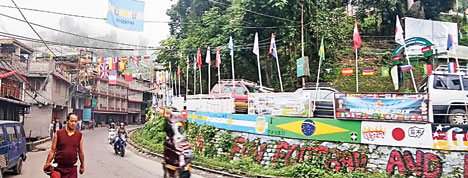
In the “World Cup Town” of Darjeeling, BKJ (Bara Kak Jhora) United Club on Sunday lifted the “trophy” hours before the biggest football tournament’s grand finale kicked off.
BKJ United Club bagged the prize for the most beautifully decorated Darjeeling area during the month-long Fifa carnival.
The Darjeeling North Point School Alumni Association (DNPSAA) handed over a replica of the Fifa World Cup to BKJ United Club.
“On June 2, we had organised an outreach programme to raise funds for a Father Van Memorial Clinic on Wheels. Thousands participated in the football parade where we had christened our hometown.
‘The World Cup Town’. BKJ United Club has bagged the award,” association chief Deven Gurung said. Father Van was a former rector of North Point.
During the event, which featured various entertainment shows, it had also been decided that the best decorated area with the World Cup theme in Darjeeling town would be awarded hours before the final begins in Moscow.
The team inspected several places like Aloobari, J.P. Sharma Path, Employment Exchange area, Nimki Dara, but found Bara Kak Jhora different.
“The place (Bara Kak Jhora) was not only beautifully decorated but was also unique in the sense that it was informative,” Gurung said.
Apart from detailing the history of the World Cup and putting up theme works on “Pele to Platini, Zico to Ruud Gullit”, the club had made a special display of Sunil Chhetri for being among the highest scores of international goals.
“We appreciate the fact that they had a corner for the ’60’s legendary players of Darjeeling’ and put up photographs of famous footballers from the region like Chandan Singh Raut, who was part of the India’s football team, Benu Subba, Avay Gurung, KrishDewan, Raju Rai, Kapil Thapa and Shyam Thapa. All of them have made us proud,” said Gurung.
The St. Joseph’s School alumni association announced that the ambulance, for the clinic on wheels, has been booked and will arrive soon. The vehicle, fitted with a slew of equipment, will be sent to remote areas for free medical check-ups.
source: http://www.telegraphindia.com / The Telegraph,Calcutta,India / Home> West Bengal / by Vivek Chhetri / July 16th, 2018
Sushila Goenka dead
Calcutta:
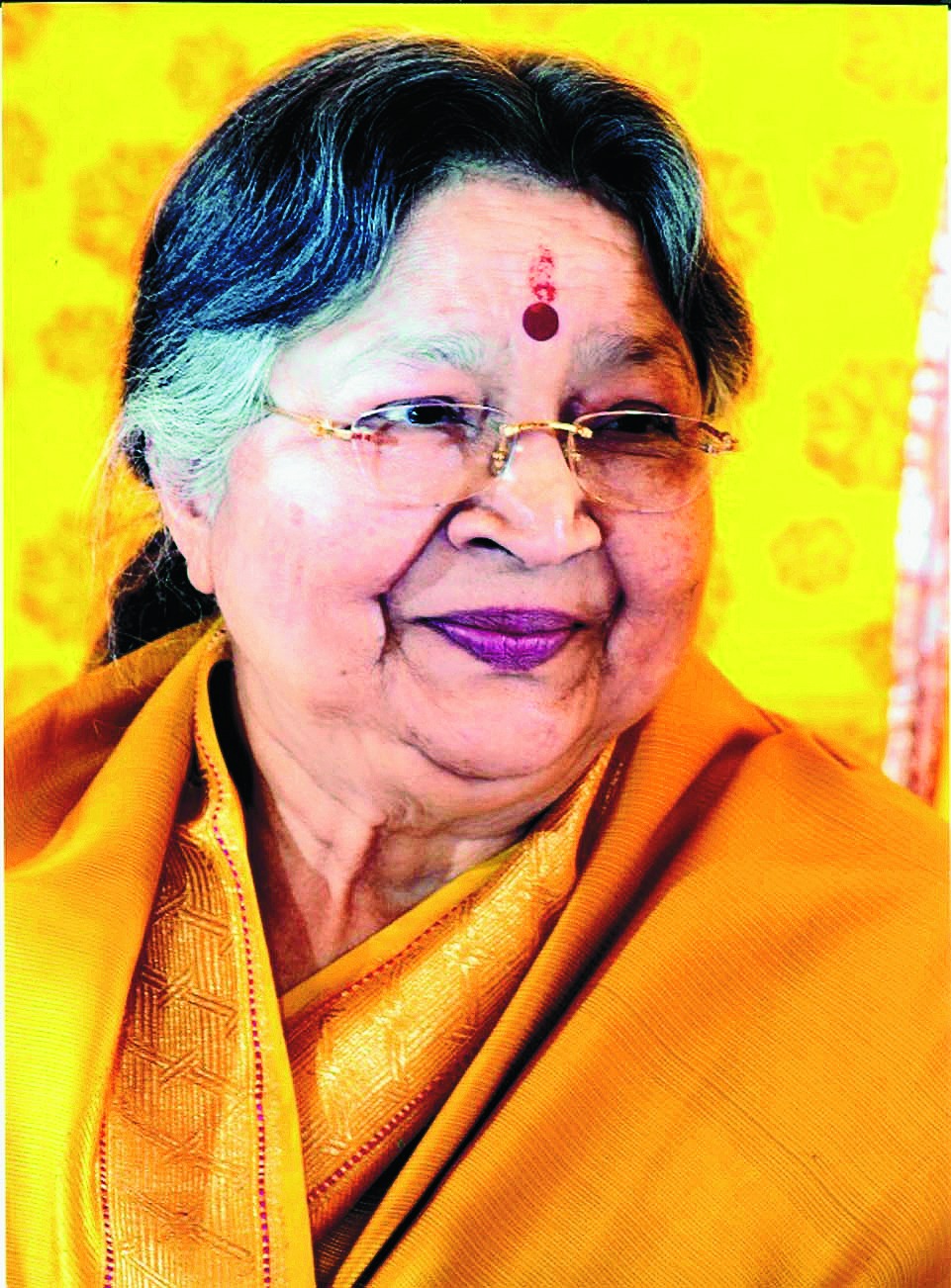
Sushila Goenka, the wife of industrialist Rama Prasad Goenka, passed away on Sunday evening. She was 82.
Her eldest son Harsh Vardhan Goenka, who is the chairman of the RPG Group, and younger son Sanjiv Goenka, the chairman of the RP-Sanjiv Goenka Group, were present along with their children and other family members during Sushila’s final moments.
R.P. Goenka’s brothers, Jagdish Prasad and Gouri Prasad, were also present.
Born in Calcutta on August 15, 1936, Sushila, a daughter of Ram Sundar Kanoria, got married in 1948. A devotee of Indian tradition and culture, she was known for her interest in Indian music and her intimate connection with musical legends like Lata Mangeshkar.
Sushila was a director of Saregama India Ltd. Along with her husband, she was instrumental in setting up the Mahalaxmi Temple on Diamond Harbour Road.
She was cremated at Keoratala on Monday morning in the presence of friends, family members, ministers, senior government officials and city-based industrialists.
source: http://www.telegraphindia.com / Telegraph,Calcutta,India / Home> Calcutta / by Special Correspondent / July 17th, 2018
Practice, chance and peace
Science City:
For 36 years, a Japanese man has been writing and sending a peace proposal to the United Nations. Even at 90, Daisaku Ikeda stays committed to his life-long effort to steer the world away from conflicts and build a humanistic society. He has managed to spread his belief across 192 countries, including India, through the Buddhist society of Soka Gakkai that he leads.
The Soka education system, rooted in the society’s values, encompasses kindergartens in six countries, elementary to graduate level schools in Japan and a liberal arts university in California. Born to a family of seaweed farmers, the Buddhist philosopher and peacemaker has also founded an art museum, a music concert association and institutes for peace and policy research in Japan and the US.
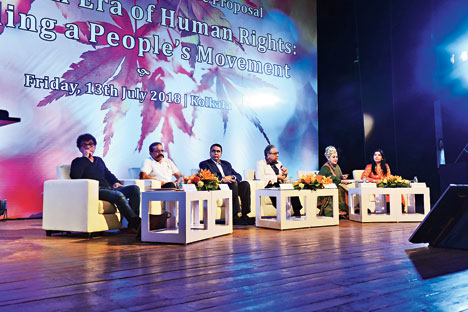
The organisation’s India arm Bharat SokaGakkai held a conference on Ikeda’s 36th peace proposal at Science City on Saturday. “Soka means value creation. There is a lot of synergy between our values and the UN’s agenda,” said Vishesh Gupta, the chairperson of Bharat Soka Gakkai.
The guests were welcomed by volunteers clapping in rhythmic unison.
“Art can’t teach anyone anything. It only makes the human soul receptive to the good. Neither does artistic vision fall from the sky. It is the result of practice,” said filmmaker Suman Mukhopadhyay. He went on to talk of the issues he has addressed through his work on the stage and in films. He is planning a film on Kashmir, titled Paradise in Flames.
Dancer Alokananda Roy shared her experience of working with prisoners. “When I walked into a prison, I did not expect to meet people with heart. But if you treat them as human, they also feel human. I have worked with juvenile offenders, too, who are traumatised by society’s finger-pointing.They made a mistake. It’s fair to give them a second chance,” she argued. Her new students, however, have not made any mistake. They are transgenders. “They do not deserve to be cast aside.”
B.N. Ramesh, additional director general and inspector general of police, West Bengal Human Rights Commission, spoke of his experience of tackling insurgency-hit states across the country and people he met along the way, like an 11-year-old stone pelter in Kashmir.
Former Prasar Bharati CEO Jawhar Sircar shared his experience of attending three Unesco conventions. On the agenda was restitution of cultural property, i.e. the question of returning cultural artefacts plundered from another nation. “Management of peace at the kitchen level calls for patience,” he said.
Using the acronym VUCA coined by the US army, which stands for volatility, uncertainty, complexity and ambiguity, he said: “That’s the world we face. Is peace worth discussing in such a world? But man’s capacity to destroy is equalled only by his capacity to save.”
He cited the genesis of a cross-cultural signal – the salutation. “When strangers met in the medieval times, it was customary to delink the right hand from the body to indicate that no weapon would be used. Warriors would also raise their visors to reveal their identity. The gesture was stylised over time.”
Sircar also mentioned the phenomenon of Mexican wave in sports stadiums. “It proves that there is dormant in man a capacity to act in unison, rising above identity and ideology thrust upon him,” he said.
source: http://www.telegraphindia.com / The Telegraph,Calcutta,India / Home> Calcutta / by Sudeshna Banerjee / July 16th, 2018
Hicky’s Bengal Gazette: The Untold Story of India’s First Newspaper review: Winds of freedom
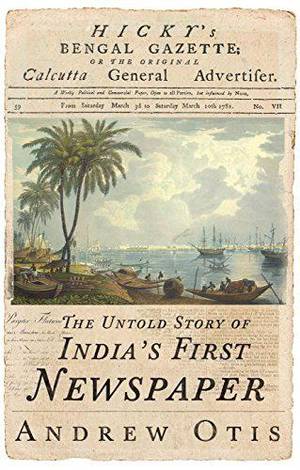
In 1780, an Irishman took on the British in Calcutta with a tell-all weekly that covered everything from corruption to politics
It was 1780. Great events were shaping and shaking the world. Four years earlier, in 1776, Britain had lost its first colony; a new nation was born, namely, the United States of America. And nine years, later, in 1789, the French revolution ushered in a new era of freedom and hope in Europe.
At a time when the western world was changing rapidly a new spirit was also taking shape in one of Britain’s eastern colonies. Calcutta, then capital of British India, though the East India Company ruled only a small part of India at that time, was witnessing developments that were new not only in India, but in all of Asia. As free thought and freedom of expression swept across the world, an Irishman called James Augustus Hicky gave Calcutta and India its first printed newspaper in 1780.
Taking on power
Hicky’s Bengal Gazette, according to the young American scholar Andrew Otis, was a four-page weekly newspaper priced at ₹1. And it took on the rich and mighty of British Calcutta. What did Hicky publish in the pages of his newspaper? “He tried to cover everything that might be important to Calcutta, devoting many sections to politics, world news and events in India.” Topics that featured regularly were poor quality of sanitation and lack of road maintenance. Houses of poor Indians had thatched roofs, prone to catching fire. The outbreak of fires was frequently reported in Hicky’s paper. Through the letters he solicited and published, the editor gave voice to Calcutta’s poor.
He attacked corruption in the East India Company and in high echelons of society. The Bengal Gazette reported that the Governor of Madras, Sir Thomas Rumbold, had been recalled to England to answer charges of corruption in front of Parliament. “Hicky sarcastically wrote,” Otis tells us, “Rumbold was a great man for only amassing a fortune of about 600,000 pounds while in India, much of it from bribes and extortion.”
Hicky did not spare any institution. He exposed the problems of low pay for soldiers in the subaltern ranks of the Company’s army. Failed wars of the Company also came under its gaze. The Company’s army suffered a crushing defeat in the Battle of Pollilur at the hands of Hyder Ali, then ruler of Mysore. As the news of the disaster trickled in, Hicky questioned why the British were fighting in India. He accused the Company of squandering the lives of its soldiers. He even praised the noble actions of Hyder Ali in his treatment of the captured soldiers of the Company.
But as Hicky continued his fearless mission against corruption, the powers of the day did not sit idle. A rival newspaper was born in Calcutta. The India Gazette of Messink and Reed differed from Hicky in every possible way. The two papers represented two sides of the political spectrum.
Tough rival
Hicky emphasised independence while the India Gazette made no secret that they had the support of Governor Warren Hastings. So much so that Hastings had given the facility of free postage to India Gazette. There were hardly any opinion columns in it, a clear sign of their obeisance to Hastings’s authority. And they did so for a good cause, that was monetary rewards. India Gazette became the Company’s de facto mouthpiece; the Company’s departments placed advertisements and notices in that paper.
Press freedom
But Hicky took on the might of the establishment. He alleged through his pieces in the paper how one Simeon Droz had sought a bribe from him and wanted to get favours for him from Marian Hastings, wife of Warren Hastings, in lieu of the bribe. Hastings fumed that someone could show such imprudence. He passed an order that the Post Office would no longer extend its facility to the Bengal Gazette.
Hicky fought back. He hired 20 hircirrahs (courier men) to deliver his newspaper, and his newspaper’s popularity soared. He continued his fight against the most powerful man of the day and his entourage.
Hastings hit back and the Chief Justice Elijah Impey decreed that Hicky be imprisoned on charges of libel. A grand jury sat to decide the fate of Hicky.
After a fierce courtroom battle, the jury acquitted him. Hicky won, Hastings lost. As Otis tells us, “He had proven that it was possible to protect the Press against the most powerful people in British India.”
There were still three more trials to come that tried to muffle the voice of Hicky. What happened; did freedom of the press triumph? For that you must turn to Otis’s book, as he sketches a riveting tale of the struggle of India’s first newspaper editor.
Hicky’s Bengal Gazette: The Untold Story of India’s First Newspaper; Andrew Otis, Westland/ Tranquebar, ₹899.
source: http://www.thehindu.com / The Hindu / Home> Books> Reviews / by Sunandan Roy Chowdhury / July 14th, 2018