All posts by wellnmed@gmail.com

The war that epitomised the callousness of imperialism

Bengal was not a theatre of war in the 1940s, yet it lost seven times more lives than Britain
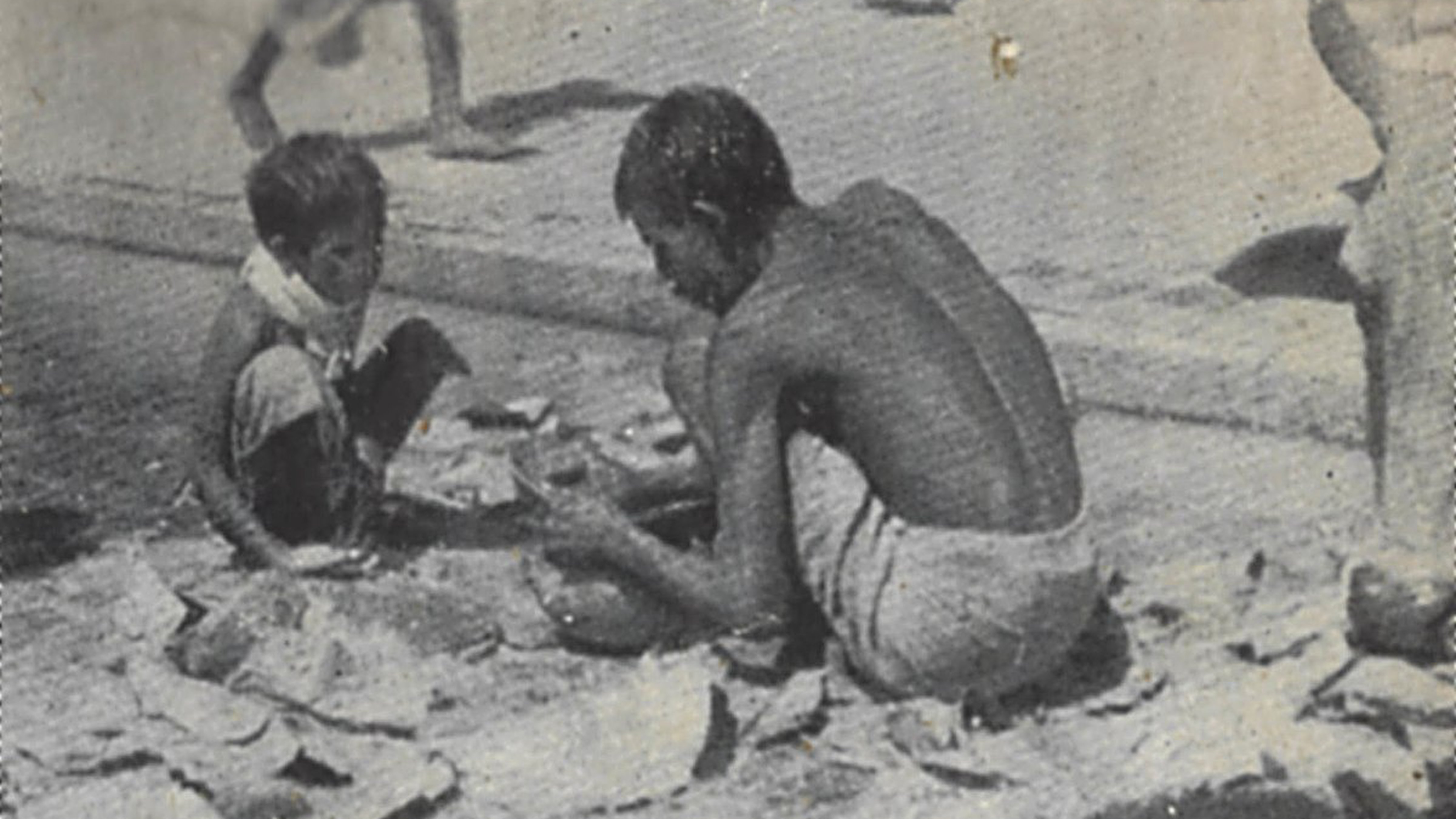
A boy, his father, and a cow rummage for scraps on a street during the Bengal famine of 1943 /
Wikimedia Commons

This year marks the 75th anniversary of the Bengal famine of 1943, a heart-rending episode in which three million persons died, and which epitomised the callousness of imperialism. The scale of devastation can be understood if we remember that in the United Kingdom, taking civilian and military casualties together, the total loss of life during the entire Second World War was just 0.45 million and in the United States of America 0.42 million. In Germany itself, the loss has been estimated as anywhere between 6.6 and 8.8 million and in the former Soviet Union, which suffered the most, at around 24 million. To say that the populations of these countries were smaller than India’s is beside the point; their comparison should be with the population of Bengal. In 1941, the population of undivided Bengal was only slightly higher, 60 million, compared to 47 million in UK; yet its loss of life was seven times that of the UK in spite of its not being a theatre of war.

The news of the famine was sought to be downplayed at the time, which is hardly surprising since the famine was a direct result of the escalation of British war expenditure on the eastern front. A war demands substantial resources; and the resources for Britain’s war against Japan were largely extracted out of the people of Bengal. Even so, such a massive loss of life could have been avoided if the manner of financing war expenditure had been different, but the same callousness which squeezed the innocent masses of a non-belligerent country for sustaining the war effort of the colonial power also prevented this squeeze from being exercised in a more humane manner than through the deaths of three million people.

If resources are to be raised from the people (let us overlook the absurdity of resources being raised from the colonised people of Bengal for the British war effort), then the obvious way of doing so is through taxation. But while taxation releases goods from those paying taxes, the goods so released may not match the goods required by the military. Moreover, the goods released by taxation may even fall absolutely short of the goods demanded by the expenditure of tax revenue, if tax payments come out of savings (that is,taxation releases no goods at all).

There would still arise therefore, even in the presence of a balanced budget (where a larger tax revenue finances a larger war expenditure), excess demand for certain commodities, and if these commodities happen to be essential goods like foodgrains, then acute food scarcity can arise in spite of the war expenditure being financed by an equivalent amount of taxation. Hence, it is imperative that the government, even while raising taxes to finance war expenditure, must simultaneously institute a regime of rationing of essential goods.

This is what Britain did at home during the war. It raised higher taxes and introduced a regime of universal statutory rationing of essential goods because of which the poor in Britain were reportedly better fed during the war than earlier. But in colonial India this did not happen; rationing, when it was introduced, was confined to urban Bengal, leaving rural areas to the mercy of the market, and resources were raised not through taxation but an altogether different method (Utsa Patnaik, Economic and Political Weekly, October 20).

The British government deposited IOUs drawn in favour of the Reserve Bank of India in London, and against these the RBI printed currency which was spent by Britain within India for its war effort. Since no goods could be imported against these IOUs, this basically meant creating additional demand for the existing amount of goods here, with the newly-printed money that was used for war expenditure. In addition, since British India also joined the war (without any sanction from the Indian people), its government also had to undertake war expenditure and this too was financed by a fiscal deficit, essentially by printing money; this further added to excess demand.

When expenditure is so financed, the goods for it are released as follows. Such excess demand generates inflation, because of which profits increase everywhere. While the working people with fixed money incomes lose, the profit-earners (including traders) everywhere gain correspondingly. But since the latter save more out of their incomes than the former, a good part of the gains they make is saved by them, so that the goods corresponding to such savings now become available to cover the government’s military needs. Hence, while the war expenditure is nominally financed by printed money, the real goods made available for it are obtained through generating such savings.

The inflation so generated is called a “profit inflation” and the additional savings generated through such inflation, which the government uses for its military requirements, are called “forced savings”. Britain’s, and British India’s, war expenditure on the eastern front was financed by a profit inflation generating such forced savings.

Such financing has three peculiar properties which make it utterly repugnant. First, the people who make the real sacrifice of consumption, because they cannot afford to buy goods at the higher prices caused by inflation, are the working people, while the persons who get the credit for such savings (those whose income and wealth increase) are the profit-earners, which is invidious. Second, if the profit-earners save, say, only half their income while habitually consuming the other half, then, for obtaining 100 units of goods for military purposes, the consumption of the working people has to be squeezed by 200, so that as the income of the profit-earners increases by 200 they can hand over 100 for military purposes while consuming an additional 100 themselves. And if they hoard a further 100, the squeeze on working people has to be 300. The squeeze is thus several times the military requirements. Third, the squeeze is imposed precisely upon fixed money income earners, who are the poorest segments of the population.

Financing war expenditure in this way imposed a heavy burden, especially on the poor people of rural Bengal who were net food purchasers (since much of the war expenditure was incurred there). The forced reduction in consumption they had to undergo entailed a drastic reduction in their foodgrain intake, and hence the famine. The poorest among them, with relatively inflexible money incomes and no cash reserves to fall back upon for maintaining real consumption in the face of higher prices, were the most severely affected (Amartya Sen, Poverty and Famines).

Ironically, the IOUs deposited in London (the so-called ‘sterling balances’) which were the counterpart of the forced savings imposed upon the hapless famine-stricken people of rural Bengal lost much of their value after the war. A strong official lobby wanted a complete repudiation of that external debt of Britain, arguing that India too had benefited from the British pursuit of the war on the eastern front. But while that opinion mercifully did not prevail, the post-war inflation, boosted by the Korean War boom, reduced the real value of sterling balances, as did the devaluation of the British pound-sterling in 1949 (which reduced their worth vis-à-vis the dollar and commodities with dollar-denominated prices). The death of three million people did not even yield much for posterity.

source: http://www.telegraphindia.com / The Telegraph, Online Edition / Home> Opinion / by Prabhat Patnaik / November 14th, 2018
KMC gives away Kolkata Shree awards

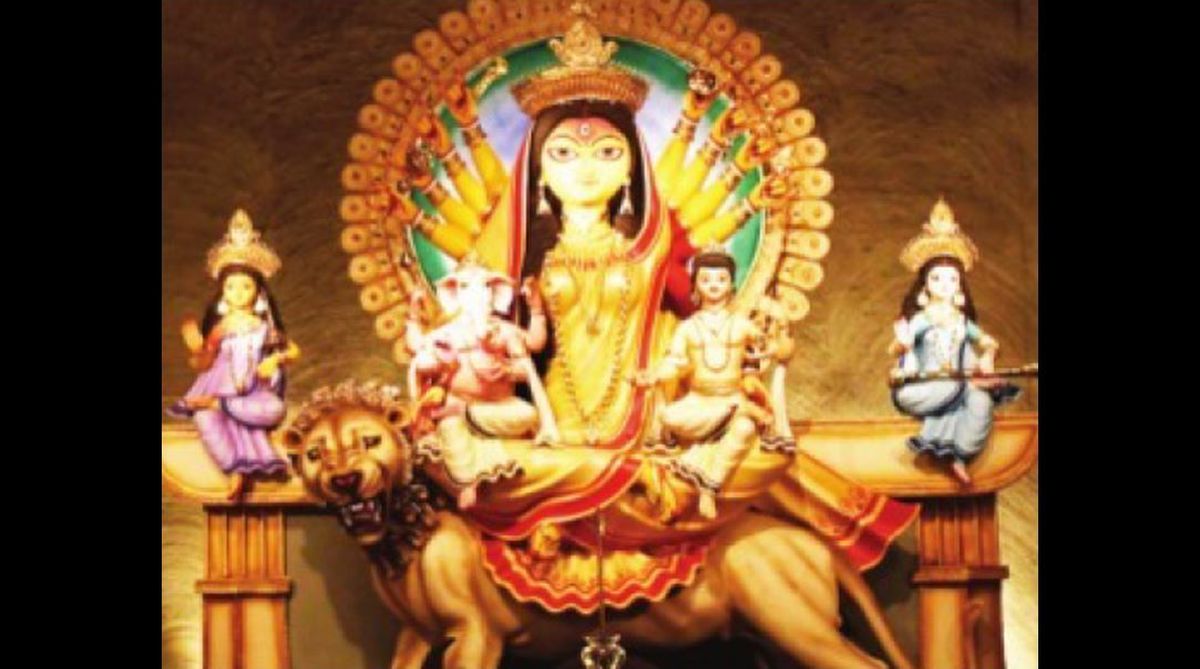
The Kolkata Municipal Corporation (KMC) on Monday announced the name of the Puja committees that have secured the winning position in the Kolkata Shree 2018 that is given out every year to best Pujas by the civic body.

Mayor Sovan Chatterjee on Monday announced the name of Puja committees that have won the Kolkata Shree award 2018. Around 100 Puja committees participated in the competition. The competition was judged by several eminent personalities who have shortlisted the winning Pujas.

A total of 10 categories had been reserved for shortlisting winners which are ‘Serar Sera’, ‘Sera Pujo’, ‘Sera Pratima’, ‘Sera Sailpik Utkorsho’, ‘Sera Bishoy’, ‘Sera Aloksajja’, ‘Sera Paribesh’, ‘Sera Parichana Pujo’, ‘Sera Sambhabana’ and ‘Mayor’s Choice’.

The following Pujas have won in the category of ‘Serar Sera’: Chetla Agrani, 95 Palli, Suruchi Sangha and Tridhara Akalbodhan. In the ‘Sera Pujo’ category the winners are: Naktala Udayan Sangha , Rajdanga Nabauday Sangha, Hindustan Club and Abasar Sarbojanin.

For ‘Sera Pratima’ category: Baghbazar Sarbojanin, Tala Pratay, Kashi Bose Lane and Behala Natun Dal.

The awards for ‘Sera Salpik Utkorsho’ category have been secured by: Shib Mandir Sarbojanin, Selimpur Pally Sarbajanin, 66 Pally and Bosepukur Sitala Mandir; ‘Sera Bishoy’ category: Bhawanipur Sadhin Sangha, 75 Pally Sarbojanin, Bosepukur Talbagan and Samaj Sebi Sangha; ‘Sera Aloksajja’ category: Ekdalia Evergreen, Badamtala Ashar Sangha, Dakshin Kalikata Sarbojanin and Kalighat Milan Samity. A total of 45 Puja committees have won in the category of ‘Mayor’s Choice’.

source: http://www.thestatesman.com / The Statesman / Home> Cities / by Statesman News Service, Kolkata / October 16th, 2018

3 quirky Indian tales from French Reunion Island

The Indian-origin community on this paradise isle is a blend of cultures and eras

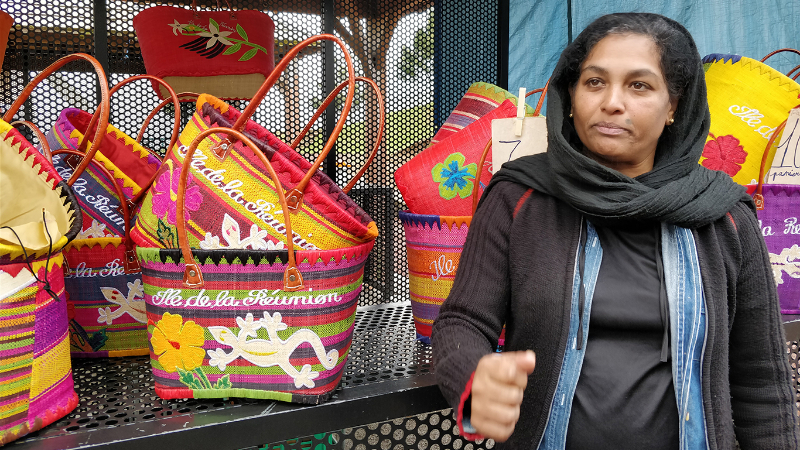
A basket maker on Reunion Island whose ancestors are from the Malabar coast
Image: Sudha Pillai

Reunion Islands in the Indian Ocean, an overseas department of France and about 9,000 km from Paris, is like a delicious kichdi – a goulash of African, Asian and European cultures. It’s the comfort food that would lift your spirits in an acrimonious world.

Sandwiched between Mauritius and Africa, this paradise isle has mountains, valleys, sandy beaches, pristine blue seas and vertiginous falls. But more than the natural beauty, it is the people of the island that give it its distinctive characteristics.

And people of Indian origin – about 45 per cent of the total population of 837,000 inhabitants – are shining testimonies to this amalgamation.

How they came to be there

The island, formed from a volcanic rising five million years ago, was first discovered by Arab traders. Soon the invaders — Portuguese, British and the French — arrived. Finally, the French colonised it, and christened it Reunion Island in 1793.

An apt name for what the island is today, if not historically accurate.

Reunion Island began as a place where prisoners were left to die. But the prisoners started living idyllic lives – swimming in the sea, climbing mountains, growing rice, vegetables and fruits in the fertile volcanic soil. After all, the island has 300 micro-climates.

The French decided to reclaim this paradise for themselves. First they brought Africans here as slaves for the sugarcane plantations. After slavery was abolished, they fetched indentured workers from India.

And that is how the Indian community started out on this unlikely island.

Mary Theresa Subramaniam

I met Mary Theresa Subramaniam at the Saint-Pierre market, where she’s been working for the past 30 years. Mary’s great-grandfather came to the island with his wife and nine children. But he abandoned them and returned to India. His young wife raised her children in a foreign land.

Clad in a skirt and lavender top, Mary has distinctive South Indian features. She’s never visited India. She believes she may have a “few relatives back in India” but has no clue about their whereabouts. This is also a typical story amongst the Indian community here.

Mary is both a Hindu and a Christian. And there are many like her on the island
Image: Sudha Pillai

Mary is both a Hindu and a Christian. And there are many like her on the island.

When the Hindu Indians got off the boat two things happened at the immigration office. First, their names were Frenchified. Mary says, “The immigration officers couldn’t get the Indian names right.” Vaidyalingam became Vaitilingam, Arumugam became Aroumougam, and so on.

Second, they were asked to embrace Christianity. Due to the fear of retribution, they embraced it and a few continued to practise Hinduism secretly. Over time, the lines between faiths blurred. When Reunion Islands embraced religious diversity, most Indian families found themselves both Christian and Hindu.

Priest Balaram

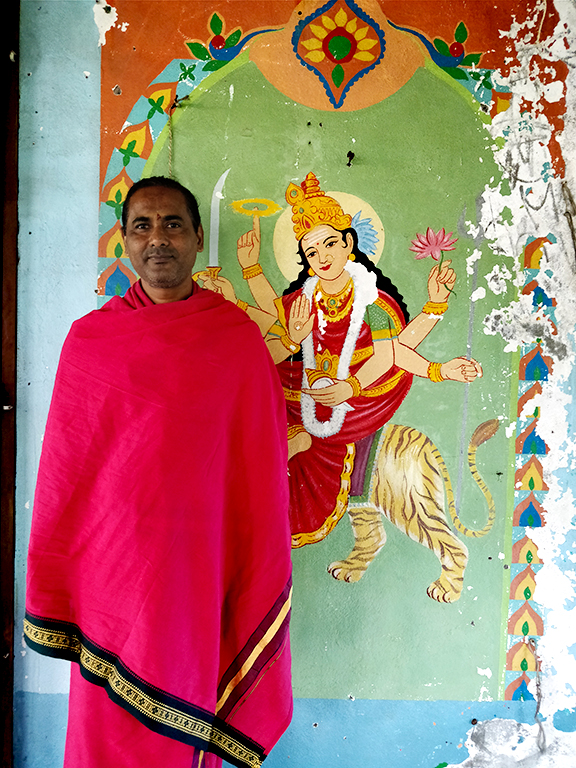
A short walk from the market is the Mahakali de Bazaar or the Mahakali temple. Mahakali Utsav and Tamil New Year’s Day are big celebrations on the island.

Tall and lanky Balaram, who can trace his roots back to Pondicherry, is the presiding priest at the Mahakali temple. He is, like most Indians here, fluent in French. “Because that is what we speak at home,” he says. Balaram’s great-grandfather came to Reunion Island. He is one of the few Indians on the island who still has some connection to India. Every year he goes to Munjod, a village in Kanjeepuram, to study Sanskrit.

Balaram, the presiding priest at the Mahakali temple, speaks French at home
Image: Sudha Pillai

On the island, Indians from South India, often Hindu, are known as Malbars. Immigrants from North India came later. Muslim Indians from North India are known as Zarabes.

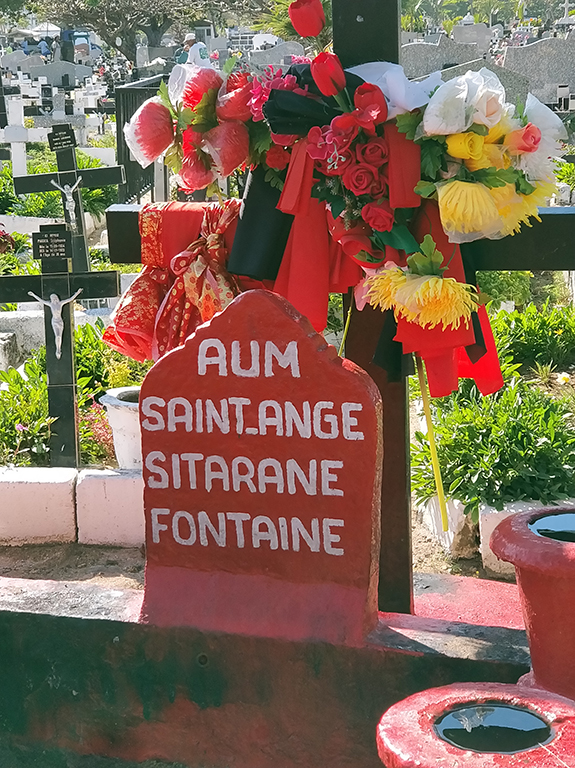
Temples and mosques – the first mosque of France was built here – stand alongside churches. Nowhere is this intermingling of faiths more evident than in the pretty cemeteries. At the St-Pierre Cemetery, amidst decorative family vaults and single graves with cherubs on tombstones, I found numerous graves of Indian-origin Christians. They had a saffron-coloured Trishul-cross combo on the headstones. This was the best religious khichdi I had ever seen.

Tombstones of Indian origin Christians at the St-Pierre Cemetery
Image: Sudha Pillai

Jacky Arourmougam

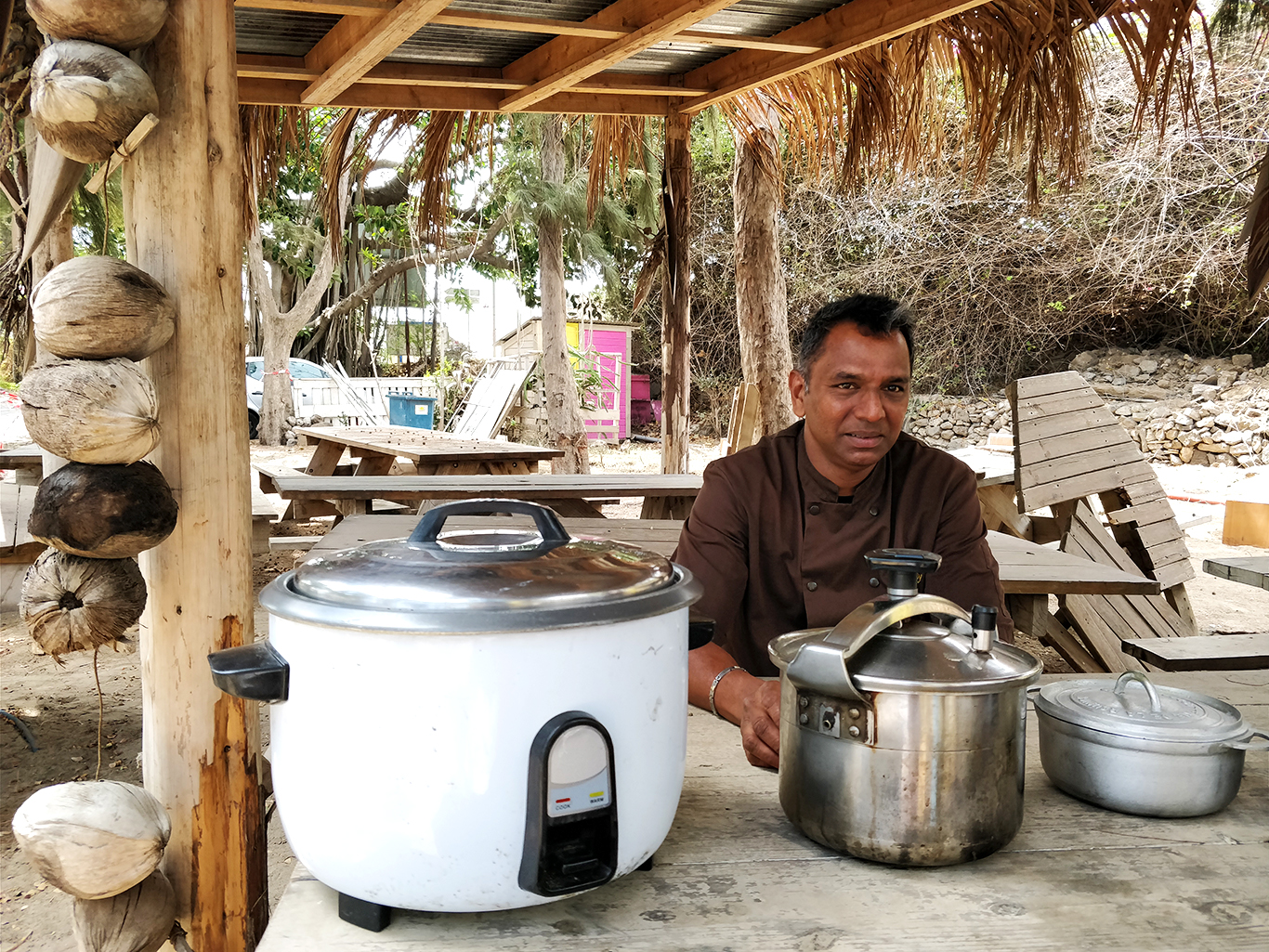
Many elements of India are integrated into the weave of the island. But the influence of Indian cuisine stands out. Jacky Arourmougam, a celebrity chef on the Island, says, “About 80 percent of Creole food is inspired by India.” Rice and lentils are staples along with croissants and baguettes. Samoussas or Samosa is the undisputed national dish.

I enjoyed an outdoor picnic at Trou d’eau at La Saline Les Bains with Jacky. His forefathers hail from Bengal and South India. Some of his unique dishes are inspired by the secret recipes of his mother and grandmother who came from Bengal. When the French-sounding ‘achhard’ is placed on the table, you realise it is but the spicy Indian achaar and that kurkuma is turmeric which is used extensively in the island cuisine. And chicken cari draws heavily from the Indian curry. No doubt, the mingling of communities has given Reunion Island its unique food culture.

Celebrity chef Jacky Arourmougam is inspired by the recipes of his mother and grandmother who came from Bengal
Image: Sudha Pillai

For most Indians in Reunion Island, their acquaintance with India has been through faded stories of their ancestors travelling through the family vine or the banyan and mango trees in the backyard, the seeds of which were brought to the island by their forefathers or the recipes that are carefully passed down from great-great-grandmothers. While few Indian-islanders desire to travel to India, most of them are indifferent to the distant association. Reunion Island is where they feel rooted. It’s not that they shun their past. It is just that they prefer to live in the present.

source: http://www.telegraphindia.com / The Telegraph,Online edition / Home> Travel / by Sudha Pillai / November 13th, 2018

Graphic novels give a push to Bengal’s dying folk arts

In a unique initiative, three graphic novels have been published on three different art forms of the State, both in Bengali and English in 2018.

Pintu, a teenager from Murshidabad is surprised to hear it from Gurudev Rabindranath Tagore that he wanted to introduce Raibenshe, a genre of folk martial dance, at Santinketan, while Tito, a boy from Kolkata is amazed that behind the Chhau masks, there are real people dancing.

These are excerpts from graphic novels published by the West Bengal government, the UNESCO and Banglanatk.com for promotion of traditional crafts of West Bengal. In a unique initiative, three such graphic novels have been published on three different art forms of the State, both in Bengali and English in 2018.

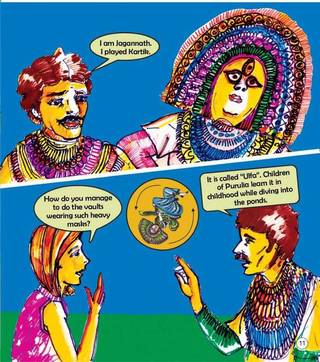
The graphic story on the Purulia’s famous Chhau dance is called Experiencing Chhau (Dekhe Elam Chhau) while the book on Raibenshe, folk martial dance form south Bengal is called Raibenshe Rocks ( Ajo Aache Raibenshe). The third publication is on the little known puppetry from Nadia titled The tale of a lost leg ( Harano Payer Kissa).

“These graphic novels are part of our efforts to promote cultural industries in different parts of the State under the project Rural Crafts & Cultural Hubs, which is supported by Department of Micro Small and Medium Enterprises and UNESCO,” said Ananya Bhattacharya, director of Banglanatak.com, a social enterprise working with artisans across different States of the country.

Ms. Bhattacharya said that the idea behind the publication is to engage young minds so that they become aware about folk tradition of the State.

“These graphic stories or short novels, whatever you call them, are not more than 50 pages and are designed with lots of colourful sketches to engage young readers. While the characters are fictional, it has been our effort to pack as much information about the folk art forms as possible in these stories,” Ranjan Sen, author of these publications said.

These stories also provide a glimpse of efforts taken up to revive these dying folk art form. Mr Sen said, adding that such initiative to encourage awareness about folk art has not been taken anywhere in the country.

These graphic novels are being distributed to children through school outreach programmes and at different fairs and festival.

There are plans to publish more of such graphic novels and one publication on Baul singers of the State is in the offing. Mr. Bhattacharya said that under the Rural Crafts & Cultural Hub initiative, work is going on 15 different crafts of the State and similar publications engaging young minds will be brought on most of these art forms.

source: http://www.thehindu.com / The Hindu / Home> Books / by Shiv Sahay Singh / Kolkata – November 12th, 2018

KIFF, marking 100 years of Bengali cinema, to focus on restoration

Kolkata fest to focus on preservation work with a workshop and screening of 13 restored movies

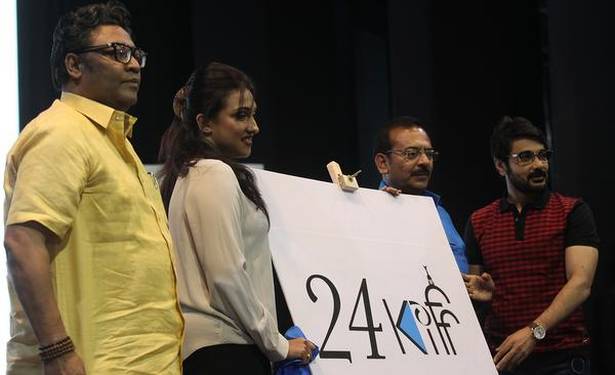
One hundred years after the first Bengali film, Bilwamangal, was screened, the 24th Kolkata International Film Festival (KIFF), to be held from November 10 to 17, will not only celebrate the journey through the past century but also focus on preservation and restoration of Bengali classics.

One of the major draws of this year’s KIFF is a workshop on film preservation organised by the Film Heritage Foundation (FHF). The workshop, which will train 60 resource personnel in the art of preservation and restoration, also aims to create awareness on the urgent need to preserve the moving image heritage of the Bengali film industry.

‘Silent films lost’
Shivendra Singh Dungarpur, founder director of FHF, said that Bengali films were the most affected when it came to preservation. “We have lost all the silent films made here between 1918 and early 1930s, except one film, Jamaibabu, of 1931,” Mr. Dungarpur said.

The FHF has compiled a list of 100 Bengali films that are in urgent need of preservation and restoration. They include Bimal Roy’s Udayer Pathe (1944), Suchitra Sen-Uttam Kumar starrer Harano Sur (1957), Tapan Sinha’s Kabuliwala (1957), Satyajit Ray’s Parash Pathar (1958) and Teen Kanya (1961), and Mrinal Sen’s Padatik (1973), among others. Most of these films are lying with individual producers or with the State government.

What makes the workshop and this year’s KIFF more interesting is that 13 classics of world cinema — including The Apu Trilogy (Pather Panchali, Aparajito and Apur Sansar) of Satyajit Ray, Bicycle Thieves of Vittiorio De Sica and Blow Up of Michelangelo Antonioni — will be screened as ‘restored classics’. Before each screening, an expert on film restoration will talk about the restoration process of that particular film.

“Restoration is an art form and we have to train people in this aspect so that our heritage of moving images can be preserved. Moreover, we have to also understand that restoration is more costly that creation,” Mr. Dungarpur said.

Vivek Kumar, director general of KIFF, said the workshop — whose organisers include Viacom18 and International Federation of Film Archives — is a “very important” component of the festival. “Eleven of the most qualified archivist and film restorers of the world will participate in the workshop,”” Mr. Kumar said.

There will be a number of other events to commemorate 100 years of Bengali cinema . This includes an exhibition and also conferring of a special award named after one of the first filmmakers of Bengal, Hiralal Sen. The 24th edition of KIFF will also publish a directory of Bengali films of the past hundred years, a brochure on historical significance of Bengali cinema and a special screening of 14 Bengali films. The inaugural film at the festival will be Uttam Kumar-Tanuja-starrer Bengali film Antony Firingee (1967).

As many as 171 feature films and 150 short films and documentaries from 70 countries will be screened at 16 different venues in the city and suburbs.

“The focus country is Australia, which is also celebrating 100 years of their cinema,” Mr. Kumar said, adding that a delegation of artist and film personalities from that country will be attending the KIFF. The master class, a regular event at the KIFF for film students and cinema enthusiasts, will be conducted by Australian director Philip Noyce.

source: http://www.thehindu.com / The Hindu / Home> Entertainment> Movies / by Shiv Sahay Singh / Kolkata – November 03rd, 2018

Siliguri artist Biplab Sarkar shines in Scotland, recalls struggle

Meet Biplab Sarkar, who was in Scotland for three months for his creative work, and who recently returned to Delhi, where he has established himself as an artist after a long struggle since his school days.

Biplab Sarkar. (Photo: Facebook/@serendipityartsfestival)

True to a proverb that says ‘a wise man does not have proper recognition in his area,’ this Siliguri resident is also a fitting example of a Bengali saying ‘Geyo Yogi Bhik Payna.’

Meet Biplab Sarkar, who was in Scotland for three months for his creative work, and who recently returned to Delhi, where he has established himself as an artist after a long struggle since his school days.

Mr Sarkar, 28, a former student of the Siliguri Baradakanta Vidyapith, says he has not looked backed ever since he has been selected to receive the Glenfiddich International Artists Residency award as an emerging artist of the year 2018.

“Significantly, my artwork was re-coloured in a Kali Puja pandal in Siliguri some time ago, but I did not bother to protest,” says Mr Sarkar, who is in town to celebrate the Pujas. He says he will return to Delhi after Bhai Phonta, which falls on Friday.

Mr Sarkar was chosen as an emerging artist of the year 2018 in March this year after an exhibition of the top five finalists’ works, whose names were shortlisted from nearly 2,500 participants across the country.

He represented India in Scotland as part of the Glenfiddich Artists in Residence programme, where he worked for three months at the Glenfiddich Distillery with a group of eight artists from around the world.

Mr Sarkar, who dreamed to be an artist and wanted to continue his studies in an art college, completed his BA degree in History from the Bagdogra KGTM college. After that, he had to earn his livelihood as an art teacher in private schools in Siliguri and he finally left for Santiniketan on guidance from his art teacher here.

“Only a mad man can make himself an artist after struggling hard and even without food for half a day due to paucity of support. If I can do something, why don’t you take the risk in your life,” his teacher told him once when he was in a dilemma over his future studies, he recalls.

He finally appeared in an examination for admission in Santiniketan and his dream came true after he qualified as a student of Kala Bhawan in Viswa Bharati University.

Later, as he decided to leave Santiniketan to build for himself a “brighter career,” he qualified for admissions in the Delhi University for Masters, where he says he faced acute financial crunch and could not manage admission fees amounting to around Rs 26,000.

“My English teacher, who loved me, helped me a lot by providing part of the admission fees for the Delhi University,” Mr Sarkar recalls.

Mr Sarkar hung around with his old friends in a forest area on the banks of the river Sahu in Siliguri on Diwali.

Mr Sarkar, who works on water colour, got a significant break in his life from India Gate in Delhi where he started working on several hawkers and their struggles and hardworking lifestyle.

“I did not prefer to showcase the misery of the life of hawkers, but tried to portray their joys and sorrows,” Mr Sarkar said. He later worked in Scotland on manufacturing of drums for storing whisky and presented a series of paintings on them with a “natural sound effect,” which was much appreciated there.

source: http://www.thestatesman.com / The Statesman / Home> Cities> Siliguri / by Manas R Banerjee / Siliguri – November 09th, 2018

No priest, women perform Kali Puja in Siliguri

The managing committee of the Ashram’s Siliguri branch has also roped in people from all communities and religions like Hindu, Muslim, Sikh, Buddhism, and Jainism.

(Photo: SNS)

At a time when the Sabarimala Ayyappa Temple has closed its doors for girls and women despite a Supreme Court order, Kali Puja organisers in Siliguri have shunned traditions and allowed a group of women in Siliguri to worship Adya Maa (Kali), while they have organised the puja without a priest.

Significantly, when the puja organised by the Matrisangha Jankalyan Ashram was inaugurated, a group of five women welcomed Goddess Adha Kali by presenting a dance and a song.

Women were directly involved in organising the puja since Tuesday midnight to dawn on Wednesday, while hundreds of Siliguri people witnessed the unique presentation.

The managing committee of the Ashram’s Siliguri branch has also roped in people from all communities and religions like Hindu, Muslim, Sikh, Buddhism, and Jainism.

“Devotees have been offering their prayers and presenting various devotional songs, hymns and even Rabindra Sangeet,” organisers said.

As the Yajna went on, hundreds of people visiting the pandal were greeted by a Rabindra Sangeet ‘Agun’r Parosh Moni Chhoao Prane…’, while the music continues till the oblation of fire.

Notably, the Late Sudin Kumar Mitra, an employee of the Central excise department, established the Matrisangha Jankalyan Ashram, at different locations, including Kolkata and Siliguri.

Mitra organised the first puja in Siliguri in 1978, and termed it the ‘Sarba Bharatiya Adya Kali Puja’ and then set up the Ashram on Balaidas Chatterjee Road at Hakimpara in Siliguri.

Several devotees of Mitra, after his death in 1984, maintain the tradition by showcasing his photograph and his method of worship.

“Our Gurudev Sri Sudin Kumar Mitra has asked us to perform the Kali Puja without a priest, but by involving many people from the society. We maintain the tradition, the method of worship popularized by him and especially his guidance during the puja here. ‘No priest is required for the puja, you do your own puja,’ he used to say,” a member of the managing committee of the Ashram, Bikash Das, said.

“You will not be getting Ma (mother) by ignoring the people (Manush), because the first letter of Manush is Ma,” Sudin Kumar Mitra wrote on 29 July 1969.

Mitra, a resident of Kolkata, started the first puja in Allahabad, as he was posted there and went to many places in India and finally settled in Siliguri.

A poet, Subhan Das, who curiously witnessed that puja throughout the night, said: “Women took part directly to organise the puja when women are being prevented in a temple at Sabarimala in Kerala. Such puja is so significant at the present times we are experiencing.”

“I was delighted as the Rabindra Sangeet ‘Aguner Parosh Moni’ was played during the Yajna,” he added.

source: http://www.thestatesman.com / The Statesman / Home> Cities / by Manas R Banerjee / Siliguri – November 08th, 2018