All posts by wellnmed@gmail.com
03
02
01 Oct
30 b
30 a
29
28
50 years of NSS at Xavier’s
At St Xavier’s College, every student is a NSS volunteer and the social outreach activity is mandatory for all students
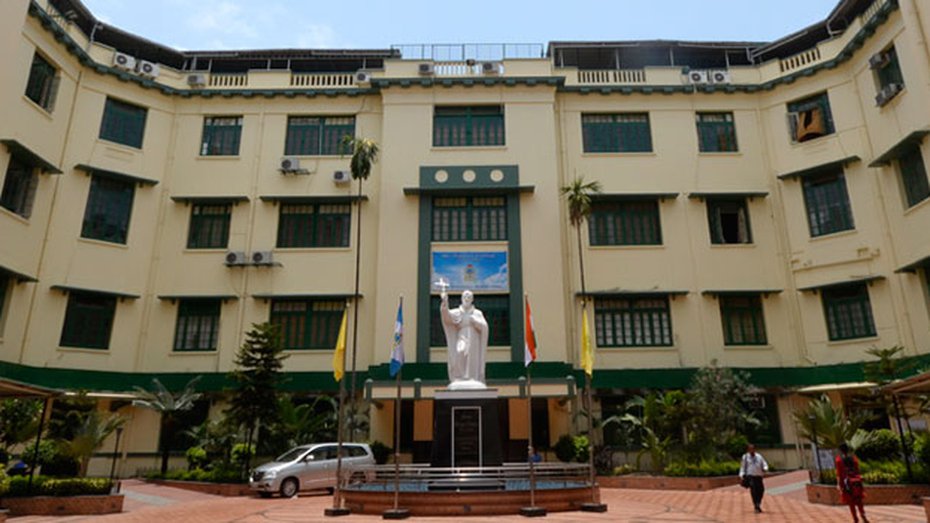
St Xavier’s College students on Tuesday marked 50 years of the institute’s National Service Scheme (NSS) by pledging to reach out to poor students and ensure their mental wellness and fight plastic pollution.
At least 230 students, divided into 23 teams, discussed education, health, environment and the need for mental wellness of young students.
At the end of the sessions, the teams concluded mental wellness and plastic pollution were two major problems and their “active participation” was needed to resolve them.
The NSS — sponsored by the youth affairs and sports ministry — was started at St Xavier’s on September 24, 1969, the day it was launched in the country for college and university students.
At St Xavier’s College, every student is a NSS volunteer and the social outreach activity is mandatory for all students. “The primary objective of the event was to encourage students to work together for social causes,” Father Dominic Savio, principal, said.
A seminar on “Social Responsibility of College Students — Its Need and Relevance Today” was held on the campus to mark the occasion. NSS volunteers of the college regularly visit 12 villages of South 24-Parganas where they are involved in welfare activities for poor students.
“At least six of the 23 teams spoke on the need for mental wellness and the role students of St Xavier’s could play in helping those suffering from low mental well-being,” Sheryl Francis, the director of NSS and the college’s social work department, said.
The teams had been asked to come up with suggestions on how the problems could be resolved. A team suggested that the process start on the campus. The experience could be used to help poor students.
For example, someone in a class may be going through a crisis at home. “There could be someone showing signs of low mental well-being. He/she may be silent…. We can start an exercise to identify our friends who show such signs. We can provide them with a platform to address their problems,” according to a suggestion from one of the teams.
Arranging regular adda where students get to share their day’s happy and sad moments was another suggestion. The same process could be followed to help poor students outside the campus.
Almost all the students said they were “concerned” about plastic pollution. The students decided to ban the use of plastic on the campus.
source: http://www.telegraphindia.com / The Telegraph, online edition / Home> West Bengal / by Mita Mukherjee in Calcutta / September 27th, 2019
Time stops at Trincas, as it celebrates its 60th birthday this weekend
“It was a magical time: gentlemen in suits and ties and ladies in evening gowns, all decked up to eat, drink, dance and sing-along. In the 1970s and ‘80s, Trincas was dominated by the Anglo-Indians. It definitely is Calcutta’s most nostalgic location.”
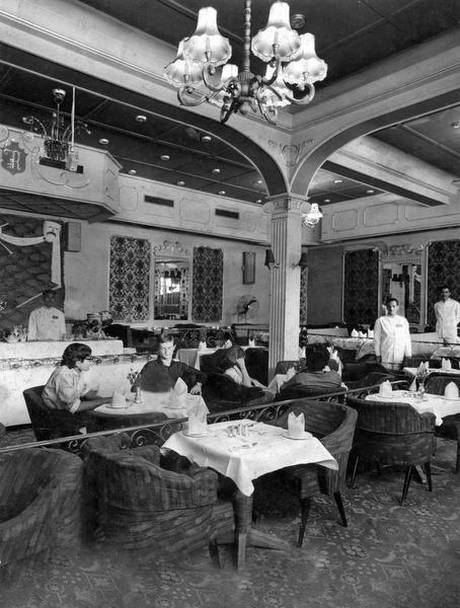
Usha Uthup has more reason than most to be nostalgic about the iconic restaurant and performance venue — her maiden performance at Trincas was what made her the darling of the city, and eventually the country.
Trincas, one of Kolkata’s most iconic venues for a family evening out, is celebrating its 60th birthday this weekend. It was established by a Swiss man, remembered today only as Mr. Trinca, back in the 1930s as a bakery and tea house, but was taken over by Ellias Joshua and Om Prakash Puri in 1959, then shutdown for extensive renovations before reopening in 1961. Famous for live music performances, fresh food and a wide range of drinks at the bar, it became Park Street’s main attraction.
Celebrating music
The Puris eventually innovated again, sectioning off a third of the floorspace to make a quiet area and pioneering Szechuan cuisine in the city in the newly christened ‘Ming Room’. But what Trincas has been known for most, are its legendary live music performances. Carlton Kitto, an Anglo-Indian jazz guitarist, was followed quickly by Usha Uthup, whose maiden performance at Trincas was in 1969. Returning to headline the Diamond Jubilee celebrations over three days, October 27, 28 and 29, Uthup recalls her four decades at Trincas — “The people and their dress have changed, Trincas has not. It’s the same great music, good food and drinks and people enjoying themselves”.
Uthup found her way to Trincas after she began her career in the erstwhile Bombay at the Talk of the Town bar, now known as Not Just Jazz By The Bay. Her father was Vaidyanath Someshwar Sami Iyer, so returning to Madras’ Mount Road to perform in the basement of what used to be the Safire theatre complex in a club called Nine Gems, was homecoming for her.
Cornel Bloud, the lead guitarist and occasional singer who has been gracing Trincas’ stage just about every night for the last 25 years, also has fond memories. “The crowd has changed a lot, we don’t see many older people like we used to, now it’s mainly younger people coming to relax with their friends, but they all come to enjoy themselves. Trincas is a brand: time will pass but people know to come here for a good evening out with their families.”
Today’s customers are far more relaxed, jeans and T-shirts have replaced suits and dresses, save for the handful who have been stalwarts for decades. Office goers throng the restaurant on weekdays, while those seeking an alternative to the thumping bars and nightclubs of the city come to Trincas to listen to the Eagles and other classics that walk them through the 1960s, ’70s and ’80s. Weekends see the wooden dance floor in front of the stage cleared for those who can jive, twist and waltz — often gracefully, sometimes not so. Sing-alongs are also popular, with the band and lead singers frequently taking song requests scribbled on napkins.
Om Prakash Puri’s grandson Anand, having spent decades running similar establishments in Mumbai and Delhi, has now returned to the family business with a keen eye on keeping pace with changing customers. Tall with a managerial presence, Anand sits across the table from me narrating his plans for the coming decades. He coordinates the waiters with an easy flick of the wrist or tap of a finger. “I’ve seen Cal change. It’s not the sleepy town it used to be, so many venues for live music, ranging from rock to indie, have popped up everywhere. I see writers, poets, musicians all over the city. I need to let them know Trincas is for them too, while not altering where Trincas has come from.”
Anand’s calm exterior hides myriad plans milling about on a war footing below the surface. He is setting about replacing the flowery curtains with the old, blood-red velvet drapes, tied back with old-fashioned thick ropes. Old pictures telling the story of the restaurant are going up, as are small red table lamps. His eyes dart around his family’s pride — “See the wall here?” — he points at a creamy space between speakers behind him.
“I’ve dug up some old photos for it. And there used to be a mirror here, I am going to get that back up, too.” The back of the stage has also gone back in time. “Do you remember the mirrors?” he asks me, and I nod. “Well, they too have gone. The old photos showed a red velvet sofa-backing type of backdrop, so I copied that and this is what we now have.”
While other live music bars and restaurants try their level best to keep up with rapidly changing times, Anand strikes a fine balance between taking Trincas even further back in time, and looking forward. As Trincas celebrates 60, a new generation of Puris are looking at 100.
source: http://www.thehindu.com / The Hindu / Home> Life & Style / by Anthony Khatchaturian / September 25th, 2019