All posts by wellnmed@gmail.com

Two rush to help those all fear to touch in Calcutta

Duo rescue people abandoned on roads, clean maggots and nurse them back to health
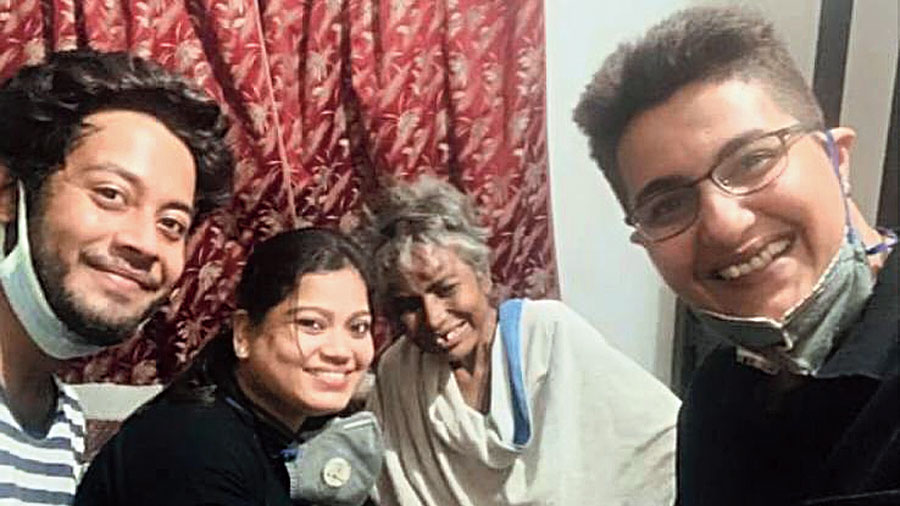
Priyanka Mitra (right) with Priyam Dutta (second from left), a friend (left) and a woman (third from left) they had rescued from a road in north Calcutta where she had been lying injured for three weeks / Telegraph picture

Two women have been rescuing people abandoned on the roads of Calcutta, many of whom government agencies had hesitated to touch because of the pandemic.

The two have been able to rescue seven people found abandoned near Nagerbazar, Amherst Street and Maniktala in the past 15 days. One of them who had been lying on the road for 14 days and had severe infection could not be saved.

Priyanka Mitra, 33, and Priyam Dutta, 33, have been helping abandoned and injured people and animals for the past five years, from cleaning their infected limbs to nursing them. The Covid crisis has left them busier.
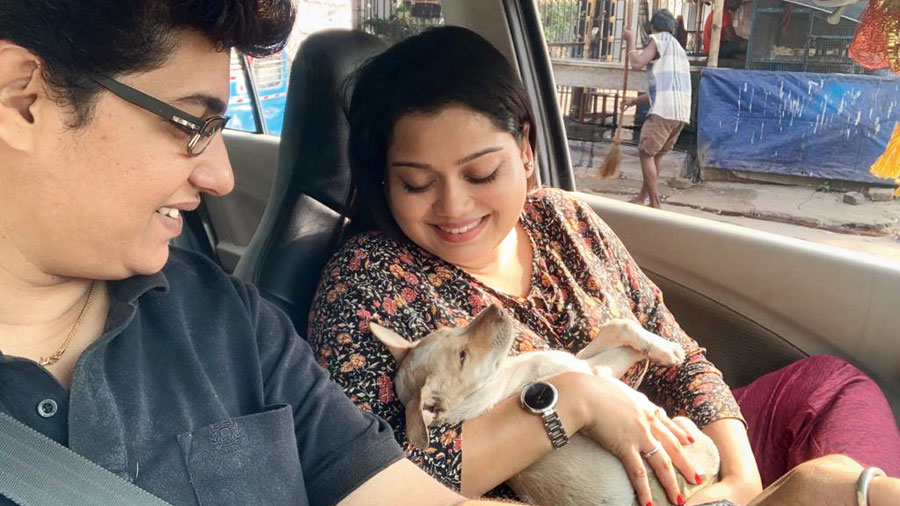
The two with a dog they rescued / Telegraph picture

Mitra works in a telecom company and lives with her mother in Baguiati. She is posted in Odisha but returns to Calcutta every weekend when she teams up with Dutta to serve the needy on the roads.

She has been working from home during the lockdown and the number of “cases” they have handled has gone up.

Dutta is a single mother. She lives with her 13-year-old son and father. She has been supporting Mitra outside her professional job as a physiotherapist.

On June 4, officers of Baguiati police station called them to “remove” a man who had been lying on the road for two days. Mitra and Dutta took the man to RG Kar hospital where he was diagnosed with “severe malnutrition”. They kept visiting him till he was back on his feet in four days and discharged.

The two have rescued hundreds of men and women lying incapacitated on roads in the past few years.

In the initial days, people around them would mostly react with shock, Mitra said. “Many years ago I found a woman inside the Indian Botanic Garden lying motionless… only her eyes kept flickering. When I started to remove the maggots moving on her, one of my friends said ‘Pagal hai kya? (are you mad?)’.”

She said she ignored such jibes and continued to do what she thought was right.
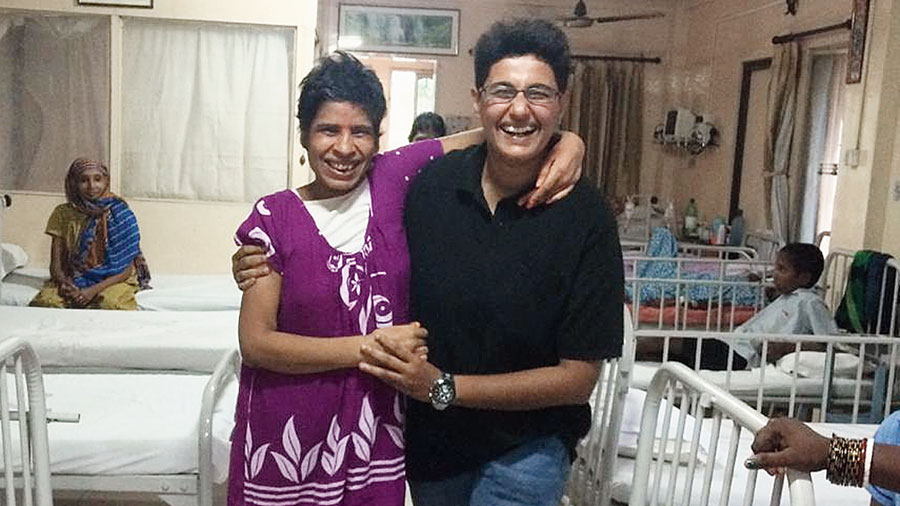
Priyanka with a woman they had found unconscious on the street with both her legs fractured. This picture is when she was back on her feet after surgery at RG Kar hospital. / Telegraph picture

Both Mitra and Dutta have always used gloves as their work involves touching strangers often covered in dirt and at times cleaning maggots at the risk of getting infected themselves.

These days, they have started wearing masks in addition to the gloves.

“I regret one incident… a woman was lying motionless in the Amherst Street area a few weeks ago. We cleaned

her face with a wet cloth and tried to make her drink some water… she gasped for a moment and passed away,” Mitra said. “I later found out she had been there on the road for five-six days without food and water. I wish someone had spotted her earlier. She could have been saved.”

Are they not afraid of a Covid infection?

“Of course we are! At times we keep a count of 14 days after helping a person on the road,” Mitra said. “At the end of the day, we tell each other, ‘amader barir lok holeo toh etai kortam (we would have done the same thing had it been someone from our family)’.”

Her father who was an insurance agent inspired her to do such a work. “He would always say we should feel lucky if we can support anyone who needs us. In his endeavour to help others, he left us nothing. I started from scratch.”

Around a decade ago, when she was in college, Mitra gave tuitions and sold Oxford dictionaries and recipe books for a commission of Rs 30 a book in Howrah and Salt Lake to pay her college fees. Once a dog was unleashed on her in Salt lake as the family did not want any salesperson in their apartment, she said.

Dutta, too, had her own set of struggles in her married life. She found a way to support her family by learning physiotherapy.

“I used to be afraid of cockroaches. But seeing her pluck out each and every maggot… so sincerely to prevent the spread of infection, I have been able to overcome that fear, too,” Dutta who is more into feeding and curing stray dogs said.

Every night, the two would step out with home-made “mangsho-jhol bhaat and biscuits” to feed strays across the city.

The two have been taking uncared and unclaimed men and women to government hospitals where treatment is mostly free. The two bear any extra expenses. They said they were lucky to have the support of their families and police.

In March 2016, Mitra had spotted a woman lying on the road near Baguiati Joramandir. One of her legs was bandaged but her clothes and the condition of the bandage made it clear she had been abandoned, Mitra said.

“I contacted the police and got her admitted to RG Kar. She underwent multiple surgeries. We later learnt she hailed from Rajasthan and that her husband had thrashed and broken her leg before dumping her on the road,” Mitra said. “We managed to contact her home with the help of cops and various NGOs… her mother came and took her home. I will never forget her smile when she stood on her feet again.”

source: http://www.telegraphindia.com / The Telegraph, Online Edition / Home> West Bengal> Calcutta / by Monalisa Chaudhuri / Calcutta / August 06th, 2020
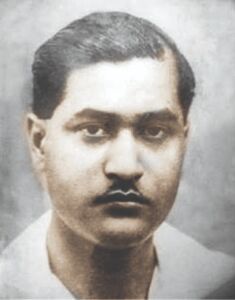
Versatile musical genius – Kamal Dasgupta

With a career of about fourteen years, Dasgupta have approximately 8,000 songs under his belt including 80 Bengali movies – his unique contribution was the invention of a shorthand method for swaralipi.

In the 1940s, he was a star composer. He had many firsts to his name. He was the most educated man across the industry in those days. He came to the rescue of singers who were trying to break into the music world. He gave music in the most successful films of the 40s. The sale of his private records touched an all-time high. Yet the man behind many unforgettable melodies has been forgotten – he was Kamal Dasgupta.

Kamal was born on July 28, 1912, in Kalia village in the district of Jasore, then in British India (now in Bangladesh). He was initiated into music by his father Prashanna Dasgupta. He later learnt it from his brother Bimal Dasgupta. Afterwards, he became a disciple of the legendary Dilip Kumar Roy and Ustad Zamiruddin Khan. He did his matriculation from Calcutta Academy. Later, he completed his B Com from Komila Victoria Collage. He joined Banaras Hindu University (BHU) for his masters. He earned his PhD from BHU for his work on Mirabai’s bhajaans and music.

Kamal Dasgupta was a versatile musical genius. He used to sing modern songs in Bangala, Hindi, Urdu and Tamil.

He was a brilliant composer who composed around 8,000 songs. His first composition was recorded in 1932 in the voice of Satyaboti. His composition was classical based and folk music. Later he tended to lean towards Thumri style and Naats.

In 1935, Kamal Dasgupta joined the Gramophone Company of India in Calcutta as a music director. During this stint, he developed a close and lasting association with the poet Nazrul Islam. They became fond of each other and the relationship lasted for eleven years (1934-45). The culmination of their friendship were 400 songs – inspired by the works of the poet.

Calcutta was the major hub of Indian films produced in the 1930s. New Theatres and Madan Pictures were the main studios along with the other companies. After earning a name with his compositions, Kamal tried his luck in films. His first picture was Pandit Moshai (1936) in Bangla which was followed by Sarbjanin, Vivahotsab and Devyani between 1936-1942.

The legendary actor, director Prathmesh Chandra Barua was impressed by his music and gave him a break in Jawaab in 1942. PC Barua directed both the version in Hindi and Bangla. The film was an instant hit. It had cult numbers like Toofan mail ye duniya toofan mail, Ae chand chhup na jana and Kuchh yaad na rahe.

Kamal Dasgupta’s next film was MP productions social, Hospital, starring Kanan Devi, Ahindra Choudhary and Heeralal. Its hit number was, Ghata chhayi ghanghor. The very same year he did another Barua Production, Ranee. The cast included J Ganguly, Kalawati, PC Barua and Jamuna. Like his earlier films, his music became popular.

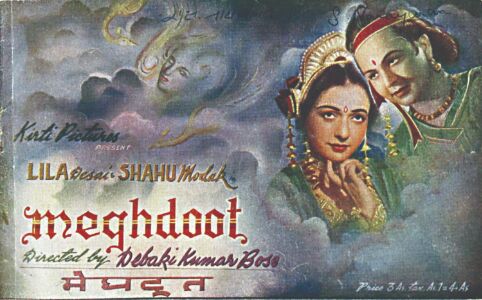
Kamal Dasgupta was as successful in films as he was in his private recording career. In 1944, he moved to Bombay and did the film Meghdoot (1945), based on the Sanskrit poet Kalidas. Leela Desai and Sahu Modak were in the lead. The film was directed by the legendary Debki Kumar Bose.

During his stay in Bombay, he did several films across different genres. His next film was Arabian Nights, directed by Niren Lahari. The cast included Kanan Devi, Nawab and Robin Majumdar. All the numbers of the film became very popular – Suno suno kya ek naya fasana, Hum dil ko, dil hamko samjhaye, Mujhe sapno se kaun jagaye re and Aankhon ki roshni hai dil ki ye ye chandani hai. The same year, he did a social film Bindiya, starring Ragini, Amar, M Shakeer and E Billimoriya. The film was directed by CM Luhar. Kamal Das Gupta used the voices of Anima Dasgupta, Kalyani Das, Hemant Kumar and Amar. Its hit numbers were: Hanso hanso ae kamal kali, Jeevan sargam pe aye jaa geet suhane, Meri aankhon mein ye aanshu nahi dil ki kahani hai and Chand pass hai raat andheri kyun.

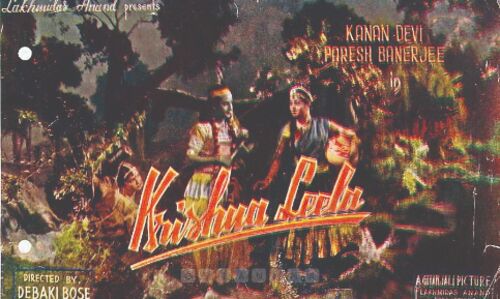
His next film was the mythological Krishna Leela (1946) which was directed by Debki Kumar Bose and had Kanan Devi and Paresh Banerjee in the lead. The popular hits in this film were: Man mein basa le manmohan ko, Prabhu teri maya jo chahaye, Sawan ki rani aaiye, Chanda door gagan mein bulaye, More janam janam ke saathi, Bahein churaye jaat ho nirmal mohe jaan and Tera ghar man mera.

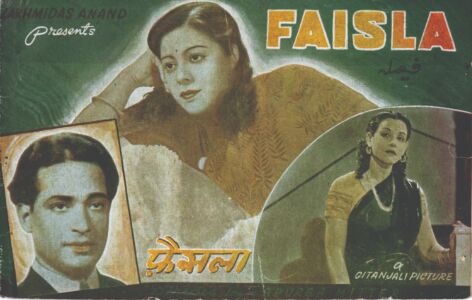
1946 was the busiest year for Kamal Das Gupta. He did Zameen Asmaan for director Dwarka Khosla, starring Ranjana, Jeevan and Kusum Deshpande. Its hit numbers were: Ek raat kabhi aisi aye, Papiha papiha to pee ko pukaar and Ek geet sunana hai hamein. Coming back to Calcutta, he did Faisala (1947) followed by Manmani. The film had Ragini and Jairaj in the lead. The film was directed by Sarvottam Badami. Its hit numbers were: Ishare ishare mein duniya bana li, Baiman tori batiya jadu bhari and Ae chaman bata kyun hansta hai.

His last film with his mentor PC Barua was Iran Ki Ek Raat (1949) – a costume drama, starring Jamuna, Narang, Chandrakant and Chandrawati.

Its melodious number were: Ulfat mein jise banaya tha, Chhalke chhalke sarabein jawani ke palaye, Kaun hai teer andaaj bada, Ae dil kya and Khel hai ye zindagi.

His last release was Phulwari in 1951. He had 40 films to his credit. Following this, the maverick composer got completely disillusioned by the film industry and recording companies. His favourite songs which were sold in the lakhs didn’t carry his name on the jackets.

At the age of 44, he married his favourite singer, Firoza Begum and embraced Islam. Kamal Dasgupta, by now, became Kareemuddin Ahmed. He kept on doing movies whenever an offer came. His last film in Bangla was Bodhu Baran in 1967. He shifted to Dhaka. When Bangladesh became independent, he became a citizen in 1972.

The composer was a man of taste. He owned a Buick, a rare thing in Calcutta in the 1950s. He was a great human being. He fed hundreds of people during the Bengal famine. He was also extremely fond of cricket. He was blessed with three sons – Shafin Ahmed, Hamin Ahmed and Tahsin Ahmed. They followed their father in music and cricket. Two brothers played cricket at the state level and Hamin Ahmed was selected for the national team of Bangladesh.

Kamal Das Gupta with his failing health and lack of proper medical treatment succumbed to his ailments and passed away in Dhaka on July 28, 1974, at the age of 62.

source: http://www.millenniumpost.in / Millennium Post / Home> Sunday Post> Beyond Bygone / by Sharad Dutt / March 07th, 2020

A few good men

To duck the coronavirus or dodge Amphan’s fury was never top of their agenda

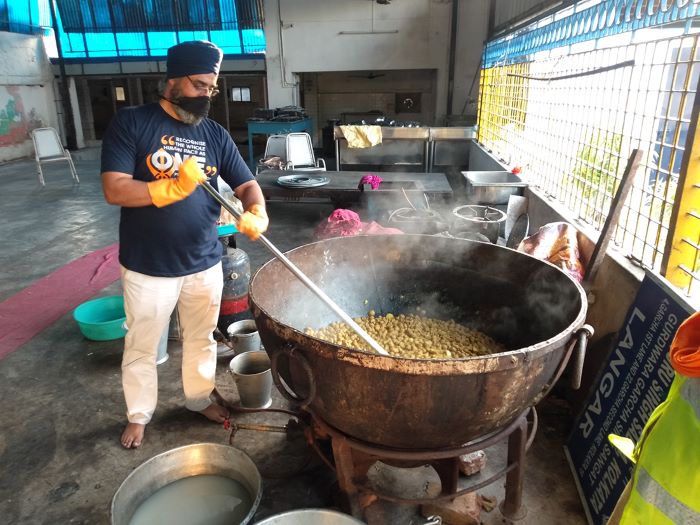
SERVE ALL: Food being prepared in the Khalsa Aid kitchen for those hit by Amphan / Courtesy, Raghbir Singh

During the first few days of the lockdown, Raghbir Singh and some others served 500 meals in and around south Calcutta. Thereafter, they lost count and it was never the point in any case.

The 30-year-old, who works part-time as a real estate dealer and also helps out with the family car rental business, is not new to relief work; he has helped during the Kerala floods of 2018 and the Assam floods of 2019. He says, “When the lockdown was announced, we knew our relief work would have to be ramped up. Since Day 2 we started cooking dal-chawal daily at the Garcha gurdwara and distributed it to people living on pavements and makeshift houses by the roadside.” Volunteers also went around city hospitals such as Chittaranjan Hospital in Park Circus, R.G. Kar Medical College and Hospital in Shyambazar and Calcutta Medical College on College Street with food packets for patients’ kin.

After the first few days, volunteers of Khalsa Aid, a UK-based humanitarian relief organisation, with the help of south Calcutta’s Sri Guru Singh Sabha Gurdwara, started distributing rations — flour, rice, pulses, sugar, salt — to those in need. They had those as well as cooked food home-delivered too. Raghbir has also been on National Highway 6 a couple of times since the lockdown to hand out bottles of drinking water, biscuits, puffed rice and juice to migrants walking home.

It is difficult to get phone time with Raghbir. Their garage has been shut, and he has been immersed in seva round-the-clock. It entails serving cooked food all day and then driving around the city in the evening delivering household staples.

Raghbir says amidst all this frenetic activity, every successive day he has seen a different side to humanity. “I saw first-hand how difficult it was for the daily-wage earners to survive. They wanted to earn money and some refused to accept the food we distributed.” He talks about others, middle-class folks who first fought shy of seeking assistance, but approached him when he was by himself. “I met so many people who feel that because they are poor, they do not exist for the government,” says Raghbir in muted tones.

On the night of Cyclone Amphan, Raghbir and others from Khalsa Aid got their cars out and drove around the city looking for the stranded and those in need of help of any sort. “We came upon more than one ambulance — carrying patients and kin — stuck on the road. There were uprooted trees all around, impeding movement,” he says.

The morning after brought to light the scale of devastation. Keeping in mind the disrupted power supply and lack of running water across the city, the sevaks went about collecting more groceries. On the first day, they distributed food and water among 400 people, the next day that number doubled and the day after that, it tripled.

Funds to continue this outpouring of support continue to come from private organisations and individuals, most of who prefer to remain nameless.

The night of the cyclone, Raghbir and other volunteers had received instructions

to be on Ground Zero and report the situation so they could start relief work immediately. He says, “We were unable to reach places such as Namkhana and Kakdwip in South 24-Parganas as the roads were completely blocked; so we focused on Calcutta until the roads were cleared.”

On May 25, the group set up their base camp in Diamond Harbour, also in the South 24-Parganas. Raghbir says, “Most of the people had kutcha houses and the cyclone had blown them away. We had carried along plastic sheets; we made canopies for temporary shelter.” The kitchen in Diamond Harbour fed the locals and also many in the Sunderbans and Sagar Island.

Did Raghbir ever fear that he would contract the coronavirus? Does it play on his mind even now in the face of continuing relief work? By way of reply, a photograph lands in the chat window. A close-up of a Khalsa Aid T-shirt with a message emblazoned on it. It reads — Recognise the whole human race as one. Raghbir says, “There is magic in the uniform.”

source: http://www.telegraphindia.com / The Telegraph, online edition / Home> Culture / by Manasi Shah / June 06th, 2020

First-ever container cargo from Kolkata via Chattogram port reaches Agartala: MEA

India and Bangladesh have enhanced cooperation in shipping and inland water trade in the recent years.

MEA Spokesperson Anurag Srivastava

New Delhi :

The first-ever container cargo from Kolkata via Bangladesh’s Chattogram port has reached Agartala, the External Affairs Ministry said on Thursday, terming it a “historic milestone” in the Indo-Bangladesh connectivity and economic partnership.

Union minister Mansukh Mandaviya had last week flagged off the first trial container ship from Kolkata carrying cargo meant for Agartala that reached the city via the Chattogram port.

MEA Spokesperson Anurag Srivastava said it will help in further development of the northeastern region.

“Another historic milestone in India-Bangladesh connectivity & economic partnership as the first ever container cargo from Kolkata via Chattogram port reaches Agartala.

This will help in further development of the north eastern region,” he said in a tweet.

India and Bangladesh have enhanced cooperation in shipping and inland water trade in the recent years.

Under the Protocol on Inland Water Transit and Trade, in addition to the six existing Ports of Call, five more in each country have been added recently, the Ministry of Shipping said in a statement last week.

A Port of Call is a place where a ship stops during a voyage to enable the loading and unloading of cargo.

Dredging of inland waterway routes is ongoing under a pact signed by the two countries on development of fairway in selected stretches of Bangladesh waterways, with the Government of India bearing 80 per cent of the project expenditure and the balance being borne by the neighbouring country, it said.

Cruise services have also commenced between the two countries, promoting tourism and people-to-people contacts, it said.

source: http://www.newindianexpress.com / The New Indian Express / Home> Nation / by PTI / July 23rd, 2020

Former JU professor passes away

He had been admitted to a private hospital for a procedure and later his Covid test report came positive.

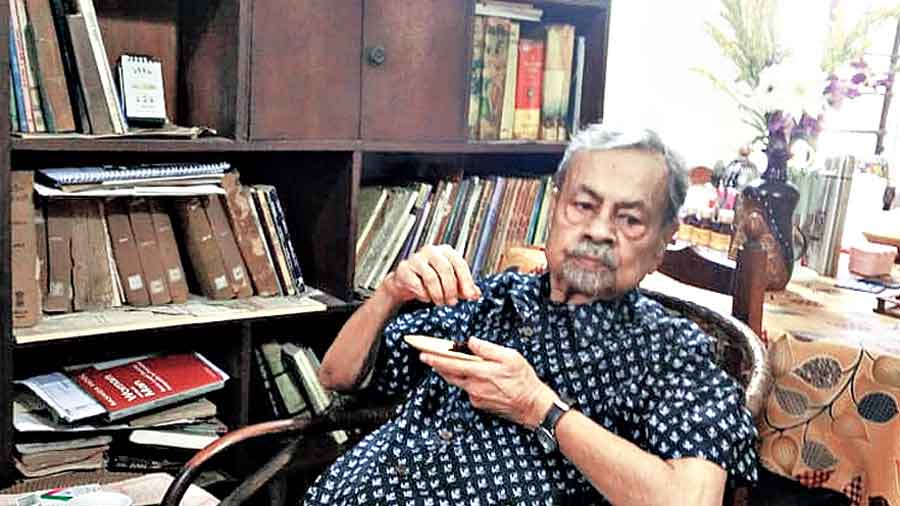
Manabendra Bandyopadhyay / sourced by The Telegraph

Manabendra Bandyopadhyay, a former professor of comparative literature at Jadavpur University, passed away on Tuesday. He was 82 and is survived by daughter Kaushalya.

Bandyopadhyay was among the five students of the first batch of the comparative literature department at JU, which was launched by poet Buddhadev Bose in 1956. 

He had been admitted to a private hospital for a procedure, said a professor of the department. “The procedure went fine and he was supposed to go home. But he had some complications. His Covid test report came on Tuesday afternoon and it was positive,” the professor said. 

Bandyopadhyay was widely known for translating Latin American literature into Bengali.

Ipshita Chanda, a JU teacher who did her PhD under him, said: “Death does not diminish professor Manabendra Bandyopadhyay’s presence as the scholar, translator and ‘rasika’ who introduced the Bengali reader to literatures of the ‘third world’ as well as to literatures in other Indian languages. Not only did he translate prolifically, he also, on principle, produced scholarly  and creative work in Bangla, inspiring and encouraging his students to do the same. He was not only a PhD supervisor but a mentor, a guide and above all an understanding and humorous friend.”

Another teacher said he introduced Gabriel García Márquez in the syllabus of the department before the Latin American author won the Nobel prize. 

“He was the one who translated Jules Verne in Bengali. Dev Sahitya Kutir would publish the abridged version initially. Later, as his expertise grew, he started coming up with unabridged versions,” said a teacher of the department.

source: http://www.telegraphindia.com / The Telegraph, online edition / Home> West Bengal> Calcutta / by Special Correspondent / August 05th, 2020