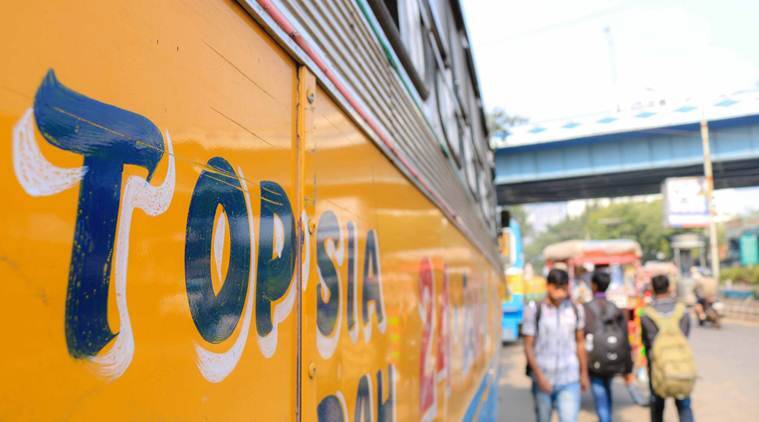
According to historian P Thankappan Nair who has extensively documented Calcutta’s history, the name ‘Topsia’ may have been derived from the fish species Polynemus paradiseus , also known as the ‘topshe’ fish found in the waters of West Bengal, Bangladesh and elsewhere in Southeast Asia.
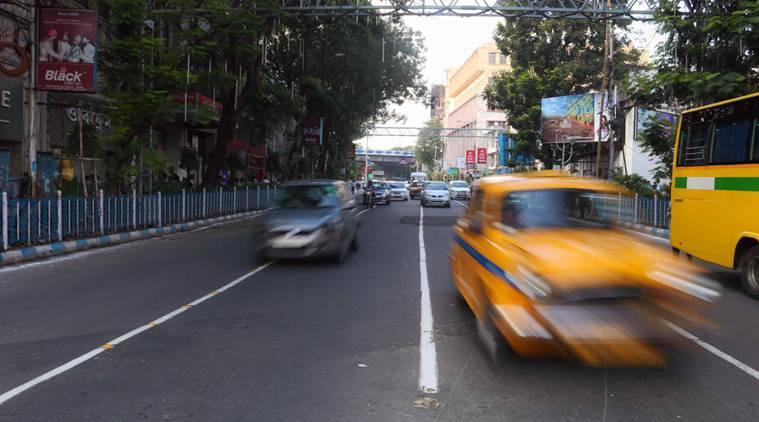
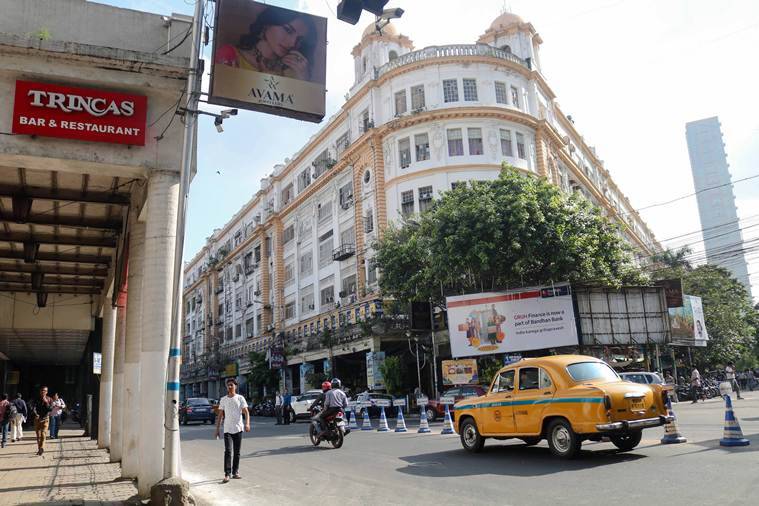
Topsia became a part of the burgeoning metropolis of Calcutta in 1717. (Express Photo by Shashi Ghosh)
The tanneries that once choked the bylanes of Topsia have long gone, shifted to the outskirts of the city. But a decade later this eastern neighbourhood of Kolkata has found it difficult to shed the association with the industry even though the pungent smells of the neighbourhood — a combination of tannery fumes and effluents, open ditches and the garbage landfill sites at nearby Dhapa — have long dissipated.
Several neighbourhoods have come up in the East Kolkata wetlands despite its ecological importance and for decades the area was home to the city’s tanneries that caused severe environmental degradation. In 1996, the Calcutta High Court ordered the tanneries to be relocated outside the city limits, a process that took at least another decade to fully materialise. Following the court order, the tanneries slowly left the neighbourhoods of Tangra, Topsia and Tiljala, only to be replaced by construction companies that swooped in and began filling up the wetlands to develop the area for residential and commercial purposes, despite it having been declared a Ramsar site in 2002.
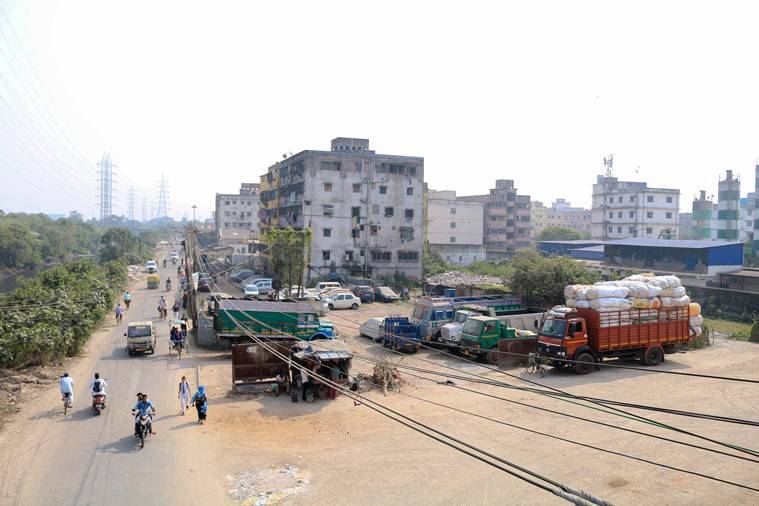
Due to the presence of the wetlands near Topsia, historical records show that fishing was one of the main sources of livelihood for many in the village. (Express Photo by Shashi Ghosh)
Topsia became a part of the burgeoning metropolis of Calcutta in 1717 when the British East India Company rented 38 villages surrounding the city from Mughal Emperor Farrukhsiyar. The Company went on to purchase 55 villages, including the 38 that it had previously rented, from Nawab Mir Jafar in 1758 and incorporated them all as the outer fringes of the developing city.
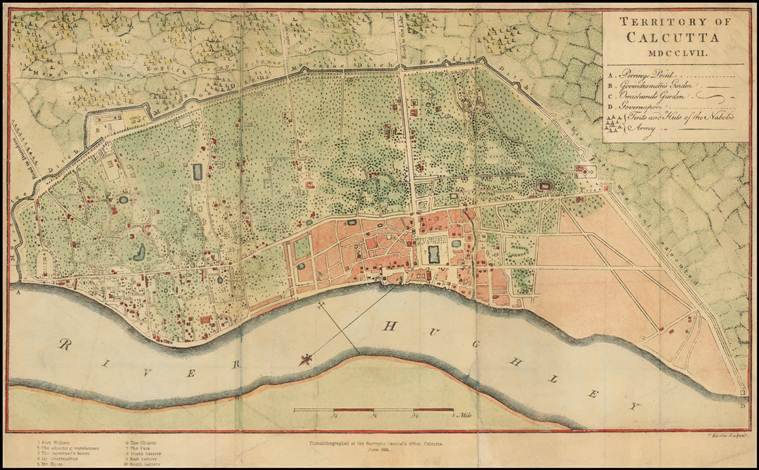
The villages collectively came to be known as Dihi Panchannagram, the literal meaning of which is “55 villages”, and lay outside the Maratha Ditch, an approximately 5 kilometer ditch that was excavated in 1742 to form a perimeter around Calcutta to protect the British from the Maratha invasion that never came. The Maratha Ditch, built for the protection of the British, was entirely funded by taxes paid by Indians.
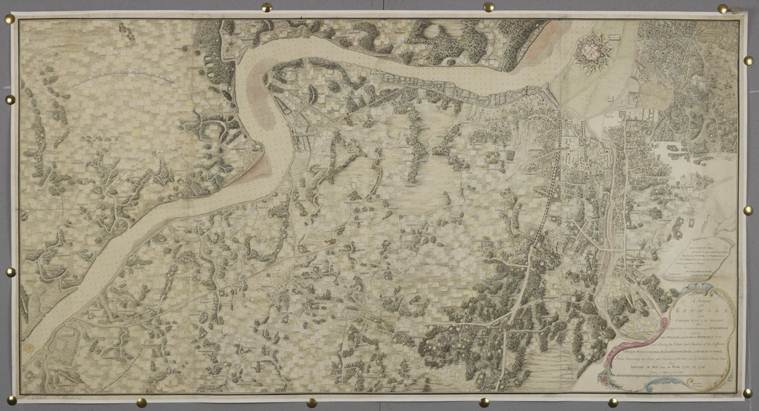
This rare photo-lithographic reproduction print of Thomas Kitchin’s map of Calcutta, titled ‘Territory of Calcutta MDCCLVII’, first issued in 1763, is one of the few mapped records of the Maratha Ditch, spelled ‘Morratoe Ditch’. (Source: Antique Maps Inc)
The villages that formed Dihi Panchannagram fell outside the Maratha Ditch despite being a part of the city of Calcutta. Their incorporation into the city limits occurred more completely when the Maratha Ditch, having been a useless enterprise, was partially filled in 1799 and then entirely in 1893. Harry Evan Auguste Cotton, an English barrister and historian who lived in the city during that time and wrote about Calcutta in his book ‘Calcutta, Old and New’, refers to the 55 villages as the “suburbs” of Calcutta that had been separated from “the 24 Perganas” and added to the city of Calcutta by Mir Jafar in 1757. “For revenue purposes they formed part of Calcutta, but their legal existence was separate and distinct,” wrote Cotton. Topsia, as part of the Dihi Panchannagram, finds mention in Wood’s map of Calcutta of 1784 and A. Upjohn’s map of Calcutta of 1794. Today, this area is still known as Panchannagram, the term ‘Dihi’ having gotten lost over the centuries as street names got diluted and changed in the city.
Due to the presence of the wetlands near Topsia, historical records show that fishing was one of the main sources of livelihood for many in the villages and it may also be how the villages collectively got this name. According to historian P Thankappan Nair who has extensively documented Calcutta’s history, the name ‘Topsia’ may have been derived from the fish species Polynemus paradiseus, also known as the ‘topshe’ fish found in the waters of West Bengal, Bangladesh and elsewhere in Southeast Asia, and the name has continued to be used till date. Prior to the reclamation of the East Kolkata wetlands, the fish was found in relative abundance in the waters and was a staple for the people living in the villages in the area.
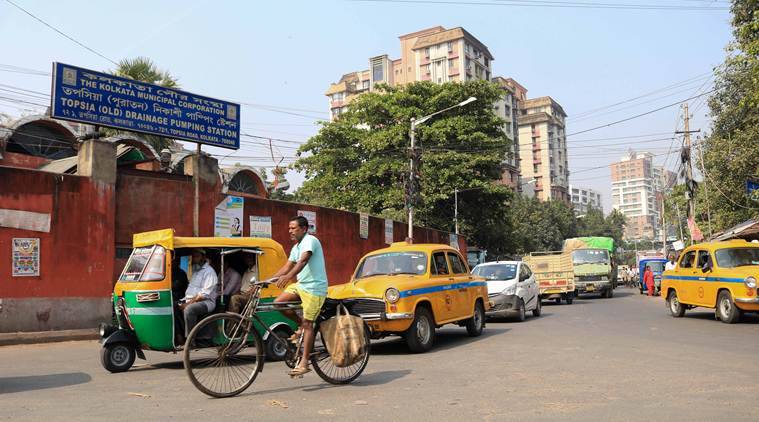
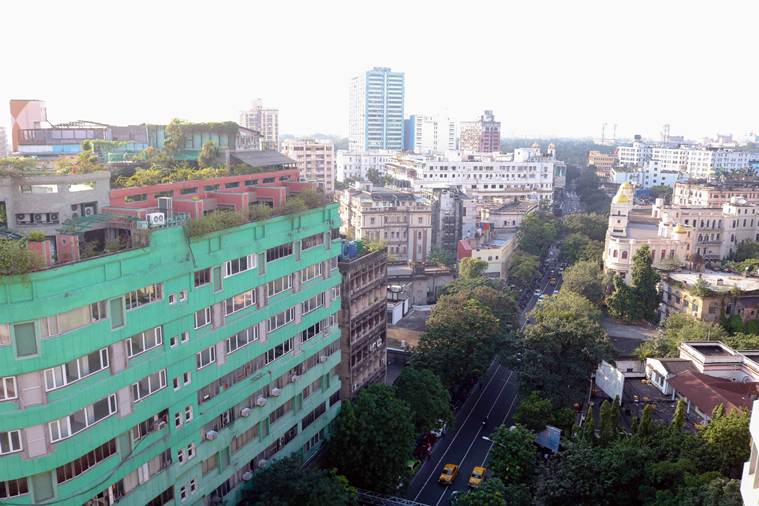
Topsia is a juxtaposition of slums, haphazard residential accommodation and luxury hotels that have paved the way for aggressive modern construction. (Express Photo by Shashi Ghosh)
Over the years, as Kolkata expanded and migrants from nearby towns and states relocated to the city for work, tanneries developed near the wetlands because the neighbourhood was still considered to be the outer fringes of the city. Many of these migrants found low-paying, physically challenging jobs in the tanneries, living and working in cramped quarters, with little hygiene and access to resources and even less impetus from the government that did little to better their working and living conditions. Although reports of severe pollution and improper disposal of waste as a result of the tanneries had been circulated for years, it took a court order issued by the Calcutta High Court in 2008 to lead to an official crackdown on the tanneries operating in the area, several illegally, and resulted in the relocation of operations outside the city limits. During the last three decades, as the area witnessed rapid development and land reclamation, it slowly became more fully absorbed into the growing metropolis of Kolkata. Today, it also serves to connect central Kolkata to the Salt Lake neighbourhood, Rajarhat and the airport beyond.
Topsia is a juxtaposition of slums, haphazard residential accommodation and luxury hotels that have paved the way for aggressive modern construction on a larger and wider scale in the sensitive wetland area, that shows no signs of stopping despite protests over the years by environmental activists.
These days, the ‘topshe’ fish can be found in Kolkata’s local markets, brought to the city after having been harvested elsewhere. The fish that gave Topsia its name, however, would be hard to find, if not entirely impossible, these days in what remains of the waters of wetlands.
source: http://www.indianexpress.com / The Indian Express / Home> Cities> Kolkata / by Neha Banka / December 03rd, 2019
Kolkata’s decision to rename Park Street after Mother Teresa is a perplexing one, since she had little to do with the thoroughfare and its environs, but the street’s name change is hardly a new occurrence.
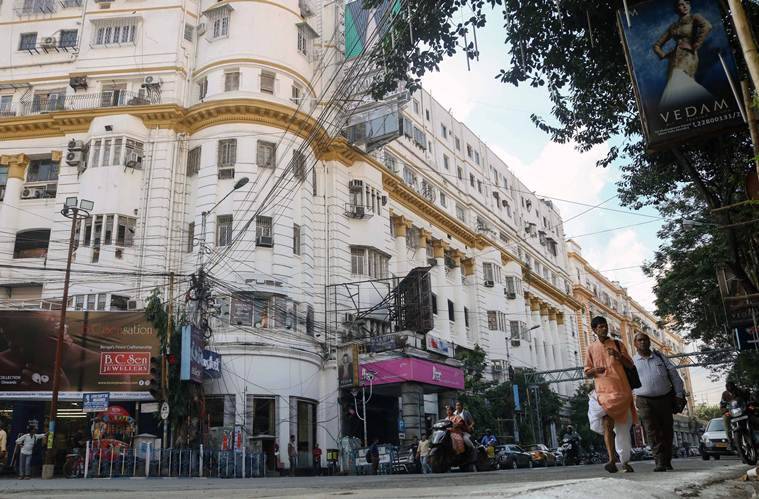
Park street’s colonial nomenclature is as iconic as the street itself. (Express Photo: Shashi Ghosh)
In 2004, Mayor Subrata Mukherjee announced that the Kolkata Municipal Corporation would be renaming several streets and roads in the city after prominent Indians and residents of the city, a change that would divest street names of their colonial identities. The renaming of city streets continued for the next decade by subsequent governments but for residents of the city, British colonial street names have been remnants that have been hard to shake off. Despite the name change, one of the city’s main thoroughfares, Park Street, is rarely referred to by its relatively new nomenclature, Mother Teresa Sarani, even on most government documents and during government-organised street programmes. The street’s colonial nomenclature is thus as iconic as the street itself.
A view of Park Street, Kolkata. (Express Photo: Shashi Ghosh)
Documented records of the street itself can be traced to 1760 when the city was still called Calcutta and was the capital of British India. The city’s decision to rename Park Street after Mother Teresa is a perplexing one, since she had little to do with the thoroughfare and its environs, but the street’s name change is hardly a new occurrence. Since 1760, the street has seen several name changes as Calcutta consistently swelled and developed into a larger metropolis. The first known name of the street can be found in the ‘Bengal & Agra Directory of 1850’ where it went by the name of ‘Ghorustan ka Rastah’ or ‘Badamtallee’ and “open(ed) on Chowringhee opposite the ‘Chowringhee gate’ of the fort, (ran) easterly to circular road.”
A survey of the eastern bank of the Hooghly, from Calcutta to Budge Budge, including Fort William and the river at low tides, between January to May, from the year 1780 till 1784. This map is a part of the King’s Topographical Collection and was the product of a survey of Calcutta undertaken from 1780 to 1784, produced by Captain Mark Wood for the East India Company, in watercolour and pen and ink. (Courtesy: British Library)
In 1760, the East India Company appointed Henry Vansittart as the Governor of the Presidency of Fort William in Calcutta and set him up in a large three-storey colonial mansion at No 5, Middleton Row, a relatively small street that was a bylane off the main thoroughfare that is now Park Street. That three-storey residential structure had a large garden attached to it, as was the common architectural layout during that time and served as the residence of Vansittart during his four-year governorship in Calcutta.
Vansittart’s tenure in Bengal was rife with misconduct and reports of widespread corruption that resulted in him being forced to step down followed by his departure for England in 1764. His residence was emptied and occupied by Elijah Impey, the first Chief Justice of the Supreme Court of Judicature at Fort William, Calcutta in Bengal.
The last burial ground of Park Street may soon be the only remaining witness of what the thoroughfare once was and its history. (Express Photo: Shashi Ghosh)
Impey too took advantage of his position as Chief Justice. A friend of the then Governor-General of Bengal Warren Hastings, Impey tried Maharaja Nandakumar, a diwan in Birbhum, on charges of fraud. But Hastings had framed the charges after Nandakumar reported him for wrongful appropriation and embezzlement of public property. Impey himself oversaw the trial and pronounced Nandakumar guilty of the charges. The Maharaja was hanged in Calcutta in 1775.
After the hanging of Nandakumar, Thomas Macaulay accused Impey of judicial misconduct and Hastings of misconduct and corruption and brought on a seven-year-long impeachment hearing against the two. At the end of the impeachment process, both were exonerated by the British House of Commons, mainly owing to domestic political reasons in Britain and not because of findings of any investigation. Both went on to live comfortable lives in Britain.
Historian P. Thankappan Nair traces the origins of the name Park Street to the expansive gardens around Impey’s residence. The area occupied by Impey’s residence and the adjoining gardens were so large that it included the grounds on which Loreto College now stands. Some records say the residence extended all the way from Middleton Row to Russel Street and included the grounds that now belongs to the Royal Calcutta Turf Club, now unused and in dire need of maintenance. Other records claim the gardens had deer running around, because of which the grounds began to be called a deer park, but there don’t seem to be any existing documents that confirm this.
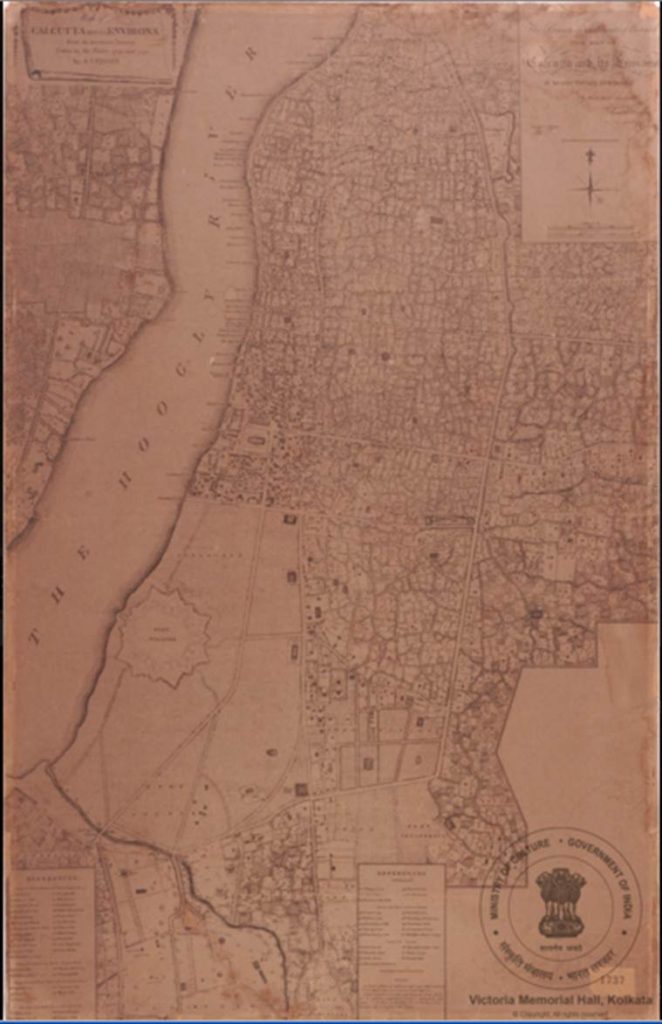
In A. Upjohn’s ‘Map of Calcutta & its Environs’, Park Street is referred to as Burial Ground Road. Upjohn’s map of Calcutta was developed as a result of a survey undertaken in 1792 & 1793 by A. Upjohn. (Courtesy: Victoria Memorial Hall museum archives, Kolkata)
Other names of the street through the city’s history have included Badamtalla, or Almond Street, Vansittart Avenue, Burial Ground Road and Burial Ground Street. Henry Ferdinand Blochmann, a German scholar who was fascinated by the Indian subcontinent and studied and taught Persian during the 1860s in Calcutta, has documented the history of the city and it’s streets during the 18th century in his book ‘Calcutta During Last Century’. Park Street, writes Blochmann, was called Burial Ground Street and “had about ten houses lying along it”.
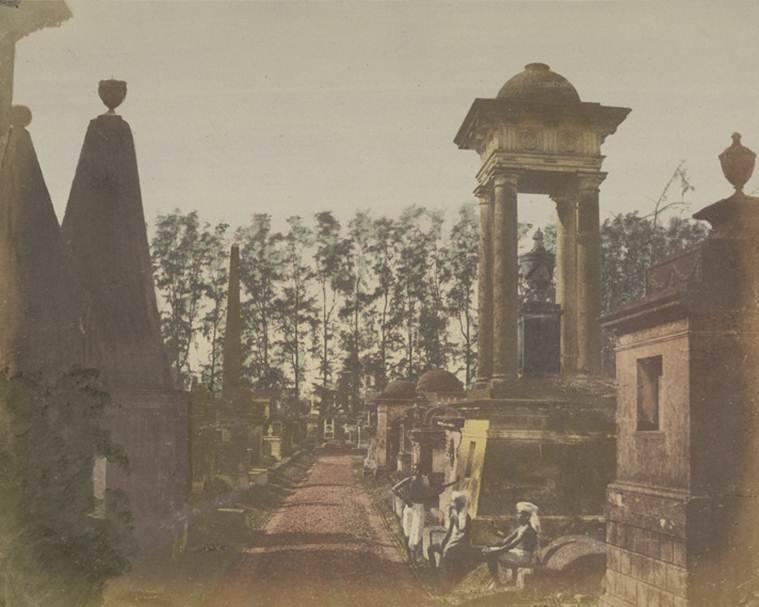
In A. Upjohn’s map of Calcutta, 1794, Park Street is referred to as Burial Ground Road, because it was the path that funeral processions took to reach the South Park Street Burial Ground that opened on August 25, 1767. Due to this, for a long time, the street was not a preferred choice of residence. The Park Street area also had the North Park Street, Mission and Tiretta burial grounds before they were flattened to make way for other establishments. The Apeejay School now stands on the remains of a razed French cemetery and while the Assembly of God Church Tower stands on the site of the North Park Street Cemetery. The only visible remnant of the North Park Street Cemetery is the Robertson Monument, a grave for the Robertson family whose members served in Kolkata Police. According to historians who have traced the structure’s history, it was only this connection of the family with the Kolkata Police that prevented the monument from being served the same fate as the rest of the tombs on the North Park Street Cemetery. Today, the monument stands in one corner of the pavement, outside the Assembly of God Church Tower, coated in grime from passing vehicles and drowning under surrounding billboards and the hanging mass of tangled wires and cables, easy to miss if one isn’t paying attention.
A hand-coloured print of tombs in South Park Street Cemetery, Calcutta from the Fiebig Collection of Frederick Fiebig, from 1851. (Courtesy: British Library)
It isn’t clear when the name changed from Burial Ground Road to Park Street, but given its association with Impey’s “deer park”, it can be assumed that the transition occurred sometime around the 1760s during Impey’s tenure in the city. According to city records, Park Street extended from Chowringhee to Lower Circular Road till 1928 when the Calcutta Improvement Trust extended the portion on Lower Circular Road to the city’s railway lines at E.B Railway Bridge Number 4. The extension of Park Street at its southern end was completed in 1934 and found mention in that year’s government gazette.
Park Street, writes Blochmann, was called Burial Ground Street and “had about ten houses lying along it”. (Express Photo: Shashi Ghosh)
Despite its earlier association with the four burial grounds in its area, the long stretch of the street rapidly developed over the centuries to accommodate residential mansions and educational and religious institutions like St. Xavier’s College, the Freemason’s Hall, the Asiatic Society of Bengal etc. In recent decades, especially post the Second World War, many of the city’s iconic structures on Park Street have been steadily razed to make space for modern construction and the architecture of the street has changed. Today, the mansions are fewer, as are the neighbourhood’s residents who have seen Park Street rapidly change over the past four decades. Restaurant chains, cafes and sari shops with neon sign-boards have taken over the colonial structures that once housed residential apartments and government offices. The last burial ground of Park Street may soon be the only remaining witness of what the thoroughfare once was and its history.
source: http://www.indianexpress.com / The Indian Express / Home> Cities> Kolkata / by Neha Banka, Kolkata / December 03rd, 2019
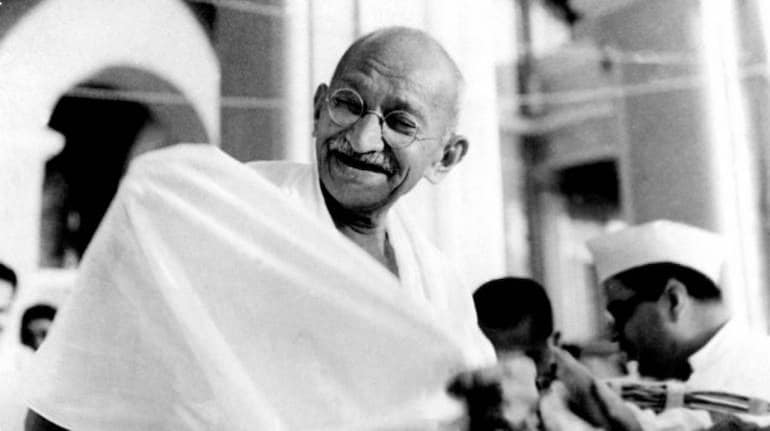
On August 15, 1947, when most of India was feeling triumphant and rejoicing the new-found independence, Bapu was in Calcutta, trying to figure out how to stop the communal violence triggered by the partition of Bengal.
On the night of August 14, 1947, when Jawaharlal Nehru was preparing to deliver his famous “Tryst with destiny” speech, Mahatma Gandhi was earnestly trying to end the communal violence triggered by the Partition.
Bengal was partitioned by the British, and a chunk of the state went on to form East Pakistan (now Bangladesh). The Partition, done along religious lines, resulted in bloody communal strife that ended in tears and pyres. So, on August 15, 1947, when most of the nation was feeling triumphant and rejoicing the new-found independence, Bapu was in Calcutta, worried sick.
Mahatma Gandhi was supposed to be in Bihar in the days leading to August 15, before heading to Bengal – both areas ravaged by communal strife. Bapu was only concerned about forging peace and harmony between the two communities. “To me, peace between Hindus and Muslims is more important than the declaration of independence,” he had famously said, and refused to take part in any celebrations.
He said: “I cannot rejoice on August 15. I do not want to deceive you. But at the same time, I shall not ask you not to rejoice. Unfortunately, the kind of freedom we have got today contains also the seeds of future conflict between India and Pakistan. How can we, therefore, light the lamps?”
Gandhi was eventually successful in his efforts, and his miraculous strategy in pacifying both communities was recognised by Lord Mountbatten, the last Viceroy of India.
Mountbatten said: “In Punjab, we have 55 thousand soldiers and large-scale rioting on our hands. In Bengal, our forces consist of one man (Gandhi), and there is no rioting.”
source: http://www.moneycontrol.com / MoneyControl / Home> News> India / by Jagyaseni Biswas / August 15th, 2020
Kings and priestly classes developed a way of recording transfer of property ownership in strikingly parallel terms
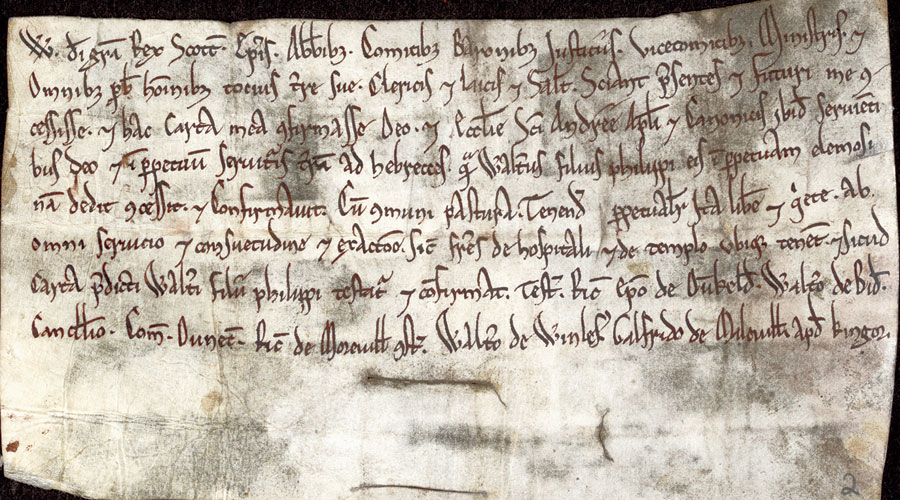
While the copper plates had the Sanskrit word “danam” inscribed in them, the parchment charters bear the word “donum” in Latin. / Both Telegraph picture
In the medieval societies of Bengal and Scotland, kings and priestly classes developed a way of recording transfer of property ownership in strikingly parallel terms using related vocabulary and philosophical concepts.
In Bengal, land gifts were recorded in Sanskrit etched in copper plates and stone inscriptions. In Scotland, it was recorded in charter parchments in Latin. In both societies, it was the king who made the donations of land to the priestly class.
John Reuben Davies, a research scholar at Glasgow University, came to Calcutta in 2011 and was surprised to find in Asiatic Society copper plates from the Pala era in Bengal (10th to 12th century CE) that had close similarities with parchment charters from Scotland belonging to the same period. Charters are written records of transfer of property.
While the copper plates had the Sanskrit word “danam” inscribed in them, the parchment charters bear the word “donum” in Latin. Both of giving as a gift is ‘danam’. Latin, the same Indo-European root, provides the noun ‘donum’, a gift, indicate a gift of land from the king to the priestly class for eternity.
“In Sanskrit, the word for the method and the verb ‘dono’, I give as a gift,” said Davies.
“The concept of transferring ownership of property by giving as a gift is at the heart of property records both from Bengal and Scotland. And both in Bengal and Scotland, a word that has the same origin in Sanskrit and Latin was used to describe the transaction and give it legal force. So in two early medieval societies, 6,000 miles apart with no known contemporary connections or influences, had evolved an almost exactly similar way of recording transfer of property in strikingly parallel terms and using directly related vocabulary and philosophical concepts.”
Davies made the statement during a recent online lecture as part of the Stories of World Culture, an Indian Museum’s virtual initiative during the pandemic.
Davies and retired Calcutta University professor Swapna Bhattacharya, who has worked on Indian copper plates and European charters, collaborated and co-edited a book on these findings, Copper, Parchment and Stone: Studies in the Sources of Land Holding and Lordship in Early Medieval Bengal and Medieval Scotland, published by the Centre of Scottish and Celtic Studies of Glasgow University.
Glasgow University has decided to include the findings of Davies and Bhattacharya in the first-year undergraduate and postgraduate syllabus. Classes on the topic will start next year.
Regarding its inclusion in the history course, Joanna Tucker, a history lecturer at Glasgow University, said in a WhatsApp message to Metro: “The digitisation of texts and the surge in availability of digital resources have partly (and paradoxically) led to a new appreciation of the ‘physicality’ of our manuscript sources…. One recent publication (Davies, 2019) compares Indian and Scottish gifts of property in parchment charters and in copper and stone inscriptions. This provides a way to show our students that recent work in the field of medieval Scottish history has been taking a global perspective….”
Davies found further similarities like properties could be owned outright forever. A very similar conceptual, linguistic and textual framework evolved to guarantee the conveyance and ownership of property. The king was the supreme authenticating authority, provided he is the legitimate heir proved by the publication of his genealogy in copper, stone or parchments that he could govern and guarantee the rights of his subjects.
source: http://www.telegraphindia.com / The Telegraph, online edition / Home> West Bengal / Calcutta
The list of alumnae who played a significant, if less acknowledged role, in India’s freedom struggle is a lengthy one, and includes those who took up arms in their war against British rule and oppression.
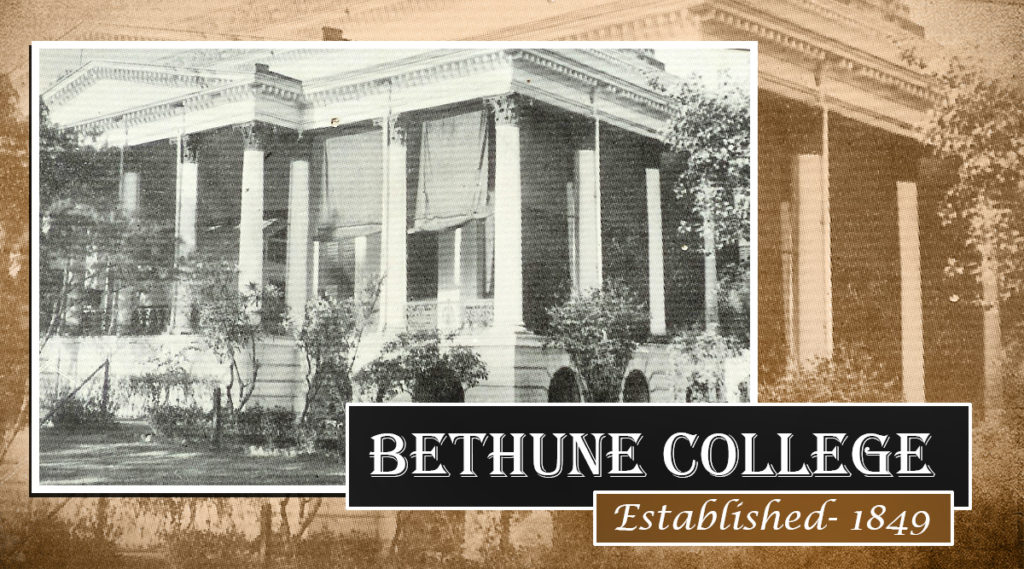
The Bethune college played a pivotal role in shaping women who fought for freedom from British rule. (Wikimedia Commons/ edited by Gargi Singh)
Bina Das was only 21 when she opened fire on Bengal Governor Stanley Jackson at Calcutta University in 1932. But in Calcutta’s Bethune College, women like her were not rare. In fact, the institution played a pivotal role in shaping women like her, especially those who called undivided Bengal their home, who fought for freedom from British rule.
The list of alumnae who played a significant, if less acknowledged role, in India’s freedom struggle is a lengthy one, and includes names like Kamala Das Gupta, Kalpana Dutta and Pritilata Waddedar who took up arms in their war against British rule and oppression. There are also women like Sarala Devi Chaudhurani, Kadambini Ganguly and Chandramukhi Bose, who did not pick up weapons, but urged literacy and education for girls and championed women’s rights and protections, paving the way for several reforms for girls and women in pre-Independence India — a war of a different kind.
In her memoir, Das recalls how the library at Bethune College in Calcutta shaped her life by allowing her access to books on the theories of revolution and freedom, and encouraged her ideas and hopes for a nation independent from British rule. In addition to churning out women who went on to become revolutionaries, the institution was remarkable for several other reasons, the foremost being that when it was turned into a college in 1879, it became the only institution for higher education for women in Asia.
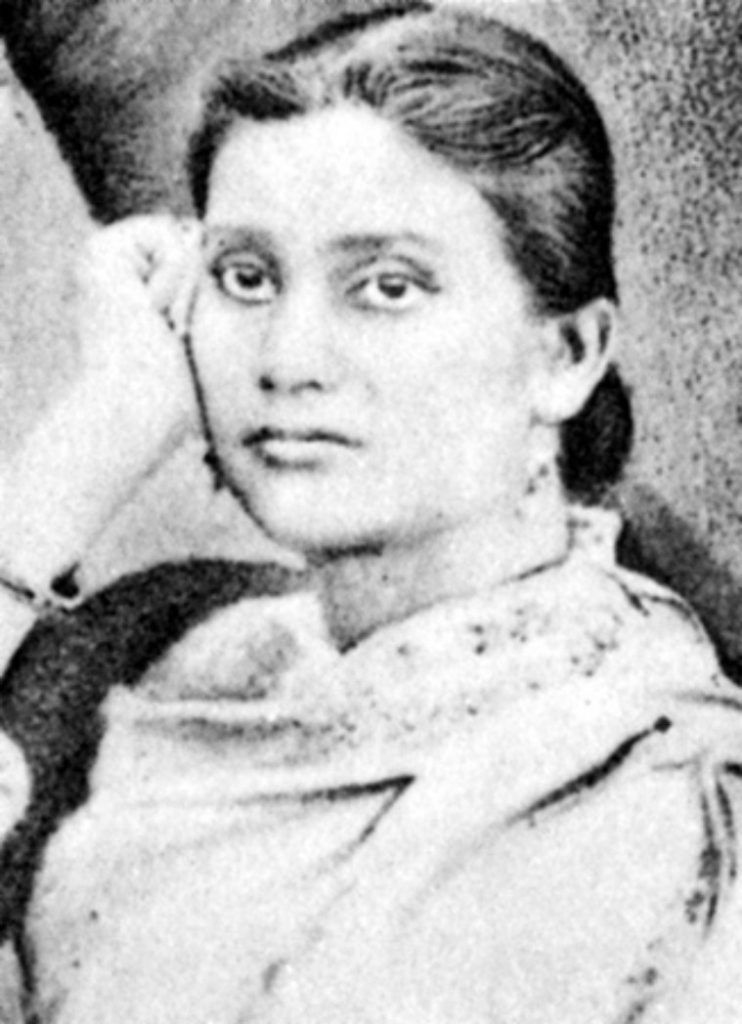
Kadimbini Ganguly, one of the first two women graduates in the subcontinent. (Wikimedia Commons)
Uttara Chakravorty, a former teacher of history at Bethune College, who spent approximately five years conducting research on the history of the institution, believes that the college library particularly played an important role in shaping the lives of the women who passed through its gates. “We didn’t find records of teachers imparting revolutionary views, but the library was good and the girls read newspapers,” she tells indianexpress.com . The college itself had no role to play in the formation of revolutionary views, but it was the diverse peer group to which women had access in the institution that fostered an exchange of ideas, believes Chakravorty. “The peer group consisted of girls who came from undivided Bengal. There were Jewish girls, Afghan girls, Anglo-Indians. The cosmopolitan nature of the environment shaped their views, along with the (college’s) architecture. The library had books of all kinds.”
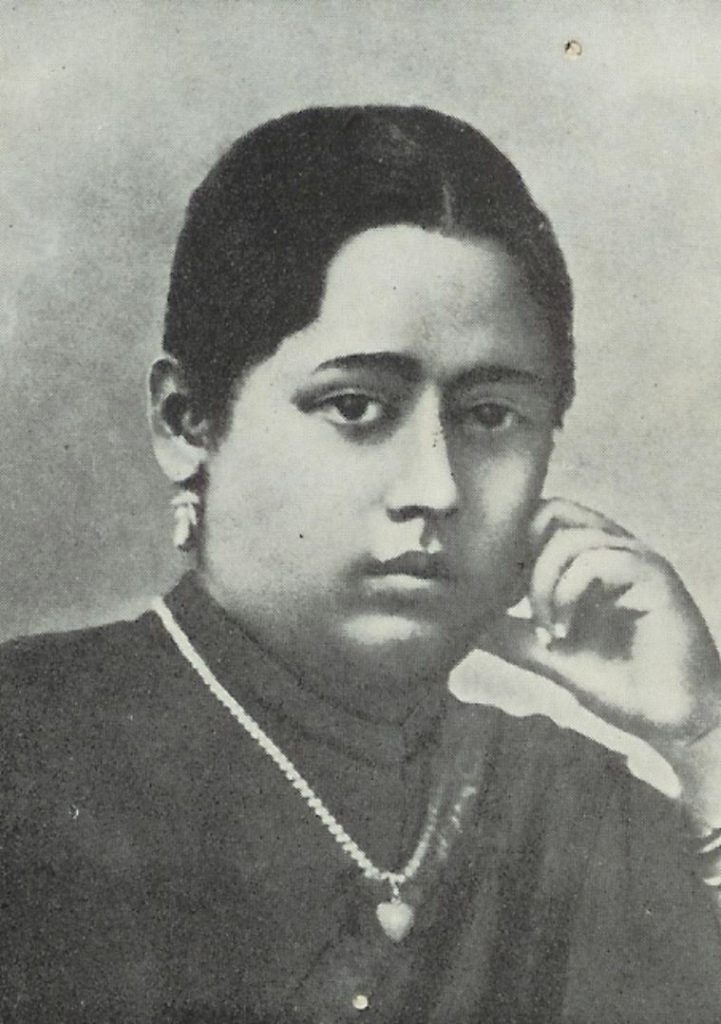
When Kadambini Ganguly and Chandramukhi Basu graduated from Bethune College in 1881, they became the first two women graduates in the subcontinent. “This was the most revolutionary thing at that time,” says Chakravorty. Ganguly’s achievements were particularly extraordinary for a woman back then. Not only was she one of the first two women graduates, but she was also the first South Asian woman physician, with training in western medicine.
Chandramukhi Basu, who graduated with Kadambini Ganguly in 1881 as the first two female graduates in the subcontinent. (Wikimedia Commons)
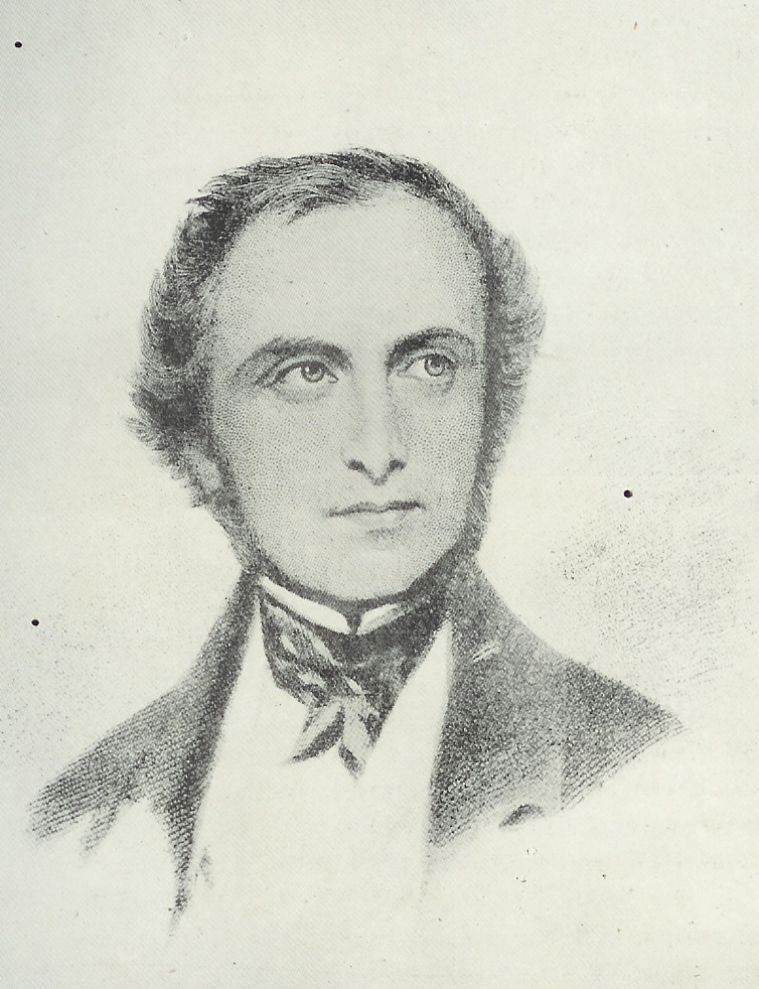
After John Elliot Drinkwater Bethune arrived in India in 1848, as a Legal Member of the Governor-General’s Council, he was appointed president of the Council of Education. Bethune’s posting allowed him to meet members of the Bhramo Samaj, who like him were also proponents of education for girls and women. In one of his meetings in the city, zamindar Dakshinaranjan Mukherjee gifted Bethune five and a half bighas of land for building a school that opened as ‘Calcutta Female School’ in May 1849 with 21 girls on the roll, an institution that became the predecessor of the Bethune School.
According to Kalidas Naga’s writings in ‘Bethune School And College Centenary Volume 1849’ published in 1949, “none but the girls of respectable Hindus would be admitted”. A school carriage was arranged to transport the girls who lived at a distance to and fro from school.
John Elliot Drinkwater Bethune, who founded the Bethune college. (Wikimedia Commons)
It was the first public institution for girls’ education, and was government-run. Although the school’s administration experienced some success in finding families interested in educating their daughters, the conservatives in Indian society rose up in protest against the school, discouraging their neighbours and relatives from sending their girls to study there. Families who succumbed to the social pressure withdrew their girls, till the number of students dwindled to just seven. The scenario changed by the end of the year, writes Naga, because some girls came back, increasing the number of students on the roll to 34.
Bethune’s initiative appears to have inspired philanthropic Indians to engage in similar endeavours. For instance, Raja Radhakanta Deb soon started a school for girls inside his large rajbari in Sovabazar, 15 days after Bethune’s institute started operations. After opening the Calcutta Female School, Bethune then purchased a new plot of land belonging to the Government of Bengal in Cornwallis Square, adjacent to the Calcutta Female School, and established another educational institution for girls, called the ‘Hindu Female School’ in 1849 with significant financial support from Dakshinaranjan Mukherjee.
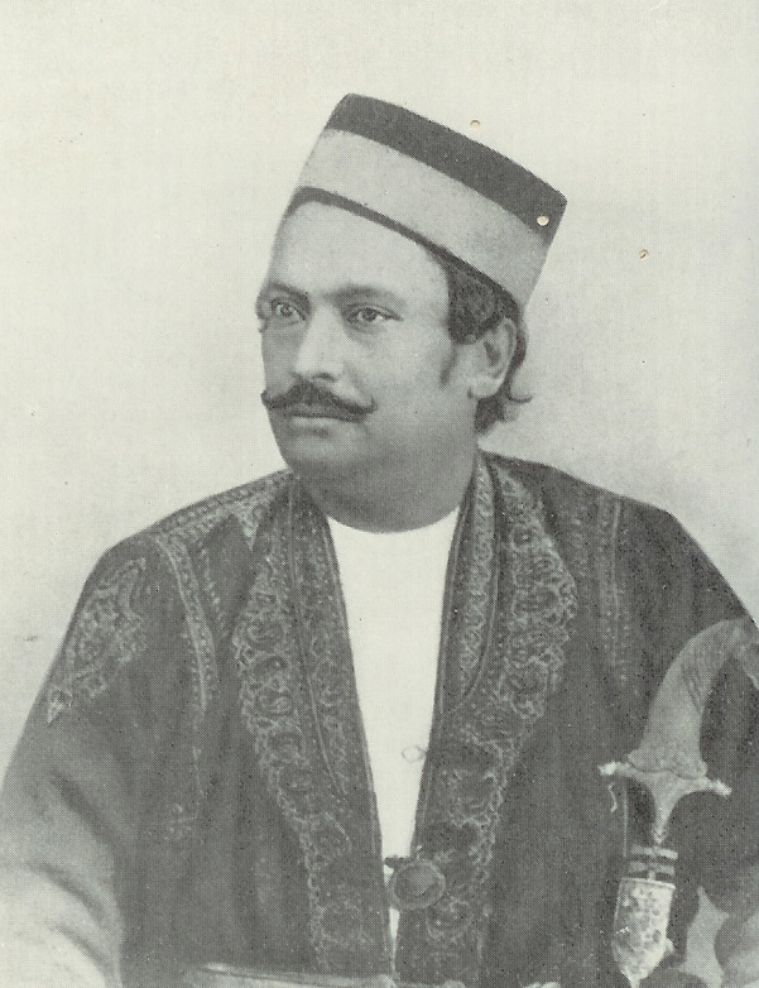
Zamindar Dakshinaranjan Mukherjee gifted Bethune five and a half bighas of land for building a school, that later turned into Bethune college. (Wikimedia Commons)
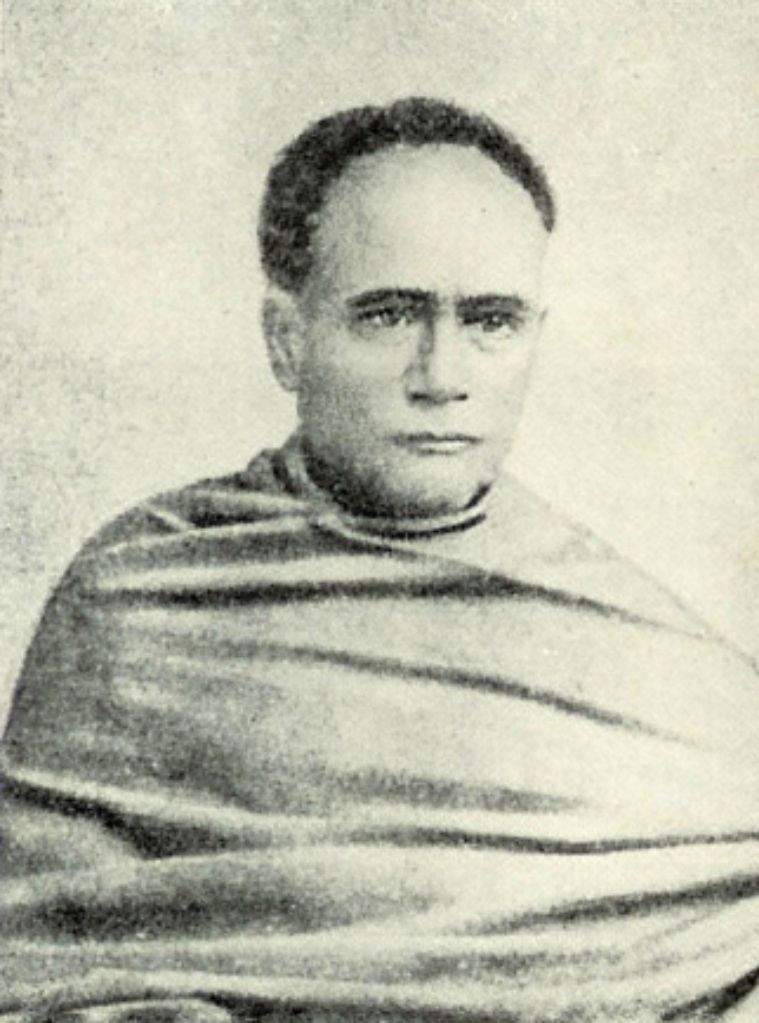
In December 1850, Bethune appointed Ishwar Chandra Vidyasagar as secretary to the school, in what proved to be a masterstroke. Naga writes that Vidyasagar’s biographer Sambhu Chandra Vidyaratna acknowledged in the biography that this appointment encouraged many Hindu families to send their girls to Bethune’s school.
In December 1850, Bethune appointed Ishwar Chandra Vidyasagar as secretary to the school, in what proved to be a masterstroke. (Wikimedia Commons)
Thirty years after its founding, the school became a college, named after its founder. Chakravorty believes that the architecture of the building deeply impacted the students who enrolled in the institution, more than one realises. “It is a one-storey building with an open courtyard. There are Corinthian columns with a supporting pediment and a sculptured balustrade,” she explains. Built in the neoclassical style, the design included an open terrace and wooden french windows, a lot of which can still be seen on the building’s exterior.
“The openness of the layout was attractive to the girls, who were till then confined in their homes. Many of the girls wrote about (the architecture) in their memoirs. It did have an impact on their lives,” says Chakravorty. Chameli Basu, a gifted student who later went on to teach Physics at her alma mater, and passed out in the same year as Bina Das, specifically mentions the architecture of the institution. “She came from a conservative family and the openness of the space was overwhelming for her.”
While many teachers of Bethune College were Indian, the heads of the institution for the longest time remained English. In texts that Chakravorty found in the college library during her research, records of one particular incident stands out, she says. “The first mention of the student’s political consciousness can be found in a text in the college library from 1915. Anne Louis Janeau, the principal of Bethune, wrote that the students once wanted to go to a religious meeting but she suspected it was a political gathering.” It is one of the earliest records that indicate that although the institution was established for the education of Indian girls, there was little tolerance for ideas and initiatives that could be perceived to be anti-British in nature.
One of the most significant incidents in the history of Bethune College occurred when the Simon Commission arrived in 1928. This incident finds mention in Bina Das’ memoir where she recalls how she along with a group of fellow students, organised their first student protest against the Commission and faced threats from the college administration and Mrs. Wright, the English principal, if they did not apologise. Wright and the Director of Public Information collectively warned the students that if they didn’t return to their classes, they would be expelled and their scholarships would be withdrawn.
Bina Das in her memoir recalls how she along with a group of fellow students, organised their first student protest against the Simon Commission in 1928. (Wikimedia Commons)
Led by Das, the students refused to comply and the agitation became so strong that it spread outside the college. Das recalls in her memoir that Wright, “the overbearing Englishwoman”, was forced to resign from service and was compelled to leave the institution. This protest was one of the most important occurrences in the history of the institution and the college has an entire file on the subject in its archives today. “It wasn’t just a struggle, but an active choice to get involved,” says Chakravorty of this protest.
The 1930s were turbulent times with more students becoming actively involved in the freedom struggle. “The girls were inspired by the Bolshevik Revolution. Kamala Das Gupta wrote in her memoir that most of the girls read banned books that were hidden under their textbooks; books like Pather Dabi, Maxim Gorky’s Mother,” says Chakravorty.
Chakravorty recalls the writings of Malati Guha Ray, an exceptional student at Bethune, who wrote in her memoirs of an incident when British police descended upon Bethune College in search of Kalpana Dutta, a member of the underground group Chhtari Sangha, who had left the institution to engage more fully in revolutionary activities. “Guha Ray wrote about how the principal was unhappy that students were participating in revolutionary activities and banned groups.”
By the 20th century, other educational institutions for women started opening up in Calcutta, like Loreto College, a morning section at Ashutosh College only for women and Victoria College. “When Presidency (College, now named University), started taking in women in 1944, Bethune began losing out on bright students who were more attracted to Presidency,” says Chakravorty.
The former students of Bethune haven’t mentioned teachers as inspiration in their struggle for India’s freedom, says Chakravorty, but the role of the institution cannot be discounted for the opportunities that it provided to women at a time when they were so few in number. Over 171 years after it first began as the ‘Calcutta Female School’, the only pathway for formal education for women in Asia, Bethune College’s own role as a revolutionary institution can perhaps only be fully understood in a re-reading of the memoirs of the lives of the women it shaped and altered over the decades.
source: http://www.indianexpress.com / Indian Express / Home> Research / by Neha Banka / Kolkata – August 14th, 2020
Women’s Day Special: Inspired by Surya Sen, the 21-year-old led the raid on the Pahartali European Club in Chittagong.
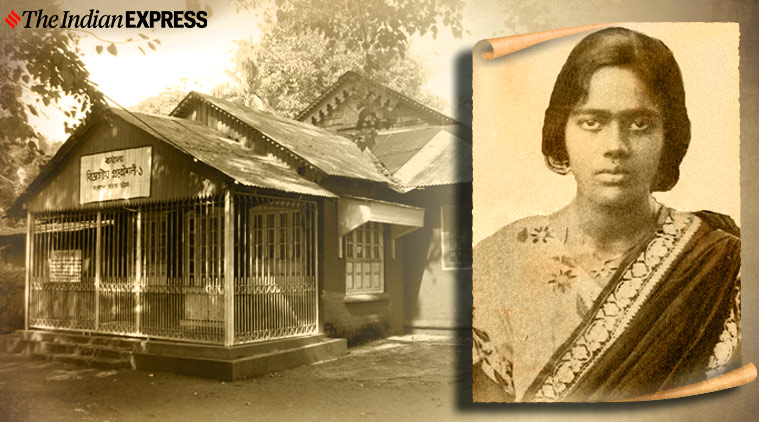
In a re-reading of historical accounts on Waddedar’s life and contributions, it is easy to forget how young she was when she threw herself fully into the cause of liberation of her motherland. (Photos: Wikimedia Commons; Designed by Gargi Singh)
Born in Chittagong, now in Bangladesh, Waddedar was a promising student, having spent her school years in her hometown. While a student at Eden College in Dhaka, Wadderdar’s anti-British sentiments began to take a more form as she slowly developed connections with other women who were spearheading semi-revolutionary groups. One such was with Leela Nag, a student at Dhaka University and an associate of Subhash Chandra Bose, who established the Deepali Sangha, a revolutionary group that provided combat training to women.
Waddedar came to Calcutta for higher education and enrolled as a student of Philosophy at Bethune College under the University of Calcutta. In the city, Waddedar was introduced to revolutionary leader Surya Sen, affectionately called ‘Master da’ by associates. Inspired by Sen, Waddedar soon joined his underground group. According to various accounts from the 1930s, members of Sen’s group initially objected to her membership, but appear to have eventually relented when they discovered her devotion to the cause for the motherland’s freedom, as well as her abilities to carry out assignments undetected by the police.
During the Chittagong Armory Raid of April 1930, 20-year-old Waddedar, along with Surya Sen, Ganesh Ghosh, Lokenath Bal, Ambika Chakrabarty, Anand Prasad Gupta, Tripura Sen, Bidhubhusan Bhattacharya, Kalpana Dutta, Himangshu Sen, Binod Bihari Chowdhury, Subodh Roy, Monoranjan Bhattacharya among a others in a group of at least 65 people, devised plans to raid the armoury of the British forces and destroy telegraph and telephone lines. Although the group did not manage to locate the armory, they succeeded in ruining the telegraph and telephone lines. Many members in the group were very young at that time, Subodh Roy being the youngest at just 14.
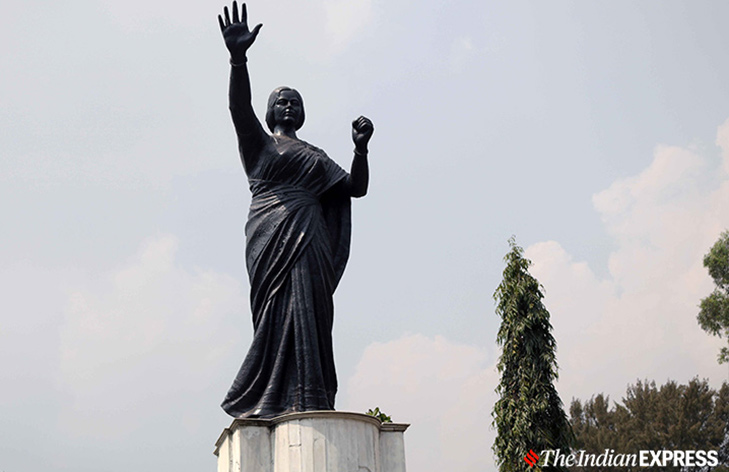
The tall statue depicts Waddedar, clad in a khadi sari, beset with sharp folds, with one arm outstretched and another balled up in a fist, perhaps signalling her determination for the cause of freedom. (Express photo by Shashi Ghosh)
While some members of the group were captured and arrested, Waddedar and a few others managed to escape and regroup over the next few months. In 1932, the group, following Surya Sen’s original plans to attack the Pahartali European Club in Chittagong, assigned Waddedar as the leader for this assignment. The social club for Europeans had been specifically targeted because of its racist and discriminatory practises towards Indians, especially its use of the signboard that read “Dogs and Indians not allowed”.
Under Waddedar’s leadership, a group of 10 was trained in the use of arms and taught how to consume potassium cyanide if the need arose. They attacked the club on the night of September 23, 1932. Several members of the club were injured, while the group was shot at by the police guarding the club. Waddedar sustained a bullet wound that prevented her from escaping with her group. In those circumstances, she consumed potassium cyanide to evade arrest and ended her life. Waddedar was only 21.
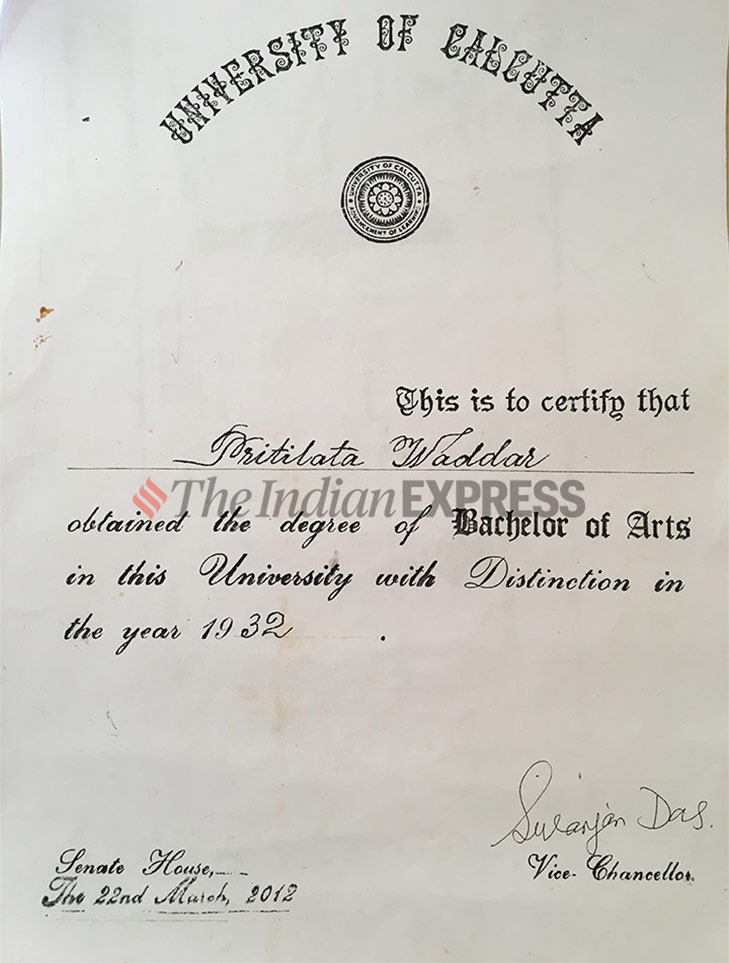
Like her contemporary, Bina Das, Waddedar too had been denied her graduation degree by the British authorities of Bethune College under Calcutta University. In March 2012, almost eight decades after her death, the University of Calcutta posthumously awarded Waddedar her pending Bachelor of Arts degree with Distinction for the year 1932. On her graduation certificate, Waddedar’s name is mentioned with a misspelling, ‘Pritilata Waddar’, perhaps an indication of how her name was recorded in university records.
In March 2012, Calcutta University posthumously awarded Pritilata Waddedar her pending Bachelor of Arts degree with distinction for the year 1932, that the British administrative authorities had withheld from her. (Express Photo by Neha Banka)
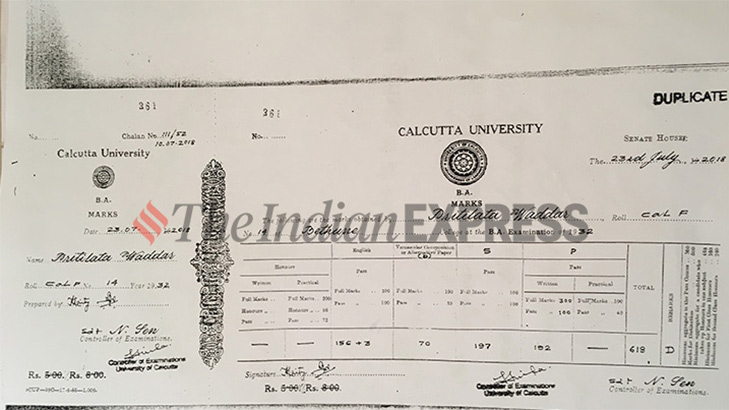
Dr Soumitra Sarkar, Librarian of Calcutta University, who oversees university archives told indianexpress.com that he did not have much information concerning why this may have occurred. A copy of Waddedar’s graduation certificate and marksheets were provided to the Birkanya Pritilata Trust in May 2018, based in Waddedar’s native village, Dhalghat, Patiya, Chittagong, established in her memory.
Calcutta University provided indianexpress.com a copy of Pritilata Waddedar’s marksheets for the year 1932, a detailed document that indicates that Waddedar was a student at Bethune College, reproduced by university authorities in 2018 for archival purposes. (Express Photo by Neha Banka)
The large expanse of the Maidan area in the heart of Kolkata, is dotted with statues of individuals associated with the freedom struggle. Between 1947 and 1983, the West Bengal government replaced statues of British officials and East India Company employees with those of revolutionaries, men and women who had devoted their lives to the freedom of the nation.
One such statue is that of Pritilata Waddedar, the only commemorative structure dedicated to her in the country. The monument does not have an address; to find it, one would have to walk down the long stretch of Indira Gandhi Sarani in the Maidan. The tall statue depicts Waddedar, clad in a khadi sari, beset with sharp folds, with one arm outstretched and another balled up in a fist, perhaps signalling her determination for the cause of freedom.
In a re-reading of historical accounts on Waddedar’s life and contributions, it is easy to forget how young she was when she threw herself fully into the cause of liberation of her motherland.
source: http://www.indianexpress.com / Indian Express / Home> Lifestyle> Arts & Culture / by Neha Banka / Kolkata – March 08th, 2020
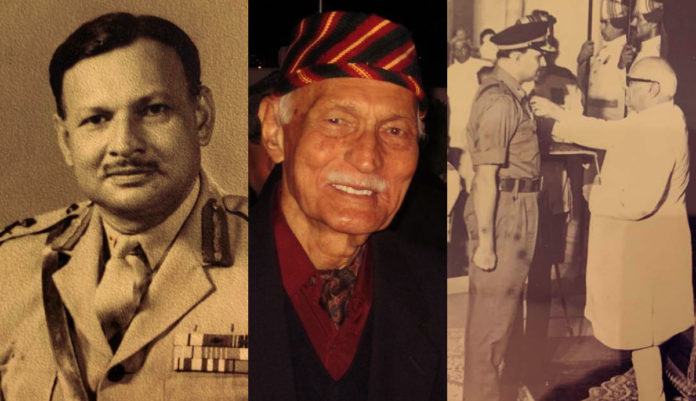
The Second World War, the Korean War, the Indo-Pakistan wars… Major General Premangsu Chowdry has seen them all. A salute to the Indian Army veteran, forever young at 100
Major General Premangsu Chowdry of the Indian Army is an extraordinary man, with a military and corporate career par excellence. He took active part in the Second World War operations in North Africa, Middle East and Italy; did post-war General Staff assignments in Japan with the British Commonwealth Occupational Forces (BCOF) and in the Headquarter of Supreme Commander Allied Forces (SCAP) commanded by General Douglas McArthur; with the British Commonwealth Division during the Korean War 1950-53; and fought in all the three India-Pakistan wars of 1948, 1965, 1971.
I am fortunate to have had the opportunity to spend quality time with the 99 years young ‘fighting fit’ General and relate to his extensive war experience. He with his contemporaries shaped the Indian Army since Indian Independence in 1947, notably, General (later Field Marshal) KM Cariappa, OBE, the first Commander-in Chief of Independent India; General KS Thimayya, DSO, Chief of Army Staff (1957-1961); and General (later Field Marshal) Sam Bahadur Manekshaw, MC, Chief of Army Staff (1969-1973), legend of the India-Pakistan war in 1971.
The General is to be applauded for his amazing and sharp memory to recall dates/years, names and places from his military career since 1941. The General celebrated being 100 years young on 1 May.
General Chowdry hails from Barisal town on the banks of Kirtan Kola river, then in East Bengal, now in Bangladesh. The family was well known as the ‘Chowdrys from Loha Ghar’ in Comilla District having zamindar credentials in that era. The General’s grandfather was the Superintendent of Prisons in Dacca, Bengal, the first Indian to have held that post in the 19th century. His father was the treasurer to the District Commissioner of Barisal in the early 1900s.
After completing his schooling at Barisal, where he received the gold medal for standing first in his matriculation exam, young Prem did his Bachelors and Masters at St Xaviers College, Calcutta University. Prem studied Arts with English Honours and was placed in the order of merit in the Bachelors programme.
A soldier is born
While he had plans of joining the Indian Civil Services (ICS), recruitment to the ICS had ceased due to the emerging World War in 1939. Prem instead opted for and joined the 1st batch of the Bangalore Cadet College, structured as a British Public School and which became the Officer Training Academy (OTA) for commissioning into the British Indian Army.
On 21 December 1941, Prem was commissioned as a 2nd Lieutenant into the ‘Royal Garhwal Rifles’ and joined at the Garhwal Regimental Centre at Lansdowne, which is present Uttarakhand. He was one of the first commissioned Indian officer into the ‘Royal’ Regiment.
After the initial training at the Regimental Centre, in 1942 Prem was posted to the 3rd Battalion Garhwal Rifles and served with them in the Western Sahara desert, Egypt, Cyprus, Iraq, Syria, Palestine and finally in the Italian campaign. In North Africa, the battalion was part of the 5th Indian Division and took part in the ‘Battle of Tobruk’. The fierce battle cost the battalion dearly, and they lost 12 officers and over 500 soldiers. The battalion was withdrawn and moved to Cyprus to rest, recuperate and await reinforcements from the Garhwal Regimental Centre.
Prem was sent for a Weapons Course at the Military School at the Allies military base in Gaza, where he excelled and then was ordered to be transferred to the Gaza Military School as an Instructor, a rare accomplishment because he was one of the first officers of Indian origin to be posted as an Instructor to the School. However the posting order was withdrawn at Prem’s request since he wished to remain with his troops involved in operations. After six months ‘Rest, Relief and Reinforcement’ in Cyprus, which included ‘Raid Operations’ in the Greek Islands, Prem and his battalion were deployed for training under the 9th British Army in the Middle East. From 1943 the battalion, as part of the 10th Indian Division, was actively involved in the ‘Italian Campaign’, where the Division was part of the 8th British Army commanded by General Bernard Montgomery, later Field Marshal, 1st Viscount Montgomery of Alamein.
Prem’s outstanding performance in the Italian Campaign earned him a recommendation for the ‘Military Cross’
Onward to Italy
Prem and his battalion were involved in the Italian Campaign for almost two years until May 1945. The battalion was deployed for operations in the Taranto Sector and in the Eastern and Central Sectors along the Apennine Mountains; they fought battles in ‘River Crossing’ operations at Sangro, Garigliano and Senio.
Prem’s outstanding performance in the Italian Campaign earned him a recommendation for the ‘Military Cross’—but the vagaries in the fog of war instead earned him the gallantry award ‘Mentioned in Dispatches’—his first of the three, two of which follow in the 1948 and the 1965 India-Pakistan wars. Thereafter, in 1944 Prem was promoted out of turn to the rank of a Major when he was just 24 years of age, the youngest officer to achieve the rank at that age.
Prem was the first Indian origin Major in the ‘Royal Battalion’, superseding fellow British Officers in the battalion, thereby exemplifying his high officer leadership quotient.
At the end of World War II, Prem was selected as one of the three officers, with 10 Battalion Commissioned Officers (BCO) and 25 Other Ranks to represent and lead the 10 Indian Division in the Allies Victory March in London in 1945.
Return to India
In October 1945, Prem and his Battalion 3 Garhwal Rifles returned to Lansdowne. The Battalionwas thereafter deployed in the North West Frontier Province (NWFP—currently in Pakistan) at Campbellpore forming part of an experimental Infantry Brigade responsible for testing new weapons and tactics in Waziristan and the Swat Valley. The core task of the Battalion and the Brigade was to suppress the Hazara tribal uprising in NWFP region. At the end of the tenure, Prem was posted as the Training Commander at the Garhwal Regimental Centre at Lansdowne.
After the India-Pakistan Partition, in 1948, Prem was posted back to his battalion 3 Garhwal Rifles deployed in the Kashmir region for the 1948 India-Pakistan war. The Battalion as part of the 160 Infantry Brigade was responsible to clear the Baramullah-Uri axis which they accomplished under heavy odds. Prem earned his second gallantry award ‘Mention-in-Dispatches’ in the Kashmir operations.
Prem as a 28-year-old Lieutenant Colonel was given the prestigious offer to command the 3rd Battalion the 5th Gorkha Rifles (Frontier Force). The Battalion provided support to the Hyderabad State police in their action against the Nizam-ruled princely Hyderabad State to ensure that the State remained in the Indian Union.
Prem thereafter undertook the entrance exam for admission into the Defence Services Staff College (DSSC) at Wellington, Tamil Nadu. In 1949-50 Prem underwent the 3rd DSSC Course where he attained the second position in merit and was subsequently posted as the General Staff Officer Grade 1 to Headquarter East Punjab Area in Jullundur commanded then by Major General SPP Thorat.
In December 1950, Prem was chosen by the Commander-in-Chief of the Indian Army, General KM Cariappa to take up the post of General Staff Officer Grade 1 (GSO 1) at the Headquarter British Commonwealth Occupation Forces (BCOF) in Japan. The appointment was another feather in the cap for Prem and his military career, and he was the first and only Indian origin officer to have been part of the BCOF.
Prem’s position as the Liaison Officer at the Headquarter UN Forces enabled him regular professional interaction with General Douglas McArthur, an honour and privilege which Prem recalls with clarity and great pride. In 1951 Prem was posted as GSO 1 to the 1st British Commonwealth Division in Korea. The Division was actively engaged in the ‘Korean War’ in the peninsula. Prem spent a year in the Division and excelled.
Return to India, and finding love
In October 1952 Prem returned to India and was given his second command of an Infantry Battalion, the 2nd Battalion the 5th Gorkha Rifles at Ferozepur as part of the 43 Infantry Brigade. In 1953, Prem got married to Sheila Devichand in New Delhi. The General won the heart and mind of Sheila, in fact he was a dashing and suave gentleman able to leave a lasting impression on anyone who met with him. At 100 years Prem still carries that aura and gentry to win over people. The love of his life for 57 years, Sheila passed away in 2013.
Ethiopia and the emperor
At the end 1960, Prem was appointed by General KS Thimayya, DSO, the Chief of Army Staff to be Commandant of the Ethiopian Military Academy in Harar, reporting directly to Emperor Haille Selassie of Ethiopia. Prem was also an unofficial military advisor to the Emperor. This tenure over the next three years built a lasting association between the Emperor and Prem.
Back to India
After the Ethiopian tenure Prem was posted for the second time to command a brigade, the 120 Infantry Brigade at Rajouri, as part of 25 Infantry Division. In 1965 Prem was posted as Brigadier General Staff (BGS) and acting Chief of Staff of 1 Corps at Mathura which took part in the second India-Pakistan war in the same year. Prem earned his third gallantry award ‘Mention-in-Dispatches’ in this war for his exemplary contribution to the war effort.
In 1967, at the age of 47, Prem was posted as the General Officer Commanding (GOC) Madhya Pradesh Area. The following year Prem took command of the 3 Infantry Division at Leh which he commanded until 1970. Prem earned his Param Vishisht Seva Medal from VV Giri, the President of India during this command for his overall meritorious service and the specific job of organising and personally directing the relief programme for the local civilian population after an earthquake struck the Ladakh region. Prem’s efforts saved many lives.
In December 1970, Prem took over as the General Officer Commanding (GOC) Bengal Area. This was a vital responsibility since the Area was required to deal with the violent Naxalite problem in Bengal State. In order to do so, Prem was given significant responsibility and authority, and had under direct and indirect command, the three Army divisions then based in Bengal, the Railway, State Police, CRPF, BSF and the Home Guards. During the 1971 India-Pakistan war which led to the creation of Bangladesh, Bengal Area under Prem’s leadership provided vital support to Eastern Command. Leading into the war, the Bengal Area had the crucial responsibility of managing and attending to thousands of refugees pouring into India from East Pakistan.
From the battlefield to the boardroom
On 30 April 1974, after 33 years of meritorious service, Prem retired from the Army and pursued a successful career in the corporate world. In civil life, initially in Calcutta, Prem held senior executive positions in the corporate and public sector including, Director of Shaw Wallace; Managing Director of Durgapore project, a public sector undertaking to which he was appointed by the then Prime Minister Indira Gandhi and the Chief Minister of West Bengal Siddhartha Shankar Ray; and Managing Director of Sankey Wheels. Prem’s contribution to the undertakings enabled them to turn around their losses and be profitable enterprises.
In 1979 Prime Minister Indira Gandhi directly appointed Prem as the Chairman and Managing Director of Incheck Tyres & National Rubber. The position held equivalence to a Minister of Industries and was part of the Appointments Committee of the Cabinet at the federal level.
In 1983, at 63 years Prem took permanent retirement. The General and his wife spent time with their three sons Rahoul, Drone and Kunal who lived in Sydney and Dubai. The General currently resides in Sydney with his eldest son Rahoul. An avid golfer into his mid-80s, Prem never missed a chance to swing his golf clubs at the Delhi Golf Club and the Manly Golf Club in Sydney. The Manly Club honoured the General over an evening sit-down dinner with all the members in 2010.
Prem is associated with many charitable organisations and is a Fellow of the Royal Geographical Society United Kingdom. The General was also an active member of the Royal United Services Institute for Defence and Security Studies in Sydney.
A salute to the centenarian.
The writer is an Indian Army Veteran
source: http://www.theindiansun.com.au / The Indian Sun / Home> India / by Colonel Joseph Malhews / August 14th, 2020
Visionary geologist PN Bose pioneered mineral exploration in India
While he could have easily made a life for himself in England, Pramathanath Bose – nationalist to the core – chose to return to India. Sources by The Telegraph
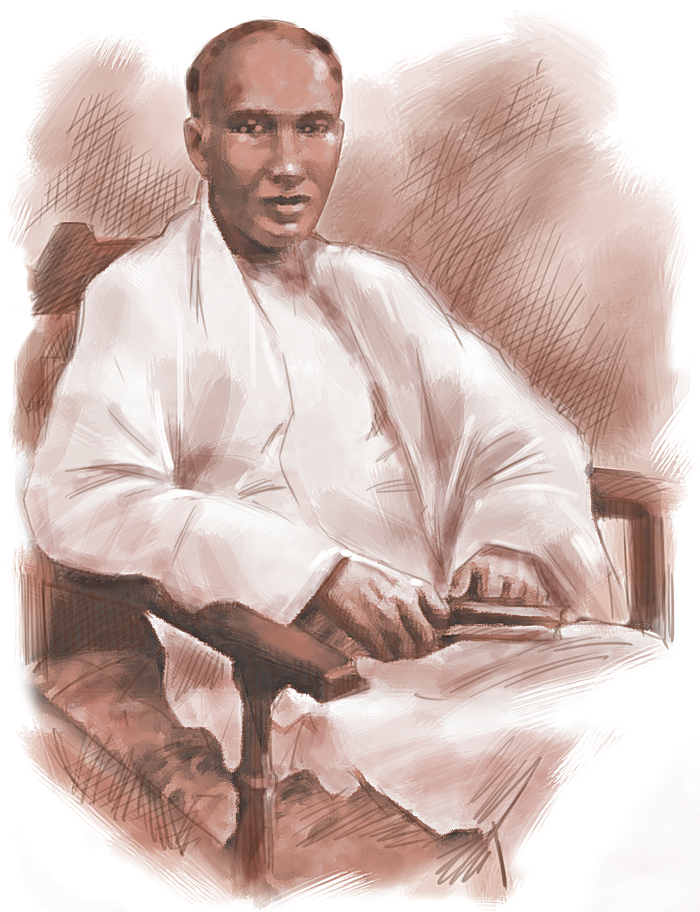
Pramathanath Bose, a scientist and geologist who lived in the 19th century, has many firsts to his name. Marked by an ardent passion for geology, he pioneered mineral exploration in India and was responsible for the Tatas setting up a steel plant in Sakchi, better known as Jamshedpur.
Born in 1855 in Gaipur village in West Bengal, Bose completed his studies from Krishnagar College with flying colours before moving to Calcutta for further studies. In 1874, he graduated from St Xavier’s College. He travelled to England on the Gilchrist Scholarship to earn an undergraduate degree in science. Bose was in fact the first Indian to get a BSc degree from a British university. He went on to get a diploma from the Royal School of Mines. While he could have easily made a life for himself in England, Bose — a nationalist to the core — chose to return to India.
In 1880, he joined the Geological Survey of India (GSI) as assistant superintendent, the first Indian to hold this post. He served with great distinction for 20 years, assiduously attempting to promote industrial expansion by developing geological resources, particularly coal and iron ore. He discovered the Dalli-Rajhara iron ore deposits in what is now Chattisgarh, which became the captive mines for Bhilai Steel Plant, set up exactly a century after Bose’s birth. Mining started in the Ranigunj coalfields in 1774 but it was under Bose that the operations became systematic and structured.
Next, he turned his attention to Sikkim, not a favourable area for mineral extraction because of inaccessibility, rugged terrain, excessive rainfall leading to frequent landslides and a thick mantle of vegetation. Studies revealed that Sikkim was rich in deposits of copper, iron, lead and zinc, with traces of cobalt, gypsum, graphite, limestone, dolemite, gold, silver and tungsten.
Bose’s tireless efforts in Burma, now Myammar, too were rewarded by the discovery of a variety of minerals. Later, geological studies carried in the royal states of Indore and Kashmir too delineated vast areas with mineral deposits.
Bose’s work in the Narmada valley helped understand the rock structure of the Deccan as well as open up new areas of study such as petrology, historical geology, mineralogy and fossils. He could determine the age of fossils by the radio-carbon method. He located the Gondwana layer in the Deccan which connects Indian history with Africa. His theoretical as well as practical knowledge and his writings in the newsletters and bulletins of GSI helped contextualise Indian geology and elevated the study of Indian geological science in the world.
Bose discovered the unique carbonatite rock and means to extract minerals from granite. Due to his perseverance, the GSI was able to extract manganese and iron ore in Durg, Chattisgarh. In spite of this, Bose was superseded by his British junior, T.J. Holland, as director of GSI in 1903. Miffed, he resigned.
After his voluntary retirement, Bose became technical adviser to the Maharaja of Mayurbhanj. This area in Odisha is rich in mineral deposits, and while surveying it, Bose discovered abundant iron deposits at Garumahishani. It had not escaped Bose’s observation that all his previous discoveries were utilised by the British. This time, he arranged for swadeshi industrialist Jamsetji Tata to sign an accord with the king, Sriram Chandra Bhanjadeo, to establish Tisco (Tata Iron and Steel Company). According to Jamsetji’s biographer, Frank Harris, Bose suggested the factory be set up at Sakchi, at the confluence of the Subarnarekha and Kharkai rivers. He also inspired Jamsetji to set up the Indian Institute of Science at Bangalore.
Bose played a pivotal role in the establishment of the Bengal Technical Institute, now called Jadavpur University, where he was the first principal. He also held regular lectures at the Dawn Society and the Indian Association for Cultivation of Science. He understood that without economic development India’s progress would remain a dream.
Bose wrote books on science in Bengali, including Prakritik Itihaas, which explored the natural history of India. He also published three volumes of the History of Hindu Civilisation During British Rule. This great scientist, who died in 1935, was also a humanist greatly interested in the heritage and culture of India.
The writer is a science historian and author of Science and Nationalism in Bengal
source: http://www.telegraphindia.com / The Telegraph, online edition / Home> Science-tech / by Chittabrata Palit / January 19th, 2020
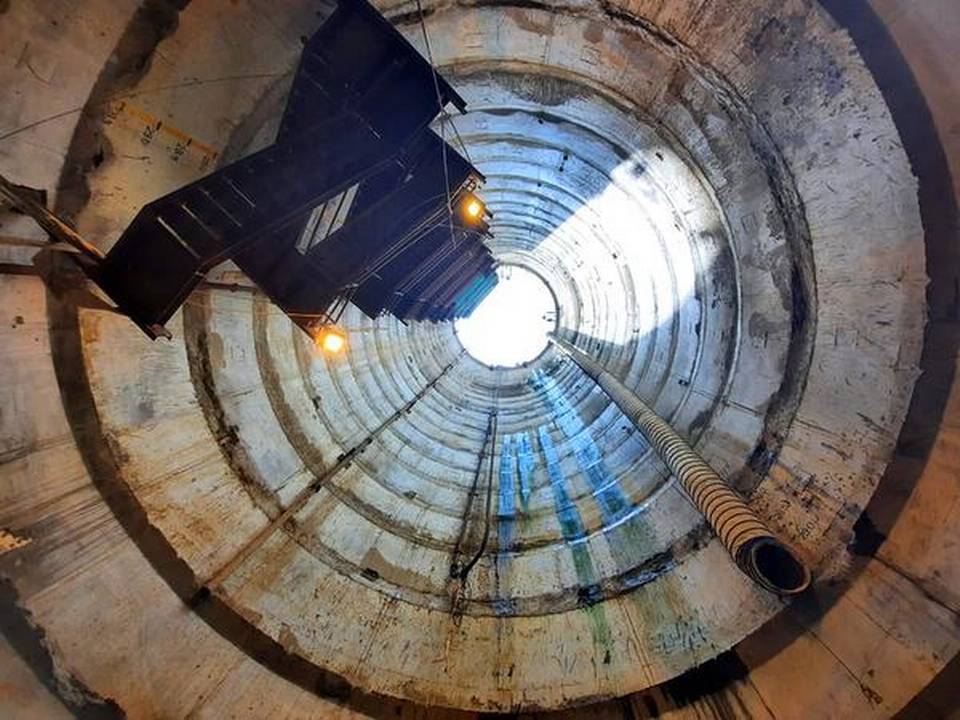
To greater depths: India’s deepest ventilation shaft for East West Metro in Kolkata.
The Metro project connects Kolkata and Howrah through underground tunnels below river Hooghly
Kolkata’s East West Metro Project, a mega infrastructure venture connecting the twin cities of Kolkata and Howrah through underground tunnels below the river Hooghly, will have achieved another engineering feat on Monday when it completes India’s deepest Metro ventilation shaft. The shaft goes 43.5 metres below the ground level, equivalent to a 15-storey building. The shaft will not only provide ventilation to the tunnels, but also an exit for evacuation during an emergency.
The evacuation shaft is located at Strand Road near river Hooghly and is situated between the two tunnels.
“This is a marvellous achievement, to successfully complete the 43.5-metre deep Metro ventilation shaft on the bank of river Hooghly. This is India’s deepest Metro ventilation shaft ever constructed by adopting a unique methodology… ,” said Satya Narayan Kunwar, Project Manager, Afcons.
Afcons had been commissioned by the Kolkata Metro Railway Corporation Ltd ( KMRCL) to execute the underground stretch of the East West Metro Project from Howrah Maidan to New Mahakaran station, which includes the tunnels below the river bed. The projects have already achieved a number of significant milestones which are considered engineering marvels. Two tunnels running parallel to each other about 37 metres below the river bed were completed by mid 2017 followed by the Howrah Metro Station, which, at 30 metres below the earth surface, is the deepest metro station in the country.
Afcons officials said the ventilation shaft was another such milestone. The shaft has a 10.3 metre inner diameter circular lining wall of minimum 500 mm thickness, and of concrete grade minimum M40 (a special construction material) circumscribed by 1 metre thick diaphragm walls all around.
‘Innovative techniques’
“The Metro shaft has been constructed adopting innovative engineering techniques and methodology to navigate geological challenges and overcome any impact on Kolkata’s circular railway track along river Hooghly,” Mr. Kunwar said.
The 16.6 km East West Metro Project will connect Howrah on one side of the river Hooghly to New Town Rajarhat in the north eastern fringes of the city on the other side. About 10.8 km of the metro line is underground and the remaining 9.8 km of the project will be through an elevated corridor.
source: http://www.thehindu.com / The Hindu / Home> News> Cities> Kolkata / by Shiv Sahay Singh / Kolkata – August 10th, 2020
To talk about public theatre in colonial Calcutta is to encounter its actresses.
The very first recorded women actresses that appeared on the stage of the new public theatre in Calcutta were Golap, Elokeshi, Jagattarini, and Shyama. They starred in Michael Madhusudhan Dutt’s Sharmishtha in 1873.
Their arrival on the public stage was a greatly contested matter for society at large — and especially for the elite men who had the means and ability to engage with the theatre as creators and patrons.
Some, like Girish Chandra Ghosh, the actor-director who towered over the early Calcuttan stage, not only supported women acting, he personally trained and worked with them. (This relationship was not straightforward, and is not meant to position him as some kind of feminist champion as we understand the term now — but simply to demonstrate his attitude towards the issue of cis-women acting on stage). Others, like Ishwarchandra Vidyasagar, who participated in social reform movements, vehemently opposed the idea. Vidyasagar, remembered as a social reformer who supported causes like widow remarriage, was so aghast when it came to pass that he resigned from the theatre.
As Lata Singh points out in an essay on modern theatre, an actress was not the intended beneficiary of the social reform movements led by people like Vidyasagar. Singh has pointed to the formation of the oppressive archetype of the ‘ideal’ Indian woman by the Indian nationalist movement, which demonised any woman who fell outside of its narrow criteria. This included any woman who would perform in public. “Women performers were kept out of the frame of the nation in the making,” writes Singh.
Scholars have shown us the dichotomy that this engendered in the lives of actresses. Although the actresses of the time were extremely popular and acclaimed for their work, stigma would dog them in their lifetime, and continues to in their afterlives in our collective memories.
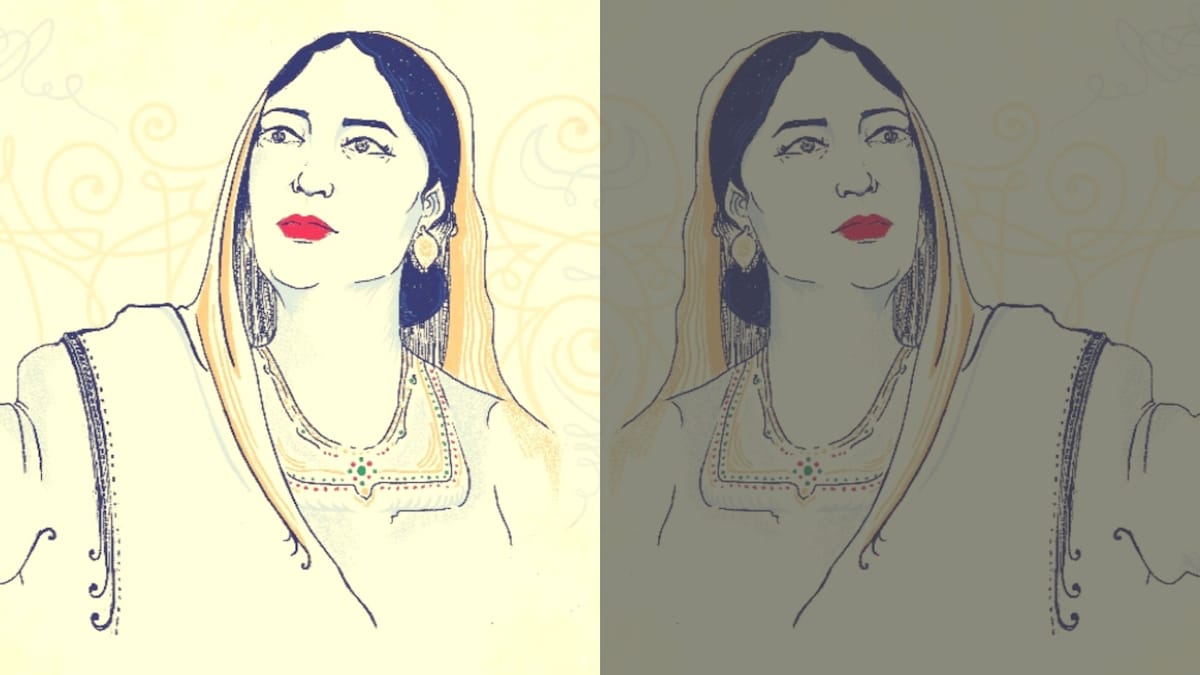
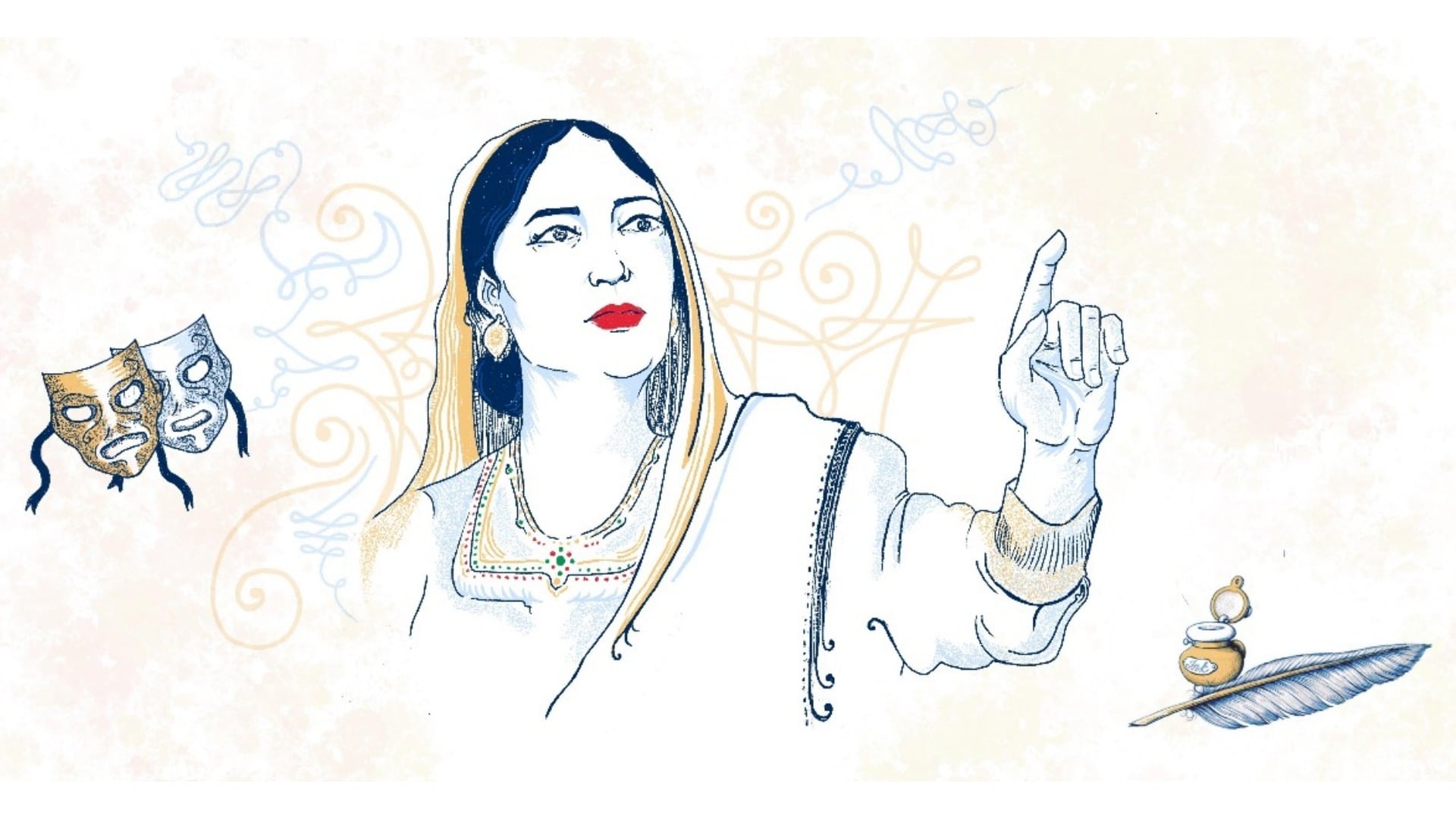
It is in this uncomfortable space that we encounter Tarasundari, one of the most successful and accomplished actresses of her time.
Born in 1878, Tarasundari was introduced to theatre by her neighbour and friend, Binodini. Binodini was 15 years older than her, and was already a well-known actress when Tara started acting. Her first role, at age seven, was that of a little boy in Girish Chandra Ghosh’s Chaitanya Lila, beginning a career that spanned decades.
Despite her professional success, the context in which Tarasundari was performing was extremely difficult.
The translator of Binodini’s two memoirs, Rimli Bhattacharya, who has studied the pivotal role of the actress in Bengal’s theatre history, writes, “[The] professionalisation of the stage with the hiring of actresses provoked a spate of letters, editorials and speeches at public meetings…The greatest fear was that they would corrupt the youth of Bengal… there was a constant fusillade — sometimes bitter and often ludicrous — directed against the actresses.”
The actress was immediately and vehemently derided, and regarded with fear and suspicion. The chief anxiety was her supposed “influence” over young men who were in reality far more socially powerful than her. “The vulnerability of women becomes apparent in this context: almost every little girl who joined the theatre came from what were designated as a-bhadra (‘dis-respectable’) households, usually those of women abandoned by husbands or lovers, or widows without any source of support,” writes Bhattacharya.
In addition to the constant public attacks, professional actresses were not paid equitably, or even enough to be financially secure. They were constantly under pressure to become the mistresses of elite men — entanglements that necessitated the managing of these men’s egos and negotiating with their dictates.
At the same time, the women on stage made pioneering cultural and material contributions to the theatre. Aside from their creative work on stage, they contributed in monetary terms, and by mentoring actors. Tarasundari was part of this — she was acknowledged for teaching, and later in her career, for financing theatrical productions.
But what she was most known for was her prowess as a performer.
Aside from being an actress, Tarasundari was also a dancer, a formally trained singer, as well as a published poet. Like her peers, she played a wide variety of roles — historical figures (Razia Sultana), to literary heroines (Desdemona ), to mystics (Jana), to neo-mythical figures (“Mata Banga Bhasha” — Mother Bengali Language).
Ironically, this last role as the personification of the Bengali language was part of a play to honour Vidyasagar. The editor of Nachgar wrote that the role earned her “a permanent place on the Bengali stage”.
So popular and skilled was Tarasundari that she could save the fortunes of a floundering theatre company or show with her participation. She was given the moniker “the Divine Sarah of Bengal”, after Sarah Bernhardt, the famous 19th century French actress — a move that Bhattacharya reads as “an effort to ‘internationalise’ her”.
Yet Tarasundari has been sidelined, her artistic contributions near-forgotten except in specialist spaces like academia. When Bhattacharya went to meet Prativa Devi, Tarasundari’s daughter, in Bhubaneshwar, she found that “the only material legacy” of the legendary actress that remained was a huge framed photograph. Many researchers had visited before her, and Prativa Devi had found that they had not stopped writing about her mother as “a fallen woman” while Tarasundari’s male colleagues and detractors were remembered with reverence.
Sarvani Gooptu, too, argues in the essay “Memory and the written testimony: The actresses of the public theatre in Calcutta in the 19th and 20th century” that most actresses of this time, including Tarasundari, are remembered in relation to their romantic relationships rather than artistic legacy.
Gooptu criticises the actresses for describing themselves as “lowly” in relation to their mentors and suggests that that is why their achievements were erased. But this self-fashioning cannot possibly be divorced from the context in which they existed, in which they were the targets of constant revulsion. Nor can we accurately assume this was the only way they articulated themselves.
In the context of the constant public attacks against them in the press and in public meetings (despite newspaper reviews that seriously engaged with their work), and the constant questioning of their authenticity (Gooptu points out that the “actual” authorship of the actress and playwright Sukumari’s play was constantly attributed to men she was acquainted with, rather than rightfully to herself), this erasure is part of a venomous legacy that seeks to reduce, to deride, to erase.
One antidote is remembrance — to seek out the material that still remains with us, and to acknowledge the formative influence that an artist of Tarasundari’s stature had on theatre.
source: http://www.firstpost.com / FirstPost. / Home> Long Reads / by Shreya Ila Anasuya