All posts by wellnmed@gmail.com
28
27
26
Casting director Tess Joseph on her journey from Calcutta to California…
…being on the Academy voting panel and lockdown lessons
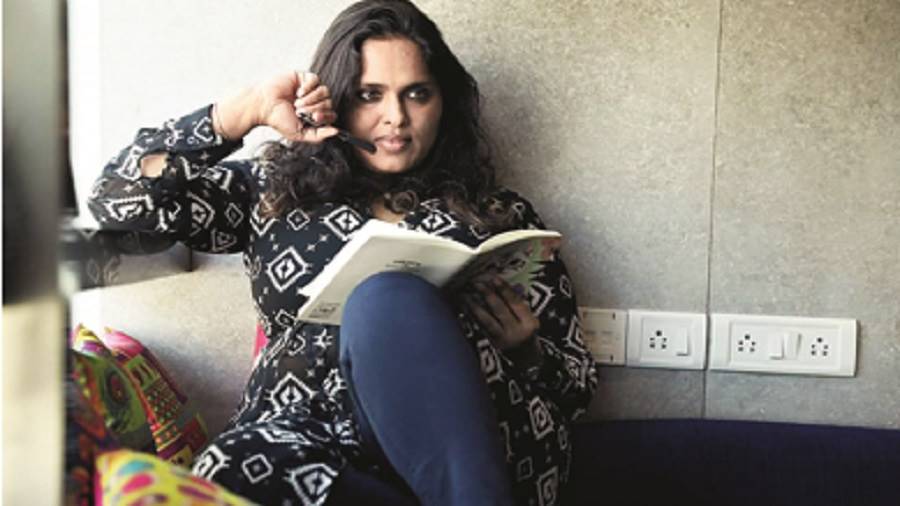
Calcutta girl Tess Joseph, who had found Sunny Pawar to play little Saroo Brierley in Lion that went on to the 2017 Oscars with six nominations, will now be in the powerful Academy voting panel. The casting director has recently received the invitation to join the Academy of Motion Picture Arts and Sciences. An alumnus of Loreto House and St Xavier’s College, Tess started her career as a casting director in Calcutta with Mira Nair’s Namesake in 2006. She tells The Telegraph about her profession, recent works, accolades, lockdown days and more…
Getting an invitation from the Academy to be a member…
I remember tweeting on July 1: “I feel like I made the valedictorian list of 2020”. I feel humbled and grateful to be recognised by my peers globally. It’s truly a great honour. The Casting Directors Branch is the one of the newer, youngest branches at the Academy, so it’s great to be a part of it.
Life after Lion…
It’s been busy days for me and my team! After Lion, we worked for Guy Ritchie’s Aladdin. Then we cast Netflix’s biggest success of the year, Extraction. Yeh Ballet by Sooni Taraporevala was also very special with a young new cast at the helm. We have Ramin Bahrani’s The White Tiger coming up, which is based on Aravind Adiga’s book. We cast Apple TV+’s Shantaram and we have also been part of the casting team for Foundation, a science fiction series for Apple TV +, and the Amazon series The Wheel of Time.
The journey from a Loreto House girl to an Academy member…
I would say it’s been a serendipitous and ever-changing journey. Loreto House is in many ways the foundation of who I am as a person. Among scores of uniformed girls, I do believe, I found my voice at Loreto House. I discovered who I am, what I love doing, how to communicate that well. I had picked up most of the awards for extracurricular activities. My schooling exposed me to literature, musicals and movies as my family cemented my love for the art. Loreto also helped me discover the “rebel” in me, from debates to breaking the rules. I feel that’s an integral part of schooling. Everything that I loved as a “hobby” plays a role in what I do today, probably that’s why I love what I do as “work”. Nothing goes to waste. Whatever you discover and explore will connect to your future in ways you can only understand when you look back!
When I was growing up, TV, films, media, these were careers no one spoke of. Like many others, I too wanted to be a doctor. My Ma pushed me to give the entrance examination for mass communication which had just started as a graduation course at St. Xavier’s College. The course was supposed to be my stop gap while I prepped for medicals. Once I joined, there was no turning back. Serendipity has always played a role in my choices.
Memories from school days…
I wasn’t a very good student till Class V. Then I realised that if you are good at your studies, you can get away with a lot of things. I was talkative and often got into trouble in class. The Famous Five and The Secret Seven were my favourite books and I used to go to places in the school where we were not allowed to go. So it was like we were living the books we were reading. However, my most favourite school memory till date is when I was in Class IX, there were three certificates for the top three students of the class — one is for excellence, one is for doing well and the other is for best improvement. So one day I stood up in the class and asked my class teacher, who was also our math teacher, as to why the girl who came third got the most improvement certificate and why the girl who worked the hardest won’t get it. For example, if a girl who was failing got 60 per cent, she should get the best improvement certificate. On the basis of that beautiful discussion, our school decided to change the certificate that year and one of my close friends got that. My school taught me to stand up and express myself. It allowed me to do what I believe in. I was in love with music, dance and basketball. I played district-level basketball, performed in several inter-school fests in Calcutta and also won the best performer in the Eastern region award once.
Missing Calcutta…
I always miss Calcutta. Though I’m settled in Mumbai now, Calcutta is my home, comfort, familiarity, and “reset” button. My parents are in Calcutta and they, along with the city, have shaped me in so many ways. I feel blessed that I grew up in Calcutta where art was treated with respect, always encouraged and celebrated. I do feel if I had grown up anywhere else, I would be a different person today. My baba was a Cine Central member and always saw film as an art form. My brother and I were reading subtitles once we knew how to read! From Bicycle Thieves to Chaplin, musicals to horror and documentaries, baba encouraged us to watch everything and we would end our film festival days with dinner at New Cathay or rolls from Badshah! I was more of an auditory learner than reader and my father gave lyrics the same standing as poetry. I was always encouraged to listen and remember Bob Dylan, Leonard Cohen and Hasrat Jaipuri.
Choosing to become a casting director…
Even today if you ask my parents or friends how I relate or remember cinema, books or stories, they will tell you that I’m constantly in love and raving about characters and performances and now, I get to make those memorable performances happen. As a casting director, my team and I bring to life the one living and breathing aspect of all cinemas — the actors! It’s often daunting because I get to be the first person to show the director what his/her film could potentially feel and sound like. I love watching and fine-tuning performances, discovering and elevating talent and now I get to do that all day!
My job is to collaborate with producers, directors, networks and studio executives to cast the best talent for each part. We need to be the biggest supporters of actors. We want actors to succeed, and often the perception can be the opposite, but the truth is, if life were perfect, the right actor would be the first actor walking into our rooms for the audition!
Beating lockdown blues…
Generally I don’t approach things I cannot control with panic. My fears were mostly heightened for my parents, senior family members, friends’ parents and those I knew who were stuck in other countries. Of course I first treated it as a break, which I desperately needed because we had been working non-stop for six months. After a couple of days off, I found a routine very quickly that has been integral to my lockdown days and beating the blues! I have been learning during the lockdown and I’ve been writing and listing them as I discovered each one. They are:
Stay close, while in distance: The pandemic doesn’t dictate your relationships, so remember to stay close always and remember the distance just shows you care, be it 6ft apart or choosing not to travel home, you’re doing it to safeguard the people you love and yourself.
The extra hours mash-up: I had a little cube or dice which I wrote things on to decide what to do with my extra hours. The cube had things like meditate, binge watch, read that book, course/workshop, write, go walk etc. If I ever felt the “I’m bored” or the “I’m not feeling inspired” coming on, I’d roll it!
Remote working is an option, not a reactive solution: We never treated Zoom like a sad solution to casting, instead we adapted fast and moved our casting online, constantly pushing and learning to make the process better and more intimate for actors.
Listen and notice: This time has shown me a thousand things, from epic sunsets, silence, greed, claustrophobia, kindness to the crack of an egg as I relearnt to cook, fold, clean and even talk to myself. I’ve seen a myriad of things — empty roads, a nation coming together to show gratitude to essential workers, watched migrants left to walk home, I’ve also been the person feeding stray dogs in the afternoon sun and answered appeals from friends reminding me to donate, to help and to share. More than anything, I’ve learnt that progress is an elastic word, sometimes it meant just getting through a day, finishing chores and cooking to the efficiency of 10-hour work days — both are progress.
Be relevant: Be relevant by contributing your time, your learnings. I’ve been mindful of what I’ve shared on social media to how we help others cope at a time which might be very different and difficult for them. From learning sessions to workshops to helping people discover their stories and voices, I’m glad I could use this time to be relevant to make someone’s day better.
Looking forward to the post-pandemic world…
I miss my friends and family, I miss hugs, I miss that feeling of shared energy in a room, of shared laughter in a room and the shared experience of watching a movie with strangers. I just want to rediscover a sense of trust that allows me to experience all these simple things without questioning my health and safety while doing so.
source: http://www.telegraphindia.com / The Telegraph, online edition / Home> Entertainment /pix Tess Joseph, picture sourced by the Telegraph / by Ayan Paul / August 28th, 2020
A network of Good Samaritans lends helping hand to Covid patients in distress
Mountaineers, models, medical students and some well-known doctors are part of this “Covid Care Network”, which has more than 200 members.
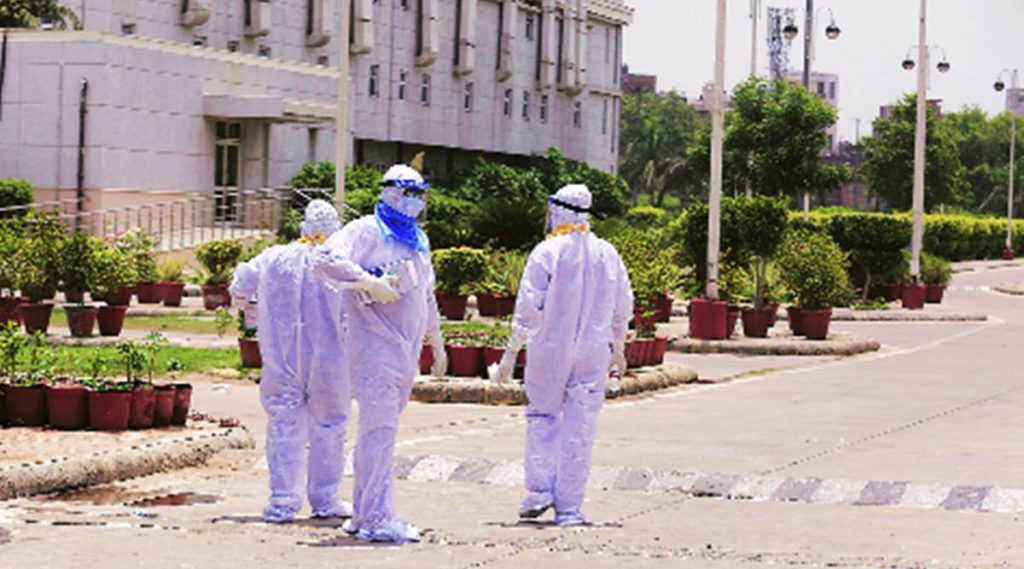
With the state struggling to contain Covid-19, the pandemic has brought together people from diverse fields on a common platform to provide assistance to thousands of patients who need help. Mountaineers, models, medical students and some well-known doctors are part of this “Covid Care Network”, which has more than 200 members.
Both mountaineer Satyarup Siddhanta, who has spent most of his life scaling the world’s highest peaks and setting records, and climber and model Madhabilata Mitra are part of this network.
“We want to improve access to healthcare, provide social support to the Covid-infected and their family. We have a 24X7 helpline where people can call anytime and get real time assistance,” said Siddhanta.
The group has now formed a crisis management team, and attached two ambulances with it.
“We regularly see how people suffer due to the non-availability of proper ambulances, and some have even died. There is a stigma attached to this disease, which is making it more challenging for the government to tackle this pandemic,” said Siddhanta.
The group’s members said they provide prompt action whenever they are contacted for help. Medical students Suchismit Bhattacharya, Parijat Bera, Antarup Haldar and Lopamudra Bose said fear was the “deadliest virus” of all.
“Covid-19 is not always related to death. Many only see mild symptoms and get cured as well. We should understand that it is curable and panicking over the situation will have an adverse effect. I work in a Covid ward and when I come back I am exhausted. But when I get calls, I answer their queries and try to calm them and advise them. Everyone has to contribute to end this situation,” said Somdutta Satpathy, an intern at SSKM hospital.
Physician and public health activist Dr Abhijit Choudhury told The Sunday Express, “Half of the Covid battle is fought in hospitals, and the other half in the community. Covid Care Network is looking into the social aspect of this pandemic. They also share information about patients’ relatives admitted in different hospitals, depending on the request. The team gives them medical advice and enlightens them about the pandemic.”
The group organises small gatherings to lift people’s spirit. Those who have gone through similar experiences at hospitals share their expertise so that others do not repeat their mistakes.
“It is not possible for the government to fight this pandemic alone, and it is good to see people from diversified fields joining hands,” said a doctor at a private hospital who did not want to be named.
source: http://www.indianexpress.com / The Indian Express / Home> Cities> Kolkata / by Express News Service / August 23rd, 2020
KMC launches free Covid tests at doorstep
The initiative first started with the residents of Suryakiran Awasana on Umakanta Sen Lane in north Kolkata’s Paikpara, during which as many as 74 people underwent Rapid Antigen tests.
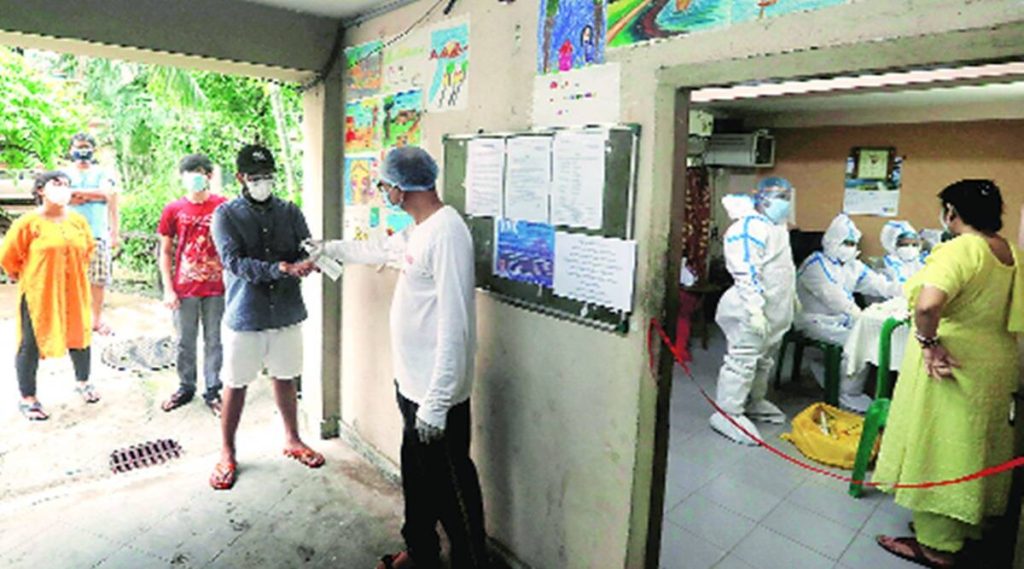
The Kolkata Municipal Corporation (KMC) on Sunday launched a first-of-its-kind initiative, “Free Covid Test at Doorstep”, in the city. The programme had been announced by KMC Board of Administrators’ Chairman and Trinamool Congress MP Firhad Hakim on Saturday to boost the number of daily Covid-19 tests to trace suspected patients.
The initiative first started with the residents of Suryakiran Awasana on Umakanta Sen Lane in north Kolkata’s Paikpara, during which as many as 74 people underwent Rapid Antigen tests. The test reports were available in just 30 minutes.
According to Trinamool MP Dr Santanu Sen, no one among those whose samples were collected on Sunday tested positive for Covid-19.
“There are 300 people in the society. In the initial phase, 74 people were tested. Those who will test positive will be advised for home isolation or will be sent to safe homes,” said Sen.
“If test reports of a resident with symptoms say ‘Covid negative’, the municipality will collect that person’s saliva for an RT-PCR test, all free of cost,” the MP added.
According to officials, Kolkata is the first municipal corporation in the country to introduce Covid testing at doorstep.
Any individual, or local clubs and organisations, can contact Hakim at his WhatsApp number (9830037493) to organise a test camp in their locality. The sender has to text details such as name, address and phone number to that number
source: http://www.indianexpress.com / The Indian Express / Home> Cities> Kolkata / by Express News Service / August 24th, 2020
Renowned danseuse Amala Shankar passes away in Kolkata
The centenarian, who had been active even in her early 90s, was awarded Banga Vibhushan by the Bengal government in 2011 for her contributions in the field of art.
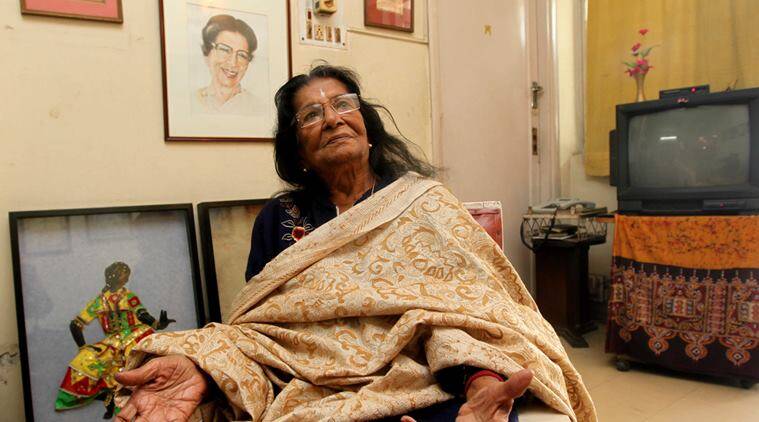
Renowned danseuse Amala Shankar passed away in Kolkata at the age of 101 on Friday. Wife of legendary Indian dancer and choreographer Uday Shankar, Amala learned to dance during the 1930s, when women from “respectable households” were just about beginning to perform classical dance on stage.
Amala Nandy was born in 1919 in Jessore (present day Bangladesh) to a merchant family, which was interested in education and arts. It was a chance encounter in France in 1930 when she met her guru and future husband Uday Shankar. At the tender age of 11, when she had accompanied her father, Akshay Nandy, at the International Colonial Exhibition in Paris, she met Uday Shankar for the first time, totally unaware what would follow next. Uday Shankar was there at that time with his troupe.
On the request of Uday’s mother Hemangini Devi to leave Amala with the troupe, her father agreed. On a day during this trip, Shankar, then 30 years old, asked the demure girl, dressed in a frock, to try out a few steps and twirl a stick in the air. Amala nailed every movement, as well as the expressions flitting on his face — it impressed him and he had said that she’ll be a dancer, that’s how her journey began as a dancer in the Shankar troupe.
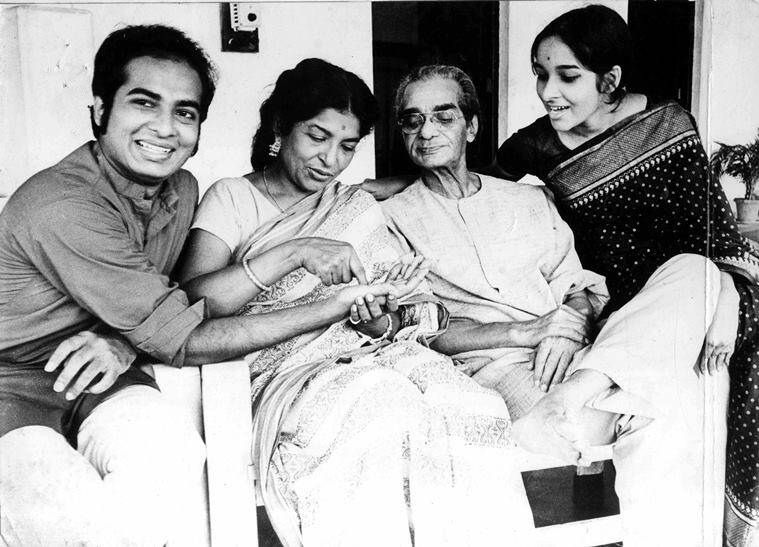
The following year, Amala’s first performance as Kaliya in ‘Kaliya Daman’ was staged in Belgium in 1931. A long-lasting association with Uday started and later she became the stalwart to keep Shankar gharana of dance alive.
In 1939, when she was with a dance group in Chennai, Uday came to Amala one night and proposed her for marriage. The duo finally tied a knot in 1942. They had two children — Ananda, who went on to become a reputed composer and dancer, and daughter Mamata, who is also an actor and dancer.
Amala also played the lead role in ‘Kalpana’ (1948) — a film by Uday Shankar about a young dancer’s dreams of setting up a dance academy. She also graced the red carpet at prestigious Cannes Film Festival.
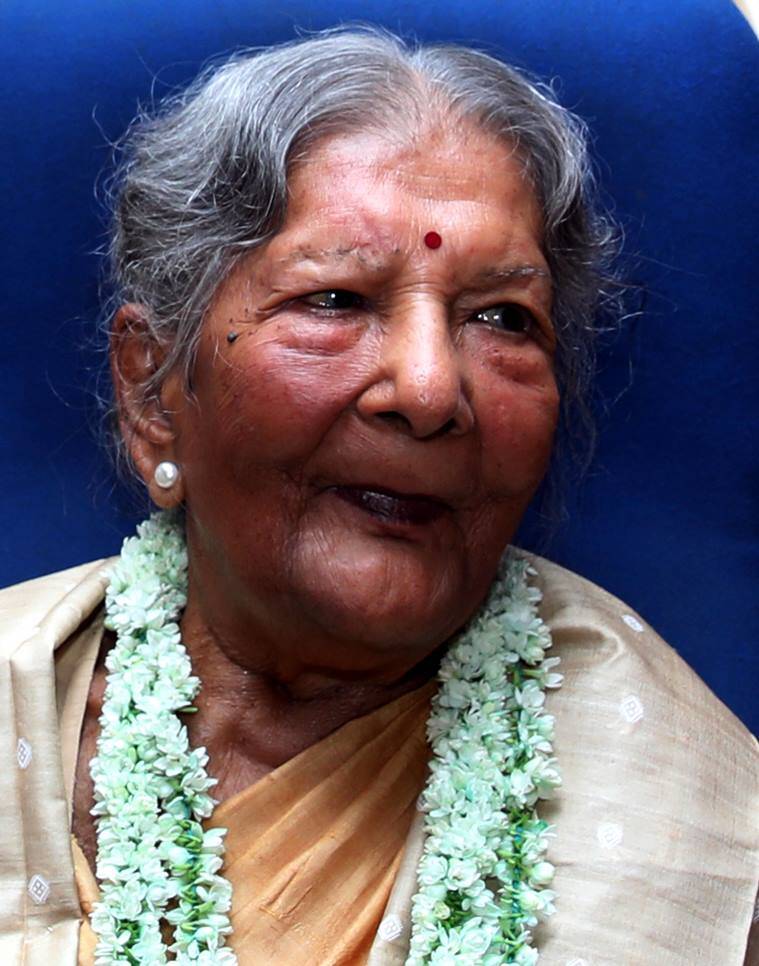
The restored print of ‘Kalpana’, which was screened at the festival’s Cannes Classic Section in 2012, the then 93-year-old star arrived at the event saying, “I am the youngest film star in Cannes”. The film had been brought to life after four years of concerted efforts. It was Uday’s brother, renowned sitarist Pandit Ravi Shankar, who had got in touch with Martin Scorcese’s World Cinema Foundation for support and funds.
The centenarian, who had been active even in her early 90s, was awarded Banga Vibhushan by the Bengal government in 2011 for her contributions in the field of art. In 2012, she received Sangeet Natak Akademi Tagore Ratna award for her contribution to dance.
Expressing her condolences, West Bengal Chief Minister Mamata Banerjee said her demise is an irreparable damage to the world of dance.
source: http://www.indianexpress.com / The Indian Express / Home> Cities> Kolkata / by Express Web Desk / Kolkata – July 24th, 2020
The past preserved in a Marble Palace
Rajendra Mullick built the museum and zoo because he was a botanist, ornithologist and an art lover
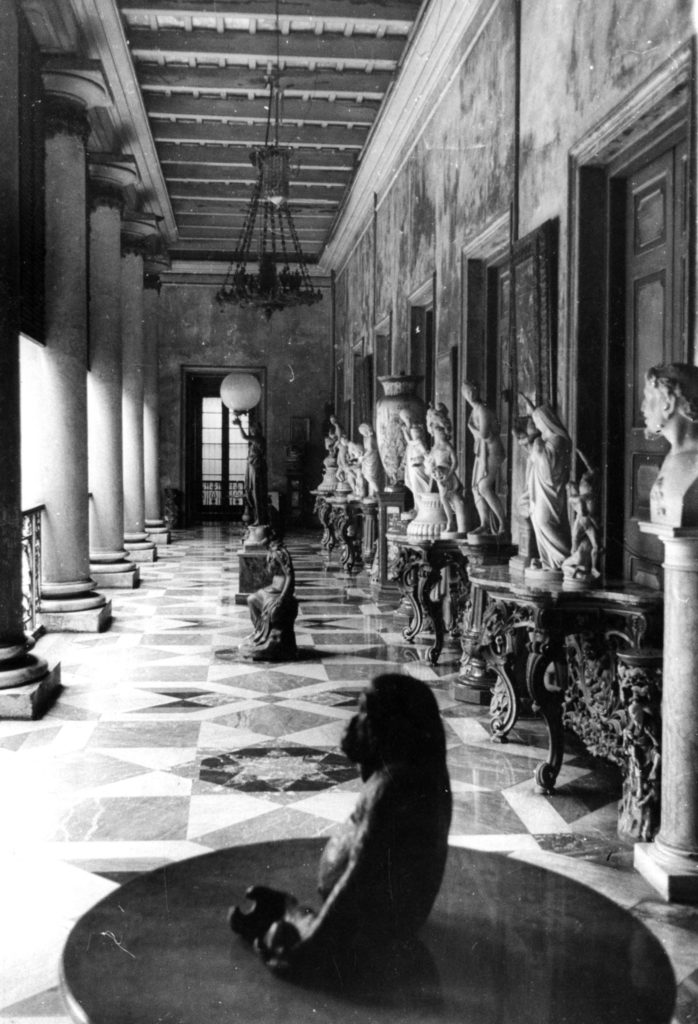
In the heart of Calcutta lies a quaint time-bubble, the Marble Palace. I walked in to see and feel what the walls, pillars and statues of the Marble Palace had seen through the many generations they had endured.
Rajendra Mullick, one the pioneers of modern Bengal, founded this Western art museum and a private zoo at Chor Bagan, North Calcutta in 1835 and 1855 respectively. This establishment came to be known as Marble Palace. Walking in was like walking into many cultures and histories simultaneously.
Hirendra Mullick, resident and curator of Marble Palace, helped me go back in time and space. He said Rajendra Mullick built the museum and zoo because he was a botanist, ornithologist and an art lover.
“Rajendra Mullick was also religious. He built six halls for prayer and mid-day meal centres, all depicting different times and myths, all designed in different architectural patterns,” he said.
There are only five rooms for family members and they are in the five corners of the palace. Misra Gharana, he called the style of the architecture, which calls for the bedrooms in the corners. It’s easy to lose your way trying to navigate your way through the corridors. It feels a lot like the maze outside the Overlook Hotel in The Shining.
Mullick says the land was given by the British in exchange for land around Fort William in central Calcutta. “An agreement between Job Charnok, Charles Sayer and Shabanya Roy Chowdhury’s family was signed in 1698, which permitted the government to take land for an amount of Rs 1298. These lands were taken from Sils, Borals, Tagores, Mullicks, and Sheiks. In exchange, they were given undeveloped lands in Jorabagan, Jorashankho, Kolabagan, Mechuabajar, Bnashtola and Chorbagan.”
The museum is a combination of various styles of architecture like the doory columns, the Corinthian style, wage-wood style and the French arch style. There are two gardens, larger than two football fields-length. They are filled with cast iron chairs and tables. There are three fountains as well in the courtyard, all made of marble. That leads visitors to the main worship hall, thakurdalan, which was made for worshipping Jagannath, one of the ten avatars of Vishnu.
Outside the hall stand marble representations of Greek gods Phoebus Apollo and his twin sister Diana — offspring of Zues and Latona. Cupid and Psyche from Lucius Apuleius Madaurensis’s Metamorphoses are the next representations that my eyes go toward. Cupid, also known as Amor, is not the spitting image of a baby in diapers with a quiver full of arrows with hearts on the tips. His statue is just as large and erect as he was in the story.
Then there are also sculpted figures of Antigone and her sisters, which have been inspired from The Theban Plays by Sophocles. The sculptures are replicas of Praxiteles Phidias, an ancient Greek sculptor. Replicas of Dancing Girls and Dancing Fauns are present throughout the palace.
Hirendra Mullick said most of the sculptures and paintings were purchased from auction houses and art collector houses.
One of the halls with replicas by Rembrandt, Michelangelo, Josho and Praxiletes Phidias, is floored with 76 kinds of Italian marble. The adjacent reception hall displays a 12-feet statue of Queen Victoria, which was carved out of a single block of wood.
Each hall has Austrian chandeliers and Venetian candelabras. The entrance of the museum side of the palace displays sculptures made in Miroy Foundary in France. Four statues of women depicting the four seasons of summer, autumn, spring and winter.
While looking at these figures, Antonio Vivaldi’s rendition of the Four Seasons rings in my ears.
Now, imagine.
A different work of art.
In a scene in Satyajit Ray’s Charulata, there is a scene where the protagonist is on an old-schooled swing reminiscing about what had happened in her life and what could have happened. I feel the same nostalgia walking down the winding path in the garden and into the private zoo, which is more or less an aviary now.
The zoo, called Nilmani Niketan after Rajendra Mullick’s father, displays rare animals and birds. Mullick brought animals and birds in exchange of money and through submission of legal papers and approval of the Zoo Authority of India. The zoo was made for preserving and displaying herbivorous because the institution was vegetarian.
There are rare birds like albino peacocks, Hyacinthine Macaw, bird of Alexandria, Trucan, Hawk-headed parakeets, silver and golden pheasants, magpies, hornbills and mute swans. Birds of Paradise are missing because they have become extinct. There are also long-tailed monkeys, spotted deer, barking deer, red-butt baboon and porcupines.
Hirendra Mullick tells me proudly that this is the only private zoo in India. “I visited one in Bikaner in the ‘80s, but now that has closed down,” he said.
Mullick, who has been looking after the museum and zoo for the past 30 years, says the founder laid guidelines for maintenance that have been followed rigorously. “Everything is preserved to protect the glamour and glory of the tradition, history and ambience of the past. Everything is religiously followed as instructed by the founder.”
source: http://www.telegraphindia.com / The Telegraph, online edition / Home> Culture> Heritage / by Saurajit Mazumdar / Calcutta / October 31st, 2018
Remembering Pandit Jasraj, Who Brought a Touch of Divinity Among Mortals
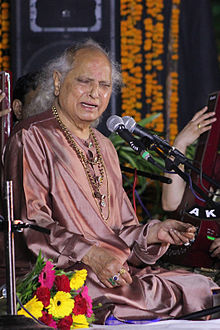
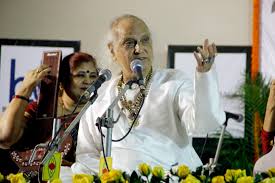
White hair billowing around him, with no attention to give to a gaping audience, Jasraj on stage often took the form of a singular devotee.
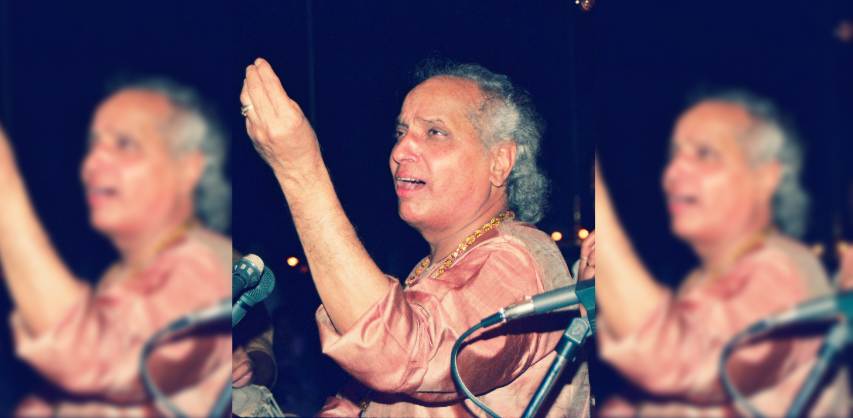
In 1946, Pandit Jasraj (1930-2020) moved to Calcutta, to work at All India Radio. I was born in 1965 and his voice on the radio wafts through all my early memories.
My father, in the first flush of relative financial comfort since travelling to Calcutta from Barisal in Bangladesh during 1947, had brought home a radio. Until I was 26, it was the only technology that offered entertainment in our household.
My father played the sitar and sang north Indian classical. He had a deep disdain for exhibitions of any sort, and seemed to thrive only on minimalism. But he filled our mornings with the Bhairavis and Lalits that the likes of Bhimsen Joshi and Jasraj would sing. By the time I started learning classical music, I was six years old and knew that the dark voice was Bhim’s and the softer one, Jasraj’s.
In 1974, my father pulled a surprise and took the family to our first concert. Stages in those days had few lights. But in the middle sat Jasraj, affable and jocular, conversing freely with the audience as if they were his friends. I remember him as iridescent. I was just learning Raag Yaman, and in a coincidence that children are prone to consider magical, Jasraj sang it too on the day. Listening to him live, my ears opened to a quality of his music that I have believed in to this day.
Even for a vocalist of such renown, a word that must be repeated to describe Jasraj’s unique voice, is ‘sweet’. His renditions were pleasing to the ear, that was the simple truth.
I went on to study Hindustani classical with a singular passion, picking up the flute along the way.
By the time I watched Jasraj live again, it was 1983. A lot had changed. My father had lost his wife, my mother. But the morning radio kept up with its song offerings. I was 18 and the concert was at the Netaji Indoor Stadium in Kolkata. Back then, the Bengal government would organise four-day music festivals that would continue till midnight. Jasraj was the main draw of the day and performed last.
This would be my first brush with an artist’s temperament. Usually, musicians make a brief announcement of what they would sing. He didn’t and instead stared fixedly at a point on stage while the musicians checked the sound.
It was quite late and I had been meaning to leave. Then, suddenly, he broke into song. First, was Raag Bhim Palashree. But he ended it soon and without a single word, began chanting the ancient syllable, ‘Om’. I stood near the door, thinking, “Let me hear this for five more minutes, and then I will leave.”
For the next hour, with just that one syllable, Jasraj travelled at maddening pace through a maze of influences, fusing styles, merging elements and making no bones of the fact that little mattered to him that night other than his own artistic satisfaction. Yet for all the vocal fireworks, the chant retained its sublime essence throughout, renewing itself for the audience each time yet smoothly travelling through the whole range of all that the Mewat gharana held sacred. I stood near the door the whole hour, transfixed and unable to make any real attempt to exit.
On my way home that day, I did not know that I would not go on to hold fast to my passion for classical music. I did not know that I would listen on the tape recorder to the bhajan Govinda Damodar Madhaveti and marvel — as an atheist — at the divinity that possesses its singer. I did not know that amidst life’s many turns I would sing the same Om Namoh Bhagwatey Vasudevaya under my breath while waiting at the grocery, cooking a meal or making the bed.
But I did know that I had witnessed the work of a singular devotee. White hair billowing around him, with no attention to give to a gaping audience, Jasraj on stage that day took the form of the saint that he is. His voice was enormous, so enormous that it filled spaces as small as my childhood home with hope. And now the saint has returned to his ashram.
The writer is a gold medallist of the 1985 batch of the Bengal Music College.
Translated from the Bengali original.
source: http://www.thewire.in / The Wire / Home> Culture > The Arts / by Debasree Sarkar / August 17th, 2020