All posts by wellnmed@gmail.com
04
03
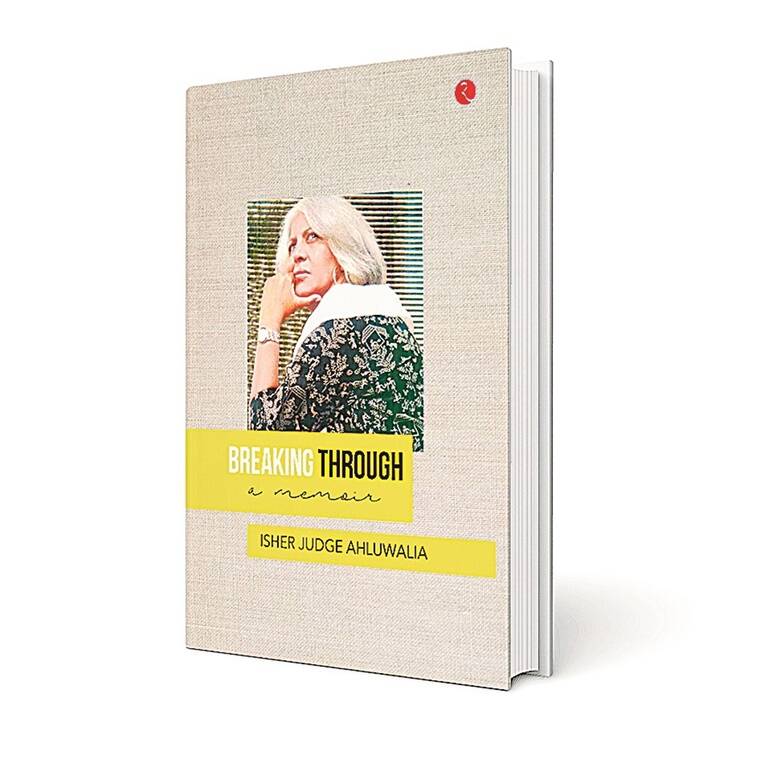
The personal and the public coalesce in Isher Judge Ahluwalia’s memoir
In Breaking Through Ahluwalia writes an account of her extraordinary life, career and fight against an implacable disease
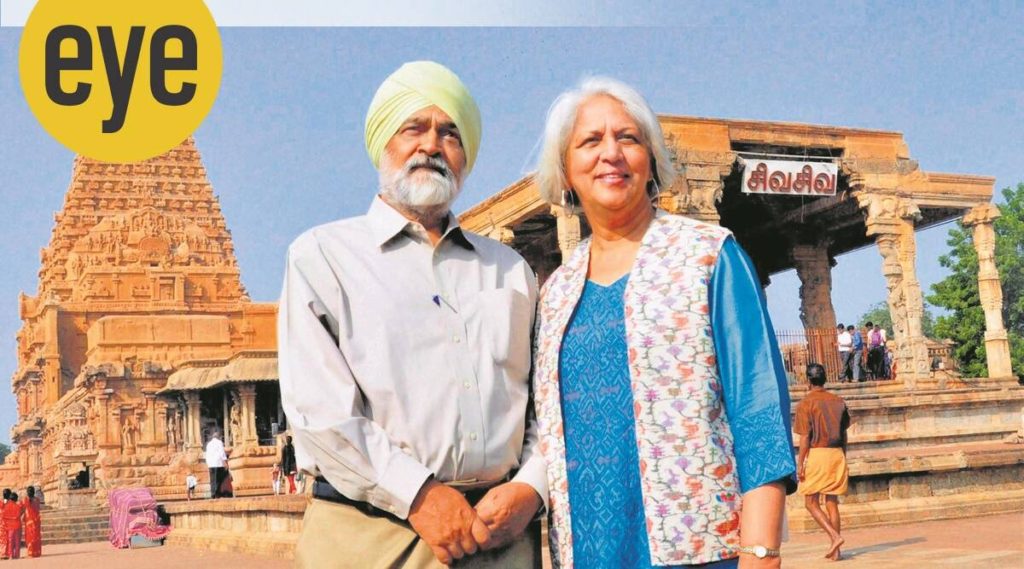
At almost the end of her long innings, wracked by grade IV glioblastoma, among the toughest of all cancers, Isher Judge Ahluwalia — grace, charm and subtlety personified, and, with widespread connections — took it upon herself to write this book. Courageous as she is, Isher did so in the most trying circumstances, while she was losing the ability to read and write on her own, relying extensively on help from the family to put down her thoughts.
Yet, thank God that she has written this book, for it is a story of grit, love, care and commitment. Grit, because who would have bet that a daughter of simple, traditional Sikh parents — one of 11 siblings — living in a small, rented flat near Purna Cinema, not far from Calcutta’s Kalighat, would reach where she did, entirely on the strength of her efforts and her intense determination to succeed?
Or, that she would in 1962, finish her West Bengal Higher Secondary Board examination from the highly-regarded Shri Shikshayatan Vidyalaya, coming eighth in the state? She writes, “My father had never shown any interest in our education but when I did well in the exams, he would often tell his friends with some pride that I had got the third rank among girls. While I approved of his new interest in education, I objected to the gender differentiation; I would correct him, saying I was eighth, not third.”
Isher then went to Presidency College, Calcutta, to study economics with a scholarship of Rs 35 per month, which paid for her college fees and the tram ride from home and back. After the Presidency, she joined the Delhi School of Economics for her Master’s degree. “My family would never have let me go to Delhi to live in a hostel. At this point, I had a lucky break. In 1964, my brother decided to move to the capital with his family to start a business and my parents agreed to my going to live with them, attending DSE as a day student.”
As was the case with many of us, DSE was Isher’s road to Damascus — a point of revelation when she was determined to study further and apply for a PhD. Armed with a high first division in a year when seven of the eight ‘first-divers’ were women, Isher applied to Massachusetts Institute of Technology (MIT), where she was accepted with a fellowship. Thus began her journey in Cambridge, Massachusetts, a passage that took a bit longer than necessary because of an interlude in Washington, DC.
In the summer of 1970, Isher applied to the International Monetary Fund (IMF) for a summer internship. Instead of the usual three months, she got a special six-month break from MIT. With that came to love. Soon after moving to DC, she had a date with a super-bright young man, the clever, erudite English-speaking debater from St Stephen’s and winner of a congratulatory first in philosophy, politics and economics from Oxford, one Montek Singh Ahluwalia, who had joined the World Bank as a part of its Young Professionals Program.
Montek impressed Isher sufficiently enough — lunch in the Bank’s Executive Dining Room, films, dinners, walks and drives. “It was during one of those drives, while we were picnicking off some bread and cheese and a glass of wine, that I decided that Montek was the man for me.” Soon, Isher secured a full-time job at the IMF; and, in 1971, she and Montek married in Washington.
Four years passed in setting up home in Georgetown, going with IMF delegations for Article IV consultations in the Caribbean, and working long hours at the Fund. Suddenly, it dawned upon her that she had left her PhD programme behind. So Isher applied for a fellowship at Brookings and completed her MIT thesis from there in 1976 — which was published in 1979 by Macmillan, titled Behaviour of Prices and Outputs in India: A Macro-Econometric Approach.
Then came care. Of parenting two boys — first Pavan, who was born in November 1977; and, then, Aman in October 1979, after the three of them had returned to India for good. Of taking charge of what was an immaculate home and hearth; of looking after a growing family that eventually extended to daughters-in-law and grandchildren; of being a partner to Montek, who would return late at night with stacks of government files.
Then, there was a commitment to her profession. “Being a mother is a full-time job. Being a working mother is two full-time jobs.” Even so, Isher completed two major books: Industrial Growth in India: Stagnation Since the Mid-Sixties (1989, Oxford University Press) and Productivity and Growth in Indian Manufacturing (1991, OUP).
She worked at the Centre for Policy Research, then took over as the head of Indian Council for Research on International Economic Relations (ICRIER), an institution which she strengthened by attracting excellent full-time fellows and garnering some very serious grants from abroad and the Indian corporate world, that made ICRIER financially comfortable. If these were not enough, Isher got into urbanisation and published two books on the subject.
Breaking Through is a beautiful read because it is so honestly written, so touching in content — a wonderful mélange of the personal and the public. It is, in effect, a signing off. Of a great life. Of struggles. Of success. Of love and caring. Of building families, values and institutions. And, of Montek.
Thank you, Isher.
The author is the founder and chairperson of CERG Advisory Private Limited
source: http://www.indianexpress.com / The Indian Express / Home> Books and Literature / by Omkar Goswami / August 30th, 2020
The Minister who read too much
Pranab Babu spoke English with a Bengali accent yet made it to the top. Here’s why
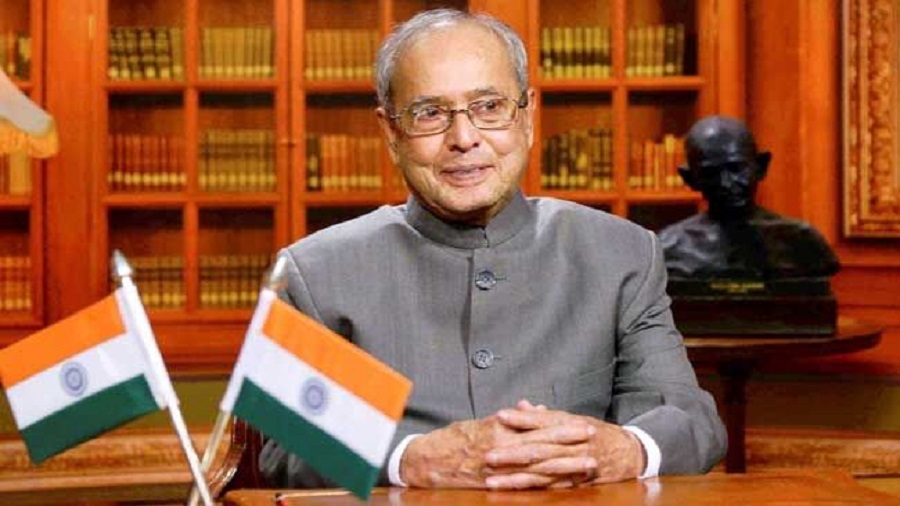
Pranab Mukherjee was an unusual politician and his success was unusual given that the odds were stacked against him. He was not a grassroots politician and he lost most of the elections he contested. He was not an intellectual in the Bengali sense of the word and he didn’t come from an English-speaking background (all his life he spoke the Queen’s language with a heavy Bengali accent). He was also singularly lacking in charisma. He thus broke all the rules that had governed Bengal’s politics harking back to C.R. Das and Subhas Chandra Bose to Siddhartha Shankar Ray and Jyoti Basu.
But he had other strengths. Most notable was the fact that he was born into politics. From their home in Mirati village, his father Kamada Kinkar Mukherjee controlled, and had an iron grip on, Birbhum district politics. Along with his alphabet, his son learnt the first rules of public life: influence-peddling and networking. He was a zealous student and never forgot the lessons.
Mukherjee’s first big opportunity came soon after he had moved to Calcutta in the 1960s and dived into the thick of state politics. The Syndicate that ruled the Congress Party in Bengal, as elsewhere, threw a dissident leader out of the party. Mukherjee sensed that politics in India was changing and he chose to side with the dissident leader and was also expelled.
He had timed it perfectly. Feelings against the Congress party were rising and in the assembly elections the dissidents scraped together enough seats to be the deciding factor. The Left successfully wooed the breakaway Congress by agreeing to make the Congress dissident leader the chief minister. Even Jyoti Basu agreed to serve as the deputy chief minister.
Mukherjee knew though that no good could come out of an association with the Communist party. By then, the Congress Party had split into two parties – the Indira Gandhi Congress and the old Congress. Mukherjee skilfully negotiated a way for his group to ally with Indira Gandhi and even managed to win himself a junior minister portfolio in Delhi. His senior in the ministry was Kamlapati Tripathi, a UP Brahmin who preferred temple-hopping to ploughing through ministerial files.
That task was left to the young Mukherjee who learnt the other important lesson, one his father had not taught him, namely that if you want to run India, you must know your files. He was not house tamed by the babus — he became one.
_________________
Abhijit Mukherjee@ABHIJIT_LS
With a Heavy Heart , this is to inform you that my father Shri #PranabMukherjee has just passed away inspite of the best efforts of Doctors of RR Hospital & prayers , duas & prarthanas from people throughout India ! I thank all of You

5:46 PM . Aug 31, 2020
Mukherjee was not quite the ultimate old-school politician. True, he had friends in every political nook and cranny and beyond, and he knew when to cash in on his friendships. True, he held almost all the great offices of state, shuttling between finance, defence and external affairs with equal ease. But he had one redeeming feature which the rest lacked. He could read, and he read, every file that came his way. Jagjivan Ram, the most outstanding of all Indira Gandhi’s ministers, was once asked who was the best minister he had seen. “Pranab Mukherjee,” Ram replied. Why? “He reads the files” was Ram’s response. Others had different views. Arun Jaitley who regarded Mukherjee highly thought there was always a danger of losing the tree for the wood. Pranab had a fondness for Jaitley but thought that without spending time on files, one could never have a grip on the Ministry. Understandably, Mukherjee’s role model as Finance Minister was C.D. Deshmukh, a civil servant who went on to become the governor of the Reserve Bank and then the Finance Minister.
Mukherjee harboured ambitions of being prime minister but being elevated to the presidency was an impressive consolation prize.
In the political world, he was famed for his elephantine memory that made him the go-to man during any political discussion. Whether it was Bengal or any other part of the country, he could rattle off events and even the dates on which they occurred. “He was a ‘human computer’ like Shakuntala Devi. In most states, he could also give you the macro picture. He was relied on for spot information,” said a former bureaucrat. In addition, he was a meticulous diary-writer and brought out two books based on his memories and the contents of his diaries.
Mukherjee held a law degree as well as an MA in history and political science. He often made jokes about his diminutive stature. Many in the political world turned up at his doorstep for advice when they were in difficulties. Once he shifted into a counselling role, many say, he would switch off his political side.
He was also an administrator who could keep his cool when all others around him were losing theirs. Towards the end of his political career, bureaucrats reported he got irritable more quickly but even that was only an occasional flare-up, such as on TV when he ticked off interviewer Rajdeep Sardesai and told him to mind his tone when speaking to a former president of India.
Above all, he was a man who cared about politics and political processes. One visitor to Rashtrapati Bhavan found him intently watching the parliamentary proceedings on Lok Sabha TV and muttering irately at the screen: “He should not have said that.”
Early in his career, he caught Sanjay Gandhi’s eye and was catapulted to high office even before he was 40. It is said he won his attention with the help of Kamal Nath, who was, at the time, a Calcutta businessman but making his mark in politics.
Mukherjee proved his worth as a junior minister in the finance ministry. Noida, on Delhi’s outskirts, was Sanjay Gandhi’s pet project but even he could not get the State Bank of India to open a branch in Noida. At Mukherjee’s suggestion, the Finance Ministry was split into two independent entities — Revenue and Finance — both reporting independently to the prime minister. As the revenue minister, Mukherjee instructed the State Bank of India to open the branch.
The problem was resolved and a legend, that of the go-to man, was born.
By 1980, when Indira Gandhi returned to power after the brief Janata Party interregnum, Mukherjee received a huge promotion and was made Commerce Minister at the age of only 47 — still very youthful by Indian political standards.
In 1982, two years later, his dreams came true. He became the Finance Minister of India. Mukherjee fought theelection against Indira Gandhi’s wishes and lost. Indira Gandhi was reluctant to include a defeated candidate. It was Sanjay Gandhi who persuaded his mother to change her mind. It also set the curious precedence for finance ministers (or wannabe finance ministers) who lost the election to be inducted into the Cabinet through the back door. Arun Jaitley and Jaswant Singh took advantage of this unfortunate example. Manmohan Singh did one better. He became the Prime Minister.
Pranab Mukherjee was essentially a Sanjay Gandhi protégé but he was aware of the negative consequence of this association. He downplayed this relationship and instead pulled out all the stops to portray himself as an Indira Gandhi man.
But his relationship with Sanjay was to haunt him later in his career. Rajiv didn’t trust the Sanjay men and Mukherjee’s clumsy effort to become an interim prime minister when Indira Gandhi was assassinated was seen as an additional and very glaring black mark. Pranab was not included in the Rajiv Cabinet in 1984 and later at the first opportunity, Rajiv Gandhi expelled him from the Congress Party. It took him a great deal of effort (and a failed attempt to launch a party) to be allowed back. Mukherjee admitted that being dropped from the cabinet left him “shell shocked and flabbergasted”. The Rajiv years were for Mukherjee the years of wilderness and the political aridity spilled over to the Rao era. He could regain a cabinet berth only in 1995 after 12 long years in the no-man’s land.
Earlier, it was during his time in the Commerce Ministry that he grew close to Dhirubhai Ambani and the Reliance Group. At the Commerce Ministry, he learnt the intricacies of how, especially in the heyday of the licence raj, duties could make or break products and, indeed, companies.
By the time Mukherjee was back in favour, the Rajiv Gandhi government had lost its energy amidst the artillery fire surrounding the Bofors gun deal, and also the Shah Bano imbroglio. Later, he was pipped to the post to be finance minister in P. V. Narasimha Rao’s government. Mukherjee had misread Rao as he earlier had misread Rajiv Gandhi. He had also misread the change in ideological climate. Globalisation was beginning and was being endorsed even by communist countries. Deng’s China and Gorbachev’s Russia had all mended their ways. Mukherjee, a diehard statist, was the wrong man at the wrong time.
Not merely did Rao have a new finance minister, he also had a radically new economic policy. The nation had made a 180-degree turn. Mukherjee was history’s baggage. Still he got another innings when Chidambaram was replaced by Mukherjee in the UPA era. But he was clearly at odds with the new India. Worse, he was largely blamed for the economic downturn of the UPA2 that paved the way for a Modi triumph. His last act as the Finance Minister was to introduce the infamous Retrospective Taxation which amended a 50-year-old regulation and gave the government power to change laws with retrospective effect. This was Mukherjee’s last hurrah and a valiant last-ditch effort to bring back the rules-regulation Raj. From all accounts, he succeeded. The new law is said to be the single important factor in reducing foreign investments in India. His departure in 2012 for the Rashtrapati Bhavan saved him some embarrassment.
Mukherjee himself always insisted he couldn’t become prime minister because he didn’t speak fluent Hindi. Others joked that, with his strong Bengali accent, he didn’t speak English either. Even after decades in Delhi and criss-crossing the world, his accent didn’t change the slightest. Some put this down to his innate belief in Bengali superiority. “Bengalis know there is only one language on earth and English is just a dialect of Bangla,” said another bureaucrat who knew him well. Mukherjee was unfazed whether he was meeting the Queen of Great Britain or any other world leader. “He would speak to the Queen in Buckingham Palace and he stuck to his village college-teacher English. He didn’t care about his background or his height,” the bureaucrat said. Mukherjee’s first job had been as a lecturer in a local college before he shifted to Calcutta.
It was common knowledge that Mukherjee, and many others, blamed former West Bengal chief minister Siddhartha Shankar Ray – with whom he didn’t get along — for the Emergency. But Mukherjee, himself, was a prime beneficiary of the Emergency and a charter member of the Sanjay Gandhi faction. He was also at odds with former minister A.B.A. Ghani Khan Chowdhary, another Congress Party mass leader in Bengal.
In other ways, he was the quintessential Congressman and he took a stern line on communalism. Once when a communal incident broke out and others were caught off-balance, he delivered a strong lecture, quoting, as he was wont, earlier instances when the Congress had fought communalism – even throwing in the exact dates when the incidents had happened.
Later in life, however, he took a milder line towards an organisation like the RSS. He adopted the view, as one observer explained, that “if you keep them in the doghouse, they will do many things in an effort to shock you”. Mukherjee argued that the RSS should be mainstreamed and that would force them to “soften down,” the observer said. That outlook may have been the reason for his trip to Nagpur in 2018 where he addressed RSS swayamsevaks and even praised the institution’s founder, though he did also emphasize the importance of tolerance.
It was an open secret that Mukherjee wasn’t Sonia Gandhi’s first choice for the presidency. But he built up support at different levels and is said to have forced her hand and easily won the largely ceremonial post. He had recognised he was growing older and the one job he wanted wasn’t coming to him. Later, when Narendra Modi became Prime Minister, he knew that nothing would induce the BJP to give him a second term, but he did sound out Modi gently about his re-election. “You are a Congress nominee,” said Modi almost mischievously. “If the Congress Party proposes your name, we shall consider it,” Modi added. Mukherjee knew the game was lost. He bowed out quietly and gracefully, citing “health complications relating to old age”.
Modi was otherwise kind to Mukherjee. He may not have given him a second term but he did honour him with the Bharat Ratna. That was more a put down to Advani (who certainly contributed much more to the nation from the Hindutva point of view) and also to Manmohan Singh (whose contributions surpass Mukherjee’s by the long shot).
It marked a low-key close to a long and illustrious political career. While it wasn’t perhaps the triumphant finale that he might have chosen for himself, it was very far from an ignominious ending.
Mukherjee was predeceased by his wife, Suvra Mukherjee, who died in 2015. The couple had two sons and a daughter. Sharmistha Mukherjee is an accomplished Kathak dancer and choreographer who contested the 2015 Delhi Assembly election as a Congress candidate but failed to win. Abhijit Mukherjee served as a Congress MP from Bengal from 2012 to 2019.
In 2012, Sharmistha wrote about her father for India Today, recalling he had to walk nearly 10km every day to school and there was a stream on the way that during the monsoon became a gushing torrent. “Whenever I close my eyes trying to visualise my father, I see this little boy standing by the roaring stream thinking about how to cross it. He has crossed that and many other barricades in his life and walked a long way since then,” she said.
source: http://www.telegraphindia.com / The Telegraph, online edition / Home> India / by Paran Balakrishnan / New Delhi – August 31st, 2020
The golden oldies: Calcutta’s heritage list
The burgeoning vision of heritage preservation must expand to districts and villages
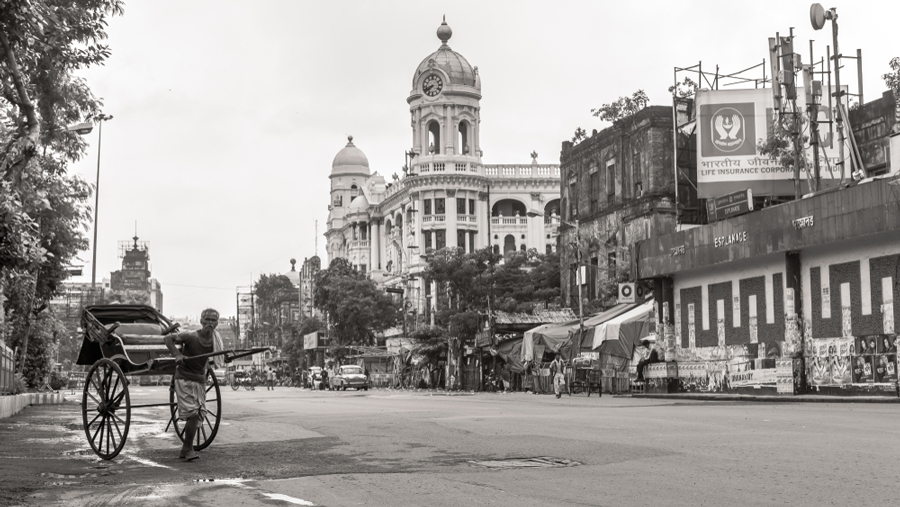
There is a lot more worth saving than meets the eye — or, more accurately, than the eye has been willing to see. That is why it is heartening to hear that Calcutta’s heritage list, which has been lying dormant and unchanged since 2000, is finally set to be updated by the Calcutta Municipal Corporation. The inordinate delay notwithstanding, the revision is a welcome move, as it will add greatly to the representational nature of the list with the inclusion of more structures of cultural, economic and historical value. It is no secret that in spite of its diverse culture and history, Calcutta, much like other Indian cities, is known for doing precious little to preserve and protect the remnants of its past. This disregard has been amply reflected in the apathetic response to conservation; as recently as 2018, the old Kenilworth Hotel was razed to the ground after its heritage status was quietly downgraded. Well before that, the exquisite Darbhanga palace on Chowringhee was demolished; in its place today stands Calcutta’s ‘tallest building’, promoted by the same consortium that acquired and demolished the old Kenilworth Hotel.
In the light of this, it is reassuring that the practice of downgrading heritage buildings without public knowledge is set to end and, more important, public participation is to be made a significant part of the municipal framework of conservation activity. In this case, archivists, heritage enthusiasts and activists will be able to identify not just mansions but also entire precincts within the city that deserve to be preserved for their unique cultural and historical dimensions. This kind of cohesion and dialogue between administrative bodies and experts is rare in Indian policy-making; and yet, it is crucial for firing up the bureaucratic imagination to transcend established codes of conservation. After all, heritage is a fine mesh of the tangible with the intangible. It is an endangered space where old buildings and edifices jostle for survival along with cultures and livelihoods. This ecosystem is in dire need of regeneration. Calcutta’s Chinatown, a vibrant but marginalized hub, is a case in point. There is an added advantage to this nimbler comprehension of heritage. The preservation of livelihood, integral to heritage precincts, could, in turn, strengthen local — neighbourhood — economies, bolstering public mobilization to demand conservation. Heritage then can turn truly participatory and democratic.
This momentum must be widened in its scope. The burgeoning vision of heritage preservation must expand to districts and villages. Apart from Serampore or Chandannagore, places such as Tamralipta and Chandraketugarh — from where there is archaeological evidence to suggest a sea-faring history of the region’s people — as well as Bengal’s crumbling terracotta temples must be brought within the ambit of a collective culture of conservation. The future of heritage and its protection in India rely on enterprises that are modern, well-funded and truly participatory in character.
source: http://www.telegraphindia.com / The Telegraph, online edition / by The Editorial Board / August 22nd, 2020
31 a
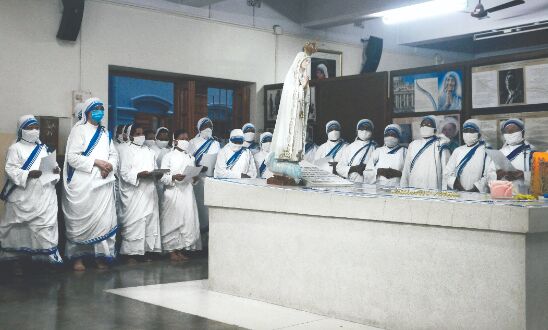
Darjeeling remembers St Teresa of Calcutta on her 110th birth anniversary
Darjeeling:
Along with the rest of the world, the Queen of the Hills commemorated the 110th birth anniversary of St Teresa of Calcutta popular as Mother Teresa. Darjeeling occupied a special place and was a turning point in the life of the Saint.
“We had Mass (prayer service) in the Houses in Darjeeling, Tukdah, Tindharia, Kalimpong, Siliguri and Sikkim on Wednesday to commemorate her birth anniversary” stated Sister Marjelle of the Missionaries of Charity.
Agnes, who later became Saint Teresa of Calcutta had arrived in India in 1929. She had then joined the Loreto novitiate in Darjeeling.
She took her first religious vows as a Nun on May 24, 1931 in Darjeeling and made her final profession as a Loreto nun on 24 May 1937 in Kolkata, and hereafter was called Mother Teresa. While in Darjeeling she used to teach at St Teresa’s school under the Loreto Convent.
The school was founded in 1921.
On 10 September 1946, on a train journey from Calcutta to Darjeeling during annual retreat in between Siliguri and Darjeeling, Mother Teresa received what she termed the “call within a call,” which prompted her to start the Missionaries of Charity. Thus she had stepped out of the Loreto Convent in Darjeeling into the slums of Kolkata. She was canonized on September 4, 2016 as St Teresa of Calcutta.
The Cathedral of Immaculate Conception located at the Loreto Convent in Darjeeling also houses an Oratory (a place of worship) in her name. On December 3, 2016, Darjeeling had named a road after St Teresa of Calcutta. The road connecting Gandhi Road to Dr. Zakir Hussain Road (TV Tower) has been named the “Saint (Mother) Teresa Road.” The Missionaries of Charity House of Darjeeling is located on this street.
“People of her stature cannot be confined to any religion, color, caste or creed. She was a world citizen. She inspired people to become better human beings, to love and serve others. Let us strive hard to continue her legacy” stated Reverend Stephen Lepcha, Bishop, Roman Catholic Diocese of Darjeeling.
source: http://www.millenniumpost.in / Millennium Post / Home> Kolkata / by Amitava Banerjee / August 27th, 2020
30 a
The long wait ends for India’s first Asiad gold medallist Sachin Nag
Swimmer Sachin Nag, who won the country its first gold medal at the inaugural 1951 Asian Games in New Delhi, gets Dhyan Chand Award
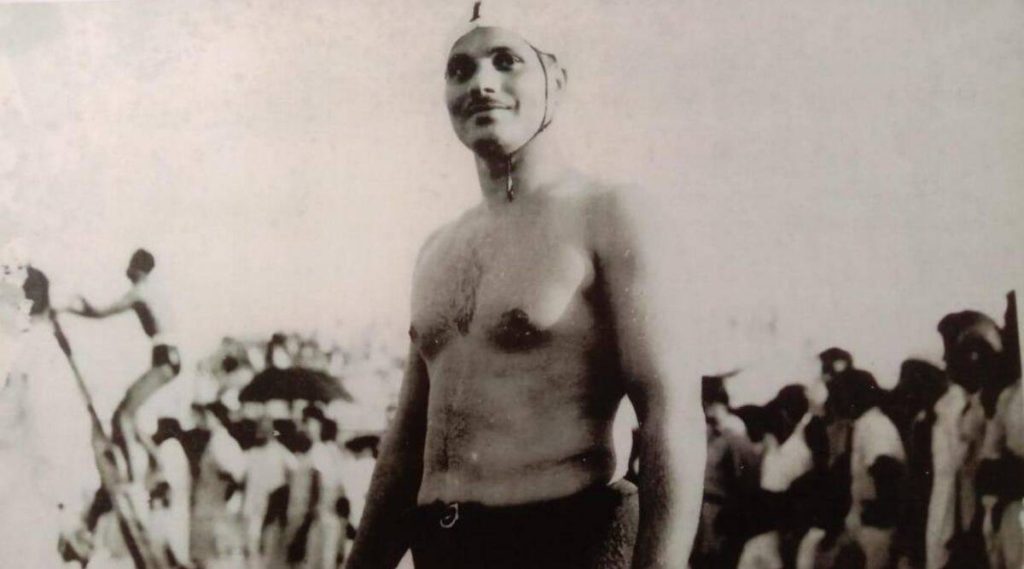
Ashoke Nag talks about having sleepless nights before the national sports awards were announced earlier this month. The son of late swimmer Sachin Nag, winner of the first gold medal for the country at the 1951 Asian Games in New Delhi, had experienced rejection in the past when he tried to secure his father’s legacy.
This was the fifth time Ashoke had applied to the sports ministry to bestow an award posthumously to one of Independent India’s first sporting superstars.
His father passed away in 1987 ‘with a broken soul’, Ashoke says.
Armed with 47 supporting documents, including black-and-white paper cuttings, certificates and a recommendation from paralympic swimmer Prasanth Karmarkar, Ashoke, a former sergeant in the Indian Air Force, applied again this year. The willpower to fight for the recognition his father deserved grew stronger every year that Sachin Nag’s name was not included in the list of awardees. 2009, 2012, 2018 and 2019 had brought only heartbreak.
“This year, I had reason to be hopeful because it is his birth centenary. And remember, he won three medals at the 1951 Asian Games. The gold in the 100m freestyle and bronze medals in the 400m freestyle relay and 300m medley relay. This was just four years after independence. India was a young country, those medals mattered a lot to the nation. I felt frustrated in the past when my father’s name was not included. My father passed away with a broken soul,” Ashoke, who has also penned his father’s biography in Bengali, says.
On Saturday, Ashoke will attend the online awards ceremony at the Sports Authority of India centre in Kolkata, where the president will virtually bestow the Dhyan Chand Award to his late father. “I attended the rehearsal on Thursday. I met archer Atanu Das and sprinter Dutee Chand. Felt good to be in the company of young achievers. I am looking forward to Saturday. After applying for the award, I would wake up at night and wonder if this would be the year,” Ashoke says.
As time went by, Ashoke knew he was in for a long battle.
The family had generously handed over Nag’s medals and blazers to the museum at the National Institute of Sports in Patiala in 1992, five years after the swimmer passed away. Nag was also a two-time Olympian and also part of the Indian water polo team. He coached for three decades as well. Ashoke felt his father got nothing in return after the initial fanfare died down.
Former Prime Minister Jawaharlal Nehru and Lady Edwina Mountbatten watched the event at the pool in 1951, Ashoke says. “Nehru ji was the first one to congratulate my father poolside when he won the gold in the 100m freestyle. I have pictures of Nehru ji and my father together. My father would say PM Nehru gave me respect but at times he felt that over the years people had forgotten him,” Ashoke, the third of six children, says.
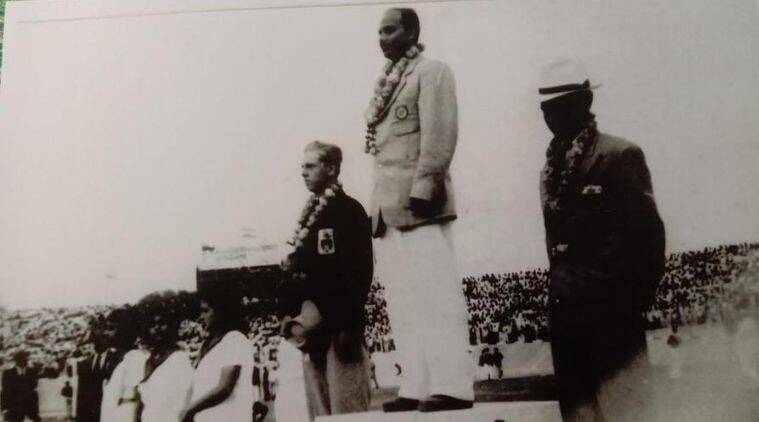
Nag, according to his son, was a proud man. He never asked for favours. Ashoke remembers how his father shot down the idea of approaching a top Swimming Federation of India official to recommend his name for the awards after they were instituted in 1961. “My father said, ‘I used to beat him in the 100m freestyle in the pool. I can’t go and ask him for a favour just because he has become a powerful official.’ He was a proud man,” Ashoke recalls.
Hurtful barbs
Some of the barbs Ashoke faced over the years still sting. Once after the awards were announced, he asked a footballer on the committee what went against his father. “The footballer asked me, ‘how many times did your father represent India? The footballer himself had won the Dhyan Chand award earlier. Yet he insulted my father by asking that question. It hurt me back then,” Ashoke says.
Nag had to deal with official apathy in the run-up to the 1951 Asian Games. The games were scheduled for early March, but Nag had arrived in Delhi in December, hoping to train in the capital. “An official of the organising committee asked my father why he had come so early and told him to go back to Calcutta. He was told there were no swimming pools in Delhi that he could use. But my father decided to find a way to train in Delhi. He located Sisil Hotel in old Delhi, which had a 20m by 10m pool, and requested an Italian lady who was the manager to allow him to use it for training. She agreed for a fee of about Rs 5. That too was waived off later.”
When he won the gold at the Asian Games a few months later, one of his first stops was the hotel. “He went to Sisil hotel to thank everyone for the support. He always remembered those who supported him.”
Caught in riots
If not for Nag’s steely determination, his swimming career would not have reached the heights it did in the late 1940s and early 50s. Nag suffered during the tumultuous days of Partition when he inadvertently got caught in the Calcutta riots. “He was returning from training at the Ganges when a bullet hit him on the right leg. He was badly injured and was admitted in a hospital for five months. When he was being discharged, the doctor told him that it would take him two years to get back to swimming,” Ashoke says.
But in a year’s time, Nag was at the 1948 London Olympics. He participated in the 100m freestyle and was a member of the Indian water polo team that beat Chile 7-4. All four goals were scored by Nag, Ashoke says.
To speed up his recovery, Nag returned to Banaras, where the family was based. He returned to the pilgrim town to rejoin the Saraswati Swimming Club, which he had founded. The masseurs in Banaras were excellent.
Another incident connected to the freedom struggle, where a young Nag was chased by police who were trying to break up a protest, resulted in his swimming talent being discovered early.
Ashoke narrates the sequence of events. “My father jumped into the Ganges to give the police the slip. He first hid underwater between two boats. But how long can someone stay underwater? There was a 10km swimming competition starting in the river and my father joined them. He finished third,” Ashoke says.
Back then, reputed swimmers from Calcutta clubs would enter long-distance competitions in Banaras. One of them, Jamini Das, who would captain the national waterpolo team at the 1948 Olympics, believed Nag had great potential and asked him to shift to Calcutta where he joined the Hatkhola Club.
One of Ashoke’s cherished memories from his childhood was his father pushing him and his brothers into the Ganges to swim. “We never became top-class swimmers like our father. But being successful in getting my father the prestigious award gives me immense satisfaction.”
source: http://www.indianexpress.com / The Indian Express / Home> Sports / by Nihal Koshie / August 29th, 2020