All posts by wellnmed@gmail.com

Two teachers from West Bengal receive National Awards on Teachers’ Day

When Kalimul Haque, 45, joined the Nepalipara Hindi High School in West Bengal’s Paschim Burdwan district a decade ago, he was faced with a challenging task.

Misha Ghosal
Misha Ghosal(HT)

When Kalimul Haque, 45, joined the Nepalipara Hindi High School in West Bengal’s Paschim Burdwan district a decade ago, he was faced with a challenging task.

“Such was the reputation of the school, that not only the students passing out of the institution were facing a bleak future, but I was badly scolded by a senior education officer of the district in my first meeting. On that day, I decided, that I would do something for the school,”

While in 2019, the Nepalipara Hindi High School at Labourhut, with more than 3600 students, was selected as the best school in the state by the West Bengal government, on Saturday Haque, a doctorate in geography, received the National Award.

Today, the school boasts of smart classes, a rooftop kitchen garden with hydroponics, water harvesting, vermicompost and students prepare their own teaching material under the guidance of teachers. From ten classrooms and one toilet in 2010, the school now has 57 classrooms and 24 toilets. Earlier students of classes, five, six and seven used to sit on the floor. Today the school has class 11 and 12 with all streams.

“Developing the school had almost become my addiction. My family supported me throughout. I am happy that I could do it,” said Haque who has received several awards including the Siksha Ratna award from the state government.

Meanwhile, in north Bengal, Misha Ghosal (51), the headmistress of Dhanapati Toto Memorial High School in Alipurduar districts’s Totopara, a home of primitive Toto tribes, had been working tirelessly for 11 years to make the school stand out among others. A postgraduate in Mathematics, she received the National Award on September 5.

“Even though I hail from Alipurduar district I had studied in Kolkata. So when I got selected for the head master’s exam and I was offered the school in the remotest corner, I was a bit afraid. But then, I took up the challenge and thought of doing something for the school and the society,” she said.

When she joined the school in 2009, only one student from the Toto community, having a population of only 1585, was able to cross the Madhyamik (class X board exam) hurdle. This year the success rate is over 80 percent.

Totopara, is a small and remote hamlet by the Indo-Bhutan border and remains marooned during the monsoons. One needs to cross seven rivers to reach the village. She almost single-handedly turned things for the school having 250 students.

“I worked hard to first win the confidence of the community and started two hostels. The school was developed from government-aided to government-sponsored so that it becomes financially sound. Now my aim is to uplift the quality of education in the school so that students can find jobs,” she said.

Rita Toto was the first female graduate from the community in 2010.

source: http://www.hindustantimes.com / Hindustan Times / Home> Education / by Hindustan Times, Kolkata-Siliguri / September 05th, 2020
A solo traveller around the world, on a bicycle

The cycle is as good for our personal health as it is for our environment, not to mention women’s empowerment: Lipika Biswas

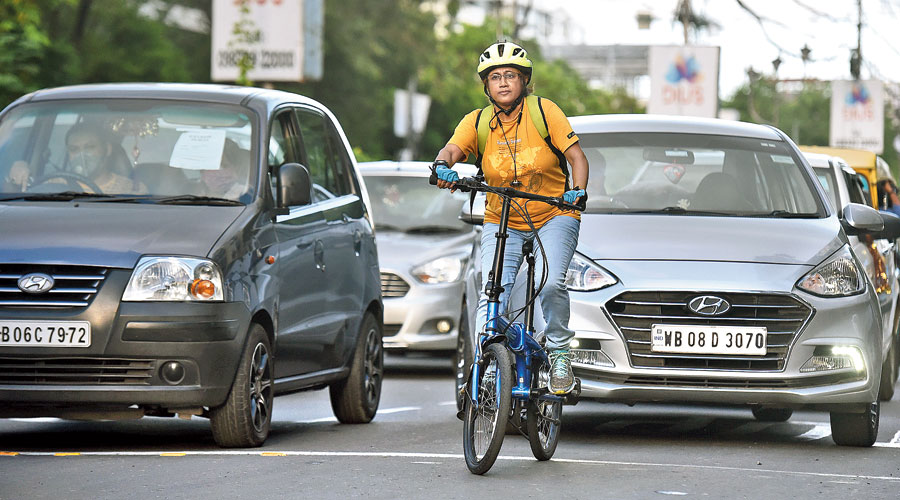
Lipika Biswa cycles on a road in Kasba / Picture by Subhendu Chaki

Lipika Biswas’s landing in Europe for the first time in July 2018 was with a thud. She was in Frankfurt where first the immigration officer would not believe that a woman from India was on a two-month cycling tour in Europe, alone. Then Biswas realised that no mechanic was free to help her re-assemble her bicycle, which she was lugging behind her packed in a box.

But Biswas is not someone who gives up easily. Getting to Frankfurt had not been easy either.

She calls herself a solo traveller. An Eastern Railways employee where she works as a senior clerk, Biswas, who turns 52 on Wednesday, had planned the Europe tour meticulously. She would bike from Germany to Iceland. With loans from friends and a very supportive family, she had managed to put together Rs 4.5 lakh for the trip, and had trained herself relentlessly, but had missed the bit about the re-assembling.

In Frankfurt, she lost a day trying to get a mechanic to help her and several Euros, which would always and instantly be converted into rupees in her mind. “I paid Rs 3,500 as taxi fare in Frankfurt just to move to a new accommodation,” says Biswas, a resident of Kasba. The next day she got to work herself, going by instinct, and put together her bike, and set off for Mainz, when she also realised that she did not know how to use GPS.

But the roads held her up, as she was borne by the kindness of strangers.

Biswas had been a mountaineer from 1994, the year she joined the railways. She wanted to be an adventurer. She had grown up in Palta, on the outskirts of Calcutta, attending school there and college in Naihati. “I was a tomboy. I played daant-guli. No dolls for me,” says Biswas.

She joined a local mountaineering club, Nababganj Mountain Lovers, and with them, as with others, “summited” several Himalayan mountain peaks. In 1995 she trekked up to Kalindi Pass, which connects Gangotri and Gastoli. Within a few years, she was a veteran. For two years, 2014 and 2015, she was part of an Everest expedition team, but on both occasions she had to return from the base camp as the expeditions were cancelled.

She had always loved cycling. The last few years she has turned to these “magic wheels”.

“I still wanted to go far,” she said. To be able to go up mountains that seem to be rising straight up is to conquer fear. “While going up I would think not again. Coming down I would want to return right then.”

But she also wanted to go alone. It would help her to confront the final frontiers of fear. A doctor friend, her adviser, told her to try Europe. It would be “safe”.

So there she was, on way to Mainz from Frankfurt, on a bicycle assembled by herself for the first time.

In Mainz, she was told at a late hour that she would have to cross the Rheine to camp. Biswas would either be hosted by members of Warm Showers, an international free touring cyclists community, or stay at Airbnb places, or camp in her own tent wherever possible, even in someone’s garden, spending as little money as possible on food. But in Mainz, the couple told her she could stay the night at their place. This would be the first of the many homes that would be offered to her by strangers.

“One of the best things about cycling is meeting people,” says Biswas. She made many friends in Europe. She did not face a single incident of racism, she feels. She felt appreciated, though she surprised many as an “Indian woman” out on such a tour.

She rattles off the names of places she visited: Mainz, Cologne, Duisberg, to Arnhem, Amsterdam, Zalk (a village in the Netherlands), back to Germany, and Fehmarn, from where she entered Denmark. Then she visited Sweden and Norway. From Norway she reached Iceland from Faroe Islands by ferry. Reaching Iceland was an emotional moment. She biked through the country from Seyðisfjörður to Reykjavik, from where she took a flight to Calcutta via Copenhagen and Delhi.

“On some days I cycled for 100 to 120km,”says Biswas. “My friend from Calcutta insisted that I go wild camping. So I stayed alone in the forest at Kronsjo the night before I entered Norway from Sweden.”

She discovered the pleasure of railway waiting rooms. At Lunden, near Flam in Norway, she decided to spend the night at the tiny railway station just because it was so heart-stoppingly beautiful. She was the only one at the waiting room, surrounded by mountains and an immense solitude.

She also made friends out of a few Indian ambassadors at the capitals. “Despite some problems, the tour went off quite well,” says Biswas, who was back in Calcutta after two months.

Only to be back in another part of Europe the next year, same time, for two months. She took off from Vienna, biked through Budapest, Belgrade and Sofia to Istanbul, where she had a brainwave.

She felt she must visit Greece. She went to the island of Lesbos, the home of Sappho, the greatly admired poet of ancient Greece who also gives her name to the Sapphic tradition.

Biswas visited the island, but when she wanted to enter Turkey again, from where she would take the flight home, she realised that she had a one-entry visa. She spent a deeply anxious night with her passport taken away, after which she was finally granted another visa for Turkey.

Last year in April, she had also gone on a bike tour of Sri Lanka, but with a friend.

“And I will go again,” she says. And looks proudly at her three bikes – a folding bike, a mountain bike and a touring bike — which are all parked happily inside her bedroom at her small Kasba apartment.

She wants Calcutta to be more cycle-friendly. The cycle is as good for our personal health as it is for our environment, not to mention women’s empowerment, she points out. During the pandemic many cycles are out in the streets.

“But in Calcutta cyclists should also learn to follow traffic signals,” she insists.

source: http://www.telegraphindia.com / The Telegraph, Online / Home> West Bengal> Calcutta / by Chandrima S Bhattacharya / September 14th, 2020

After Kanyashree, Bengal govt bags WSIS award for its Sabuj Sathi scheme

Started in 2015, bicycles are given to students of state-run, state-sponsored, aided schools and madrasas studying between classes 9 and 12 in a bid to reduce the issue of dropping out of school, especially in rural Bengal.

Ahead of 2021 Assembly elections, the TMC is gearing up to fight tooth and nail against the BJP by taking on the Centre’s programmes. (File)

After Kanyashree scheme, another West Bengal government project has received a global prize. The World Summit on the Information Society (WSIS) on Monday handed over the winner prize 2020 to the state government for Sabuj Sathi project through a virtual ceremony, a state government official said.

Sabuj Sathi had contested with 800 projects from across the globe to become the “winner” under the e-government category.

S K Thade, principal secretary and officer-on-special duty of the Backward Classes Welfare Department, received the prize on behalf of the state government.

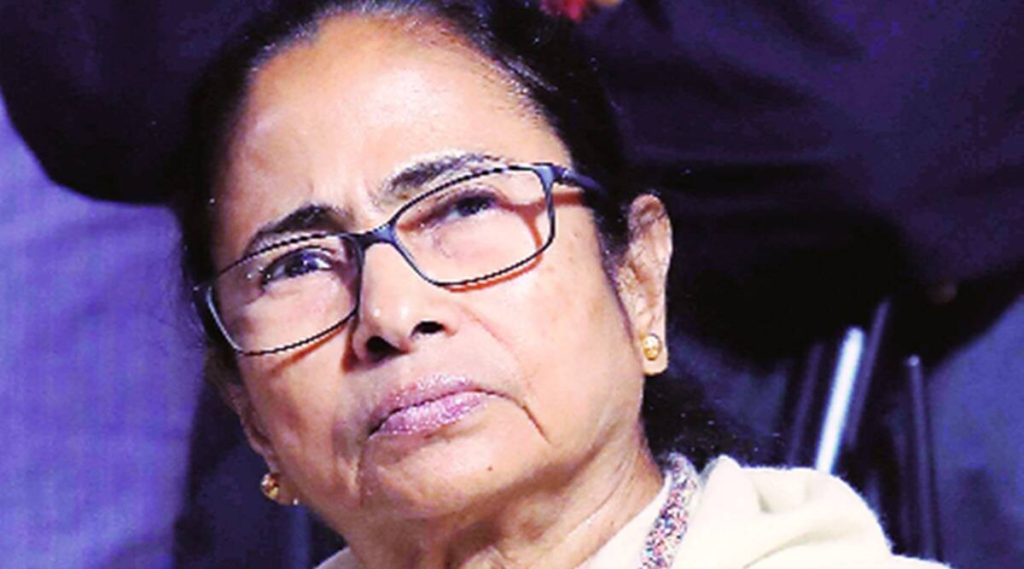
The project is the brainchild of Chief Minister Mamata Banerjee. Started in 2015, bicycles are given to students of state-run, state-sponsored, aided schools and madrasas studying between classes 9 and 12 in a bid to reduce the issue of dropping out of school, especially in rural Bengal and also to ensure they continue school education till at least class 12. According to the state government, it has so far distributed cycles among 85 lakh students at an estimated cost of over Rs 2,700 crore.

In 2017, Kanyashree Prakalpa, which is a targeted conditional cash transfer scheme, received the United Nations highest award, the first place for Public Service. The scheme, which is a brainchild of Banerjee, received the first prize out of 552 projects of 62 countries, which were nominated for the award.

source: http://www.indianexpress.com / The Indian Express / Home> Cities> Kolkata / by Express News Service / Kolkata -September 10th, 2020

Malda librarian keeps old coins for posterity

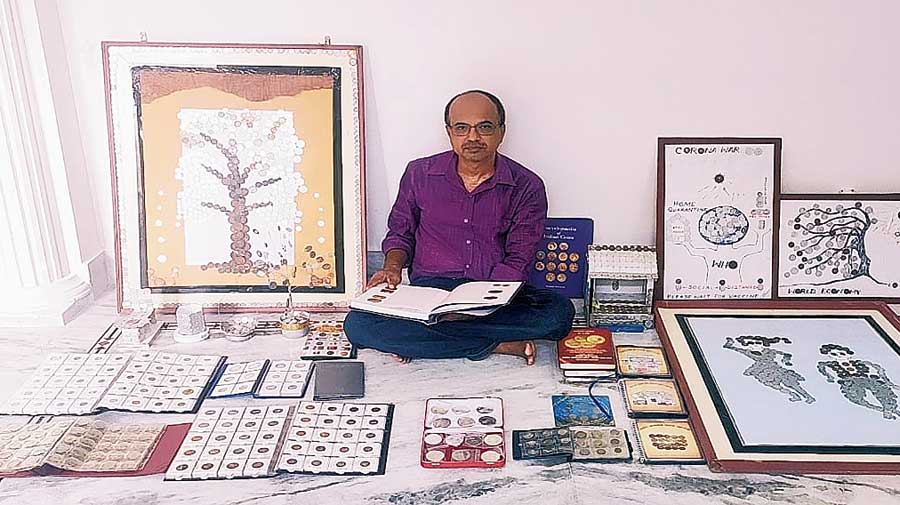
Saha is dreaming of developing a modest museum in association with the state government where he can display his collection and ensure that the rare coins are preserved properly for the future

Subir Saha with coins at his home in Malda on Thursday. / Soumya De Sarkar

Hundreds of coins dating back to the Sultanate era and of the current age have helped librarian Subir Saha spend his days indoors during the Covid-19 pandemic and the lockdown.

Saha, a known numismatist who stays at Green Park here, is now dreaming of developing a modest museum in association with the state government where he can display his stock of coins and ensure that the rare coins are preserved properly for the future.

A visit to his residence, and one would be delighted to see the “Gani” coin used during the regime of Mohammed Bin Tughlaq, “Tanka” of Kutubuddin Aibaq to “Dam” of Akbar, Jahangir and Aurangzeb.

The repertoire also contains “Falus”, a coin used during regimes of emperors Humayun and Shah Jahan, “Paisa” used during the rule of Sher Shah Suri and also coins used during the eras of rulers like Alauddin Khilji and Gias Uddin Balban.

A postgraduate in economics and a postgraduate diploma holder in business management, Saha, who is posted as a librarian at a state-run library in Old Malda, also takes the pride of displaying coins used during the rules of King George V and George VI and King

“I also have a gold-plated replica of ‘Mohor’ that was used in transactions during the regime of Queen Victoria. I have coins made of silver, copper, nickel, blending of aluminium and magnesium and stainless steel,” said the numismatist, who is in his early fifties.

His collection of coins which have been minted in India post-independence is no less surprising.

He has the coin of 1,000 rupees denomination that was introduced to celebrate the 1,000th anniversary of a temple in Thanjavur, Tamil Nadu, and also the coins of Rs 500, Rs 200, Rs 150, Rs 125, Rs 60, Rs 25 and Rs 20, introduced as souvenirs to celebrate occasions like Indo-African summit, sesquicentennial anniversary of Rabindranath Tagore and platinum jubilee of the Reserve Bank of India.

“During the recent lockdown, it is these coins with which I had spent most of my time. These coins keep me busy as I also make different models with the coins which have turned outdated in our country. I had developed the habit of collecting coins since my university days and I feel equally enthusiastic even now to collect rare coins,” said Saha, who has created a collection of over 2,000 coins during the past 30 years.

At his home, there are at least 50 such models made of coins, which include a coin plant, decorative pieces and figures.

The librarian-cum-numismatist also has coins of over 20 countries with him, including coins of the US, France, UK, Canada, Japan and Thailand.

“My aspiration is to make a permanent display of these coins so that more and more people can see the collections. Each coin carries a piece of history with it. Once the situation normalises, I will approach the administration and the state government with a proposal of a museum that can be set up jointly in Malda,” he said.

His collection has also made some local youths propose an exhibition in the town.

“However, we can think of it only after this pandemic is over,” said Saha.

Interestingly, the numismatist is a phillumenist as well and has a collection of thousands of matchboxes.

“This is yet another collection that I have. In the past few months, we often heard that people feel bored or are depressed as they have to spend hours and days at home. I believe they can utilise their time and develop some hobby or other to remain mentally fit,” he said.

source: http://www.telegraphindia.com / The Telegraph, online edition / Home> West Bengal / by Soumya De Sarkar / Malda – September 11th, 2020