All posts by wellnmed@gmail.com
Women make Bengal government doorstep delivery a hit
A state government agency delivering essential items has outsourced its entire operation to the women of Self Help Groups in various districts.
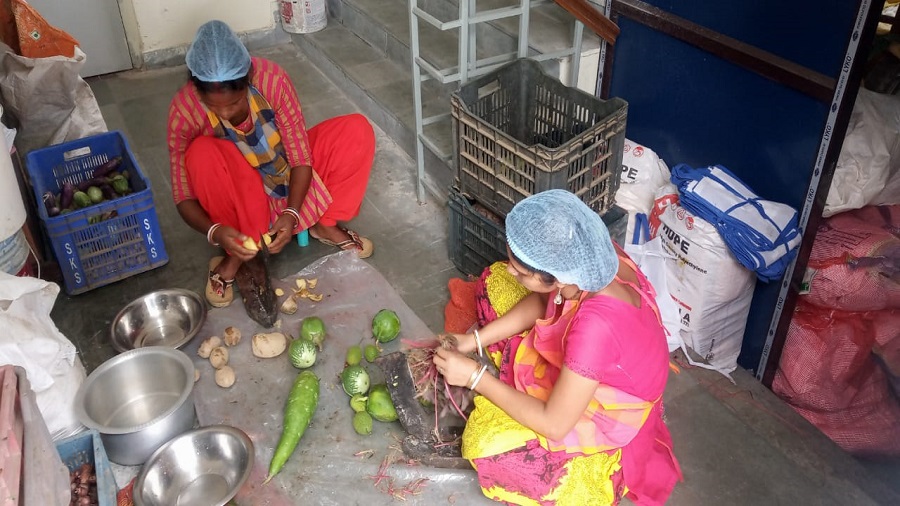
A doorstep delivery of essential items for senior citizens during the lockdown has now turned into a full-fledged delivery system for the entire city and parts of Howrah.
A state government agency has been promising everything — from locally produced vegetables and select fruits to grocery, fish and meat products — at the doorstep.
The West Bengal Comprehensive Area Development Corporation has been delivering such items and more to people in Calcutta within hours of them placing orders on WhatsApp or on the department’s website.
The corporation is an autonomous organisation under the Panchayat and Rural Development Department.
Freshly-cooked meals, too, are available. The entire operation has been outsourced to the women of Self Help Groups in various districts.
The corporation, which has been training members of Self Help Groups in agriculture, fishery and animal resource development, used to sell their produce in New Town before the pandemic struck. They sold at fairs and haats (Ahare Bangla and Saras), too.
The corporation started doorstep delivery for the elderly once the Centre announced the lockdown. A WhatsApp group was formed.
Also, the state government began an exercise to create a database of all senior citizens living on their own in Calcutta, Howrah and Salt Lake.
Orders are placed on the WhatsApp group or on the corporation’s website.
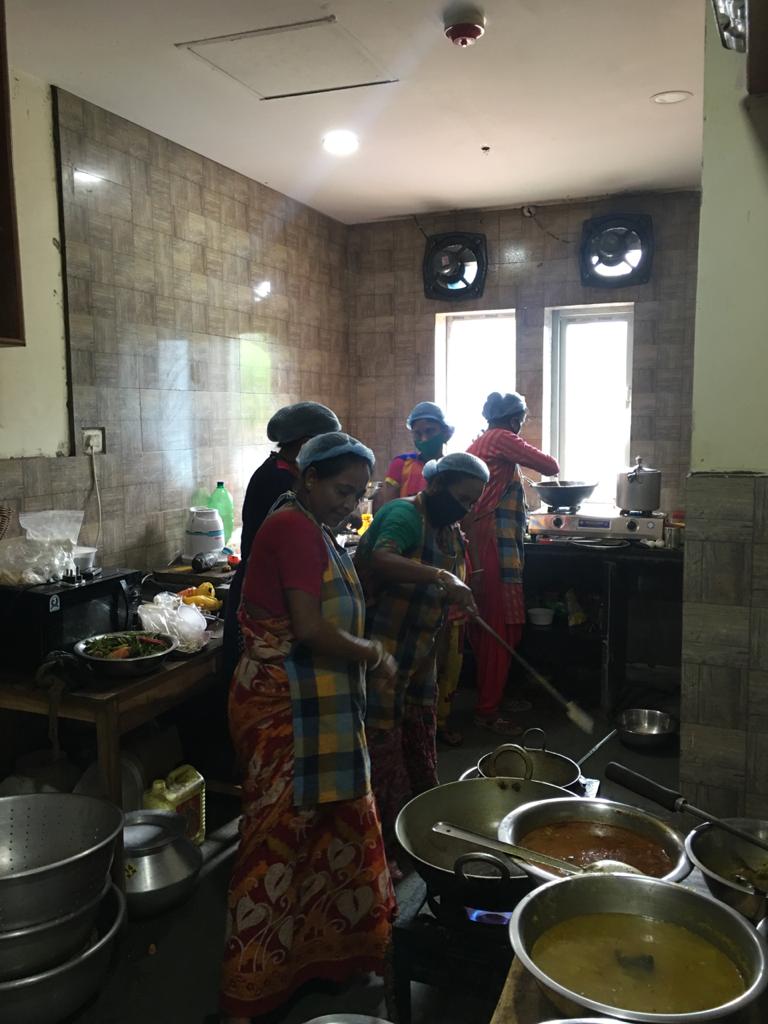
The corporation started expanding from vegetables, essential items such as pulses, cereals, and oil, and fish and meat to cooked meals, moringa powder, Mecha sandesh (a GI product from Beliatore in Bankura), crabs, Kadaknath chicken and fresh hilsa.
Before Durga Puja, the corporation intends to introduce chicken dust, mango flake, and dried fruits.
Primarily, Self Help Groups were trained in pisciculture and rearing animal husbandry. “We are into research, output and production,” Soumyajit Das, special secretary, Panchayat and Rural Development, said.
Das personally responds to every WhatsApp order. “The initiative here is to empower women, the entire operation is run by women from Self Help Groups handpicked by us.”
Piu Bag from Birohi Mahila Samannay Samiti in the Haringhata Block has been supervising girls from her Self Help Group in the supply of vegetables to the corporation this month.
“We cultivate bottle gourds, ladies fingers, onions, cauliflowers… we have been supplying to the corporation after the lockdown. We are getting a better price here than elsewhere. My girls are helping out in the corporation canteen, too, and they get a monthly salary,” Bag said.
Salekha Khatun from Hariharpara in Murshidabad is part of Nil Akash Mahila Samannay Samiti, which supplies spices and pulses to the corporation. “We have leased out 50 bighas this time in the hope of getting more orders from the corporation.”’
The department is now trying to grow the produce locally and Self Help Groups are being trained in vertical gardening and maintaining bioflock ponds at Mrittika Bhavan, the corporation headquarters.
“We have noticed we need to produce locally to maintain quality. So, we are training them to grow here in Calcutta where they are supplying,” Das said.
All customers give their feedback on the WhatsApp group and every complaint is attended to.
Indranil Hazra from Belgachhia said: “A friend sent me the link to the WhatsApp group and I have been ordering since April. I am very impressed with the professional service as well as the range and quality of products.”
His neighbour Subhasree Banerjee, a Corona warrior, along with her husband, too, have benefitted from the service.
source: http://www.telegraphindia.com / The Telegraph Online / Home> West Bengal> Calcutta / by Anasuya Basu / Calcutta – October 11th, 2020
Breed and eat fish at home, panchayat dept shows how
A demonstrative version of biofloc technology was inaugurated at Mrittika Bhavan on September 28P
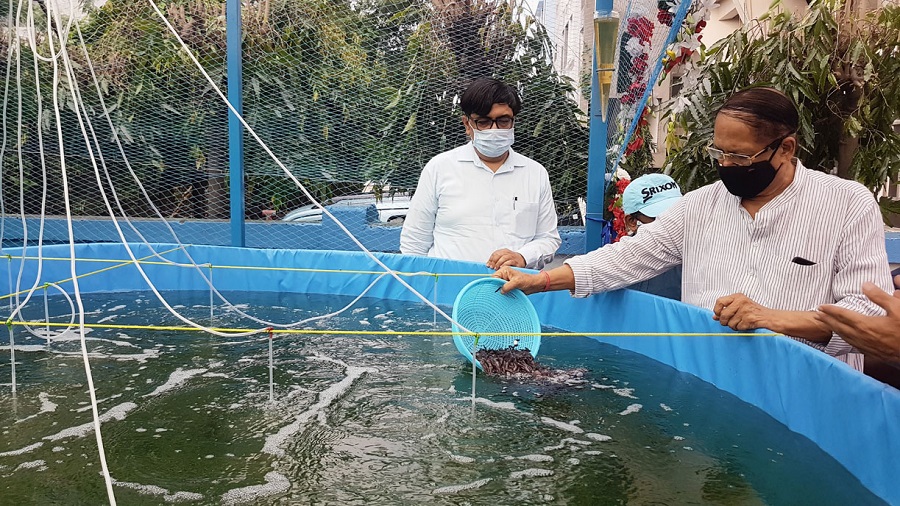
It doesn’t get any fresher than this. A new technology provides you the means to build an artificial pond in your house, garden or terrace where you could head to every morning and pick out any fish you want cooked for lunch.
A demonstrative version of biofloc technology was inaugurated at Mrittika Bhavan on September 28. The building in DD Block houses the state comprehensive area development corporation (CADC), under the panchayats and rural development department and inaugurating the facility was minister Subrata Mukherjee.
“This system can breed fish like Koi, Pabda, Singi, Magur and Golda Chingri that people love,” said Mukherjee. “It can come in handy at a time when prices of fish increase. While the system is fairly easy people rarely start something new by simply hearing about it. They want to see it in operation before adopting it and that’s why we have built this demo version. Anyone is free to come and learn about it from us and replicate it at home.”
Unlike an open pond, the biofloc tank doesn’t need acres of land. The one at Mrittika Bhawan is a round-shaped open-top tank with an iron net body and polymer sheet wrapped around it. Its base is connected to an underground water pump that will replenish water that gets evaporated and there are slim aerator pipes sending oxygen into the water for the fish to breathe. Its capacity is 10,000l.
“Biofloc is a relatively new technology developed in and for cold European countries where the rivers stay frozen for much of the year.
There they use thousands of biofloc tanks to farm fish,” said Soumyajit Das, special secretary to the panchayats and rural development department and administrative secretary of the CADC. “The technology has also seen success in Bangladesh.”
The water in the tank at Mrittika Bhavan is nourished with probiotics, bacteria and jaggery that will convert the droppings of the fish into their food. So one doesn’t even have to spend on food for the fish thereafter. Only the probiotic-solution needs to be added afresh every two months. Other than that it’s zero-maintenance,” he said.
Those interested in replicating this system are welcome to go and learn at the centre. “Households can install a 1,000l tank at a cost of about Rs 10,000,” said Das.
“The lockdown has proven how little of the city’s fish and agricultural demand is produced within it. If people can grow their own fish it would help them be self-sufficient to some extent,” Das said.
The minister released fingerlings into the water and the department expects the first batch of fish to be ready for sale by Diwali. The fish will be available at Mrittika Bhavan as well in vehicles that tour the township selling fish, meat and agricultural products sourced from farms.
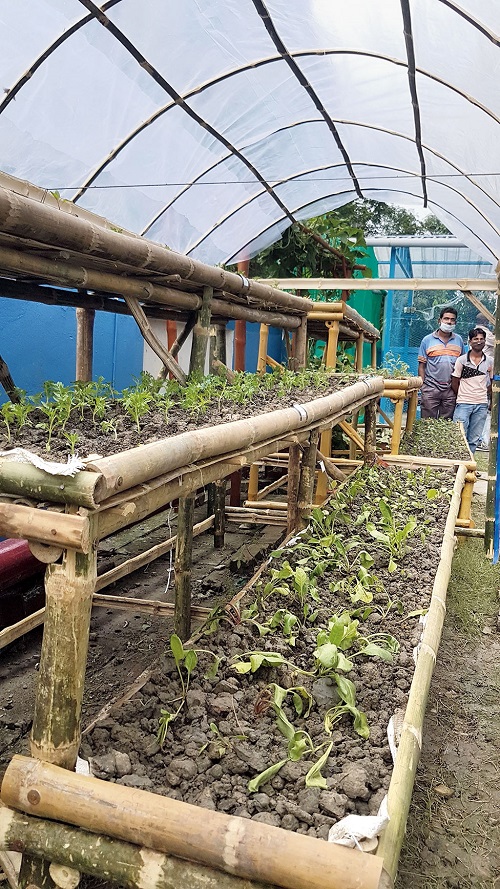
The minister also inaugurated a kitchen garden section on the day, produce of which will be added to their cart. “Plants like spinach, broccoli, cabbage, lettuce, capsicum are being planted on ‘hanging seed beds’ which are three-tier bamboo shelves installed around the parking lot of the building.
source: http://www.telegraphindia.com / The Telegraph Online / Home> West Bengal> Calcutta / by Brinda Sarkar / October 09th, 2020
In a first, scientists discover 2.5 million-year-old dragonfly fossil in India
Researchers from four universities in West Bengal have been looking for fossils in the sediments of Chotanagpur plateau for almost a year
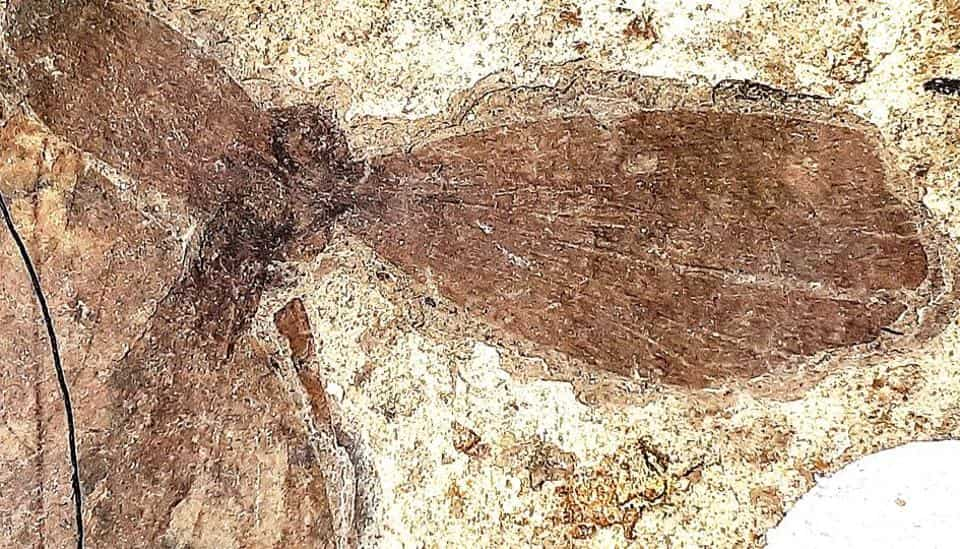
A team of scientists from West Bengal has discovered the first dragonfly fossil in India from Jharkhand’s Latehar district. The fossil is at least 2.5 million years old. A paper on the finding was published in the October 10 edition of Current Science journal.
“This is the first dragonfly fossil from India. It is a well-preserved one. The fossil belongs to the late Neogene period, which dates between 2.5 million and five million years ago,” said Subir Bera, a professor with the Centre for Advanced Study of the Botany department, University of Calcutta.
The dragonfly is around 3cm long and has a wingspan of around 2.5cm. This is, however, much smaller than the fossils of giant dragonflies, which have been found elsewhere in the world. Experts said that the wingspan of one of the giant dragonflies Meganeuropsis permiana measured around 2.5 feet. It dates back to the Permian era, around 300 million years ago. In 2013, a giant, well-preserved dragonfly fossil, dating back 200 million years, was discovered in China.
Researchers from four universities in West Bengal have been looking for fossils in the sediments of Chotanagpur plateau for almost a year. In January 2020, they dug the dragonfly fossil from a depth of around 5m below the soil surface.The team has also found fossils of various insects, fishes and leaves of some flowering plants.
The research was headed by Mahasin Ali Khan, assistant professor of Botany at Sidho-Kanho-Birsha University.
“The nearest living member of the fossil is Libellula depressa, a species of dragonfly that is found in any tropical country, including India,” said Manoshi Hazra, one of the team members and the first author of the research paper, which has been published in Current Science.
As dragonflies spend most of their lives near fresh water bodies, the scientists said that millions of years ago a freshwater body might have existed there, which has now dried up. The other fossils of plants and fishes, which the scientists have found, also support the theory.
“The very fact that the team has found the fossil of an adult dragonfly from the sedimentary bed is very interesting. Usually the prospect of finding an immature dragonfly from the sedimentary bed is huge because dragonfly-larvae live underwater. The prospect of finding insect fossils from sedimentary beds and coal beds is huge, but unfortunately little work has been done in India in this regard,” said TK Pal, a former scientist of the Zoological Survey of India.
source: http://www.hindustantimes.com / Hindustan Times / Home> Kolkata / by Joydeep Thakur / Hindustan Times, Kolkata / October 08th, 2020
Bengal woman creates Taj Mahal image with over 3 lakh matchsticks
Saheli Pal an MA English student at Calcutta University, created the image on 6 feet by 4 feet board. She had started her work in mid-August after receiving the guidelines from the Guinness World Records authorities and completed it on September 30

A 22-year-old woman in West Bengal’s Nadia district has created an image of the Taj Mahal using more than 3 lakh matchsticks.
Saheli Pal of Ghurni locality in Krishnanagar seeks to break the Guinness World Record of Iran’s Meysam Rahmani, who had made a UNESCO logo with 1,36,951 matchsticks in 2013. Pal, an MA English student at Calcutta University, created the image on 6 feet by 4 feet board.
She had started her work in mid-August after receiving the guidelines from the Guinness World Records authorities and completed it on September 30.
A video of her artwork has been made and it will be sent to the Guinness World Records authorities soon.
“I have used matchsticks of two colours to depict Taj Mahal at night,” she said.
Pal had in 2018 created a world record by making the smallest clay sculpture of the face of Goddess Durga, measuring 2.54 cm by 1.93 cm by 0.76 cm and weighing 2.3 gm. Her father Subir Pal and grandfather Biren Pal had won the President’s Awards for their sculptures in 1991 and 1982 respectively.
“I want to carry forward the legacy of my father and grandfather,” she added.
source: http://www.indianexpress.com / The Indian Express / Home> Cities>Kolkata / by PTI / Krishnanagar / October 03rd, 2020
Phoolbagan Metro station unveiled
Once fully operational, the East-West corridor will connect Howrah and Salt Lake, a distance of 16.5km, and a part of it will run under the HooghlyA

East-West Metro got its first underground station on Sunday with the inauguration of Phoolbagan station. The station will be open for passengers from Monday.
East-West services have remained suspended on Sundays since the resumption of commercial run, following the Covid-induced suspension, on September 14.
Till Saturday, trains ran between Salt Lake Sector V and Stadium stations on the East-West route, a distance of 5.5km. There are six elevated stations on the route.
From Monday, trains will run between Phoolbagan and Sector V. Phoolbagan is around 1.7km from Stadium.
Once fully operational, the East-West corridor will connect Howrah and Salt Lake, a distance of 16.5km, and a part of it will run under the Hooghly.
source: http://www.telegraphindia.com / The Telegraph Online / Home> West Bengal> Calcutta / by Special Correspondent / October 05th, 2020
City link to Nobel winner
A Calcutta physicist’s mathematical formulation served as an elegant basis for research by laureate Roger Penrose

Roger Penrose in Calcutta in January 2011 / File picture
Amalkumar Raychaudhuri, a young teacher at Calcutta’s Ashutosh College in 1955, had developed a mathematical formulation that served as an elegant basis for the research by British physicist Roger Penrose a decade later that brought him the Nobel Prize on Tuesday.
The Calcutta physicist’s formulation, known as the Raychaudhuri equation, sought to quantify certain but tricky aspects of geometry with widespread use in Albert Einstein’s general theory of relativity, essentially a geometric description of distortions and bends in space and time.
Penrose teamed up with the celebrated late British physicist Stephen Hawking and used the Raychaudhuri equation for a mathematical description of black holes — objects with such intense gravitational pulls that not even light escapes them — and singularities, extreme situations where laws of nature break down.
It is for these singularity theorems that the Nobel committee awarded Penrose the prize, citing that he showed that “…at their heart, black holes hide a singularity in which all known laws of nature cease”.
Without Raychaudhuri’s formalism, and Hawking’s early work connecting it to black holes, this work of Penrose may have not happened at all.
When I was a student at Oxford in the mid-eighties, Penrose and Hawking had still been working on some aspects of these ideas. Penrose, as a mathematics professor, had also been working on various other forms of mathematics.
I once knocked on the door of Penrose, together with one of his students, to ask whether I could attend his course on Spinors, the theory of which he was then developing. He had company, but in addition to saying yes, he asked where I was from. When I mentioned I had come from Presidency College in Calcutta, he asked whether I was related to THE Raychaudhuri.
I nodded, and said that while he was no relation, he was of course the head of my undergraduate department, and that Amalkumar Raychaudhuri had indeed taught us mathematical physics in the first year, and electromagnetism in the second. On the side, he had taught us general relativity, which wasn’t in our syllabus.
The other person in the room, who introduced himself as Stephen Hawking (in his own voice still), said that I had been fortunate to have been taught by AKR himself, and that they hoped to meet him one day.
Later on, of course, as a PhD student in Cambridge, I attended several courses given by Hawking, and I continued to meet Penrose, including several times in Pune.
Lord Martin Rees, another of my gurus from Cambridge, has rightly said today: “There would be a consensus that Penrose and Hawking have done more than anyone else since Einstein to deepen our knowledge of gravity. Sadly, this Nobel award was too much delayed to allow Hawking to share the credit.”
Somak Raychaudhury is the director of the Inter-University Centre for Astronomy and Astrophysics, Pune
source: http://www.telegraphindia.com / The Telegraph Online / Home> India / by Somak Raychaudhury, Pune / October 07th, 2020
The long road to Eden Gardens, retraced
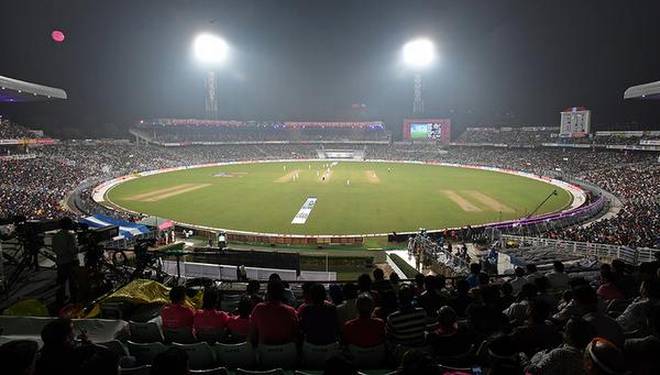
Cricket enthusiasts in the 19th century got little support from the colonial Army,
Kolkata’s Eden Gardens, India’s oldest cricketing ground, came about as the third-time-lucky effort of fans in 1864, after two attempts to have a good venue for the sport failed, because it was seen as an encroachment, and due to objections raised by the British Army at Fort William.
That story emerges from colonial documents at the Directorate of State Archives, West Bengal with other interesting facts on the history of cricket in India. A documentary has been made on this piece of sporting history. The first cricket club outside Britain was the Calcutta Cricket Club founded in 1792, and the first match was played 12 years later between the Etonians, senior civil servants and other company officials.
Sumit Ghosh, the Archivist at the State Archives, says the match was played in front of Government House which is the Raj Bhawan of the present day on January 18 and 19, 1804. “In 1825 the club got a plot of land on the Maidan between Government House and Fort William to be used as a cricket ground,” he told The Hindu.
In 1841, the club was permitted to enclose the ground with a fence. But the Army at Fort William, described the club as an “encroacher” and in 1853, the Chief Magistrate of Calcutta wrote to Cecil Beadon, Secretary to the Government of Bengal, on this act of “forceful occupation”.
Mr. Ghosh says Cricket Club of Calcutta authorities then looked for an alternative ground and at ₹1,000, found a new one, fenced it and made it playable. To their dismay they realised that a new road into Fort William was being built, which would cut into the ground. The Club officials appealed but their pleas were rejected.
The road to Eden Gardens is traced in a documentary titled Edener Itikatha (History of Eden Gardens) by Mr. Ghosh. “There is so much of recorded history but so little known to common people walking past these grounds. It is important that people know that in the mid-19th century, the vast Maidan was also used as pasture,” he adds. The Archives say Matabooddin Sirkar, a native took the land on lease for one year from February 1, 1854 to January 31, 1855 at a rent of ₹500. That contract allowed horse, cow, goat, sheep, donkey to graze, but not pig and buffalo.
Archivist Sarmistha De, who has worked on the area, says“State Archives from the mid-19th century show that Maidan was a zone of contention between the British military and British civil society. While the military thought it should mainly be for their purposes and monitoring of Fort William area, another section was actively considering it as a recreation zone with cricket as a part of that”.
After two failed attempts, in 1864, land was laid out for a ground for Calcutta Cricket Club in the extended part of Eden Gardens.
Eden Gardens made its first appearance during the time of Governor-General Lord Auckland (1836-42). Originally ‘The Auckland Circus Gardens’, the area south of Baboo Ghat changed to ‘Eden Gardens’. The Archives say Baboo Rajchunder Doss, husband of Rani Rashmoni gifted this land after Lord Auckland and his sisters Emily Eden and Fanny Eden helped him save his third daughter from a deadly disease. Eden Gardens, many believe, may be commemorating the Eden family.
“In 1868 there was a proposal for a new building of the Calcutta Cricket club ground but it was not sanctioned by the Government. The construction of a pavilion was sanctioned by the Government of India in their Military Department’s letter no. 699, dated the on April 19, 1871,” Mr. Ghosh says. The conditions imposed were club being at any time required to do so promptly remove the erection without any compensation.
“Now many people know that in 1856, a Pagoda was set up in the gardens and which has been a principal interest of the gardens. The Pagoda was built in Prome in the year 1852 by Ma Kin, wife of Moung Honon, Governor of Prome, Burma. The Pagoda was taken to Calcutta in 1854 by the order of Lord Dalhousie,” Mr. Ghosh said, adding that Pagoda still stands towards the northern part of the stadium.
source: http://www.thehindu.com / The Hindu / Home> News> Cities> Kolkata / by Shiv Sahay Singh / Kolkata – September 27th, 2020
A collab on a jazz standard
Two Bengali musicians from Calcutta, one Israeli sax player in Berlin and a Russian contrabassist in New Delhi got together, the outcome is the hauntingly beautiful Detour aheadS

Vocalist Rupsha Sen heard the classic Detour Ahead for the first time in April 2020. “I was transported to that special place where powerful art can take us sometimes,” she says. Soon Rupsha got together with musicians Soham Dey, Omri Abramov, Ekaterina Aristova to work on a version of the song. On September 19, the music video for Detour Ahead dropped and has met with heartwarming feedback. A chat with Rupsha…
What was the starting point for this collab?
As the pandemic hit, we were forced to retire to our homes, lock our doors and ride out the storm. Subsequently, all establishments were shut down along with venues that hosted live music in the city and thus we were all forced to stay apart and put a halt to rehearsing and performing live music. This birthed the surge of virtual performances and collaborations including ours. Although some of us knew of each other distantly, Soham, Omri, Ekaterina and I officially met online and came together for this collaboration based on our shared love for this genre of music.
Why pick this song to perform?
Firstly, because it’s a gorgeous jazz standard that all four of us love. Secondly, it is harmonically rich, evocative and beautifully structured with such simple yet poignant lyrics and lastly, it is not very often performed or covered, which makes it an interesting choice.
Do you remember the first time you had listened to this tune?
I actually heard this song for the first time back in April 2020 when Soham posted a rendition of it online and I was immediately hooked. This made me look up the different versions available online, such as Mark Murphy, Ella Fitzgerald, Kurt Elling but I have to say the version I ended up channelling for this collaboration and also my favourite is the rendition by Sarah Vaughan. It’s hauntingly beautiful.
It’s safe to say that when I heard the song for the first time I was moved and could feel exactly what Sarah was singing about — comparing love’s progress to a motor trip… of course credit for the lyrics goes to the composers of the song — Herb Ellis, Johnny Frigo and Lou Carter.
I remember Soham telling us about his memories of how he listened to the song on his long bus rides back and forth from his work in 2016 and how this song was a constant companion to him at that time.
Music definitely has the power to evoke all kinds of emotions in us, including nostalgia, which is beautiful in a melancholic way.
How did you put together the group and why pick them?
The line-up of this collaboration includes Omri Abramov, an incredible saxophone and EWI (electronic wind instrument) player originating from Israel, currently residing in Berlin; the wonderful Ekaterina Aristova on contrabass hailing from Russia, currently living in New Delhi; Soham Dey, a talented singer and guitar player from Calcutta, and of course me on vocals. Omri, Soham and I had already collaborated on a song before and we had a wonderful experience working together so it was a no-brainer really that we wanted to work together again, which manifested in the form of this collaboration after we decided to bring in Ekaterina on double bass, as we really felt the song needed the sound of a double bass to make it wholesome.
We had a particular vision and sound in mind for this collaboration and we were fortunate enough to be able to bring together the people who we thought would help us get as close to that as possible.
How did you record the song? How did you rehearse for it?
The song was recorded in parts as we were all situated in different parts of the world. Having the benefit of living in the same city, Soham and I recorded the guitar and vocal tracks at Blooperhouse Studios, after which we sent the track to Ekaterina over at Delhi.
She was able to record her parts with the help of her friends at Chizai who have a studio set-up.
Lastly the track was sent to Omri, who has a studio of his own where he was able to work on the piece and come up with a combination of saxophone and EWI, which he used to simulate sounds of the clarinet, cello, violin and viola, giving the song a beautiful bed of sound to flourish on.
We were not able to rehearse together but we listened to different versions of the song to familiarise ourselves with the essence of it and came up with a way of how we wanted to approach it and also discussed all of it together so that we were all on the same page about the final piece.
How did you shoot the video? Did you have a theme for it?
Again as we were all in different locations we all had to shoot it ourselves from our respective homes/studios. It was definitely not easy and involved a number of challenges. I’m grateful to each and everyone for taking the trouble to follow the guidelines we had discussed, not only for the musical part of it but also for the video. It was also definitely an uphill task to edit the video but thankfully it all came together in the end. The theme I had envisioned for the video was always something that had a distinctly noir feel to it, so that is what we discussed and that is what we all tried to achieve.
You must have heard/watched some inspiring lockdown collaborations in the last few months. Which were your favourites?
Yes, this lockdown has definitely inspired some great collaborations, the ones that come to mind are definitely an online concert that I watched by Bireli Lagrene Trio comprising Bireli Lagrene and Adrien Moignard on guitar and William Brunard on contrabass. It was a bevy of amazing musicians creating magic together and was absolutely a treat for the ears… loved it completely.
Apart from that I have been following some Brazilian and French artistes on Instagram who have been dishing out some beautiful collaborations, namely Vanessa Moreno and Camille Bertault. From India I enjoyed a number of collaborations by the Delhi-based band The Revisit Project. I’ve been following their work online and through the pandemic they have been doing some great work and are also about to release a new album, which is a testament to their hard work.
How important a role did music play in your life in the last few months?
I felt like a teenager again, listening to music all day, watching incredible musicians come live and host free concerts, watching musicians collaborate with one another to make beautiful music.
Music has always played an incredibly important role in my life and it did more so in these last couple of months as when you take everything else away only the most important things remain.
source: http://www.telegraphindia.com / The Telegraph Online / Home> Arts / by Arindam Chatterjee / September 27th, 2020
Cruise down the Hooghly river offers a peek into Kolkata’s history
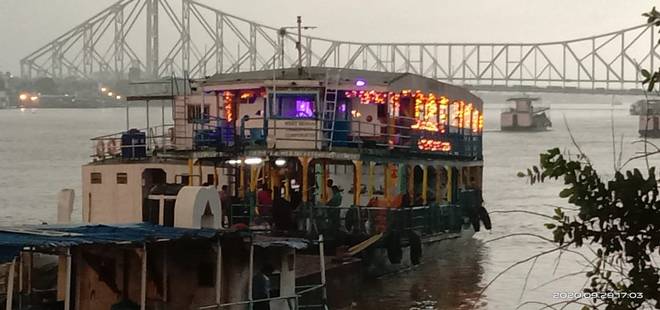
Affordable 90-minute guided experience guide launched by Bengal Transport Department on October 1
It is along the bends of the river Hooghly that the city of Kolkata grew from three villages to a bustling metropolis. Now a cruise on the Hooghly will take people past the different ghats of the river, providing a peek into the history of the metropolis.
From October 1, the West Bengal Transport Department (WBTD) commences a 90-minute Heritage River Cruise that starts from the Millennium Park Jetty.
Sailing upstream and downstream, the vessel will pass beneath the majestic Howrah Bridge, and go past ghats such as the Armenian ghat, Nimtala ghat and Mayer ghat. Each ghat on the bank of the river has a bit of history attached to it.
For instance, the Armenian ghat was built back in 1734 by Manvel Hazaar Maliyan, a trader of Armenian origin. The ferry ghat stands testimony to Kolkata’s cosmopolitan culture in the colonial times, and the Armenian community’s contribution to the city.
There is also the Mayer ghat (the mother’s ghat), which draws its name from Maa Sarada Devi, wife of Ramakrishna Paramhamsa. She would visit the ghat daily, and stayed near it from May 1909 to July 1920.
Similarly, the Nimtala ghat is a historical landmark where the cremation of Rabindranath Tagore and other important cultural icons was performed. The famous Bhootnath temple is located here.
The cruise’s itinerary also includes Chandpal ghat, located just on the northern side of Babughat, the very place where Lord Cornwallis, the first Governor General of India, landed on September 12, 1786. Guides on board the cruise will tell people about the ghats, and visitors will also be provided with complimentary cruise heritage navigation brochures.
Officials of the Transport Department said that tickets have been kept affordable at ₹39 for the entire cruise to attract more people. “The idea is to make the heritage river cruise experience affordable, and popular among the youth,” said the Managing Director of WBTD Rajanvir Singh Kapur.
Following physical distancing norms, as of now, not more than 150 people will be allowed on each trip.
Attempts have been made in the past to boost waterfront tourism in the city by State governments and different agencies. About 17 km of the Hooghly river’s waterfront lies within the metropolitan corporation’s boundaries, of which about a 10 km length of riverfront, from Taktaghat in south Kashipur and Pramanik ghat in the north, represent the most active and vibrant portion of Kolkata’s diverse engagements with the river. There are dozens of ghats on both banks of the river that not only provide a rich slice of history but are associated with the way of life of the city’s people.
source: http://www.thehindu.com / The Hindu / Home> News> Cities> Kolkata / by Shiv Sahay Singh / Kolkata – October 01st, 2020