All posts by wellnmed@gmail.com
How a suicide in Calcutta in 1800s sparked a debate on applying English laws in India
The East India Company wanted the law of forfeiture to apply in the colonies, which would have allowed a suicide victim’s property to pass to the Crown.
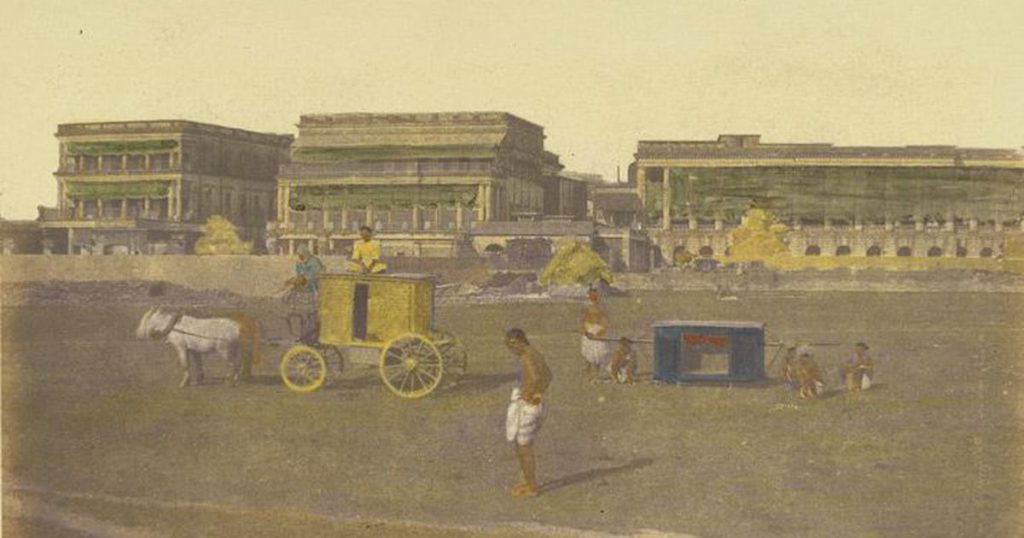
In a delicate case from 1864, the Privy Council considered whether the English practice of forfeiture following a suicide should apply to a subject of the British Raj.
Following the death of Rajah Christenauth Roy Bayadoor in Calcutta on October 31, 1844, a second will was discovered, written by him that morning, which left a portion of his estate to the East India Company. Since his death was by his own hand, Bayadoor’s widow, Ranee Surnomoyee, disputed the validity of this will on the grounds that it was not written in sound mind. The court found in favour of Ranee Surnomoyee, declaring the second will to be invalid.
An appeal was then made to the Privy Council against this verdict on behalf of East India Company, citing the law of forfeiture in cases of suicide. A digitised copy of the response of the Council is available to view on the website of the British and Irish Legal Information Institute.
Known as felo-de-se within English common law, meaning “crime of his-, or herself”, suicide in England was associated with restless souls. Confirmed victims were historically buried at crossroads with a stake through their heart, possibly in an effort to stop the soul from wandering. The law was only changed to allow burials within churchyards following the tragic death of Foreign Secretary Viscount Castlereagh in 1822.
Even then, restrictions still applied. In her book on Victorian attitudes to suicide, Barbara Gates states that churchyard burials were allowed without Christian rites and restricted to “at night, between the hours of nine and midnight, and his/her goods and chattels must still be turned over to the Crown”.
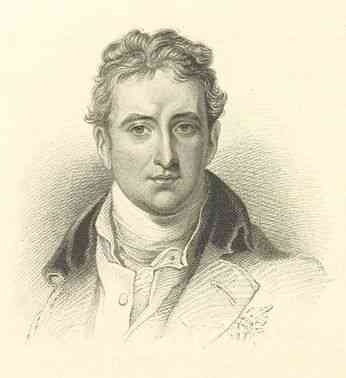
Intended as a deterrent to criminals, the law of forfeiture passed the deceased’s property to the Crown and away from inheritors. It also applied to suicides, which were considered a crime against the individual, God and the Crown. Abolished by the Forfeiture Act 1870, the practice was applied infrequently, even at the time of our case.
In the appeal, the representative of the East India Company did not further contest the second will. Instead, he argued that English law, including forfeiture, applied in the colonies. The privy councillors, therefore, had to consider the application of these laws in India.
They examined cultural differences between Britons and Indians to find examples of where British law did not fit with Indian traditions. The main examples given by the Council were polygamy and child marriage. Although shocking to Victorian sensibilities, these were part of the culture and beliefs of Indians at the time and so the East India Company had allowed them to continue. Therefore, by adapting English law to suit Indian culture, the East India Company had set a precedent.
In conclusion, the Privy Councillors expressed their surprise at an effort to enforce forfeiture following a suicide as late as 1844 and their confusion at its application to an Indian Hindu. They found in favour of the descendants of Rajah Christenauth Roy Bayadoor and allowed them to retain possession of his property.
The author is a Cataloguer of Modern Archives & Manuscripts.
This article first appeared on the British Library’s Untold Lives Blog.
source: http://www.scroll.in / Scroll.in / Home> History Revisited / by Matthew Waters / October 12th, 2020
Principal of MP Birla Foundation School dead
Herbert George, who headed the Behala school since 1988, was known as a ‘strict disciplinarian’
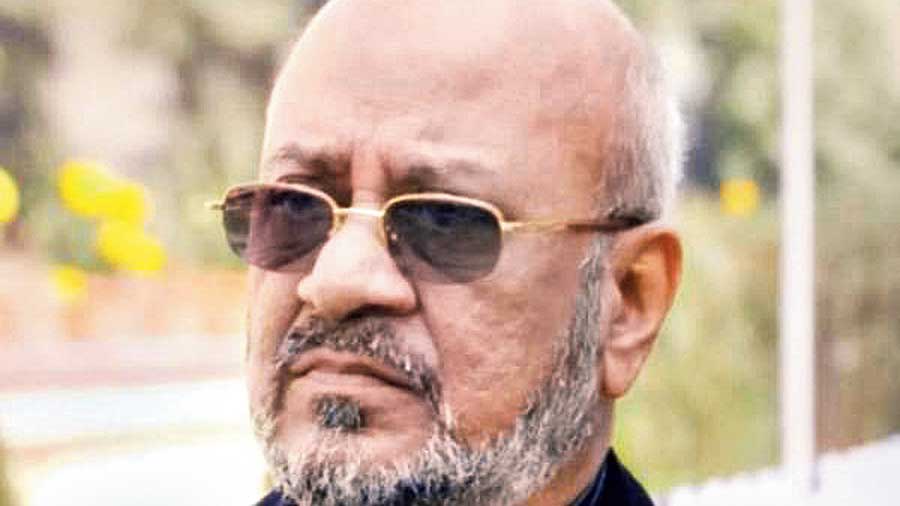
The principal of MP Birla Foundation Higher Secondary School, Herbert George, died in the city on Monday following a short illness. He was 75.
George had been principal of the Behala school from 1988 and was known as a “strict disciplinarian”. He gave importance to both academic and co-curricular activities. Before joining MP Birla Foundation, he was associated with Don Bosco Liluah and St Augustine’s Day School, Calcutta.
He is survived by his son and daughter.
source: http://www.telegraphindia.com / The Telegraph Online / Home> West Bengal> Calcutta / by Special Correspondent / October 20th, 2020
City gets new 10 million gallon water reservoir
Help in increasing the supply to areas south of Bhowanipore that receive potable water from the Garden Reach plantTh

A 10 million gallon water reservoir was inaugurated adjacent to the Garden Reach waterworks on Wednesday.
The reservoir will help increase the supply to areas south of Bhowanipore that receive potable water from the Garden Reach plant.
The plant can produce 185 million gallons of water every day, but there is only one 29 million gallon capacity reservoir to stock water. The new reservoir will start functioning from Thursday; it will increase the storage capacity, a civic engineer said.
Rashbehari Avenue, Gariahat, Golpark, Ballygunge, and parts of Kasba and Jadavpur receive potable water from the Garden Reach waterworks. All these places will benefit, the engineer said. “We can now supply water more efficiently. The demand changes with season… the demand is more in the mornings. The additional water in the reservoir can be diverted to areas where demand is more.”
A reservoir is required to store the water that is produced during lean periods when the demand is less. “The demand is always less at night. But if we have more storage capacity, we can go on producing water at night that can then be thrust into the supply network in the morning. This will increase the pressure of the flow and take water to pockets that face water shortage now,” the engineer said.
Mainak Mukherjee, the chief engineer of the CMC’s water supply department, said the operation of the new reservoir would be completely automated. “There will be minimal human interference. Chances of errors will reduce because of automation. The system will give alerts in case there is any abnormality in any component and this will help address the problem faster.”
Firhad Hakim, the chairperson of CMC’s board of administrators, inaugurated the reservoir.
source: http://www.telegraphindia.com / The Telegraph Online /Home> West Bengal> Calcutta / by Subhajoy Roy / Calcutta / October 15th, 2020
18
Quest to build a ‘beautiful society’
Birth centenary of children’s museum founder Jugal Srimal
A girl in her early 20s seated on a wheelchair came to Nehru Children’s Museum in 1992 because she wanted to learn how to operate computers. She could not speak but had a compass fitted to her head and a book of letters on her lap, which she made use of to point out and express herself.
The person at the museum who was approached did not want to refuse her but was unsure whether they would be able to accommodate her. So she approached the director.
Founder Jugal Srimal took the girl to the class she wanted to go to and told the students that the “main objective” of Nehru Children’s Museum was “to build a beautiful society’, not to train them in operating a computer.
Members and staff of the museum paid tributes to Jugal Srimal, the founder-director of Nehru Children’s Museum, on Thursday on the occasion of his birth centenary.
“That society will be built by all of you. No matter whatever the challenges are for a beautiful society, each one of you has to hold hands…,” Sikha Mukherjee, the administrative secretary of the museum quoted Srimal as telling the class, back in 1992.
Memories and anecdotes were shared about Srimal, who was also the founder trustee of Tagore Foundation, a trust formed to promote Bengali culture.
Srimal got the land on Chowringhee Road, on which the museum stands, from the Bengal government in 1969. The museum was inaugurated on November 14, 1972.
The museum has clay models that narrate the stories of Ramayana and Mahabharata and costume dolls from over 96 countries, some of which were collected by Srimal. Various embassies have also presented dolls to Nehru Children’s Museum.
“There are over 1,000 dolls now, about 350 of which were collected during my father’s time,” said Srimal’s son Sudip, who is now director of the museum.
Jugal Srimal was born in an “aristocratic and cultured zamindar family” of Azimganj, Murshidabad, on October 8, 1919. “If my father would have been here today he would never have allowed us to celebrate this day. He was always against publicity…. For his centenary, we had planned a five-day programme with 1,200 invitees, but because of Covid-19 we had a small programme remembering him,” said Sudip Srimal.
From the oldest employee of the museum Ramendra Das to senior employee Dipti Biswas, each one had a story to share. Jugal Srimal’s work was not restricted to the museum but went much beyond that, said Prabal Dutta, joint director of the museum.
Dutta spoke about the founder-director’s reading habits. “He would not be able to go off to sleep at night without reading but he had noticed that the habit of reading was going away…. He thought that people were not interested in buying books or borrowing it from library, but if the books reached them the interest of reading would sustain. So he formed Tagore Mobile Library,” Dutta recalled. Jugal Srimal gave away his collection to the library.
Those who attended the programme said they were missing the children. The institute has 1,400 students learning various activities like song, dance, painting and drama.
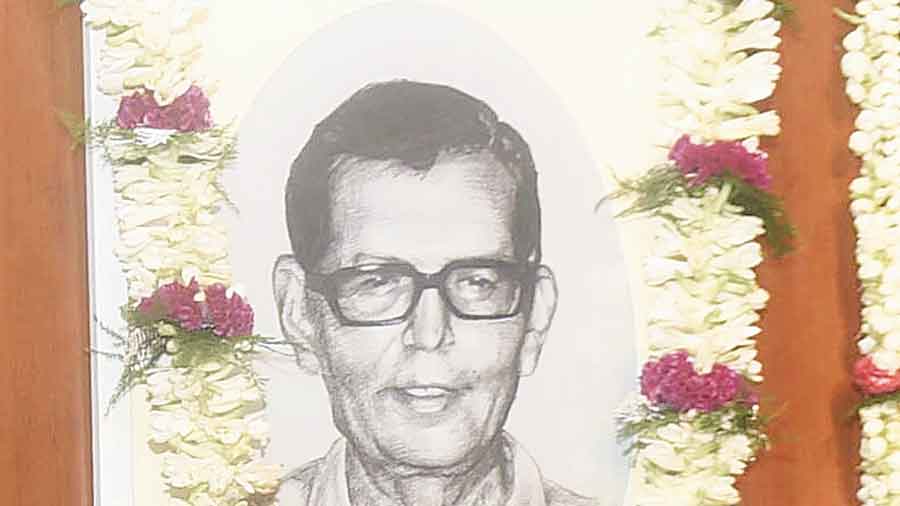
On Thursday, a portrait of Jugal Srimal made by 20-year-old Sourav Saha, who has been learning painting in the museum since 2015, was unveiled by Rotarian R.K. Bubna.
A book titled “Shishuder ja prappo ta jeno tara paye”, written by the founder before in the 1940s, was released on Thursday. Granddaughter Indrani Sengupta, now the secretary of the museum, found it among his manuscripts.
“I was young and not ready to take the responsibility but he told me it was not about age but how I handled the responsibility,” said Sengupta.
“…Last eight months have been difficult but we have paid our permanent staff and used up our savings to tide over this period. We have appealed to our friends and well-wishers and many have responded,” said Sudip Srimal.
source: http://www.telegraphindia.com/ The Telegraph Online / Home> West Bengal> Calcutta / by Jhinuk Mazumbdar / Calcutta / October 10th, 2020
16
Veteran sports journalist Kishore Bhimani dies
The septuagenarian suffered a cerebral attack recently and was undergoing treatmentK
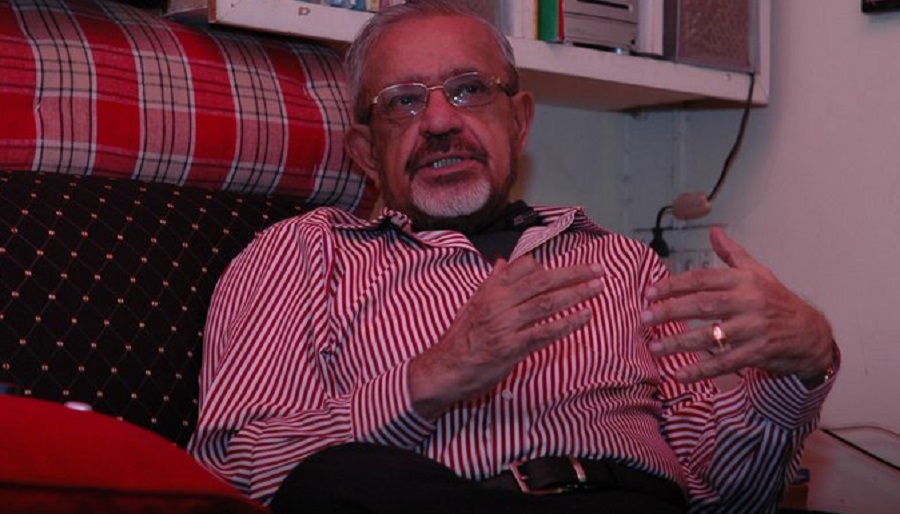
Veteran sports journalist and cricket commentator Kishore Bhimani died at the age of 74, family sources said on Thursday.
He is survived by his wife Rita and son Gautam who is also a well-known TV personality.
“He had suffered a cerebral attack a few days back and was undergoing treatment,” a family source said.
Bhimani was one of the most recognised English voices of the 1980s.
Following his death, a pall of gloom descended on the country’s sports fraternity, with tributes coming in from all quarters.
“RIP Kishore Bhimani..he was one of the good Old Fashioned Crkt writer who took Crkt writings like a player who takes to playing…Condolences to his Spouse Rita & Son Gautam.. GodBless All Always.. Fondly,” legendary Indian spinner Bishan Singh Bedi tweeted.
“Farewell Kishore Bhimani. Cricket journalist and a true lover of #Kolkata,” politician Derek O’Brien wrote on Twitter.
Bhimani was commentating when Sunil Gavaskar became the first player to reach 10,000 runs in Test cricket, during the drawn match against Pakistan in Ahmedabad in 1987.
One of the most sought-after Indian cricket writers who would be wooed by British publications in the 1980s, Bhimani was also on air during the final moments of the famous 1986 tied Test against Australia at Chepauk.
It is said that Imran Khan, during his captaincy days, was a regular at Bhimani’s residence whenever he was in Calcutta.
Bhimani had worked for Calcutta daily ‘The Statesman’, was a noted columnist and wrote ‘The Accidental Godman’.
He was the president of Calcutta Sports Journalists Club from 1978 to 1980.
source: http://www.telegraphindia.com / The Telegraph Online / Home> Sports / by The Telegraph Bureau & Agencies / Calcutta – October 15th, 2020
Nuclear scientist Sekhar Basu dies of COVID-19
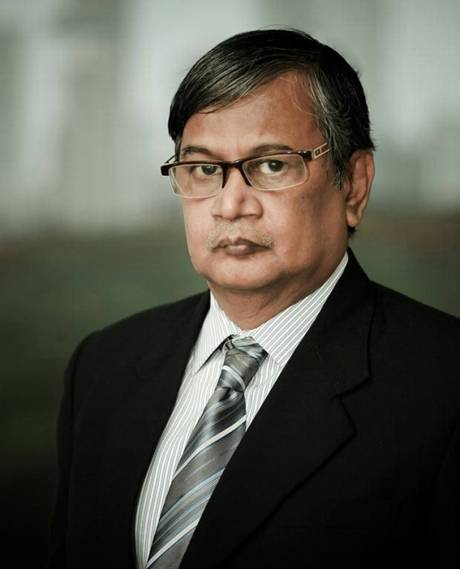
Veteran atomic scientist and former chairman of Atomic Energy Commission Dr. Sekhar Basu succumbed to COVID-19 early on Thursday at a private hospital here, a health department official said. He was 68.
“Dr. Basu was suffering from COVID-19 and other kidney ailments. He died at 4.50 a.m.,” the official told PTI.
A mechanical engineer, Dr. Basu is revered for his contributions to the country’s atomic energy programme. He was awarded Padma Shri in 2014.
He had also pioneered the highly complex reactor for India’s first nuclear-powered submarine INS Arihant.
source: http://www.thehindu.com / The Hindu / Home> News> Cities> Kolkata / by PTI / Kolkata – September 24th, 2020
Bengali OTT platform Hoichoi makes the most of the lockdown

The video streaming service has registered a growth in its subscriber base and international audience
While the pandemic has posed a challenge to the television and film industry, it has come as an opportunity for the Bengali online video streaming platform Hoichoi. The Bengali entertainment platform that completed three years of operation this September has registered an increase in revenue and revealed that 40% of the revenue comes from international subscribers.
Last week, the Bengali OTT (Over the Top) platform unveiled 25 web shows and two films — Kolkata Underground and Tiktiki — to be launched in the coming months.
Vishnu Mohta, co-founder of Hoichoi, told The Hindu that the platform has provided the Bengali diaspora an opportunity to connect to its roots through these productions.
“About 40% of our direct revenue is coming from international customers. We have subscribers in more than 100 countries including Japan, Sweden, Argentina, Iceland, where we did not think we would have much traffic,” he said. Mr. Mohta said that the OTT shows were a “ great way to connect” the Bengali community, as films and plays in the language may not be available in theatres in other countries.
Even since the lockdown, the platform has been showing a big spurt in growth on most matrices and the subscribers across all platforms are now 13 million. In recent months, it released nine world digital premiers of feature films and showcased the first direct-to-digital film release from eastern India.
Actors Swastika Mukherjee, Parambrata Chattopadhyay and Saswata Chatterjee and directors Srijit Mukherji and Mainak Bhaumik are some of the film personalities behind the programmes to be launched soon.
While the OTT platform celebrates different genres, thrillers and detective stories are high in demand. “The Bengali community always loves detective stories and thriller shows. Some of the most iconic characters like Feluda and Byomkesh have been detectives. This goes very well from an episodic point of view,” Mr Mohta added.
source: http://www.thehindu.com / The Hindu / Home> News> States> Other States / by Shiv Sahay Singh / Kolkata – September 24th, 2020