Category Archives: World Opinion

Mamata Banerjee Flags Off Kolkata-Dhaka-Agartala Bus Service

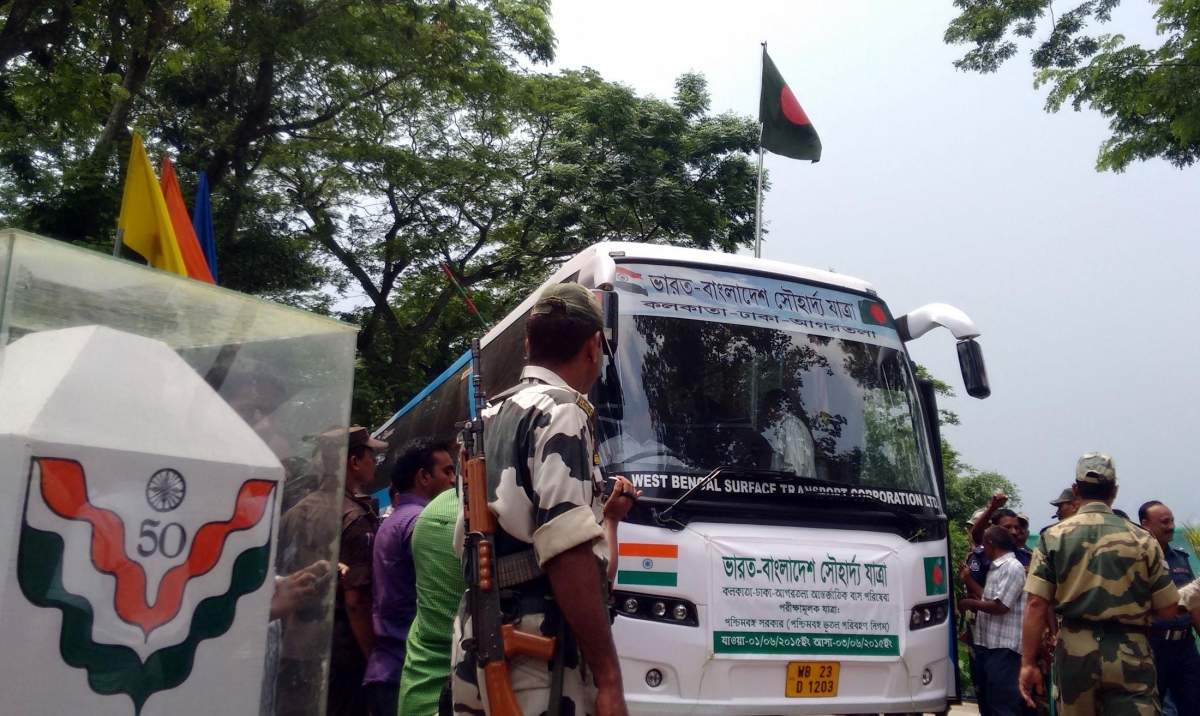
The first Kolkata-Dhaka-Agartala bus enters Agartala from Bangladesh through Akhaura integrated checkpost during a trial run on 2 June, 2015.IANS

Flagging off the Kolkata-Dhaka-Agartala bus service here on Thursday, West Bengal Chief Minister Mamata Banerjee said the initiative will turn the India-Bangladesh ties into an everlasting relationship.

“The launching of this service makes this day forever memorable and historically significant for both the countries,” Banerjee said at the flagging off event at the state secretariat, Nabanna, in Kolkata’s neighbouring Howrah district.

“This service will bring both India and Bangladesh closer and turn our cordial ties into an everlasting relationship,” she added.

The cross-border bus service was approved at a recent meeting between Bangladesh Road Transport Minister Obaidul Quader and his Indian counterpart Nitin Gadkari in New Delhi.

The bus service will facilitate visiting mainland Indian states for people of the mountainous northeastern region, reducing the distance by over 1,000 km.

Agartala via Guwahati is 1,650 km from Kolkata by road, but the distance between the tripura capital and the West Bengal capital via Bangladesh is only around 500 km.

Prime Minister Narendra Modi and his Bangladesh counterpart Sheikh Hasina are scheduled to flag off the Agartala-Kolkata direct bus service in Dhaka on June 6.

source: http://www.ibtimes.co.in / International Business Times / Home> News> Society / by IANS / June 04th, 2015

Kolkata engineer replicates Zurich model to address cerebral palsy

Kolkata :

Much like the campaign on polio, another one in right earnest will start soon. And this time Kolkata will be the city to anchor it. The audio visual campaign, that is presently getting designed will have voices of Babul Supriyo, Kumar Sanu, Abhijeet and Jolly Mukherjee to stress on the fact that cerebral palsy can largely be prevented through pre-natal and neo-natal care. The campaign is being spearheaded by a man, who is better known in the city for some of the iconic structures that he had created, but whose life is now governed by a tragedy – the death of his 27 year old son, Abhishek, a cerebral palsy patient.

Gautam Mitra, who now lives in Zurich on business, started by setting up an NGO for cerebral palsy patients in Switzerland, which attracted a lot of attention there. Enthused by that success, he has now come to Kolkata to start his Bishwa Bandhan, an NGO that will work to spread awareness and also provide supplementary support to children with cerebral palsy and their parents.

During his heydays as a structural engineer and consultant to Tata Steel, some of the structures that Mitra built were, Nazrul Mancha, the steel galleries of Mohammedan Sporting after the wooden ones got destroyed in a fire, the traffic diversions on Vidyasagar Setu, the mini bus shelter at BBD Bag and pedestrian over bridges at Ultadanga and Manicktala. But such accolades have stopped having any meaning for him anymore.

In Switzerland he continues to build tunnels, overbridges, pre-fabricated structures and other constructions using cutting edge precision technology, that is coming of age in Europe today, but only when he is not engaged in a dialogue with the WHO or state authorities in Zurich regarding his cerebral palsy awareness programme. Though he accedes that the level of awareness is very high in Europe, the fact that a large number of babies are born prematurely or with extremely low birth weight as a result of artificial insemination arising out of growing numbers of infertility cases, incidences of cerebral palsy are very high in Europe.

Bishwa Bandhan, which is headquartered in Zurich, has already partnered with WHO there and started its two pronged intervention – spreading awareness among pregnant women that cerebral palsy is preventable and supplementary therapy can make life bearable for children who are born with the problem. The NGO is making waves with its awareness campaigns that stresses on the fact that in most cases when sufficient volumes of oxygen do not reach the brain, babies develop cerebral palsy, so a great stress needs to be laid on administering oxygen on the mother during birthing. It has also started a unique music therapy on children with palsy to help rejuvenate them.

“We are trying to replicate the Zurich model here,” Mitra said. He is presently in the city to start up the the Kolkata chapter of Bishwa Bandhan. A teaser campaign on prevention of palsy will be up soon and the audio visual is getting readied now. Just like in Zurich, where the initiative is being partnered by WHO, Bishwa Bandhan here has tied up with the Institute of Child Health, the Indian Medical Association, leading gynaecologists and fertility experts. They are all enthisuastic about the impending campaign. “It is true that a large number of cerebral palsy patients would have been born normal had oxygen been administered on the mother well, this would not have happened. It is not a genetic disorder. Hence, a systematic campaign is a must. All stakeholders in the birthing process, right from the doctor to the nurses and even the mother should be made aware of this,” said Apurba Ghosh, director of the Institute of Child Health.

The Indian Medical Association has also thrown its weight around the campaign. “There are plenty of pre-natal routine procedures that are not followed in many cases. Again forcep birthing causes a lot of damage since it obstructs the flow of oxygen to the brain. When babies are born pre-mature or with low birth weight, oxygen deficiency is a related hazard. Inorder to maintain WHO standards, one has to eliminate negligence at every stage and that is possible only through an intensive campaign,” said Shantanu Sen, secretary of IMA Bengal chapter.

A 6000 square feet space at Red Cross Place off Raj Bhavan is being prepared as therapy space of Bishwa Bandhan for children with cerebral palsy. “We will experiment with different kinds of music and colour to excite and activate the slow moving brain of palsy kids. Physiotherapists will also work on their limp limbs and make them as active as possible,” Mitra promised.

source: http://www.timesofindia.indiatimes.com / The Times of India / Home> City> Kolkata / by Jhilmil Pandey, TNN / July 07th, 2015
Nadia gets U.N. pat forachieving total sanitation

The district Magistrate of Nadia along with chief of Nadia Zilla Parishad in West Bengal was on Saturday presented the United Nations Public Services Award 2015 for eliminating open defecation in the district.

Nadia district, located in south Bengal, had half of its population defecating in open till October 2013. The district administration, under a programme called Sabar Souchagar, built 3.56 lakh toilets in the district. As a result, the number of people continuing with the practice dropped to mere 0.2 per cent.

The award was presented by the acting Secretary-General of the U.N., Lenni Montiel, along with Head U.N. Women Stefani Senese, on conclusion of the U.N. Day celebrations 2015, on June 26 at Medellin in Colombia, District Magistrate P.B. Salim informed The Hindu over email.

Banikumar Roy, chief, Nadia ZP, was also present.

‘Unique model’
The U.N. has described Sabar Shouchagar (Toilets for All) as a “unique model developed to generate awareness, improve access to sanitary toilets, and bring substantial health improvement through improved sanitation.”

The U.N. added that the scheme has mobilised all stakeholders, “especially women and schoolchildren and saw involvement of faith-based organisations” and “if replicated, it has the potential to eliminate open defecation from across the world.”

West Bengal Chief Minister Mamata Banerjee had on April 30 held a programme in Nadia district highlighting the success of the scheme and announced that ‘Nirmal Bangla Divas’ will be observed across the State every year.

source: http://www.thehindu.com / The Hindu / Home> News> National / by Special Correspondent / Kolkata – June 28th, 2015

Mamata star of Bangla show, extends trip on Hasina request

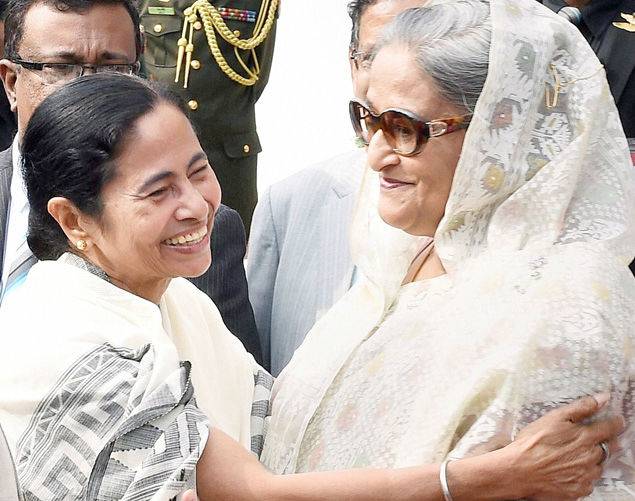
Bangladeshi Prime Minister Sheikh Hasina and West Bengal chief minister Mamata Banerjee hug each other at the flag-off ceremony of bus services between Bangladesh and India, in Dhaka on Saturday. (PTI Photo)

Dhaka :

The most talked about star of the show in Dhaka on Saturday was undoubtedly West Bengal chief minister Mamata Banerjee. Not only did she preside over the historic exchange of instruments of ratification of the land boundary agreement (LBA), but also joined the two prime ministers to flag off buses from Dhaka to Agartala and another to Shillong.

Mamata’s flight to Dhaka from Kolkata Friday night was declared a “VIP” flight — and Dhaka airspace cleared for her.

When she landed, the first call was from Sheikh Hasina who requested her to stay behind for the state banquet for Modi on Saturday night. Mamata was returning to Kolkata after the official appointments. Mamata now will be part of the Indian delegation.

While Manmohan Singh brought with him a number of chief ministers from northeastern states, Mamata’s absence was striking. This time, Modi has given Mamata star billing by not including any other chief minister in his delegation, a piece of impressive political timing.

Mamata is not staying in the same hotel as Modi, but at a Radisson hotel 10 km from Sonargaon, the PM’s hotel.

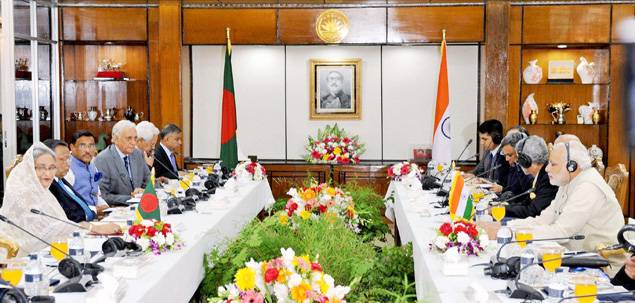
Prime Minister Narendra Modi and his Bangladeshi counterpart Sheikh Hasina during delegation level talks in Dhaka on Saturday. (PTI Photo)

Mamata is crucial for both the LBA and Teesta pacts to see the light of day. Modi has taken a leaf out of former PM I K Gujral’s book because the Ganga waters treaty, signed between India and a previous Hasina government was done with West Bengal chief minister Jyoti Basu at the helm. Modi is putting his cooperative federalism concept to work here.

Mamata cannot back the Teesta agreement until she shows a plan for north Bengal in place. She also cannot do it until the state elections in 2016. Until then, though, she and Modi are playing a very complex political tango where both have high stakes — Modi needs support in Rajya Sabha for his legislations and Mamata needs financial assistance and a leg up as she tries to regain the “bhadralok” vote in Bengal by delivering on investment, industry and infrastructure before the elections.

Mamata had been a guest of Hasina’s at the Februray 21 Language Day celebrations here where she had publicly stated that she would push both pacts. Hasina who has had an on-again-off-again relationship with Mamata, has decided to take her at her word, because the ultimate guarantor is Modi.

source: http://www.timesofindia.indiatimes.com / The Times of India / Home> India /by Indrani Bagchi, TNN / June 07th, 2015

Indian gets prestigious research grant under Obama initiative

New York :

An Indian neuroscientist in the US has been awarded a prestigious grant under President Barack Obama’s initiative to map the human brain.

The grant will help him to develop a “virtual neuroanatomist”, an artificial-intelligence system that can identify cell types and neural structures in microscopic images of brain slices.

The two researchers at the National Science Foundation, Partha Mitra and Florin Albeanu, have been awarded Early Concept Grants for Exploratory Research (EAGER) under President Barack Obama’s multi-year Brain Initiative, a statement released by the laboratory said.

The award provides $300,000 over two years for the development of innovative conceptual and physical tools to advance neuroscience. The awards are intended to fund short-term, proof-of-concept projects with the prospect of high-payoffs.

Mitra is working to develop an integrative picture of brain function, incorporating theory and experimental work, it said.

He is also the founder of the Mouse Brain Architecture Project, an experimental effort to develop a brain-wide connectivity map of the mouse brain, the statement said.

Mitra’s work extends to the interface of physics, engineering, and biology, where he is developing theories that will allow researchers to extract meaningful information about neural circuit function.

“Florin Albeanu and Partha Mitra are working at the edge of the technology limit in neuroscience, and are actively expanding the limits of what we can do to understand the ultimate mysteries of the mammalian brain’s structure and operations,” said CSHL president and CEO Dr Bruce Stillman.

“On behalf of the faculty I congratulate them on winning EAGER awards, through which the National Science Foundation (NSF) enables them to continue to innovate,” Stillman said.

source: http://www.timesofindia.indiatimes.com / The Times of India / Home> NRI’s> US & Canada / PTI / August 19th, 2014

Bengali on Queen’s honour list

Kolkata :

Seventy-year-old Pratima Sengupta, who pressed on with her charity and social activities despite debilitating arthritis, is among those being appointed Member of the Order of the British Empire (MBE) in the birthday 2015 Honour List of the Queen.

The honour is recognition for her services to the community in East Renfrewshire, Scotland. Sengupta has been living in Glasgow since 1969 and is now confused about which of her five grandchildren she will take along to accept the honour from the Queen.

On April 30, Sengupta got a letter from the Cabinet Office stating that the British Prime Minister had proposed her name to the Queen. On June 12, her name was published in the London Gazette. “I started shivering when I heard this news. All those who are on the Honour List will be invited to an investiture. The events are organized by the Central Chancery of the Orders of Knighthood in St James’ Palace. I was told that I will receive the invitation about five weeks before the event,” Sengupta told TOI from Glasgow.

Sengupta had spent her early years in Kolkata where her father, Dr Promodranjan Dasgupta, was a teacher at Presidency College. After marriage, she moved to Glasgow where she worked at the tax office. Due to arthritis, she was forced her to take early retirement in 2002. Pain in her joints notwithstanding, she continues to do voluntary service at a hospital.

“I started the Women’s Voluntary Royal Service (WVRS) at the Victoria Infirmary. I loved to give company to patients. Some of them couldn’t speak English and I worked as their translator,” she said. But her failing health didn’t make it easy. “They made special shoes so that I could walk properly. I refused to use a wheelchair. Sometimes, I’d fall down or bleed from my hands. At night, I’d cry in pain. Yet, I never stopped working,” she said.

Wearing a sari with a red bindi, Sengupta would stand out in the crowd. “Initially, people would ask me about the red blot on my forehead!” she laughs. She became a director with Voluntary Action group in Glasgow that worked with children who couldn’t afford higher education. “I’d sing ‘Phule phule dhole dhole’ to them. I also got in touch with an NGO in Tollygunge that worked with impaired children,” she added. She joined an organization called Women Across the World. “I’d go door to door asking for donations. I remember telling people: ‘You don’t need to give me more. Even one penny is enough.”

Meeting the Queen is the big event on her calendar now. “My husband and I had once attended the Queen’s Garden party at Edinburgh. I have been told that I can take four guests to this event. But I have five grandchildren. And all of them want to go to see the Queen,” Sengupta laughed.

source: http://www.timesofindia.indiatimes.com / The Times of India / Home> City> Kolkata / by Priyanka Dasgupta, TNN / June 16th, 2015

India’s only double coconut tree artificially pollinated

The palm species bears largest seed known to science

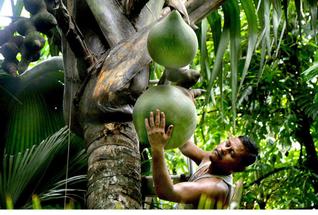
A double coconut tree stands at the Indian Botanical garden at Shibpur in Howrah district.— Photo: Sanjoy Ghosh

Scientists at the Indian Botanical Garden in West Bengal’s Howrah district have carried out artificial pollination of the only double coconut tree in India, which bears the largest seed known to science.

One of the rare and globally threatened species of palm, the double coconut ( Lodoicea maldivica ) tree was planted at the botanical garden in 1894 and the artificial pollination is a result of decades of work by scientists of the Botanical Survey of India (BSI).

“The tree took almost a hundred years to mature and when it started flowering, we started looking for this particular palm species in this part of world. We collected some pollen from palms from Sri Lanka but could not successfully pollinate it. Finally, with the help of pollen from another tree in Thailand, the pollination process was successful,” BSI Director Paramjit Singh told The Hindu .

Longest surviving palm

The Double Coconut tree not only bears the largest seed known to science — weighing around 25 kg — but this unique species is also the longest surviving palm which can live for as long as 1,000 years, he says. The palm tree also bears the largest leaf among palms and one leaf can thatch a small hut.

“Successful pollination means that we can have another Lodoicea maldivica in the country. In fact we have two fruits and it might take them another couple of years to mature,” said S.S. Hameed, BSI scientist who has been working on the pollination project since 2006.

This species of palm is diecious (where male and female flowers are borne on different plants). “Fortunately at the Botanical Garden, we had the female plant which can fruit and produce seeds,” Mr. Hameed said. The Indian Botanical Garden which serves as the repository 12,000 trees from 1,400 different species is careful in nurturing the palm.

The palm tree is located in the large palm house of the Botanical Garden which has the largest collection of palms in South East Asia with around 110 palm species.

This rare tree can be found in only two of the 115 Seychelles islands and is also called Coco de Mer (coconut of the sea), says Mr. Hameed

Legend

Legend bestows the seed with the power to bring good fortune to its owners. “There has also been a tradition of making kamandals [drinking vessels] from the double coconut by bisecting the shell. It was believed that those who consume water from these kamandals will be protected from poisoning,” Mr. Hameed said. Subsequently, sadhus started using Kamandals and it got its place in religious rituals.

source: http://www.timesofindia.indiatimes.com / The Times of India / Home> National / by Shiv Sahay Singh / Kolkata – June 13th, 2015

China to supply 14 trains to Kolkata subway

China will supply 14 subway trains with 112 carriages to Kolkata city, the biggest such contract for a Chinese company in South Asia.

China Railway Rolling Stock Corp Ltd (CRRC) will provide 14 subway trains with 112 carriages in total to Kolkata, CRRC said in a statement, state-run China Daily reported.

This is the first overseas order that CRRC has received after merger of China’s state-owned train manufacturing firms – China North Railway (CNR) and China South Railway (CSR) this month.

The Kolkata order was secured by CNRC subsidiary company – CNR Dalian Locomotive and Rolling Stock Company in February.

The value of the order has not been mentioned.
As the third-biggest city in India, Kolkata will replace the old trains that have been running for over 30 years in its south-north subway line which reaches a length of 23.45 km in order to ease the transportation pressure, the Daily reported.

According to the company, this is the first time that CNR Dalian has entered the market of South Asia.

CRRC started trading on the Shanghai and Hong Kong bourses on Monday, becoming the world’s biggest rail conglomerate in terms of market value and sales.

The Kolkata order came ahead of the visit of a high power delegation from West Bengal headed by Finance Minister Amit Mitra here to explore investment opportunities for his state.

Indian officials said the delegation will meet Chinese investors to showcase investment opportunities in the state.

Chief Ministers of several Indian states including Andhra Pradesh, Gujarat, Maharashtra and Karnataka have visited China to woo Chinese investments.

The two countries have also launched India-China Forum for State and Provincial Leaders during the last month’s visit of Prime Minister Narendra Modi to China to facilitate direct interaction between Indian states and Chinese provinces.

The order came as China is trying to make all out efforts to bid for high speed bullet trains against stiff competition from Japan.

China, which has built 40 bullet train lines with 16,000 kms of tracks in most part of the country, is currently conducting a feasibility study for the over 2,000-km New Delhi-Chennai high speed line while Japan is conducting a similar study for Mumbai-Ahmedabad route.

India has stepped up cooperation with China to modernise its railways with agreements in a number of area including speed raising of the tracks (Chennai-Mysore sector via Bangalore), training of 100 railway personnel in heavy haulage, setting up of railway university and modernisation of railway stations in Bangalore and Bhubaneshwar.

source: http://www.deccanherald.com / Deccan Herald / Home> National / PTI / Beijing – July 10th, 2015

Swimming through rough tides

KNOW YOUR NEIGHBOUR: Surajit Ghosh Swimmer

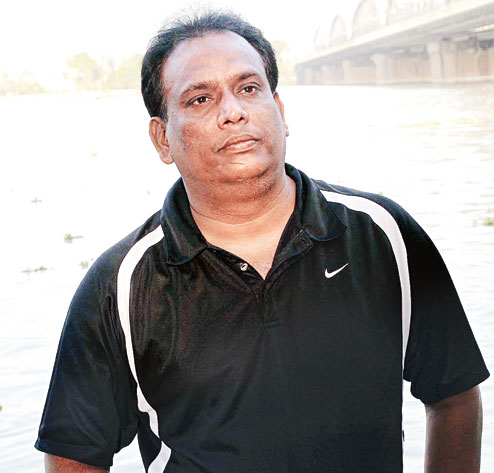
Surajit Ghosh. Picture  by Gopal Senapati
Surajit Ghosh. Picture by Gopal Senapati

For someone like Surajit Ghosh, who has won 12 gold medals in international swimming competitions, it is disheartening to lead a life without any recognition or acknowledgement. Ghosh had won the first gold medal for India in 1984 at the Asian Swimming Championships in Hong Kong. Since then, he was a winner for the next 10 years, in Asian and South East Asian Swimming Championships. Of the 19 medals that he has won, 12 have been gold medals and seven silver.

From 1985-89, Surajit was number one in South East Asia and number 2 in Asia. Apart from this feat, Surajit has over 100 medals that he has won at national swimming championships. He was champion for 10 consecutive years in the senior national championships for 200m butterfly and 400m individual medley. Despite his achievements and talent, Surajit laments that he has never been recognised by either the state or the central government. “My achievements have remained unrecognised. I have never received any kind of recognition from the state or central governments,” he said.

Surajit was a swimmer since childhood, when he started swimming in the neighbourhood pond. His elder brothers Abhijit and Biswajit were also swimmers. However, Surajit went a long way in this sport. His first guru was Jnanaranjan Das, who trained him and encouraged him to go to competitions. “My strength was 200m butterfly in which I had made a record time of 31 seconds in 1979, at my first junior national championship. Later, to perform better, I never stuck to one coach. I would go to other places around India, where I would practise with other good swimmers and practise under different coaches,” said Surajit.

A swimmer can only improve if he has a good competitor. “When I went to competitions, I would watch other swimmers and would contact them later so that I could go and practise with them to improve my speed. I have been to Madras, Kerala and other parts of India, with the aim of increasing speed,” said Surajit. Many swimmers in Bengal would want to practise with Surajit for the same reason.

“Bula Chowdhury has practised with me for a long time because she wanted to increase her speed,” said Surajit. He had also trained for many years under Australian coach, Eric Arnold, in Delhi. “I had stayed for a long time in Delhi, just to train under Arnold who was also training national champion Khajan Singh at that time,” said Surajit.

Although he has been a rank-holder in Asia and South East Asia, he regrets that he could never get a rank in world championship. “I had gone to the World Swimming Championship in 1990, but there I could not go beyond Rank 8. The competition was tougher because there were so many more swimmers from across the world who were better than me,” said Surajit.

Having a job with the Eastern Railway through the sports quota, Ghosh now coaches young swimmers in Bally and other swimming clubs. “I started Bally Swimming Centre but I also train students in other clubs in Hooghly and other places,” he said. He encourages young swimmers and is always on the lookout for new talent.

MORE ABOUT SURAJIT

DoB: January 15, 1968
Born in: Howrah
Education: HS
Family: Wife, two daughters
Loves: Long drives
Hates: Deceit

source: http://www.telegraphindia.com / The Telegraph, Calcutta / Front Page> Howrah> Story / Friday – April 03rd, 2015

Honours galore at Howrah salon

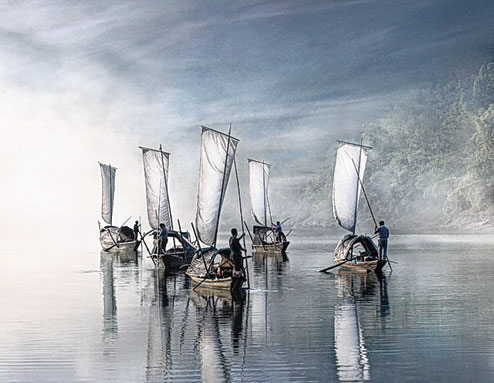
Vladimir Proshin’s photograph ‘In the River’

Vladimir Proshin caught five country boats floating together on a river. Their masts high, the boats were setting sail at dawn, through thick fog that was beginning to clear as the sun came up. Vladimir named this picture, ‘In The River’, which won a gold medal from the Fèdèration Internationale de l’Art Photographique (FIAP) at the Society of Photographers’ (SOP) 47th Howrah Colour Salon 2015.

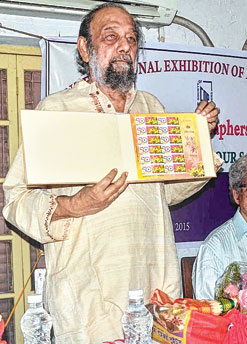
FIAP gold medal is considered to be the highest honour for photographers, who participate in competitions. At the 47th Howrah Colour Salon, 440 photographers from 41 countries sent in 3,120 entries. The panel of seven judges selected 761 photographs which were displayed through a slide show every evening from February 28 to March 1 at the Howrah Medical Club hall. There were three segments of the colour salon, open, creative and nature. This year’s colour salon was inaugurated by artist Nikhilesh Das. Also, a postal stamp with the SOP logo was launched on that day, marking the 50th year of the society.

Artist Nikhilesh Das launches a postal stamp with the SOP logo. Picture by Gopal Senapati

FIAP contributed three gold medals at the Howrah Colour Salon and Vladimir Proshin received one. Marcel Gustave Beauraind from Belgium won the second and Prabir Kumar Das from India won the third. The Photographic Society of America (PSA) contributed three gold medals and one silver medal at the competition. Martina Wolf’s photograph of a woman draped in lace won a PSA gold medal. India’s S P Nagendra’s wildlife shot of a cheetah chasing a deer, in the nature segment won the second PSA gold medal while the third went to India’s Shantanu Saha. Ian Whiston of UK won the PSA silver for the photograph of a lion and lioness in a fight.

“The quality of photographs have improved over the years,” said Asim Bhattacharjee, the secretary of SOP. Since digital photography is the order of the day, there is also place for experimentation in this art form. “A lot of photographs in the creative and open section may look less like photographs and more like creation through software. It is up to the experienced eyes of the judges to decide how much of the image is a photograph and how much has been created,” said Bhattacharjee.

Apart from the foreign medals and honour mentions, SOP gives away 10 gold medals and also certificates of merit. Memorial awards in the name of veteran photographers, Benu Sen, KG Maheswari and T D Pal were given away. The Benu Sen Memorial Award went to John Harding from the UK. The KG Maheswari Memorial award has been introduced this year as a tribute to the photographer, who died in December last year. Danielle Rovangati from Argentina won this award. TD Pal Memorial award went to Daniel Lybaert from The Netherlands.

source: http://www.telegraphindia.com / The Telegraph, Calcutta / Front Page> Howrah> Story / by Dalia Mukherjee / Friday – March 13th, 2015