A mountaineer from Kolkata completed the rare feat of scaling nine peaks, including the Seven Summits (the highest peaks of each of the seven continents), on Saturday. Software engineer Satyarup Siddhanta, 34, climbed Mt Vinson in Antarctica shortly after 9am (local time) – his ninth summit since 2012.
An asthma patient who has never had any formal training in mountaineering, Siddhanta climbed the Everest in 2016. He has also scaled Mt Albrus, Mt Aconcagua, Mt Kilimanjaro, Puncak Jaya and Mt Denali. These apart, Siddhanta has also climbed Mont Blanc and Carsten’s Pyramid in Pappua New Guinea – the highest point in the Australian continent.
A resident of Kalitala Housing in Thakurpukur, Siddhanta is now based in Bangalore. According to his fellow climber Rudraprasad Haldar, Siddhanta once went to the Everest Base Camp and was inspired to begin his mountaineering journey, though he had no training. “It changed him forever and he decided to climb the Seven Summits,” said Haldar. Siddhanta’s website, however, mentions that he is a certified mountaineer from the Himalayan Mountaineering Institute in Darjeeling.
He overcame asthma which could have been a major barrier. “I realized I needed to reduce my dependency on inhalers when I was in college. I was also allergic to food items which triggered asthma. I struggled for years, continuously challenging myself by avoiding inhalers and consuming the food I was allergic to, without taking anti-allergic medicines,” Siddhanta wrote on his website.
But he didn’t give up. “I wanted to push limits to see how far I could go. Finally, with exercises, discipline, diet and some considerable will power and determination, I got rid of asthma,” he wrote.
His mother Gayatri, a homemaker, stayed up all night on Friday, following his march to the peak of Vinson.
“I couldn’t sleep a wink. I was more relieved than happy when he finally reached the summit,” she said. Siddhanta’s father Subhamoy is a doctor.
Gayatri said Siddhanta received funds from a few corporates for the climb. “He also auctioned some of his belongings and took a loan of Rs 30 lakh,” she added.
source: http://www.timesofindia.inditimes.com / The Times of India / News> City News> Kolkata News / by Monotosh Chakraborty / TNN / December 17th, 2017
The Newton Bhabha Fund on Thursday started a workshop for scientists on the Indian Institute of Science Education and Research’s Calcutta campus at Mohanpur in Nadia.
The three-day workshop aims to involve scientists from across the globe and the IISER in social and economic development, Sourav Pal, the IISER Calcutta director, said after inaugurating the workshop.
Scientific research should be industry-oriented instead of remaining confined within laboratories, Pal said.
“A huge amount of money is spent on research across the world. Many brains are being used at laboratories.
“But, it is high time that research findings are translated for the benefit of people through industries. It should be used for capacity-building of the researchers as well,” he said.
“A researcher should not be satisfied only by publishing his findings in a journal.”
The workshop, “Functional Nanomaterials: From Spectroscopy to Bioimaging”, is supported by a Researcher Link grant under the Newton Bhabha Fund.
Prasun Mandal of IISER Calcutta, who is the joint coordinator of the workshop, said the prime objective was to bring together chemists and researchers from various faculties to explore new ideas for social and economic development.
The Newton Bhabha Fund has organised the workshop in association with the University of Manchester, the British Council, the UK’s Royal Society of Chemistry, and IISER Calcutta, Mandal said.
source: http://www.telegraphindia.com / The Telegraph, Calcutta,India / Home> Calcutta / by Subhasish Chaudhari / December 15th, 2017
Serampore, near Kolkata, was an important 18th century Danish colony. A grand heritage restoration programme is underway in the town to restore its major landmarks to their former glory. Serampore, near Kolkata, was a Danish outpost for 90 years (1755-1845). The 210-year-old Lutheran St Olav Church’s restoration was completed in 2015. The project won the Unesco Heritage Award of Distinction in 2016. (Burhaan Kinu / HT Photo)
From the white colonnaded verandah of the Denmark Tavern in Serampore, a sub-divisional town 35 km from Kolkata, the panorama is serene: a placid river Hooghly flows next to the late 18th century building, towards its final resting place, the Bay of Bengal. Even on a busy suburban weekday, the waterfront is usually quiet. These days, however, the peaceful atmosphere is often punctured by sounds of hammers, saws and drills, thanks to the restoration work going on in the building. The tavern’s renovation is not a stand-alone project; it is a part of a heritage restoration programme underway in the town, which was a Danish outpost for 90 years (1755-1845). The Danes had two other colonies in India: Tranquebar (now Tharangambadi in Tamil Nadu) and the Nicobar Islands.
Other than the tavern, several other Danish-era structures are being restored: The 12,000-square feet Danish Government House (DGH) and its two gates; Red Building (a British-era structure located inside the DGH campus), and the cast iron gate, fence and staircase of the Serampore College, which completes 200 years in 2018. The 210-year-old Lutheran St Olav’s Church’s restoration was completed in 2015.
“Tranquebar and Serampore were different kinds of outposts. The former was a port town; the sea gave it a carefree atmosphere. Serampore was a commercial and educational-missionary hub, and more urban. So its heritage has had to grapple with the challenges of an expanding town and burgeoning population,” says conservation architect Manish Chakraborti.
The DGH is located at one end of its 6.7-acre compound. The former residence of the Danish governors is an imposing colonial-style building, but not ornate. The middle part of the yellow and white house, which has an extended porch and six Iconic columns, juts out. A flight of steps will take you into the rooms. Under the Danes, DGH was the administrative headquarters. It continued to be so under the British and till 1990, the Bengal government too had its offices in the building. It was abandoned in 1990 after a fire. Today, the DGH campus, which houses the sub-divisional magistrate’s office, looks rundown. The compound is more or less barren, and doubles up as a parking lot. The town outside is dense, heavily built up, teeming with people and small businesses.
However, even today, the structure and pattern of the main street of the town centre remains as it was constructed by the Danes. The St Olav’s Church is just a few steps away from DGH. It has a portico of twin columns and has the royal monogram of Christian VII, who was the King of Denmark when the church was consecrated. It is flat roofed and reflects the designs of contemporary churches in British India.
Heritage town
“The church is special not just to Christians but all communities… It is a critical component of the town’s life,” says Mohit Ranadip of the Shrirampur Heritage Restoration Initiative, a local citizen-led body. “The town’s heritage, however, is not just about the Danish heritage …. one must not miss the elegant houses of the rich Indian trading class of the 18th century and the ghats they built on the river…we must restore them too.” Some residents, however, allege that the local municipality is not doing enough to save the town’s heritage. “For example, they shouldn’t allow high-rises around the historic centre and concretise roads,” says a resident, who did not wish to named.
While the Church was restored with funds from Denmark’s ministry of culture, DGH’s restoration is being funded by the Centre, the West Bengal Heritage Commission (WBHC), and the Serampore Municipality is in charge. The renovation of DGH will be completed early next year. The National Museum of Denmark (NMD) is overseeing the restoration of the tavern, the Serampore College, and the Red Building. Realdania, a philanthropic organisation, has provided Rs 10 crore (2012-18) funding for the project, which is called the Serampore Initiative.
“Initially, I was sceptical about restoring heritage buildings outside Denmark, but after we began researching for the project, we realised that locals also have a great appreciation for these old buildings and want them to be restored,” says Dr Bente Wolff, project leader, Serampore Initiative, NMD. “Our historian, Simon Rasten, accessed 20,000 pages of Danish documents from the West Bengal State Archives and found information about the town and the architectural plans of the building.” Rasten also traced the only existing map of the Danish areas and the buildings in The Queens Reference Library, Copenhagen.
Bengal’s Little Europe
The Europeans began trading with this region from the 16th century, an era that coincided with the birth of the large trading companies in the continent. But it was only in the last decades of the 17th century that Europe-Bengal trade in textiles, raw cotton, silk, sugar, saltpeter and opium flourished and their outposts came up along the river. Starting with the British in Calcutta, there were the Danes in Serampore, the French in Chandernagore, the Portuguese in Bandel and the Dutch in Chinsurah.
The Danish history in Bengal, however, was not one of smooth progress: In 1698, they acquired a trading settlement called Dannemarksnagore. But it was closed down in 1714. In 1755, the Nawab of Bengal, Ali Vardi Khan, granted the Danes the right to settle down in Bengal as well as free trading rights. Along with the parwana, the Danes bought land and established Fredricksnagore, in the honour of King Fredrick V. In the next few years, three more villages were added to Fredricksnagore: Serampore, Ackna and Pereapore. Since then the Danish territory has been colloquially called Serampore, only officially it was Fredricksnagore.
It was under the administration of Governor Colonel Ole Bie (1776-1805), that Serampore flourished. His abilities and cunning entrepreneurship brought prosperity to the town and the present historical town centre, which is being restored, is his legacy. Contemporary travellers also wrote eloquently about Serampore’s glory days. In 1803, George Annesley wrote that the buildings of Serampore were “picturesque being white, with expensive porticoes to the south and the windows closed by Venetian blinds painted green.”
Though Serampore was managed by the Danes, it also attracted other Europeans and Indians. “The manufacturing of cotton and silk textiles as well as salt petre and sugar led to the rise of a local class of Indian traders, middlemen and agents, and the gradual urbanisation of the settlement… Some Indians eventually became powerful, economically and politically,” Rasten told HT. The turning point in the history of Serampore was the British occupation of Denmark (1807 to 1814). The British monopolised trade in India, and in 1845 Denmark sold Serampore and Tranquebar to the British East India Company.
The challenges of heritage restoration
“When the West Bengal Heritage Commission handed over DGH in 2008 to me, it was in ruins: The floor was broken, the roof had collapsed and tree roots were coming out of the walls,” says conservation architect Gopa Sen. “There were false partitions, destroying the internal plan of the house…. It was a terrible and heartbreaking sight. And a challenge for us.”
The same was the case for the Denmark Tavern, whose front verandah, which overlooks the river, had collapsed. “The campus had been converted into quarters for policemen and additional structures had come up in its precincts. The police line is now being shifted,” says Manish Chakraborti, who is restoring the tavern and parts of the Serampore College. He is also the man behind the restoration of the church, which won the Unesco Heritage Award of Distinction in 2016. “We started with the St Olav’s Church because it had a defined boundary and a single ownership. It is also has immense historical importance because missionary, educationist and botanist William Carey was the first preacher here,” explains Chakraborti. “These buildings could have been saved much earlier but there was not much political support, nor funds. Restoration was seen as a bourgeoisie exercise. The state never looked at public spaces as vibrant community spaces.”
The architects and historians involved in the projects accessed old paintings, maps and documents to get a flavour of the core heritage zone of the town and the how the buildings looked during the Danish period to help them draw up a restoration plan. “The challenges in projects such as these are always unknown. Despite hours of planning, there can be surprises when you start work in an old building, which means reworking the original plan… while keeping to the strict norms,” says Sen.
Both Sen and Chakraborti are ensuring that all the work that is being done follows the heritage norms. This means that the building materials have to be same as those the Danes used: Lime, surki, molasses and khayer. Masons from Murshidabad, who know this old construction technique, have been employed for the project. The architects are also reusing old materials, especially the Burma-teak doors and windows.
For a restoration project to be successful and sustainable, it is important that people have a stake in the project. On that score, Serampore has not done badly: Citizens participated wholeheartedly in a competition to design a new bus stand, which will be shifted from the historic core area. Ranadip’s organisation is also pushing schools to teach their students the town’s Danish lineage.
Future plans
For heritage buildings to survive and ensure their long-term maintenance, which can be expensive, it is important to have an “adaptable re-use plan”. By early 2018, the 200-year-old Danish Tavern will be back in business: It will have a coffee shop, a Danish bakery and six well-appointed rooms for guest accommodation.
“The DGH will have a museum of the town’s Danish past and an exhibition hall,” says Dr Basudeb Malik, officer on special duty, WBHC. “Once the restoration is over, we are expecting tourists interested in Bengal’s colonial-trade history to come not just to Serampore but other outposts in Bengal as well. The government is working on a project to ensure this”.
“I see the restoration work in Serampore as a triggering process; It will hopefully lead to greater investments in urban restoration and push for developing safe, clean and secure community spaces, which Bengal –– for that matter, India –– is woefully short of,” says Chakraborti. “There are no green spaces here…the quality of open environment will improve for the people,” says Flemming Auland, architect, NMD.
The tourism sector is also upbeat about the opportunities such restoration programmes could bring. “Our Little Europe Tour will take tourists to the colonial settlements along the river,” says Navpreet Arora of FunOnStreets, a Kolkata-based tourism company.
Serampore, more than just commerce
The 18th century ushered in an era of Lutheran missionary activities in Serampore, thanks to the patronage of Danish rulers. Though they came to preach Christianity, they also dedicated themselves to education and social reforms. The protagonists were William Carey, Joshua Marshman and William Ward. They established the Serampore Mission, the Serampore Mission Press and the Serampore College. The press printed the Bible in 45 languages including Assamese, Awadhi, Telegu, Bengali, Mooltani, Persian and Pushtu. Journalism in Bengal can be said to have begun with the Serampore missionaries who were the first to expose the lapses of the British government. The Serampore College was designed by a Danish architect and the front gate and two beautiful staircases were gifts from the king of Denmark.
For Denmark, it is a restoration of a link that was lost in time. “But this is just not Danish heritage… this is a part of the world’s shared heritage, which had never been studied. It deserves to be showcased,” says Dr Wolff.
“When [foreign] governments undertake these kind of projects, there is, of course always an objective of image building and visibility,” says Gulshan Sachdeva, director, Europe Area Studies Programme, School of International Studies, Jawaharlal Nehru University. This, however, Dr Sachdeva adds, is not necessarily a negative assessment. Some of these projects genuinely improve awareness and contribute to the local economy through increase in tourism etc. “Ultimately, it is a win-win for both the partners,” he adds.
The rise of the Indian trading class
Approximately at the same time as the Danes came to Serampore, the founder of the Goswami family, Ramgovinda, settled in the western part of the town. His two sons – Harinarayan and Ramnarayan – built a large fortune thanks to their positions as middlemen and their good relations with the Danes. Harinarayan functioned as the diwan of customs (collector) under the Danish East India Company, while his brother Ramnarayan became the official moneylender to the factory. They established an aristocratic colony on the western side of town and became influential people in Serampore. “Unlike other colonial rulers, the power equation between the Danes and Indians were different… locals such as the Goswami family called the shots because they were very rich,” says Simon Rasten, historian, National Museum of Denmark.
@kumkumdasgupta
source: http://www.hindustantimes.com / Hindustan Times / Home> India / by KumKum Dasgupta, Hindustan Times / December 10th, 2017
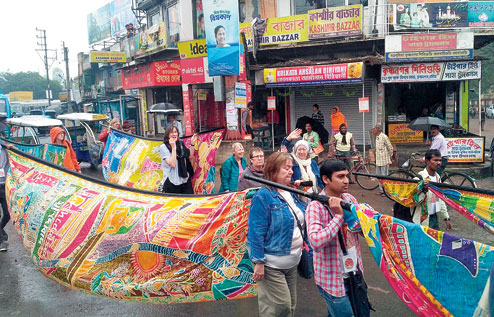
In a bid to rediscover and rebuild the cultural relationship between Bengal and the UK that developed over centuries along the banks of the Hooghly and the Thames, a group of contemporary artistes, authors and historians from Calcutta and London on Saturday participated in a walk in Nadia’s Krishnagar.
The walk, a part of the 10-day initiative titled “Silver River India Walk”, began from Azimganj in Murshidabad on Thursday. It will conclude at Calcutta’s Victoria Memorial Hall on December 16, with stops at 10 important heritage sites like Barrackpore, Chandernagore and Batanagar – all located along the banks of the Hooghly.
The walk has been organised by the British Council in India in association with UK-based art organisation Kinetika and India-based Think Arts, with the support of the Union ministry of culture, the state tourism department and several other organisations to mark the 70th year of India’s Independence.
On Saturday, around 40 artistes from Bengal and the UK paid a visit to the clay model hub in Krishnagar’s Ghurni and learnt about the craftsmanship of the artisans.
“It is a great experience to see the artisans working with delicate artefacts with such fineness. Stories of these artisans need to be known by people that live on the banks of the Thames too,” said Kevin Rushby, a travel journalist with The Guardian.
source: http://www.telegraphindia.com / The Telegraph, Calcutta,India / Home> West Bengal / by Subhasish Chaudhuri / December 10th, 2017
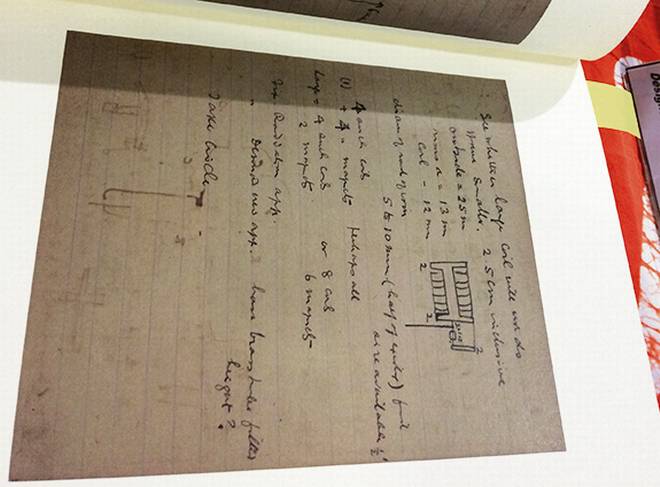
One of the pages of J.C. Bose’s notes. Photo: Special Arrangement
Bose Institute, one of India’s oldest research institutes, will house a museum highlighting the history of Indian science. The decision was taken during the recently-concluded centenary celebrations of the institution, set up by Jagadish Chandra Bose in 1917.
“The History of Science Museum will be located in the campus of Bose Institute on Acharya Prafulla Chandra Road in Kolkata. We are in touch with the National Council of Science Museums for its construction. There will be 50- 60 panels in the first phase which will be completed by 2019,” Siddhartha Roy, director of Bose Institute, told The Hindu.
According to Prof. Roy, the museum will cover four disciplines — physics, astronomy, mathematics and medical sciences — and trace the journey of Indian science from the ancient times.
“Depending on the themes we can have the gallery tracing the development from the Harappan times,” he said.
Professor P.P. Divakaran, who was present at the centenary celebrations of Bose Institute last month and gave a lecture on The Mathematics of India : From Counting to Calculus, welcomed the idea of the museum and said he was “pleasantly surprised “to find a section dedicated to mathematics.
“For most of the time till 1600 AD, India had one of the most advanced mathematical cultures among the world,” Prof. Divakaran said.
Prof. Roy pointed out that modern Indian science may have started with J.C. Bose but there were many who did pioneering work but people were not aware of their contribution.
“In terms of advancements in medical science, the museum will highlight the likes of U.N. Brahmachari, who discovered the treatment for kala azar, and Sambhu Nath De, who discovered the cholera toxin,” Prof. Roy said.
Renovated museum at Bose Institute
Interestingly, as part of its centenary celebrations, the Bose Institute recently upgraded the existing museum on J.C. Bose by displaying 12 digitised volumes of the scientist’s handwritten notes and dairies.
These diaries include the notes he took while attending classes by Francis Darwin (son of Charles Darwin) at Christ’s College in Cambridge. The museum, which also has on display the microwave apparatus developed by J.C. Bose in 1894, has also brought to light the scientist’s communications with personalities such as Mahatma Gandhi and Sister Nivedita.
source: http://www.thehindu.com / The Hindu / Home> News> Cities> Kolkata / by Shiv Sahay Singh / Kolkata – December 02nd, 2017
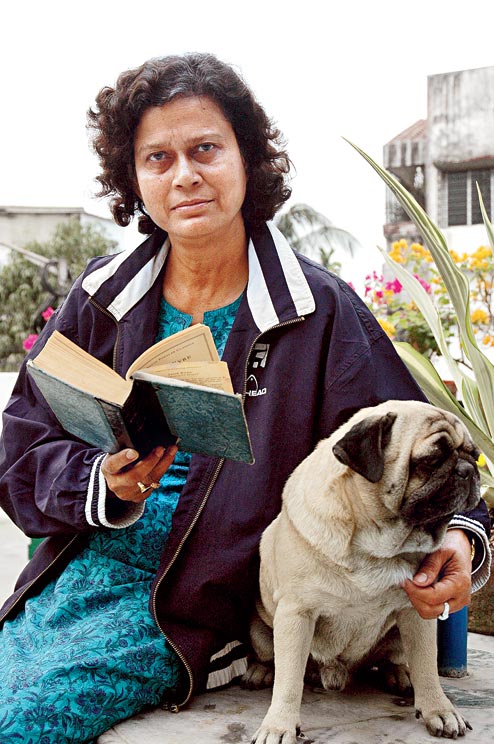
Neighbours and friends still cannot get over the sudden death of veteran cricketer Srirupa Bose. She was found lying in a pool of blood after collapsing in her GC Block house on November 30.
According to sources, a journalist had come to take her interview and she asked her to wait downstairs as she went up to her first floor bathroom. When a long time passed, the journalist got anxious and asked the domestic help to look for her.
“We were alerted by cries for help of the domestic help. Boys from a nearby chemist shop as well as a local doctor rushed. We took her to AMRI,” recalls Saktidhara Saha, a former volleyball player who lives just a house away and knew her since 1972.
She was 66, and is survived by husband Pareshnath Mukherjee, a former Bengal Olympic Association president, and daughter, Amrita Mukherjee, a tennis player.
“Her life revolved around her daughter for the last 15 years. She travelled with her all around the country and abroad,” recalled Sujoy Kumar Ghosh, chief operating officer of neighbouring Bengal Tennis Association where Amrita plays her tennis. “In fact, they had just come back from Indore and were supposed to travel to Sholapur for a tournament that evening.”
Ghosh, who knew Bose since 2003 when BTA came into being and Amrita enrolled there, also recalled the wide contacts she had in the sporting world. “She brought (1987 Wimbledon champion) Pat Cash to hold a four-day workshop here at BTA. Even this year, mother and daughter went to Wimbledon to watch the tournament.”
She was full of life. “Once we held a carnival at BTA and two of us were supposed to sing Jamaica farewell on stage. She joined us.”
Srirupa had told The Telegraph Salt Lake in an interview in 2005 how she had started with hockey and basketball at Calcutta Rangers Club in 1971 and then shifted to cricket.
“She was the first captain of the Bengal women’s cricket team,” says Gargi Banerji who played under her from 1976 to 1984. “Bengal was the national champion for seven years during that time,” she says.
Banerji recalled Bose being a shrewd captain who always knew how to bring out the best from the players without being demanding. “She was very disciplined and like a mother to us.” Bose later became India captain, the chairperson of the national selection commitee and team manager— all when women’s cricket was run by Women’s Cricket Association of India. She took charge as assistant director at Sports Authority of India after she quit railways.
Her sradh ceremony will be held on Sunday and a memorial service on Monday.
source: http://www.telegraphindia.com / The Telegraph, Calcutta,India / Home> Calcutta / December 08th, 2017
Netaji Subhas Chandra Bose’s Great Escape car, the 1937 Wanderer, was taken apart – on slides – and its restoration story told at the Calcutta Club on Saturday.
Restorer Pallab Ray (right in picture by Sanat Kr Sinha) gave an audiovisual presentation on how he was picked to restore the vintage car that was part of “such a thrilling history”.
In fact, the Bose family had two cars – a Studebaker President and the Wanderer. Apparently, Netaji wanted to escape in the Studebaker. But the Wanderer was chosen as everyone thought people would easily recognise the Studebaker.
Netaji’s nephew Sisir Bose ran an endurance test with the Wanderer till Burdwan.
On the night of the Escape, the Wanderer made a noisy start as it moved out of the Elgin Road house, turned right and then again right to get on to Allenby Road. Netaji held on to his door tightly without closing it so that anyone who was awake would hear only one door being shut. He shut the door after the car had crossed Allenby Road.
On the 75th anniversary of the Great Escape, the restored Wanderer (top in picture by Pradip Sanyal) was unveiled by then President Pranab Mukherjee.
The car had been on display at the Netaji Research Bureau (NRB) since 1970.
The NRB director appointed Audi Calcutta for its restoration. As Wanderer was built by Auto Union, which Audi bought later, they had been contracted to do the job. The Audi Calcutta CEO zeroed in on Ray who had restored his family’s Studebaker President.
Ray said he found the car in a shambles. He was asked to do just a visual restoration, but he decided to make it run again. And he did that with the help of his team. From overhauling the engine to working on the transmission and unique Wanderer suspensions, rebuilding the dashboard and stitching the upholstery, Ray restored the vehicle completely.
Reporting by Anasuya Basu
source: http://www.telegraphindia.com / The Telegraph, Calcutta,India / Home> Calcutta / by Anasuya Basu / December 06th, 2017
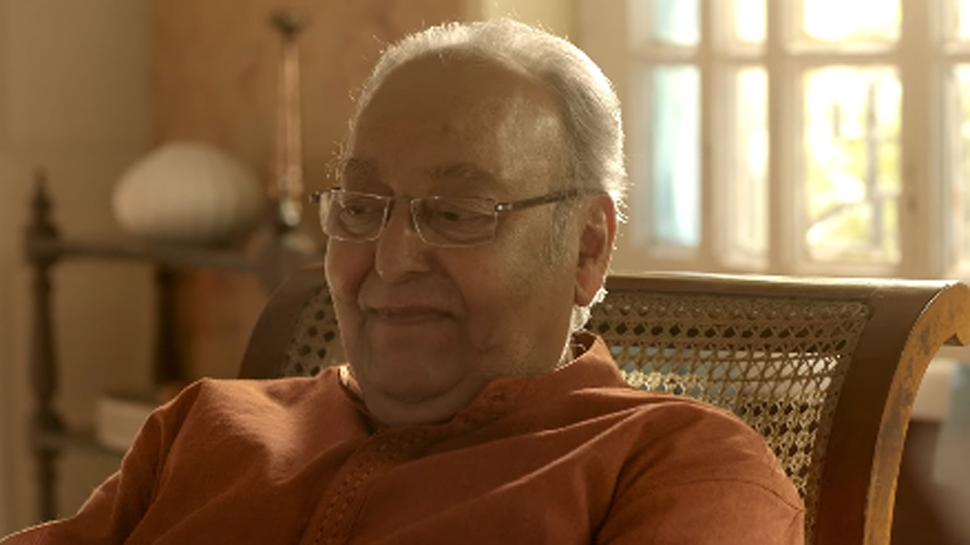
Legendary Bengali actor Soumitra Chatterjee would be handed over France’s highest civilian award Legion of Honour during the 42nd edition of the International Kolkata Book Fair in January next year.
France, which would also be the focal theme of this edition of the world’s most attended book fair, is planning to present the award to the octogenarian actor on the inaugural day of the event in the presence of its Minister of Culture Francoise Nyssen, a senior French official said on Tuesday.
“Soumitra Chatterjee is not just an actor, he is a legend. The award was announced in June. But we waited for the perfect occasion to hand him the award. The book fair seems to be a perfect backdrop as our Minister of Culture would also be present in the city at that time,” Damien Syed, Consul General of France in Kolkata, said during the announcement and logo unveiling event of the book fair here.
“It is a befitting occasion to hand him the award as a French minister would be visiting the city after seven years. We felt it would be more prestigious and impactful if he is handed over the award by the minister, who herself is a writer and a noted publisher in France,” he pointed out.
The upcoming edition of the book fair would be inaugurated by West Bengal Chief Minister Mamata Banerjee at a new venue in Central Park Mela Grounds in Salt Lake and would be held from January 31 to February 11.
Talking about the French connection to the Kolkata book fair, Syed said the French pavilion in this edition, entitled ‘Experience: The Digital Journey of France’, would focus on highlighting various aspects of Indo-French relations.
“It is wonderful to see France as the main focus country in the Kolkata book fair. The French pavilion in the fair would be uniquely designed to portray different aspects of Indo-French relationships in the past, present and future,” the consul general said.
The ongoing ‘Bonjour India Festival’, organised by the cultural wing of the French Embassy in different Indian cities on the occasion of the 70th year of Indo-France diplomatic relationship, would observe its closing ceremony at the Kolkata book fair.
source: http://www.zeenews.com / Zee News / Home> News> Lifestyle> People / IANS / November 28th, 2017
The Greeks called it indikon and the Romans, indicum, eventually indigo in English, all implying the same — from India. True indigo, Indigofera tinctoria, a flowering plant with 750 sub-species is found in the tropics. It produces this distinctive natural dye from its leaves, and is the only organic source of the colour blue in nature. And the Indian subcontinent being the prime supplier of true indigo, the dye was named thus by the Greeks.
Then, Arab merchants took the dye to the Mediterranean and Europe and its rarity gave it a regal aura. Jenny Balfour-Paul, dye specialist and an authority on indigo, says the term ‘royal blue’ came from here.
Balfour-Paul was at Kolkata’s Indian Council for Cultural Relations to speak at Indigo Sutra, a fascinating symposium held there in early November.
As Gasali Adeyemo from Nigeria demonstrated the unique adire tie-dye technique from his country, Sufiyan Ismail Khatri from Kutch demonstrated ajrakh, the block printing that’s done on both sides of the fabric. Adeyemo spoke of how the patterns in adire are tribe identifiers, also working as messages that convey specific ideas and thoughts, easily recognisable to compatriots.
Amrita Mukerji, the woman behind Sutra Textile Studies, the non-profit society that organised the event, was in Malaysia in the late 80s-early 90s and decided she wanted to showcase India as something more than just the country that provided wealthy Malays with plantation workers. So she began to exhibit, using personal and other collections, Indian textiles, jewellery, art, literature and music.
It was in Nigeria that Mukerji had fallen in love with indigo, finding the local shops stacked with bolts in vibrant indigo hues in adire patterns. It was there she discovered checked cloth called George that looked just like Indian lungi patterns. And later learnt that the name came from Fort St. George in Chennai; the same cloth was known as Bleeding Madras in other places.
And the twain met
In 2000, Mukerji met Balfour-Paul. At the time, Balfour-Paul had just come across the journals of a Victorian adventurer and fellow indigo-lover, Thomas Machell.
Inspired by Machell’s writing, which she published as Deeper than Indigo, Balfour-Paul set out to trace his footsteps; and Mukerji travelled with her to the places in Bengal where Machell had lived as an indigo planter.
Monoleena Banerjee, an independent textile designer and consultant, also accompanied them.
Superimposing a map made by Machell on to a contemporary road map, they found four of Machell’s nil kuthis or indigo houses in Nadia district. Three of them were in ruins, while the fourth had been taken over by the local Hare Krishna society.
All these threads came together at the symposium, held most appropriately in the centennial year of the Champaran Satyagraha. Wonderfully curated by Londoner Simon Marks, textile designer and natural dyer, who spends a lot of time in Jaipur and Kutch, there were seminars, workshops, discussions, film shows, a bazaar, and excursions to weaving and dyeing centres.
Participants came from across India, Africa, Japan, Thailand, Jordan, Salvador, Great Britain and Bangladesh to exhibit their skills and share knowledge, playing their part in promoting and reviving indigo, the oldest natural dye known to man.
A scale model of an indigo dye manufacturing unit, a replica of the one in London’s Kew Gardens, made for a fascinating study. There were collections of indigo-hued and inspired works of art, to be worn or displayed, as well as indigo fabric installations, including a maze-like room separator by Kolkata designer Santanu Das. Natural dye artist Ajit Das’s exhibits emphatically announced the range of this dye between hues of blue, purple and black.
We are reliably informed there are more blue jeans on this planet than there are people, and Jesus Ciriza Larraona, a Spaniard, is currently working with dye manufacturers in Tamil Nadu and elsewhere to develop organic dye for Levi’s jeans. He also manufactures organic indigo clothing for Auroville.
Ruby Ghuznavi, a reputed crafts researcher who has done much to revive organic dyes in Bangladesh, was a keynote speaker here. Living Blue, a unit of CARE, Bangladesh, works to empower weavers, indigo farmers and dye-makers in Rangpur in the northern part of the country. It specialises in exports of kantha and indigo-dyed fabrics, using the Japanese Shibori technique, for personal wear and home furnishings.
Clearly, the increasing use of organic products in a polluted world has led to the current revival of interest in sustainable indigo. And, as it did centuries before, the dye is bringing the world together.
The author, who lives in Kolkata, keeps rediscovering it, often with wonder.
source: http://www.thehindu.com / The Hindu / Home> Entertainment> Art / by Patrick Sanjiv Lal Ghose / November 04th, 2017
On February 26, 1873, sailship Lalla Rookh set off from what is now known as Suriname Ghat with 410 passengers on board. Nearly all of them were from places that are now in Uttar Pradesh and Bihar. The men and women had been recruited as ‘coolies’ or indentured labourers by the Dutch who owned sugarcane plantations in Suriname. The ship docked at Paramaribo on June 5 with 279 men, 70 women and 50 children. Eleven did not survive the voyage. In the years that followed, 63 more ships left Kolkata port for Suriname.
Nearly 145 years later, a descendant of one of the 34,304 Indian labourers who were transported to a distant land in the northern tip of South America returned to the very ghat from where her ancestor had set sail and survived the arduous journey. It was a poignant moment for Aashna Kanhai, the Surinamese ambassador to India, as she stood at ‘Mai Baap’ Memorial on Suriname Ghat and looked at the shimmering waters of the Hooghly.
“Today, there are 170,000 people of Indian origin in Suriname (the total population is 558,368). There are also 200,000 of them in Holland who decided to leave Suriname when the country became independent 42 years ago,” said Kanhai as she folded her palms in a namaskaar in front of the Mai Baap Memorial.
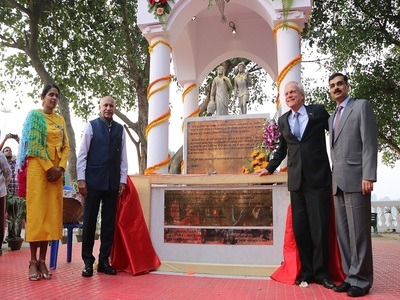
Surinam ambassador in India Aashna Kanhai, Union minister of state for external affairs M J Akbar, Netherlands ambassador in India Alphonsus Stoelinga and Kolkata Port Trust chairman Vinit Kumar at the unveiling of the plaque at Mai Baap Memorial in Surinam Ghat, Garden Reach on Saturday. photo by – Avik Purkait
The occasion that had brought Kanhai to Kolkata was Suriname Day. “My ancestors must have stood here for the last time before leaving India forever. The men carried two dhotis and two kurtas each. The women carried two saris each. Apart from this, some carried religious books like the Ramayana, Mahabharata or Quran,” Kanhai said, her voice choked with emotion.
Aashna Kanhai, the Surinamese ambassador to India, celebrated Suriname Day on the banks of Hooghly on Saturday, accompanied by minister of state for external affairs MJ Akbar, who unveiled a plaque at the Mai Baap Memorial on Suriname Ghat.
The memorial comprises a sculpture of a man and a woman, each carrying a potli, to commemorate the landing of Indian labourers at Paramaribo. The original sculpture is in Paramaribo and its replica was inaugurated in Kolkata in 2015.
Her great grandmother’s father was among the indentured labourers who landed in Suriname. During an earlier visit to Kolkata, she had heard the name Bhawanipore and it rang a bell. “I recalled that my ancestors were kept at the Bhawanipore Depot before they boarded the ship,” Kanhai added.
Initially, the transport and living conditions of Indian labourers in Suriname was worse than it had been prior to the abolition of the Dutch slave trade. Many died during the journey.
But why did the Dutch planters require Indian labourers? “In 1863, slavery was abolished by the Dutch and they entered into an agreement with the East India Company to recruit labourers from India to work in the sugarcane plantations in Suriname. Men, known as Arkatias were sent out to recruit people from Uttar Pradesh and Bihar. They entered into a five-year contract and came to be known as the Contrakees or Agreemanees. They were to receive 25-pence a week for their labour but payment was often delayed. Of the 34,000-odd Indians who reached Suriname, 65% stayed back. Indentured labour was finally abolished 100 years ago in 1917,” the Surinamese ambassador said.
During the event, videos of renditions by Surinamese singer Raj Mohan were screened. In a Bhojpuri song, the singer brought out the feelings of a ‘coolie’ after he realized that he had been cheated. The second song by Mohan was Tagore’s Ami Chini Go Chini Tomarey, Ogo Bideshini. Kanhai, who speaks fluent Bhojpuri, said that the only Bengali she knows is the Rabindrasangeet which is extremely popular in Suriname.”That one stanza of the Bhojpuri song says it all. It reveals how the labourers from India had gone to Suriname with plans to return after five years with small fortunes. Once there, they realized that they were cheated. They were taken there as replacement slaves. Such was colonialism. They just played with words to make things sound better. The Hooghly wasn’t a river of hope. It was a river of no return. The peasants left their lands in the first place because of the huge taxation imposed by the colonial government in India. They had no surplus during lean seasons. Through such programmes, we celebrate the resilience of human spirit,” Akbar said.
While Dutch ambassador Alphonsus Stoelinga recounted how his country shared a piece of history with India and Suriname, Kolkata Port Trust chairman Vinit Kumar said there are plans to improve the surroundings of the memorial. “The first labour ship to leave Kolkata for the Mauritius was in 1834. Later, ships left for several countries. We have plans to organize heritage tours to the Suriname Ghat and create a larger indenture memorial. We shall also upgrade the surroundings,” Kumar said.
source: http://www.timesofindia.indiatimes.com / The Times of India / News> City News> Kolkata News / by Jayanta Gupta / TNN / November 26th, 2017