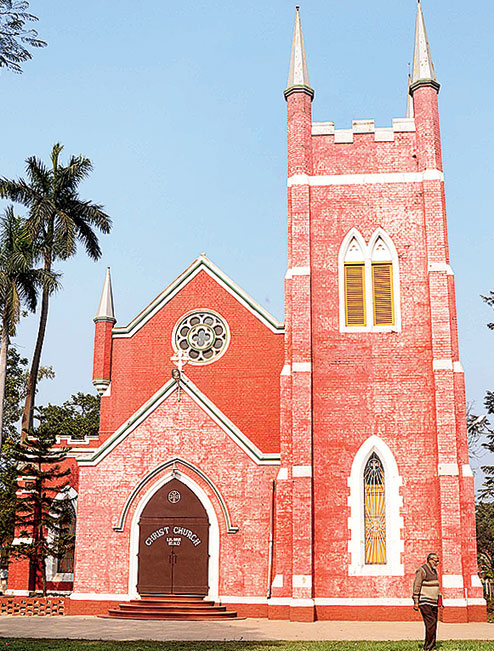
Christ Church in Liluah. Picture by Gopal Senapati
The old red Gothic structure on the eastern banks of a large pond looks huge from outside. The pond and the church stand on land that belongs to the Eastern Railway in Liluah. Despite the massive structure, inside, the church cannot seat more than 100 people on its pews. If there is a big congregation, authorities have to arrange for extra chairs for the parishioners.
Christ Church, under the Church of North India (CNI), has 160 parishioners on its list. Most of them are local residents, but there are some who come from other parts of Howrah and Hooghly as well.
The interiors of the church got a fresh lick of pink paint in December, before Christmas. Reverend Sailen Das, a senior member of the church committee, is expecting a good turnout for Good Friday on April 3. The service will start at 12 noon and will continue till 3pm. “Many people attend the church service on Good Friday because it is a significant day. The week before Good Friday is the Holy Week and every evening we have a mass for the Lent period that has started 40 days before Good Friday,” said Das.
Christ Church was built in 1915 for the European and Anglo-Indian employees of the then East Indian Railway. A plaque on the wall of the church reads, ‘This stone was laid on December 22, 1915 by Robert Swan Hichet Esq, Agent East Indian Railway.’ Since the inception of the Liluah workshop in 1900, the Christian employees wanted a
place of worship. “The church runs on donations from members,” said Das.
Inside the church, there are no other decorations, apart from the altar. An antique object inside the church has been removed some 20 years back. “A huge brass eagle with wings spread out, perched on a brass stand was placed in the front of the altar where the priest would keep the Bible during church service. There was an attempt to steal the eagle stand about 15 years back, but it was so heavy that the thieves could not carry it out of the church. After this, we were forced to give the eagle away to St Paul’s Cathedral,” said Das.
Christ Church will turn 100 at the end of this year and the committee members are planning to do some social work.
“We run a Sunday school for Biblical teachings. We are thinking of starting a dispensary at the local club where we could distribute free medicines,” said Das.
source: http://www.telegraphindia.com / The Telegraph, Calcutta / Front Page> Howrah> Story / Friday – April 03rd, 2015
Governor Keshari Nath Tripathi recently presided over the literary festival celebrating the golden jubilee celebration of BDM International school near Pratapgarh in Garia. Tripathi, who was accompanied by Usha Mehta, director and administrator, Shailesh Khaitan, chairman and Shankar Lal Gupta, secretary of the school, stressed on the promotion of Hindi literature by the students and teachers of the school.
The governor was praised students for their performances at the event, which revolved around the richness of Indian culture, art and literature. He described the five-decade journey of BDM International as a story of success, which began with Usha Mehta, and just two learners, in 1966. It is now a leading CBSE-affiliated institution with nearly 8,000 students.
Speaking about the late Draupadi Devi Khaitan and the late G N Khaitan, who dreamt of the school changing the academic landscape of the area, Tripathi said, “I am happy to know that the school authorities have introduced subjects like mass media and biotechnology to keep pace with global education trends.”
The governor told his audience, “If you get good marks in exams, don’t think yourself to be an educated or learned person. Rather imbibe moral values to become ideal citizens of India in the future. The society has high hopes from you and I want you to fulfil them.”
An author and poet, whose chief literary works include anthologies like ‘Manonukriti’ and ‘Aayu Pankh’, Tripathi lauded the students for depicting different segments of Hindi literature in their presentations.
source: http://www.timesofindia.indiatimes.com / The Times of India / Home> City> Kolkata / TNN / March 30th, 2015
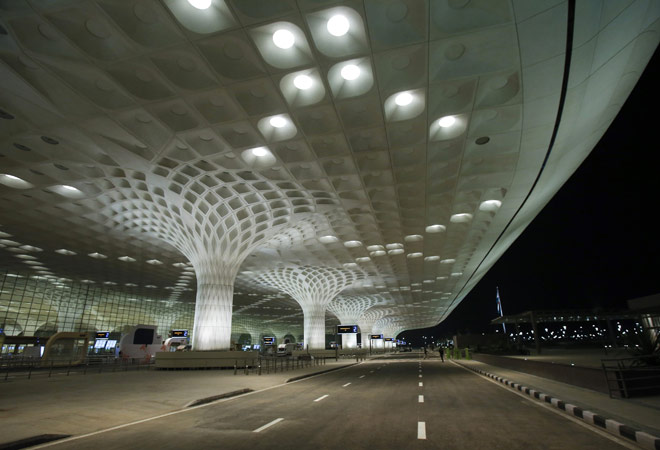
Picture for representation purpose only. (Source: Reuters)
India’s first private greenfield airport at Durgapur, promoted by Bengal Aerotropolis Projects (BAPL), is likely to be operational by April 14.
“The final calibration of navigational aids at the airport by Airport Authority is done. Now, we expect to get final DGCA licence in a month,” state Transport Secretary Alapan Bandopadhyay said in Durgapur on Monday.
In all probability, the airport, christened Kazi Nazrul Islam Airport, will be operational from April 14, the first day of Bengali calendar, BAPL officials said.
The West Bengal government has 1.2 per cent stake in BAPL, and Singapore’s Changi Airport is the single largest shareholder in the airport.
Bandyopadhyay said Pinnacle Air, a non-scheduled airline, will begin its operations from here four days a week connecting Bagdogra, Coochbehar, Durgapur and Kolkata soon after getting license from DGCA.
BAPL managing director Partha Ghosh said the company is in negotiations with IndiGo and GoAir for scheduled flights for connecting Delhi-Durgapur including Air India and non-schedule airline Air Coasta for connecting southern cities like Hyderabad and Bangalore.
Air Costa may connect these two south Indian cities for four days a week.
However, the final agreement will depend on concessions the Kazi Nazrul Islam Airport offers.
The major concessions demanded by the scheduled airlines are waiver of landing and takeoff fees, underwriting minimum of seats and 30 per cent surcharge waiver for ATF for a greater timeframe.
State government has already given a three-year waiver of surcharge on ATF for three years to Andal, Coochbehar and Bagdogra airports.
Utsav Parekh, one of the initial promoters of BAPL, said the company will focus on real estate and was holding dialogue with several global real-estate majors from Singapore, Japan and others.
source: http://www.businesstoday.intoday.in /Business Today / Home> Sectors – Aviation> Story / by PTI / Durgapur / March 16th, 2015
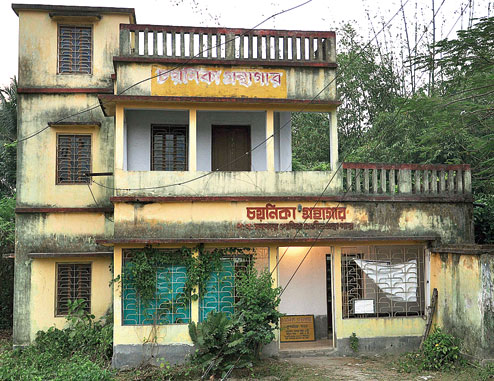
A small building beside NH6 is where Chayanika Granthagar is. The isolated two-storeyed structure is symbolic of how this once popular library has now become a lone building by the road which few people visit. Members and readers alike, prefer to go to other libraries in Uluberia and Bagnan instead of crossing the highway to come to this library. Ever since the national highway was commissioned, people have abandoned this institution that has, unfortunately, fallen on the wrong side of the road.
“The habitations are on the other side of the road. Kushberia village is actually on the other side of NH6 and that is where our members mostly reside. No one takes the risk of crossing this stretch of the highway as vehicles are always speeding,” said Sujata Ghosh, the librarian of Chayanika Granthagar.
The library was initially run from a local club in Kushberia. At that time, this was the only library in this village and area. The area had a number of jute mills at that time, and the level of education here was moderate. However, when the state government declared that it would give aid to public libraries, some educated locals took the initiative of starting a separate library. Chayanika Granthagar started at the present building in 1980 on the initiative of the founder and first librarian, Tulsi Charan Khan, Joydeb Mondal, Sukumar Basu and others. It is a rural library and was the sole source of books for many people who lived in this area, until the highway came up. “There is a library in Jaduberia. It is the nearest library now and members of this library have moved there since it is close by and they don’t have to cross the road,” said Ghosh.
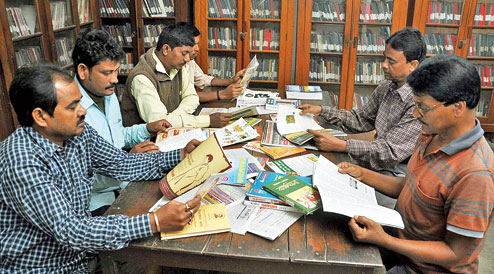
The reading room. Pictures by Anup Bhattacharya
At present, the library has 6,551 books. A separate children’s section has been made on the first floor of the building, but it remains closed most of the times. “Few child members visit the library because they cannot come on their own. They need a guardian to help them cross the road,” said Ghosh. However, there is no career guidance section here. “We have a few books for competitive exams at the library but we do not have an entire section dedicated to it,” said Ghosh.
In 2008, the library had received a book and furniture grant worth Rs 50,000. The annual grant of Rs 19,500 comes regularly. The library authorities have applied for a building grant some time back for making toilets and repairing the present building. While the library authorities are maintaining the institution with the hope that some day things will change, they had also sent written requests to the National Highway Authorities of India for building an underpass near the library. “We had sent a letter to the NHAI and also to the construction company, requesting them to make an underpass near the library. However, our request fell on deaf ears. The underpass is coming up further down the road, from where this library would be too far,” said Ghosh.
FACTFILE
Name:Chayanika Granthagar
Estd: 1978
Address: Village and PO – Kushberia, PS – Uluberia
No. of members: 261
Membership fees: Rs 2 per month for general members, free for children
source: http://www.telegraphindia.com / The Telegraph, Calcutta / Front Page> Howrah> Story / by Dalia Mukherjee / Friday – February 27th, 2015
WITH the retirement of Madhumita Bisht, a long and illustrious chapter in the history of Indian badminton has come to a close. In a career spanning nearly three decades, Madhumita grew from a small-town girl to a big-hearted champion. By stringing together will, courage and determination to succeed, Madhumita set an example for all those who followed.
Madhumita Bisht announcing her retirement in New Delhi. The queen of Indian badminton is an eight-time National singles champion, nine-time doubles winner and a 12-time mixed doubles winner
V.V. Krishnan
“If you believe you can do it, you will do it. After all, we human beings are blessed with amazing abilities. It is for us to make the most of these abilities.” These words from the 38-year-old Madhumita reflect the tremendous self-belief she developed over the years.
No wonder, Madhumita, who became the National sub-junior champion in 1977, went on to collect National titles at will. An eight-time National singles champion, nine-time doubles winner and a 12-time mixed doubles winner! That, in short, tells the tale of Madhumita’s all-round success at home.
Madhumita broke Meena Shah’s record of six successive National singles titles by winning seven between 1985 and 1991. She also had the unique distinction of emerging winner in all her eight appearances in the singles final of the National championship.
A fitness fanatic, fiercely competitive and a firm disciplinarian, Madhumita was greatly inspired by Ami Ghia, who won the Nationals seven times. She acknowledges the contribution made by Ami and says, “till date, we are best friends.”
Even before Madhumita arrived on the National scene, Ami was already a four-time National singles champion. “I remember watching her play for the first time. I thought she was just too good,” recalls Madhumita, now a Sports Officer with Northern Railway.
It was at Panjim in 1978 that Madhumita first saw Ami play and went on to lose to her. “I used to be very scared of the senior players like Ami and Kanwal Thakur Singh. Then I joined Railways and Ami was with me. I remember, we had a camp in Delhi’s Karnail Singh Stadium. We were roommates. Dipu Ghosh was our coach and he was of the opinion that I stood to gain a lot from Ami. He was right.”
Madhumita recalled a tournament in Bangalore, before joining the Railways, in 1978. “I was to play Ami in the final. But when I watched her warm-up, I forgot all about the fact that even I had to warm-up. Believe me, I did not warm up at all. Needless to say, I lost. But after watching her before the match, I realised the importance of warming up before every match. Perhaps, her meticulous ways rubbed off on me.”
It was not until 1980 that Madhumita began to believe that she could actually beat Ami. “I had beaten Kanwal Thakur Singh (who won two National titles by beating Ami in the finals) in the Lucknow International. So my confidence was growing.”
One Saturday afternoon, in the Uber Cup camp at Patiala, Madhumita lost 11-12 to Ami in the deciding game. “After the match I was wondering if I could run her so close, it was possible to beat her, too. Sunday was a day of rest. On Monday, the trials to select the team were to start. When the lots where drawn, I faced Ami in the first match of the round-robin trials. I beat her 11-7, 11-8,” recalls Madhumita with a glint of pride in her eyes.
“I beat her in August 1980 and again in January 1981. But around a fortnight later, in the Vijayawada Nationals, I lost to her in the semifinals. But thereafter, things became a little more comfortable for me. I beat her six times in the National finals. I’ve enjoyed playing with Ami. I played with her and many more opponents since then, but I can tell you, that in my opinion, Ami was the most difficult player to beat,” declares Madhumita, whose game revolved around her speed, fine anticipation, power and deception.
Hailing from Jalpaiguri and getting her early lessons in badminton from her father at Siliguri, young Madhumita worked hard to overcome the constraints. From playing on an outdoor mud-court to a make-shift indoor hall with the roof only 15 feet high, Madhumita progressed. “One could neither serve deep, nor go back since there was a danger of banging your racquet against the back-wall. But this helped my speed as I had to get adjusted to the shuttle travelling at such a quick pace,” says Madhumita on those challenging days.
An appearance in the National junior final and a sub-junior title kept her on the course. “In 1978, my dad (an artist with the Information and Cultural Affairs Department) shifted to Calcutta. This helped my badminton a lot. I must tell you that my dad was my biggest support. When I was 10, he accompanied me everywhere. He forgot everything else as he helped me pursue my dreams. He would give me an oil massage, tie my shoe-laces and even hand over the racquet to me before my match. Would you believe that? He would never scold me even when I lost. He would say, ‘unless you lose, you’ll not know what it takes to win.’ Till date, he is equally concerned,” says Madhumita about her “baba,” who used to personally repair the cemented floor of the badminton court at Siliguri to ensure that there was no break in his daughter’s practice-session.
Employed with the South Eastern Railways at the tender age of 13 years and seven months and married at 18 to Delhi-based shuttler Vikram Singh, Madhumita benefited a great deal from the environment which encouraged her to go on.
Madhumita went on to bag a bronze in the Asian Games in 1982 and received the Arjuna award in the same year. In 1992, Madhumita became the first lady to represent the country in the Olympic Games, in Barcelona. In fact, right through the 1980s and the 1990s, Madhumita was a regular feature of the Indian teams for the World Cup and Uber Cup competitions. Again in the 1998 Asian Games in Kuala Lumpur, Madhumita was part of the bronze-winning team.
Looking back on Madhumita career, success in the major international championships is absent. She won a triple-crown at Toulouse and finished runner-up in the USSR International in Moscow. But to see things in perspective, it must be remembered that during her best years as a singles player, lack of international exposure was the biggest hindrance facing the Indian players. Barring Prakash Padukone, no other player in the country could break these home-grown shackles. But surely, Madhumita deserved more in the international arena.
Among her big victories, the one against World number two Kusuma Sarwanta in 1992 stands out. Kusuma had won the Malaysian Open and the following week, Madhumita beat her in the second round in Indonesia.
Madhumita wanted to take a break from the game soon after the Nationals in 1991. “But Vikram and my in-laws asked me to concentrate on making it to the Olympic Games the following year. They said, ‘since you are playing well, you should give it a shot,'” recalls Madhumita.
Madhumita was ranked 29th in the world in 1992. For three months she looked for a sponsor to play abroad but in vain. Non-participation brought down her ranking to the 60s. “Since only the top-40 get a direct seeding in the Olympic Games, I had no option but to play and do well enough to raise my ranking. I reached the quarterfinals of the Korean Open and the ABC Championships before making the pre-quarterfinals of the All-England Championships that year,” says Madhumita.
On her return from Barcelona, Madhumita chose to stay off the game. She returned when her son was three months old but was firm on playing only in the country. “I was very happy to have a son after 10 years of marriage. I knew that I had played enough and my time was now for him. So I made up my mind not to travel overseas,” says Madhumita.
Later, Madhumita became Sindhu Gulati’s doubles partner after Nancy Keith gave up the sport following her marriage. Madhumita and Sindhu not only won their inter-Railways matches but also went on to win all three selection tournaments leading to the selection of the Indian team for the World championship in Switzerland. “Though Sindhu was aware of my priorities, all others waited for me to report for the World Cup camp at Patiala. At that time, I was away in Kolkata to attend my brother’s wedding. Citing domestic reasons, I stayed away from the camp.”
The turning point in Madhumita’s career came when she lost the doubles match with Sindhu in the 1996 Nationals at Bharauch. “I had put on a lot of weight due to thyroid problems. But I told myself that I had to become completely fit before the next Nationals. Thereafter, I began training very hard.”
A string of consistent showings, up to the Pune Nationals in 1997, saw Madhumita make the National team for the SAARC Cup at Colombo. “I was not very keen but Dipu Ghosh and Ami Ghia persuaded me to travel with the team.” She made all the three finals and won the doubles in the company of P. V. V. Laxmi.
Thereafter, in a major tournament in Chennai, where Aparna Popat and Manjusha Kanwar did not play, Madhumita beat Neelima Choudhary in the semifinals and Laxmi in the final. This was also Madhumita’s last singles title.
Her amazing success-rate in the doubles is something that has not received the kind of accolades it deserves. Madhumita’s first doubles title came in the company of Ami in 1981. She regained the crown in 1986 with Mallika Barua and went on to retain the title for the next three years with Ami. After Ami left the scene, Madhumita partnered Sudha Padmanabhan and won twice in succession till 1991. In 1998, Madhumita was back on top with Sindhu and regained the title for the last time in 2000 alongside P. V. V. Laxmi.
In mixed doubles, Madhumita’s consistency will be hard to match. She has played the National mixed doubles finals a whopping 20 times!
Madhumita first won the mixed event in 1982 in the company of Sanat Mishra. The duo came together in 1987 and recreated the magic over the next three years. For the following two years, it was with Harjeet Singh. After her comeback, beginning in 1995, Madhumita won four times in succession with Vinod Kumar. Last year, Vincent Lobo was Madhumita’s partner in prosperity, just as it was Markose Bristow this year. Interestingly, the only time Madhumita partnered Vikram, the duo ended as runner-up in 1986.
“I understand that doubles competition does not get its due. But that has not discouraged me from enjoying the doubles. I hope, with changing times, we’ll pay more attention to doubles. After all, in the World Team championship, you have three doubles. I’m glad the Badminton Association of India is working in this direction. Getting a specialist doubles coach like Rashid Sidek to India was a wonderful idea. We have talented doubles players and youngsters like Sanave Thomas and V. Diju are promising a lot. I am sure, it is a matter of time before we start getting results in doubles, too.”
Being involved in competitive badminton for 27 years, the only time an injury threatened to put an end to her career was in 1999. A leg-injury suffered in a camp in Bangalore necessitated an operation. And for once, Madhumita thought that it was not possible for her to resume playing. But help was at hand.
“Dr. Ashok Rajagopal told me that he’ll see to it that I’m back. He even told me that he cited my example to encourage others to fight their injuries and return to their respective discipline. It took eight months for me to get back. I again trained and found a place in the Uber Cup team in 2000,” recalls Madhumita.
Thereafter, she began contemplating retirement. Though there was no dearth of motivation, Madhumita thought it was time for her to spend more time with her growing son, Harshvardhan, besides fulfilling other family commitments.
“After the Cochin Nationals (in 2000), I decided to announce my retirement. But people around me prompted me to play on. The same happened even after the Jaipur Nationals, last year. But this time, before the Lucknow Nationals I had made up my mind that this would be it,” she says.
In fact, Madhumita all but made a formal announcement at Lucknow before changing her mind to do so on her return to Delhi. The mixed doubles title in the company of Markose Bristow was an indication of her form and this led to her selection in the Uber Cup team in Eindhoven.
And when Madhumita finally called it a day in New Delhi, it was in the presence of her employers, former Asian champion Dinesh Khanna and several badminton players.
“I am not feeling too sad since I had prepared myself mentally for this day long time back. May be, I’ll be attached to badminton and do everything that I can for the youngsters. Whatever I’ve learnt, I will try to give to the younger players,” said Madhumita who is also the chief coach for Railways.
“Whatever I am today, my job, name and fame, it is all due to badminton. There are several successful people in various professions and vocations but how many of them are well-known? So I’ll remain eternally grateful to the game and all those people who believed in me.”
Looking ahead, Madhumita is happy that a lot of foreign exposure is being given to today’s players. “It is good but not everyone is making the most of it. Since, they are getting it far more easily, they do not value it as much. I feel, there is not much accountability. The players should be made to feel that if they are being given the opportunity to represent the country, they should give their very best. I am not saying you win every time you go out and play, but try your best. I see that they lack dedication and discipline. This is where the role of parents comes in. Certain values need to be inculcated at home.”
Citing examples of her idol Prakash Padukone for his discipline and P. Gopi Chand for his commitment, Madhumita says, “I’ve watched Prakash work very hard. His discipline was simply amazing. Take a look at Gopi. He is so dedicated. Even after three knee operations, he is so committed on the court. If you don’t have the commitment, you cannot succeed,” says Madhumita. For years, Madhumita has carried on successfully mainly due her form and fitness. Her passion for the game and the appetite for success have kept her on the court. When looking at Madhumita’s glorious career, it is difficult to find a parallel. She is one of a kind.
“If you believe you can do it, you will do it. After all, we human beings are blessed with amazing abilities. It is for us to make the most of these abilities.” These words from the 38-year-old Madhumita reflect the tremendous self-belief she developed over the years.
No wonder, Madhumita, who became the National sub-junior champion in 1977, went on to collect National titles at will. An eight-time National singles champion, nine-time doubles winner and a 12-time mixed doubles winner! That, in short, tells the tale of Madhumita’s all-round success at home.
Madhumita broke Meena Shah’s record of six successive National singles titles by winning seven between 1985 and 1991. She also had the unique distinction of emerging winner in all her eight appearances in the singles final of the National championship.
A fitness fanatic, fiercely competitive and a firm disciplinarian, Madhumita was greatly inspired by Ami Ghia, who won the Nationals seven times. She acknowledges the contribution made by Ami and says, “till date, we are best friends.”
Even before Madhumita arrived on the National scene, Ami was already a four-time National singles champion. “I remember watching her play for the first time. I thought she was just too good,” recalls Madhumita, now a Sports Officer with Northern Railway.
It was at Panjim in 1978 that Madhumita first saw Ami play and went on to lose to her. “I used to be very scared of the senior players like Ami and Kanwal Thakur Singh. Then I joined Railways and Ami was with me. I remember, we had a camp in Delhi’s Karnail Singh Stadium. We were roommates. Dipu Ghosh was our coach and he was of the opinion that I stood to gain a lot from Ami. He was right.”
Madhumita recalled a tournament in Bangalore, before joining the Railways, in 1978. “I was to play Ami in the final. But when I watched her warm-up, I forgot all about the fact that even I had to warm-up. Believe me, I did not warm up at all. Needless to say, I lost. But after watching her before the match, I realised the importance of warming up before every match. Perhaps, her meticulous ways rubbed off on me.”
It was not until 1980 that Madhumita began to believe that she could actually beat Ami. “I had beaten Kanwal Thakur Singh (who won two National titles by beating Ami in the finals) in the Lucknow International. So my confidence was growing.”
One Saturday afternoon, in the Uber Cup camp at Patiala, Madhumita lost 11-12 to Ami in the deciding game. “After the match I was wondering if I could run her so close, it was possible to beat her, too. Sunday was a day of rest. On Monday, the trials to select the team were to start. When the lots where drawn, I faced Ami in the first match of the round-robin trials. I beat her 11-7, 11-8,” recalls Madhumita with a glint of pride in her eyes.
“I beat her in August 1980 and again in January 1981. But around a fortnight later, in the Vijayawada Nationals, I lost to her in the semifinals. But thereafter, things became a little more comfortable for me. I beat her six times in the National finals. I’ve enjoyed playing with Ami. I played with her and many more opponents since then, but I can tell you, that in my opinion, Ami was the most difficult player to beat,” declares Madhumita, whose game revolved around her speed, fine anticipation, power and deception.
Hailing from Jalpaiguri and getting her early lessons in badminton from her father at Siliguri, young Madhumita worked hard to overcome the constraints. From playing on an outdoor mud-court to a make-shift indoor hall with the roof only 15 feet high, Madhumita progressed. “One could neither serve deep, nor go back since there was a danger of banging your racquet against the back-wall. But this helped my speed as I had to get adjusted to the shuttle travelling at such a quick pace,” says Madhumita on those challenging days.
An appearance in the National junior final and a sub-junior title kept her on the course. “In 1978, my dad (an artist with the Information and Cultural Affairs Department) shifted to Calcutta. This helped my badminton a lot. I must tell you that my dad was my biggest support. When I was 10, he accompanied me everywhere. He forgot everything else as he helped me pursue my dreams. He would give me an oil massage, tie my shoe-laces and even hand over the racquet to me before my match. Would you believe that? He would never scold me even when I lost. He would say, ‘unless you lose, you’ll not know what it takes to win.’ Till date, he is equally concerned,” says Madhumita about her “baba,” who used to personally repair the cemented floor of the badminton court at Siliguri to ensure that there was no break in his daughter’s practice-session.
Employed with the South Eastern Railways at the tender age of 13 years and seven months and married at 18 to Delhi-based shuttler Vikram Singh, Madhumita benefited a great deal from the environment which encouraged her to go on.
Madhumita went on to bag a bronze in the Asian Games in 1982 and received the Arjuna award in the same year. In 1992, Madhumita became the first lady to represent the country in the Olympic Games, in Barcelona. In fact, right through the 1980s and the 1990s, Madhumita was a regular feature of the Indian teams for the World Cup and Uber Cup competitions. Again in the 1998 Asian Games in Kuala Lumpur, Madhumita was part of the bronze-winning team.
Looking back on Madhumita career, success in the major international championships is absent. She won a triple-crown at Toulouse and finished runner-up in the USSR International in Moscow. But to see things in perspective, it must be remembered that during her best years as a singles player, lack of international exposure was the biggest hindrance facing the Indian players. Barring Prakash Padukone, no other player in the country could break these home-grown shackles. But surely, Madhumita deserved more in the international arena.
Among her big victories, the one against World number two Kusuma Sarwanta in 1992 stands out. Kusuma had won the Malaysian Open and the following week, Madhumita beat her in the second round in Indonesia.
Madhumita wanted to take a break from the game soon after the Nationals in 1991. “But Vikram and my in-laws asked me to concentrate on making it to the Olympic Games the following year. They said, ‘since you are playing well, you should give it a shot,'” recalls Madhumita.
Madhumita was ranked 29th in the world in 1992. For three months she looked for a sponsor to play abroad but in vain. Non-participation brought down her ranking to the 60s. “Since only the top-40 get a direct seeding in the Olympic Games, I had no option but to play and do well enough to raise my ranking. I reached the quarterfinals of the Korean Open and the ABC Championships before making the pre-quarterfinals of the All-England Championships that year,” says Madhumita.
On her return from Barcelona, Madhumita chose to stay off the game. She returned when her son was three months old but was firm on playing only in the country. “I was very happy to have a son after 10 years of marriage. I knew that I had played enough and my time was now for him. So I made up my mind not to travel overseas,” says Madhumita.
Later, Madhumita became Sindhu Gulati’s doubles partner after Nancy Keith gave up the sport following her marriage. Madhumita and Sindhu not only won their inter-Railways matches but also went on to win all three selection tournaments leading to the selection of the Indian team for the World championship in Switzerland. “Though Sindhu was aware of my priorities, all others waited for me to report for the World Cup camp at Patiala. At that time, I was away in Kolkata to attend my brother’s wedding. Citing domestic reasons, I stayed away from the camp.”
The turning point in Madhumita’s career came when she lost the doubles match with Sindhu in the 1996 Nationals at Bharauch. “I had put on a lot of weight due to thyroid problems. But I told myself that I had to become completely fit before the next Nationals. Thereafter, I began training very hard.”
A string of consistent showings, up to the Pune Nationals in 1997, saw Madhumita make the National team for the SAARC Cup at Colombo. “I was not very keen but Dipu Ghosh and Ami Ghia persuaded me to travel with the team.” She made all the three finals and won the doubles in the company of P. V. V. Laxmi.
Thereafter, in a major tournament in Chennai, where Aparna Popat and Manjusha Kanwar did not play, Madhumita beat Neelima Choudhary in the semifinals and Laxmi in the final. This was also Madhumita’s last singles title.
Her amazing success-rate in the doubles is something that has not received the kind of accolades it deserves. Madhumita’s first doubles title came in the company of Ami in 1981. She regained the crown in 1986 with Mallika Barua and went on to retain the title for the next three years with Ami. After Ami left the scene, Madhumita partnered Sudha Padmanabhan and won twice in succession till 1991. In 1998, Madhumita was back on top with Sindhu and regained the title for the last time in 2000 alongside P. V. V. Laxmi.
In mixed doubles, Madhumita’s consistency will be hard to match. She has played the National mixed doubles finals a whopping 20 times!
Madhumita first won the mixed event in 1982 in the company of Sanat Mishra. The duo came together in 1987 and recreated the magic over the next three years. For the following two years, it was with Harjeet Singh. After her comeback, beginning in 1995, Madhumita won four times in succession with Vinod Kumar. Last year, Vincent Lobo was Madhumita’s partner in prosperity, just as it was Markose Bristow this year. Interestingly, the only time Madhumita partnered Vikram, the duo ended as runner-up in 1986.
“I understand that doubles competition does not get its due. But that has not discouraged me from enjoying the doubles. I hope, with changing times, we’ll pay more attention to doubles. After all, in the World Team championship, you have three doubles. I’m glad the Badminton Association of India is working in this direction. Getting a specialist doubles coach like Rashid Sidek to India was a wonderful idea. We have talented doubles players and youngsters like Sanave Thomas and V. Diju are promising a lot. I am sure, it is a matter of time before we start getting results in doubles, too.”
Being involved in competitive badminton for 27 years, the only time an injury threatened to put an end to her career was in 1999. A leg-injury suffered in a camp in Bangalore necessitated an operation. And for once, Madhumita thought that it was not possible for her to resume playing. But help was at hand.
“Dr. Ashok Rajagopal told me that he’ll see to it that I’m back. He even told me that he cited my example to encourage others to fight their injuries and return to their respective discipline. It took eight months for me to get back. I again trained and found a place in the Uber Cup team in 2000,” recalls Madhumita.
Thereafter, she began contemplating retirement. Though there was no dearth of motivation, Madhumita thought it was time for her to spend more time with her growing son, Harshvardhan, besides fulfilling other family commitments.
“After the Cochin Nationals (in 2000), I decided to announce my retirement. But people around me prompted me to play on. The same happened even after the Jaipur Nationals, last year. But this time, before the Lucknow Nationals I had made up my mind that this would be it,” she says.
In fact, Madhumita all but made a formal announcement at Lucknow before changing her mind to do so on her return to Delhi. The mixed doubles title in the company of Markose Bristow was an indication of her form and this led to her selection in the Uber Cup team in Eindhoven.
And when Madhumita finally called it a day in New Delhi, it was in the presence of her employers, former Asian champion Dinesh Khanna and several badminton players.
“I am not feeling too sad since I had prepared myself mentally for this day long time back. May be, I’ll be attached to badminton and do everything that I can for the youngsters. Whatever I’ve learnt, I will try to give to the younger players,” said Madhumita who is also the chief coach for Railways.
“Whatever I am today, my job, name and fame, it is all due to badminton. There are several successful people in various professions and vocations but how many of them are well-known? So I’ll remain eternally grateful to the game and all those people who believed in me.”
Looking ahead, Madhumita is happy that a lot of foreign exposure is being given to today’s players. “It is good but not everyone is making the most of it. Since, they are getting it far more easily, they do not value it as much. I feel, there is not much accountability. The players should be made to feel that if they are being given the opportunity to represent the country, they should give their very best. I am not saying you win every time you go out and play, but try your best. I see that they lack dedication and discipline. This is where the role of parents comes in. Certain values need to be inculcated at home.”
Citing examples of her idol Prakash Padukone for his discipline and P. Gopi Chand for his commitment, Madhumita says, “I’ve watched Prakash work very hard. His discipline was simply amazing. Take a look at Gopi. He is so dedicated. Even after three knee operations, he is so committed on the court. If you don’t have the commitment, you cannot succeed,” says Madhumita. For years, Madhumita has carried on successfully mainly due her form and fitness. Her passion for the game and the appetite for success have kept her on the court. When looking at Madhumita’s glorious career, it is difficult to find a parallel. She is one of a kind.
Sarod exponent Joydeep Ghosh tells Meena Banerjee his musical education allowed him to take uncommon ragas in his stride.
One discovered an intriguing fact from versatile musician Joydeep Ghosh, the concluding artiste of the annual soiree organised recently by Kolkata’s Ballygunge Maitreyee Music Circle, dedicated to the late Sangeetacharya Radhika Mohan Moitra (Radhubabu). On this occasion his sarod etched a rare raga, Kedari-Marwa, with admirable clarity. In this both Kedar and Marwa remained intertwined; like in a braid; without giving up their identity. Such an interpretation, replete with unexpected bends, does not allow complacency, either to the player or to his listeners. This was definitely a show by a maestro for initiated listeners only. The latter is a dwindling community even in Kolkata nowadays; but going by Ghosh’s usual selection of ragas, one was inspired to ask:
What encourages you to choose rare ragas for concerts?
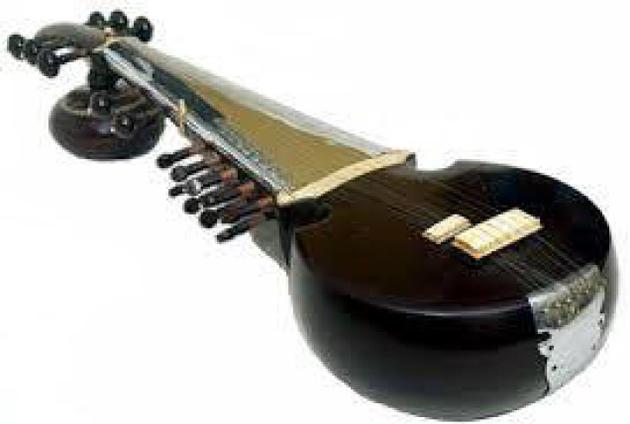
I was only five when I started learning at the feet of great masters Anil Roychoudhury and Radhubabu; and later from Buddhadev Dasgupta. They all belong to the famous Senia Shahajahanpur sarod gharana and they are revered for their enviable melodic treasures. I also learnt tabla and vocal music from venerable gurus. Subsequently, I came under the wings of the erudite and versatile master Bimalendu Mukherjee, a doyen of the famous Imdadkhani gharana of sitar and surbahar. Under their priceless guidance I assimilated vocalism, instrumentalism and the style of rhythmic play along with raga elaboration.
The simple fact is that my gurus did not tell me what were common and what ‘rare’ ragas were. They all came naturally as sister ragas, with their key phrases loud and clear, during the learning process of one major raga; even the jod-ragas (blend of more than one) were taught to me without much ado; just as they did not categorise any instrument and made me learn to play sarod, surshringar and mohanveena.
Isn’t the mohanveena a newly invented instrument?
Radhubabu’s mohanveena.
Unfortunately, very few remember the history of the original mohanveena, conceived and invented by Radhubabu in early 1948! Once, around 1944, he played the surshringar in a jugalbandi (duet) with the famous beenkar (Rudra veena player) Ustad Sadiq Ali Khan in Lucknow. The concert inspired him to design a unique instrument in which the playable materials of both the sitar and the sarod could be appropriately exploited and the tonal quality of the Rudra veena could be equally maintained. Since he was proficient in both, having had his training from Ustad Mohammad Ameer Khan of the Shahajahanpur gharana and Ustad Inayat Khan of the Etawah gharana in the sarod and the sitar respectively, Radhubabu’s experiment succeeded.
The instrument’s majestic tonality impressed Thakur Jaidev Singh, the renowned musicologist who was then Chief Producer, All India Radio, Delhi. In 1950, Thakur Saheb named the instrument ‘mohanveena’ and also arranged an archival recording for AIR, followed by an extensive interview of Radhubabu, its inventor. Radhubabu was invited in several music festivals all over India to play the mohanveena. Some of his rare recordings for AIR archives are available in compact discs as precious documents.
So, despite the emergence of another, Hawaiian guitar-based instrument of the same name almost fifty years later, the original mohanveena exists along with its own unique excellence till date, through some of the devoted torchbearers of Radhubabu’s legacy. I am also a humble exponent of the mohanveena.
source:http://www.thehindu.com / The Hindu / Home> Features. Friday Review / by Meena Banerjee / February 27th, 2015
Satyajit Ray astonished me at our first meeting. I had trotted out various Santiniketan connections I expected him to know. He looked at me for a moment while I felt his brain darting through the lanes and bylanes of the genealogical network. Then he said, “You must be related to Bussa Susheila Das!” It was the last name I expected to hear from the Maestro. Bussamami – whose death last week, three years short of a century, must be counted a merciful release – was the most fashionable, Anglicized and probably richest of my relatives. In georgette and furs, sporting a long cigarette-holder, she was a vision of elegant grandeur, the Last Burra Memsahib. When I told her about Ray, she said, “It must be because of Keshub Sen!”
If so, the Brahmo Samaj meant more to Ray than anyone imagined. Although neither Bussamami nor her husband, Mohie R. Das, had set foot in a Brahmo temple for many years, she was Brahmananda Keshub Chunder Sen’s great granddaughter. She was also the great granddaughter of General Sir Edward Barnes, India’s commander-in-chief and governor of Ceylon. That connection was embarrassingly highlighted when Bussamami stayed with us in Singapore. On the day she arrived, the afternoon tabloid, New Paper, which normally confined itself to sensational local tidbits, went to town with an unexpected cover story on Barnes and his Ceylonese mistress. As governor, he lived in what is today Colombo’s Mount Lavinia Hotel from which a secret underground tunnel snaked away to his inamorata’s dwelling. Bussamami wasn’t disconcerted.
She had flown in wearing a saree. It was her habitual garb when travelling abroad she explained. “I get better service.” At one time people laughingly called her “Susheila please!” because of her strenuous but unsuccessful efforts to banish the Bussa nickname. She was indignant when a British Indian woman in Singapore asked why she didn’t have a British passport. “Why should I?” she retorted. “India is my home. I’m Indian. I have property there.” The patrial clause in British immigration law would at once have granted her British citizenship. But people like her didn’t need to emigrate to raise their living standards or become Westernized. They easily did both in India. Her sister, Moneesha Chaudhuri, whose husband was the first Indian head of Andrew Yule, the biggest British managing agency in India, and an army chief’s brother, was also like that. She once refused the then whites-only Saturday Club’s invitation to play the piano in a concert under her English mother’s maiden name. “After all, you could pass for English,” they pleaded. She didn’t take it as a compliment.
Singaporeans found it intriguing that Bussamami and I were related twice over. She and my mother were second cousins, great granddaughters of Annada Charan Khastagir, who presided over an All-India National Conference session in 1883, preparatory to the Indian National Congress being launched two years later. Her husband, Mohiemama, and my mother were first cousins, grandchildren of Bihari Lal Gupta, who was responsible for the Ilbert Bill, which led to the AINC and INC. She and her husband being related, the marriage presented difficulties: one version for which I can’t vouch was they went to French Chandernagore for the registration.
Mohiemama’s father, S.R. Das, founded Doon School. He himself was the first Indian head of Mackinnon Mackenzie, the Inchcape shipping giant. When he joined Mackinnon’s exalted band of covenanted hands (UK-based officers who had signed a contract with the company) in England, the Numbers One, Two and Three were known in inverse order as Three, Two and One. Those figures indicated their monthly salary in lakhs of rupees. Mohiemama’s ways were upper-class English, the legacy of public school in Britain and Cambridge. My son, Deep, quoted Bussamami in this newspaper (“Learning To Speak Like The Masters”, October 13, 2004) as saying when asked if her husband went to Mill Hill or Millfield school, “Mill Hill of course. Millfield was only for the post-war nouveau riche!” Being dark and heavily built, he borrowed a turban from Maharaja Sawai Man Singh II of Jaipur – husband of the beautiful Gayatri Devi, who was Bussamami’s cousin – to visit America in the Fifties. He enjoyed describing how he clamped the turban on his head before entering restaurants in the American Deep South.
They settled down in a gracious villa called Faraway in remote Coonoor. But their world straddled Calcutta, Darjeeling, Hong Kong, London and the south of France. Or rather, small gilded niches in all these places, with extensions to Simla, Colombo and Singapore. World War II and the 300 Club had lent zest to their cosmopolitan set. Not everyone could come to grips with this dizzy diversity. Raj Thapar, wife of Seminar magazine’s Romesh Thapar, betrayed her own provincialism by dismissing Bussamami in All These Years as “an erstwhile crooner”. Yes, she, Moneeshamashi and their only brother K.C. (Bhaiya or Kacy) Sen were all gifted musicians. In her youth, Bussamami had indeed given music lessons in Calcutta, and Moneeshamashi continued to do so for free at St Paul’s School, Darjeeling. But the sleaziness that Thapar’s comment sought to convey just didn’t go with the Ingabanga (Satyendranath Tagore’s term for Anglicized Bengalis) elite.
Kacy called his delightful memoirs The Absolute Anglo-Indian. He wasn’t “a person whose father or any of whose other male progenitors in the male line is or was of European descent, but who is a native of India”, which is how the Government of India Act, 1935, defines Anglo-Indian. Nevertheless, his was the culture of the Rangers Club, Grail Club and the club of which he says “if ever there was a place that separated the men from the boys, and no angels feared to tread, it was the good old Golden Slipper”. I was struck as a child by his imaginative wedding invitation, “Bridgette and I are going to be married at the Golden Slipper Club.” His Cavaliers was a popular band. He frequently compered at the Oberoi Grand Hotel’s open-air Scherezade night club, which occupied the space now taken up by the swimming pool.
He provided Ray with Devika Halder aka Vicky Redwood for Mahanagar “over a cup of tea on the verandah” of his flat. The voice off-screen in Mahanagar was Devika’s, but the song was a ballad, Time Gave Me No Chance, he had composed in his rowing days. Major Sharat Kumar Roy of the American army was an unusual wartime buddy and surely the only Indian to be commemorated by a mountain in Greenland: he discovered Mount Sharat. Laced into the light-hearted banter of Sen’s memoirs was the fear that the “Absolute Anglo-Indian” would become the “Obsolete Anglo-Indian”.
Bussamami built personal bridges to very different milieus. Cooch Behar, Mayurbhanj, Jaipur, Nandgaon and other royals, some also descendants of Keshub Sen, were relatives and intimates. When I mentioned the novelist, Maurice Dekobra, she told me she had known him as the Paris-born, Maurice Tessier. Axel Khan, whom I met as India’s ambassador in pre-unification Berlin, was another old friend. Rumer Godden produced a flood of memories, which were borne out by Ann Chisholm’s biography, Rumer Godden: A Storyteller’s Life. Her apology for arriving late for dinner with my wife and I in our Calcutta flat was that she had got lost in the suburban lanes to Kanan’s house. Kanan who? She meant the legendary star, Kanan Devi, whom the young Bussamami had taught her dancing steps in the Thirties. They had remained friends ever since.
The real burra memsahib didn’t need to keep up appearances. Neither did she have to try to be stylish. To adapt the Comte de Buffon, the style was the woman herself. There won’t be another like her.
source: http://www.telegraphindia.com / The Telegraph, Calcutta / Front Page> Story / by Sunanda K. Datta-Ray / Saturday – February 28th, 2015
The Main Hoon Na actor is recognised for her efforts towards achieving social justice
Former Miss-Universe-turned-Bollywood-star Sushmita Sen has been awarded the Mother Teresa International Award by NGO The Harmony Foundation for her efforts towards achieving social justice.
Sushmita, who is associated with charitbale projects and NGOs, received the award Sunday and took to Twitter to express her feelings.
“Beautiful People!…wanted you to wake up to The Mother Teresa International Award, which I received last night…precious,” Sushmita posted on the microblogging site early Monday morning.
The Harmony Foundation also honoured former Outlaw motorcycle club member Sam Childers for his efforts towards rescuing children from a war-zone in Sudan.
“What a privilege to meet with Sam Childers..his life dedicated to saving the lives of children in Sudan from a Militant outfit,” the leggy lass added.
source: http://www.bollywoodlife.com / Bollywoodlife.com / Home> Sushmita Sen / by IANS / Monday – October 28th, 2013
The Indian Statistical Institute (ISI), Kolkata, felicitated its director Bimal K. Roy, an eminent cryptologist here on Wednesday on his nomination to Padma Shri award by the Union Government for his contribution in the fields of literature and education.
Dr. Roy has held several important academic positions in over 15 universities abroad.
Former Reserve Bank of India Governor and president of the Indian Statistical Institute Council, C. Rangarajan, stressed the importance of more research in applied Economics and Statistics as they provide vital inputs in the formulation of the country’s economic policy making and socio-economic development.
source: http://www.thehindu.com / The Hindu / Home> News> Cities> Kolkata / by Staff Reporter / Kolkata – February 26th, 2015