Category Archives: Records, All

Diocese of Calcutta gets 1st Indian priestess

Kolkata :

It was a historic moment for the Diocese of Calcutta, Church of North India (CNI) on Sunday as Margaret Nilanjana Ali made it to the pulpit even as the diocese completed 200 years.

“It feels nice to be the first woman ordained as presbyter (priest) in the full time ministry of the Diocese of Calcutta, CNI. Rev Priscilla Papiya Durairaj was ordained earlier, but only in the part-time ministry,” Rev Ali told TOI.

The special service at St Paul’s Cathedral was officiated by Bishop Rt Rev Ashoke Biswas. On Sunday, he became the first bishop from the diocese to have ordained an Indian woman. Rev Biswas, a firm believer in gender equality, has been instrumental in having Ali take part in service along with the male priests.

Apart from Ali, the bishop ordained two male priests — Sebastian Hansda and Saikat Nath. At the ordination ceremony, he told the congregation, “Today is a very special day in the life of the Diocese of Calcutta. Ali, Hansda and Nath will now become Presbyter with God’s call upon their lives to serve.”

The solemn and elaborate oath-taking ceremony started at 6pm and continued till 7.30pm.

“Christianity was always a part of my growing up; my father (Rev John Nelson Ali) is a priest. My vocation evolved under his tutelage and today I feel complete,” Rev Ali said.

The clergy at Calcutta Diocese, the oldest diocese in the CNI, dating back to May 2, 1814, has been male-dominated and all a woman interested in theology could dream of was to become a lay worker in a parish or a deaconess.

Ordination of women remains a controversial issue in religious circles, either because of cultural prohibition, theological doctrine, or both.

In 1978, the ‘Movement for the Ordination of Women’ was founded in England. “There are a lot of women clergy now, and several women are entering theological colleges all over the world. But there are still pockets of resistance. If a woman felt that her vocation is to be a priest, she must be given the chance to explore the calling,” Rev Ali said.

The revolution came when a legislation for women priests was passed in 1994. On March 12 that year, the first batch of 32 women were ordained as priests of the Church of England.

As a priestess-designate, Ali was in charge of 40 children at the St Elizabeth Girls’ Hostel and had been attached to the Church of Epiphany where she gave sermons, read gospels and visited the sick as part of her grooming. She has been conducting services at St Paul’s Cathedral. She was groomed to succeed Margaret Macgregor, a Scottish woman who was the only other full-time priest.

“But she was white. I will be the first Indian priest from the diocese,” Rev Ali signed off.

source:http://www.timesofindia.indiatimes.com / The Times of India / Home> City> Kolkata / by Ajanta Chakraborty, TNN / June 22nd, 2015

Kolkata students develop system to help farmers switch on pump sets from home

Kolkata :

Five pass-outs from the Meghnad Saha Institute of Technology (MSIT) have bagged the runners-up prize at the prestigious Texas Instruments Innovation Challenge 2015 by inventing a system that will enable farmers to turn on their pump sets (to water their fields) from home by using mobile or landline telephones.

Not only will this help in conservation of water, the system also promises to protect farmers from snakebite. As per a latest WHO report, nearly 50% Indian farmers suffer snakebites while travelling through dense undergrowth in the night to reach the pump sets.

The ministry of water resources claims that nearly 40% water is wasted due to inefficient irrigation practices. An IAPC – World Bank report states that irrigation efficiency in India is only 35%. This is what Suman Basak, Anik Dutta, Sourav Sinha, Priyanjit Kumar Ghosh and Mostafa Kamal Mallick, from the electronics & communication engineering department of MSIT, set out to rectify in 2014. They participated in the challenge along with 3,200 other teams from engineering colleges across India and Sri Lanka.

“They came up with something they named XENCOM. Xen means water in Chinese and ‘Com’ is short for communication. They presented this idea to Nasscom’s Idea to Proto-type Challenge for eastern India and bagged first position in June, 2014. For the TI Innovation Challenge, they had to have the product ready. They toiled hard for the last one year to develop this,” says MSIT principal Tirthankar Datta.

Apart from the timer facility, the system considers several parameters such as temperature and humidity and after interpreting the data on the basis of test cases, lets the farmer know through SMS when it is time to water his field for better irrigation. Datta calls this ‘suggestive farming’. The farmer is also kept in the loop about power availability in his field at any point of time.

“We feel awesome. Our hard work paid off. We received a lot of support from out institute, Prof Datta, Kamalendu Langal and Saikat Paul, our point of contacts with the industry and Sudip Dogra, our faculty mentor,” says Priyanjit Kumar Ghosh.

source: http://www.timesofindia.indiatimes.com / The Times of India / Home> City> Kolkata / by Jayanta Gupta, TNN / June 20th, 2015

Relic Hunter

On a rainy afternoon, Chittaranjan Dasgupta sits hunched on a chair in his dimly lit room in Bankura’s Bishnupur, working on the manuscript of his latest book, ‘Dakshin Paschim Banger Itibritto’ (History of South West Bengal).

He is 90 years old. For more than 50 years, he has been working tirelessly for preserving the history of Bankura and its surrounding region. Age has not dulled his faculties.

He has authored two other books on Bishnupur’s terracotta temple art. Recently, he wrote a paper on ‘International Trade and Cultural Diffusion in Medieval Southwestern Bengal: Some Architectural Evidence’.

His son Basab Dasgupta, economic advisor with the World Bank in Washington, has sent it to the University of Cambridge.

Dasgupta’s tryst with history began in the prime of his youth. He taught Bengali at Bishnupur High School. “Those were heady days,” he recalls. “We were still basking in the glory of new-found freedom after the British left. Everyone, especially the youth, were fired by a deep passion and commitment towards our soil.” They were free spirits, too. “We would travel to villages in and around Bankura regularly. On these trips, we stumbled upon archaeological relics buried deep in the soil.”

Bishnupur, best known for its terracotta temple art and Baluchori sarees, is a treasure trove of relics dating back to the prehistoric era.

Bankura-Bishnupur’s history can be traced back to thousands of years ago, when Proto-Australoids and Proto-Dravidians inhabited the region. Bishnupur was the core of Mallabhum that in its heydays stretched up to the Chhota Nagpur Plateau in the west and Burdwan in the east.

Its monarchs were called Malla Rajas. Bishnupur saw a confluence of various religions and sects, including Vaishnavism, Jainism and Islam. Bishnupur’s kings were patrons of art, music and culture. The eponymous Bishnupur gharana originated here.

Tansen’s descendant Ustad Bahadur Khan, a musician at the court of Bishnupur’s King Raghunath Singh Deo II, established the gharana.

The writ of time, however, ensured Bishnupur’s link with its glorious past became tenuous.

In the 1940s, Jogesh Chandra Roy, who settled in Bankura after retiring as a professor of chemistry and botany from Cuttack’s Ravenshaw College, tried setting up a museum for relics, books, manuscripts of a bygone era. Around that time, the area around the Kangsabati river was being excavated. “Prof Roy was pained to see government officials and others walking away with priceless archaeological finds,” says Dasgupta. Roy then placed an announcement in a reputable Bengali magazine, seeking help to build the museum. He received no response. Then, came a band of enthusiasts who cherished their history.

Besides Dasgupta, the motley group comprised teachers, scholars, students, businessmen and government officials. They wanted to preserve testimonies of the past for posterity.

Inspired by Roy, they set up the Bishnupur chapter of Bangiya Sahitya Parishad in 1951. Dr Manik Lal Singha was a prominent member who contributed immensely to preserving Bishnupur’s history. Like Dasgupta, he, too, taught at Bishnupur High School and became the parishad’s secretary.

“In 1970s, Manik Babu discovered a Chalcolithic site at Dihar, north of Bishnupur on the north bank of Dwarakeshwar river,” Dasgupta says. Coins, beads, semi-precious stone jewellery and pottery were excavated. The find helped establish that Bankura-Manbhum-Singhbhum was the hinterland of the Tamralipta port and part of the trade route that opened into the Bay of Bengal.

Dr Singha wrote to the Calcutta University’s archaeological department, which took charge. Parishad members scoured villages to collect bits of Bishnupur’s past. “We would go to houses asking for ancient manuscripts written on palm leaves or tulot kagoj (handmade paper). These were heirlooms and several families didn’t want to part with them,” Dasgupta says.

For about a decade — from the 1980s, till he retired in 1990 — Dasgupta, like Dr Singha, travelled through villages to collect relics. They found numerous ancient stone sculptures. Coins, ornaments, pot shards, arrow heads, weapons and tools were excavated from the banks of the Kansai, Shilai and Darakeshwar rivers. “Often, we succeeded in retrieving the relics. But there were times when villagers didn’t allow us, especially if the relic was an idol of a deity who they worshipped,” he says. Gradually, when they had a collection of manuscripts, the parishad decided to set up a museum.

In January 1951, Kabishekhar Kalidas Roy inaugurated a room from where the museum began.

Later, Bishnupur’s Bhattacharya family donated about 10 bighas of land, where then Union education minister Humayun Kabir laid the foundation of the museum, Jogesh Chandra Purakriti Bhavan, in 1954. Named after Prof Roy, today it is a two-storeyed building. The state government, too, chipped in.

During the Left Front regime, the foundation was laid for a new wing. Victoria Memorial gave a grant of Rs 15 lakh for its modernization. Dasgupta is the museum’s member-secretary. The museum became a crucible of culture.

The Parishad organized various lecture series, discussions and music performances. The list of speakers had Bengal’s best — scientist Satyen Bose, author Tarashankar Bandopadhyay, scholars like Shashibhushan Dasgupta, Suniti Chattopadhyay, Sukumar Sen, Kalidas Nag, economists Ashok Mitra and Biplab Dasgupta.

Now, most parishad members are either dead or old. Lectures and performances are no longer held. “Nobody seems to be interested in intellectual pursuits anymore,” Dasgupta feels. Also, today, moving in villages in search of relics would have been tough. “Violence and suspicion stemming from politics have eroded the innocence and peace in Bengal’s villages,” he rues.

The museum boasts a collection dating back to the Paleolithic Age. There are sculptures of Jain Tirthankaras, Parasnath, Choumukha votives and Hindu gods, including Chamunda, Vishnu on Ananta Shajya, Ganesha, Kartikeya, Shankha Purush, Indrani, Pragya Paramita and Ambika. The music gallery chronicles the Bishnupur gharana, its exponents and their instruments.

Curator Tushar Sarkar and two guards are in charge of the museum. During peak season, the museum attracts about 400 visitors a day.

Yet, such priceless treasures of Bengal’s history are left practically unguarded with not even electronic surveillance or high-tech round-the-clock vigil.

source: http://www.timesofindia.indiatimes.com / The Times of India / Home> City> Kolkata / by Rakhi Chakrabarty, TNN / June 20th, 2015
Akademi Ratna was most unexpected, says Vijay Kichlu

Kolkata :

Sangeet Natak Akademi’s decision to confer the prestigious Akademi Ratna Sadasyata award on Pt Vijay Kichlu has come as a perfect birthday gift for the legend, who will turn 85 this year. Away on a buddy-trip with his gang of eight friends in Mashobra, Kichlu was both surprised and elated with the news.

“This was the most unexpected news for me. I was the member of the last council of Sangeet Natak Akademi. As a member, one can’t receive any awards. The new chairman was announced only recently. This news came as a great surprise to me. I am humbled,” Kichlu told TOI. Musicologist S R Janakiraman, film-maker MS Sathyu and musician Tulsidas Borkar are the other recipients of the prestigious fellowships for 2014.

The last time a musician from Kolkata received the Akademi Ratna Sadasyata was in 2010. It was given to Girija Devi-ji. The fellowship constitutes a cash award of Rs 3 lakh beside an angavastram and a tamrapatra.

Of late, Kichlu has been keeping himself busy with a Prasar Bharati assignment. For this, he has to prepare 52 episodes of content that will offer a holistic view of Indian classical music. Work for this began early this year. “We have just about finished work on nine to 10 episodes,” he said.

Kichlu is being assisted by a team of researchers from Kolkata and Delhi. “Apart from Meena Banerjee and Arpita Chatterjee from Kolkata, our team also has Prashant Mallick from Delhi,” he said. As part of this project, Kichlu has himself interviewed Pt Hariprasad Chaurasia, Pt Rajan and Pt Sajan Mishra and Ashwini Bhide, among others.

source: http://www.timesofindia.indiatimes.com / The Times of India / Home> City> Kolkata / TNN / June 16th, 2015

Bengali on Queen’s honour list

Kolkata :

Seventy-year-old Pratima Sengupta, who pressed on with her charity and social activities despite debilitating arthritis, is among those being appointed Member of the Order of the British Empire (MBE) in the birthday 2015 Honour List of the Queen.

The honour is recognition for her services to the community in East Renfrewshire, Scotland. Sengupta has been living in Glasgow since 1969 and is now confused about which of her five grandchildren she will take along to accept the honour from the Queen.

On April 30, Sengupta got a letter from the Cabinet Office stating that the British Prime Minister had proposed her name to the Queen. On June 12, her name was published in the London Gazette. “I started shivering when I heard this news. All those who are on the Honour List will be invited to an investiture. The events are organized by the Central Chancery of the Orders of Knighthood in St James’ Palace. I was told that I will receive the invitation about five weeks before the event,” Sengupta told TOI from Glasgow.

Sengupta had spent her early years in Kolkata where her father, Dr Promodranjan Dasgupta, was a teacher at Presidency College. After marriage, she moved to Glasgow where she worked at the tax office. Due to arthritis, she was forced her to take early retirement in 2002. Pain in her joints notwithstanding, she continues to do voluntary service at a hospital.

“I started the Women’s Voluntary Royal Service (WVRS) at the Victoria Infirmary. I loved to give company to patients. Some of them couldn’t speak English and I worked as their translator,” she said. But her failing health didn’t make it easy. “They made special shoes so that I could walk properly. I refused to use a wheelchair. Sometimes, I’d fall down or bleed from my hands. At night, I’d cry in pain. Yet, I never stopped working,” she said.

Wearing a sari with a red bindi, Sengupta would stand out in the crowd. “Initially, people would ask me about the red blot on my forehead!” she laughs. She became a director with Voluntary Action group in Glasgow that worked with children who couldn’t afford higher education. “I’d sing ‘Phule phule dhole dhole’ to them. I also got in touch with an NGO in Tollygunge that worked with impaired children,” she added. She joined an organization called Women Across the World. “I’d go door to door asking for donations. I remember telling people: ‘You don’t need to give me more. Even one penny is enough.”

Meeting the Queen is the big event on her calendar now. “My husband and I had once attended the Queen’s Garden party at Edinburgh. I have been told that I can take four guests to this event. But I have five grandchildren. And all of them want to go to see the Queen,” Sengupta laughed.

source: http://www.timesofindia.indiatimes.com / The Times of India / Home> City> Kolkata / by Priyanka Dasgupta, TNN / June 16th, 2015

India’s only double coconut tree artificially pollinated

The palm species bears largest seed known to science

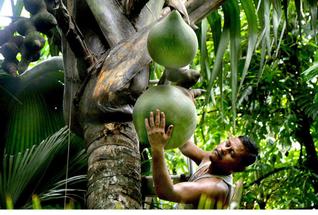
A double coconut tree stands at the Indian Botanical garden at Shibpur in Howrah district.— Photo: Sanjoy Ghosh

Scientists at the Indian Botanical Garden in West Bengal’s Howrah district have carried out artificial pollination of the only double coconut tree in India, which bears the largest seed known to science.

One of the rare and globally threatened species of palm, the double coconut ( Lodoicea maldivica ) tree was planted at the botanical garden in 1894 and the artificial pollination is a result of decades of work by scientists of the Botanical Survey of India (BSI).

“The tree took almost a hundred years to mature and when it started flowering, we started looking for this particular palm species in this part of world. We collected some pollen from palms from Sri Lanka but could not successfully pollinate it. Finally, with the help of pollen from another tree in Thailand, the pollination process was successful,” BSI Director Paramjit Singh told The Hindu .

Longest surviving palm

The Double Coconut tree not only bears the largest seed known to science — weighing around 25 kg — but this unique species is also the longest surviving palm which can live for as long as 1,000 years, he says. The palm tree also bears the largest leaf among palms and one leaf can thatch a small hut.

“Successful pollination means that we can have another Lodoicea maldivica in the country. In fact we have two fruits and it might take them another couple of years to mature,” said S.S. Hameed, BSI scientist who has been working on the pollination project since 2006.

This species of palm is diecious (where male and female flowers are borne on different plants). “Fortunately at the Botanical Garden, we had the female plant which can fruit and produce seeds,” Mr. Hameed said. The Indian Botanical Garden which serves as the repository 12,000 trees from 1,400 different species is careful in nurturing the palm.

The palm tree is located in the large palm house of the Botanical Garden which has the largest collection of palms in South East Asia with around 110 palm species.

This rare tree can be found in only two of the 115 Seychelles islands and is also called Coco de Mer (coconut of the sea), says Mr. Hameed

Legend

Legend bestows the seed with the power to bring good fortune to its owners. “There has also been a tradition of making kamandals [drinking vessels] from the double coconut by bisecting the shell. It was believed that those who consume water from these kamandals will be protected from poisoning,” Mr. Hameed said. Subsequently, sadhus started using Kamandals and it got its place in religious rituals.

source: http://www.timesofindia.indiatimes.com / The Times of India / Home> National / by Shiv Sahay Singh / Kolkata – June 13th, 2015

State honour for Budhaditya, Rani Karnaa

Kolkata :

West Bengal State Music Academy will confer this year’s Allauddin Purashkar on sitar maestro Pandit Budhaditya Mukherjee.

The award, instituted in the name of legendary classical musician Ustad Allauddin Khan in 1987, carries a citation and a cash prize of Rs 25,000. Previous recipients of the award include Pandit Buddhadev Dasgupta, Pandit Manilal Nag and Manna De.

Mukherjee, who earlier won the Allauddin Khan Memorial Fellowship offered by the Madhya Pradesh government, plays sitar and surbahar in the Imdadkhani tradition of Etawah. Speaking to TOI, he said, “I am pleasantly surprised and honoured that the state government considered my name for this award.”

Academy’s member secretary and deputy director of information and cultural affairs department Malabasri Das said, “We will also honour dancer Vidushi Rani Karnaa with Uday Shankar Purashkar, tabla maestro Pandit Gobinda Bose with Jnan Prakash Ghosh Purashkar and Agra gharana vocalist Subhra Guha with Girija Shankar Purashkar for their contribution to various forms of performing arts.”

“I was born in Sindh in Pakistan. But Kolkata has been my second home for the last 40 years. It is great to see that the Bengal government has selected me for this honour,” said Karnaa, a disciple of Odissi legend Guru Kelucharan Mohapatra.

Chief minister Mamata Banerjee will hand over the awards to the maestros at an event at Nazrul Mancha on Tuesday.

source: http://www.timesofindia.indiatimes.com / The Times of India / Home> City> Kolkata / TNN / May 26th, 2015

Vanishing magic caught on reel

Kolkata :

Even a few decades ago, city’s theatres used to remain booked for months for magic shows. Newspapers were splashed with huge advertisements portraying magicians in prince-like attires spreading the net of ‘indrajal’. Now, the city’s hobbyists and illusionists slowly watch the glory fading away.

‘Fading Magic — The Story of Kolkata’s Magicians’ is a documentary film that brings those artists on celluloid once again. Some of them are old enough to perform, some are fighting with poverty and a lucky few are trying to make a decent living out of the passion that has driven them since childhood.

While India was known for illusions such as Indian rope trick which mesmerized the court rooms of the princes and zamindars, magic in Kolkata was mostly restricted to pavements and roadside kiosks even during the early 70s. It went through a huge facelift after Protul Chandra Sorcar catapulted the shows into theatre halls. The journey of Bengal’s magic from sidewalks to theatres continued under PC Sorcar Senior and K Lal.

Sam Dalal, a magician and one of the largest magic instrument manufacturers in the world, felt that while Kolkata had magicians such as Mrinal Roy and H M Wakil, hosting shows in theatres such as Mahajati Sadan was not common. “Kolkata was the magic capital those days. Magicians such as Samiran, Gautam Guha and Raj Kothari ruled the roost,” he said. Dalal, an engineer from Indian Institute of Technology, joined the profession to turn into a manufacturer and an innovator later on.

There were others such as Sanmay Ganguly, who continued to perform on stage despite being a doctor by profession. New names came to surface as magicians started getting handsome payments even beyond cabaret acts at bars. Some chose magic to be their sole profession. But times started changing even before they could fathom the reasons.

“Finance was always a problem. For feats such as vanishing the Statue of Liberty you need huge investments,” felt Rana Banerjee. Rana had even appeared in the Roland Joffe directed ‘The City of Joy’. But such achievements only added feathers to the city’s magicians’ caps and the coffers remained dry.

D Subhash, who used to perform across the states is now finding it difficult to arrange money for his ailments.

“There has been a shift again and magic in Kolkata went back to streets once again,” said director of the documentary Amit Sahai.

Jasjit Singh said the fading glory of the art needs to be showcased. “Kolkata needs to be reminded of the glorious past it had,” he said.

source: http://www.timesofindia.indiatimes.com / The Times of India / Home> City> Kolkata / TNN / April 26th, 2015

Kolkata’s wooden trams chug into stardom

The streetcars lend authenticity to the city’s 1942 avatar in “Detective Byomkesh Bakshy!”

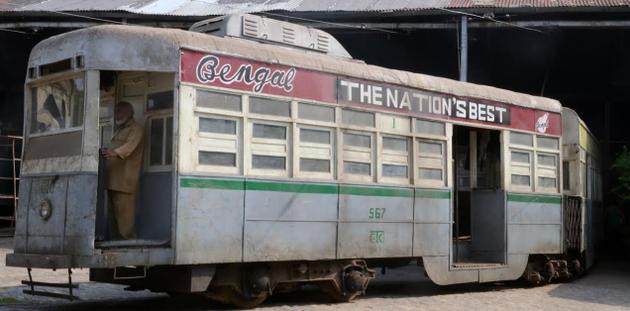
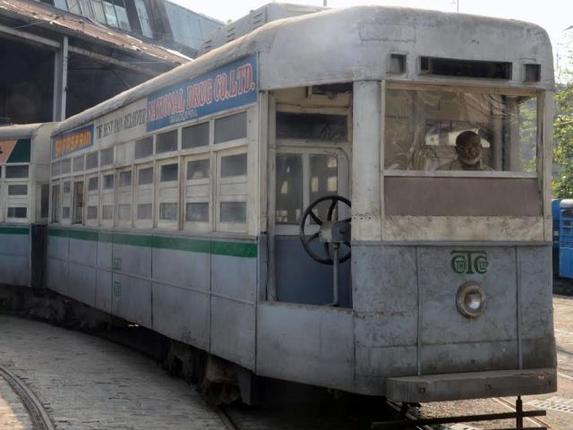
An unexpected but delightful outcome of the making of Dibakar Banerjee’s film Detective Byomkesh Bakshy! that released on Friday was the rescue from obscurity of two tramcars that were used to recreate the city’s 1942 avatar.

Tram No. 567, used in the film “Detective Byomkesh Bakshy!”, at the Nonapukur Tram Depot in Kolkata. Photo: Sushanta Patronobish / The Hindu

Using brands that have faded from public memory and antiquated ad campaigns, the project has revived interest in trams ‘No. 563’ and ‘No. 567’, now renamed ‘Byomkesh Bakshi’ Tramcars. The film, however, spells the detective’s last name as Bakshy.

The film used two wooden tramcars built in the 1930s and a watering car used to water the tram tracks of the city.

“The tramcar was renovated at their [the filmmakers] cost by us. They collected samples from old photographs and, accordingly, old-style branding was done on the top panel of the trams,” Nilanjan Sandilya, managing director of The Calcutta Tramways Company (CTC) Ltd. told The Hindu.

Mr. Sandilya said that trams were the main public mode of transport in the 1940s and were crucial to depict that period of the city.

Tram No. 567, used in the film “Detective Byomkesh Bakshy!”, at the Nonapukur Tram Depot in Kolkata. Photo: Sushanta Patronobish / The Hindu

The two tramcars used in the film are wooden ones that have seldom been taken out on the streets after the shooting of the film, said S.S. Ghosh, the Works Manager of the CTC. Tram No. 567 displayed advertisements of brands such as Bengal Lamp, Lux Toilet Soap and Dulaler Tal Mishri during the shooting. An old brand of palm candy was also advertised at Nonapukur tram depot. Tram No. 563, which was changed to No. 469 for the film, carried similar advertisements in English, Bengali and Hindi. Shooting was held at the Park Circus Tram Depot. The watering car used in the film predates the trams. According to Mr. Ghosh, watering cars were built between 1915 and 1920 and only two of them are now left with the tram company. Such is the enthusiasm surrounding the tram cars that a prototype called “Byomkesh Bakshi Tramcar” is on display at a tram museum-on-wheels called Smaranika.

source: http://www.thehindu.com / The Hindu / Home> News> Cities> Kolkata / by Shiv Sahay Singh / Kolkata – April 04th, 2015

Swimming through rough tides

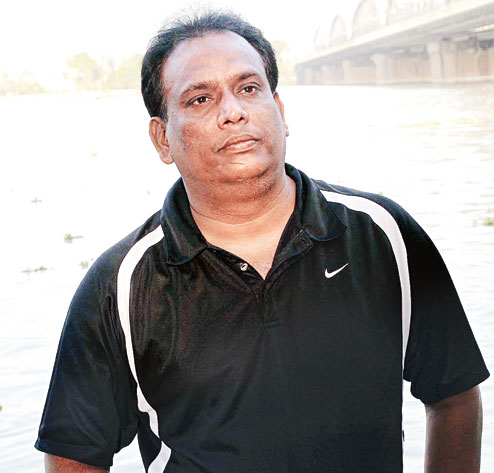
KNOW YOUR NEIGHBOUR: Surajit Ghosh Swimmer

Surajit Ghosh. Picture  by Gopal Senapati
Surajit Ghosh. Picture by Gopal Senapati

For someone like Surajit Ghosh, who has won 12 gold medals in international swimming competitions, it is disheartening to lead a life without any recognition or acknowledgement. Ghosh had won the first gold medal for India in 1984 at the Asian Swimming Championships in Hong Kong. Since then, he was a winner for the next 10 years, in Asian and South East Asian Swimming Championships. Of the 19 medals that he has won, 12 have been gold medals and seven silver.

From 1985-89, Surajit was number one in South East Asia and number 2 in Asia. Apart from this feat, Surajit has over 100 medals that he has won at national swimming championships. He was champion for 10 consecutive years in the senior national championships for 200m butterfly and 400m individual medley. Despite his achievements and talent, Surajit laments that he has never been recognised by either the state or the central government. “My achievements have remained unrecognised. I have never received any kind of recognition from the state or central governments,” he said.

Surajit was a swimmer since childhood, when he started swimming in the neighbourhood pond. His elder brothers Abhijit and Biswajit were also swimmers. However, Surajit went a long way in this sport. His first guru was Jnanaranjan Das, who trained him and encouraged him to go to competitions. “My strength was 200m butterfly in which I had made a record time of 31 seconds in 1979, at my first junior national championship. Later, to perform better, I never stuck to one coach. I would go to other places around India, where I would practise with other good swimmers and practise under different coaches,” said Surajit.

A swimmer can only improve if he has a good competitor. “When I went to competitions, I would watch other swimmers and would contact them later so that I could go and practise with them to improve my speed. I have been to Madras, Kerala and other parts of India, with the aim of increasing speed,” said Surajit. Many swimmers in Bengal would want to practise with Surajit for the same reason.

“Bula Chowdhury has practised with me for a long time because she wanted to increase her speed,” said Surajit. He had also trained for many years under Australian coach, Eric Arnold, in Delhi. “I had stayed for a long time in Delhi, just to train under Arnold who was also training national champion Khajan Singh at that time,” said Surajit.

Although he has been a rank-holder in Asia and South East Asia, he regrets that he could never get a rank in world championship. “I had gone to the World Swimming Championship in 1990, but there I could not go beyond Rank 8. The competition was tougher because there were so many more swimmers from across the world who were better than me,” said Surajit.

Having a job with the Eastern Railway through the sports quota, Ghosh now coaches young swimmers in Bally and other swimming clubs. “I started Bally Swimming Centre but I also train students in other clubs in Hooghly and other places,” he said. He encourages young swimmers and is always on the lookout for new talent.

MORE ABOUT SURAJIT

DoB: January 15, 1968
Born in: Howrah
Education: HS
Family: Wife, two daughters
Loves: Long drives
Hates: Deceit

source: http://www.telegraphindia.com / The Telegraph, Calcutta / Front Page> Howrah> Story / Friday – April 03rd, 2015